The 2018 Toyota C-HR frequently experiences Continuously Variable Transmission (CVT) bearing failures, spontaneous windshield stress cracking, premature 12-volt battery drain, and out-of-date infotainment software. While engine mechanics remain generally durable, transmission replacements can exceed $5,000, making thorough pre-purchase inspections and active monitoring essential for prospective buyers and owners.
Overview of the 2018 Toyota C-HR Reliability Record
The 2018 model year marked the debut of the Toyota C-HR (Compact High-Rider) in the North American market. Originally developed under Toyota's discontinued Scion sub-brand, the vehicle was transitioned into the main Toyota lineup built on the Toyota New Global Architecture (TNGA-C) platform. Powering the North American variant is a naturally aspirated 2.0-liter four-cylinder engine (3ZR-FAE) paired exclusively with a Continuously Variable Transmission with intelligence Shift (CVTi-S).
Because 2018 was the inaugural model year for the C-HR in North America, it inherited typical first-generation manufacturing challenges. While the TNGA platform provided strong structural rigidity and sharp handling, several mechanical and electronic sub-systems suffered from early-stage design flaws. Owners and mechanics consistently report mechanical friction in the drivetrain, glass installation stress points, and electrical parasitic draws. Understanding these specific vulnerabilities helps current owners maintain their vehicles and assists used-car buyers in evaluating potential purchases.
Critical Transmission Issues: The K118 CVT Bearing Defect
The most widespread and costly mechanical failure reported in the 2018 Toyota C-HR involves the K118 Continuously Variable Transmission. Unlike traditional automatic transmissions that use fixed planetary gear sets, the K118 CVT uses a steel belt riding between variable-diameter pulleys to change gear ratios seamlessly.
- Engine Torque
- Input Pulley
- Steel Belt
- Output Pulley
- K118 Bearing
- Drivetrain Noise / Failure
Symptoms of CVT Degradation
The primary mechanical failure inside the K118 transmission originates from premature wear on the primary shaft bearing. As the bearing surface degrades, it generates distinct operational symptoms:
- Whining or Whirring Noise: A high-pitched metallic whine that shifts pitch with vehicle speed rather than engine RPM. The noise often begins subtly around 40,000 to 70,000 miles and progressively worsens.
- Grinding and Vibration: As internal bearing races spall, metallic debris contaminates the CVT fluid, creating physical vibration under moderate acceleration.
- Hesitation and Shuddering: Contaminated fluid affects hydraulic pressure within the valve body, leading to delayed response when pressing the accelerator pedal.
- Total Drivetrain Immobilization: If ignored, the bearing can seize completely, damaging the main pulley shafts, shredding the internal steel belt, and leaving the vehicle unable to move in Forward or Reverse.
Root Cause and Diagnostic Steps
Mechanics trace the issue to inadequate bearing hardening or excessive internal load tolerances under specific driving conditions. To diagnose this condition, technicians perform a chassis ear test on a lift to pinpoint whether the hum or whine originates from the wheel bearings or the internal transmission casing. A fluid sample inspection usually reveals fine silver or bronze shimmer, indicating disintegrating metal within the transmission pan.
Repair Options and Replacement Costs
Toyota does not typically offer internal component replacement for the K118 transmission through dealerships; instead, the entire assembly must be replaced. Out-of-warranty replacement costs generally range between $4,500 and $6,800, including labor and fluids. Independent transmission specialists can sometimes rebuild the unit by installing updated aftermarket bearings, but parts availability can limit this approach.
Owners experiencing early symptoms should check whether their vehicle qualifies for technical service bulletins (TSBs) or special goodwill assistance programs through Toyota, especially if the vehicle has a complete dealership service history.
Windshield Stress Cracking Concerns
A recurring structural complaint regarding the 2018 C-HR involves sudden, spontaneous windshield cracking without any visible rock chip or external impact.
Causes of Thermal and Structural Stress Cracks
Structural glass failures on the 2018 C-HR stem from tight tolerances around the A-pillars and windshield frame. Small manufacturing variations in body weld seams combined with rigid urethane adhesive application create inherent tension points along the glass perimeter.
When exposed to rapid temperature changes—such as using the defroster on a freezing morning or washing a hot car in direct sunlight—the glass undergoes thermal expansion stress. This force concentrates at tension points along the edge, causing a crack to propagate across the glass surface.
Safety Sensor Calibration (TSS-P) Requirements
Replacing a damaged windshield on a 2018 C-HR involves more than glass installation. The vehicle features Toyota Safety Sense P (TSS-P), which relies on a forward-facing camera mounted behind the upper windshield glass.
- Glass Replacement
- Static Camera Target Alignment
- Dynamic Road Test
- TSS-P Safety Verification
- Static Calibration: Uses specialized physical target boards placed at precise distances and heights in front of the vehicle to recalibrate camera optics.
- Dynamic Calibration: Requires driving the vehicle on clearly marked roads at fixed speeds while connected to a diagnostic scan tool to finalize sensor alignment.
Using low-quality glass or failing to perform camera calibration can disable critical safety systems such as Pre-Collision Automatic Emergency Braking and Lane Departure Alert. Expect windshield replacement costs to range from $900 to $1,500, with calibration accounting for a significant portion of the total fee.
Electrical Faults and Infotainment System Limitations
The 2018 Toyota C-HR features complex electronic control networks that can exhibit software bugs and hardware battery drain issues over time.
Premature 12V Auxiliary Battery Drain
Owners frequently report dead 12-volt batteries after leaving the vehicle parked for as little as two to three days. This issue is typically caused by parasitic current draw. Certain vehicle control modules—most notably the Smart Key receiver and body control module (BCM)—may fail to transition into low-power sleep mode after the ignition is switched off.
To resolve continuous battery drain, technicians measure parasitic draw using an in-line ammeter across the negative battery terminal. A normal sleep draw should remain below 50 milliamperes (mA). If the draw exceeds this threshold, ECU reflash updates are applied to force inactive modules into sleep mode. Installing an AGM (Absorbed Glass Mat) battery with higher reserve capacity can also help buffer against unexpected discharge.
Entune 3.0 Infotainment Glitches
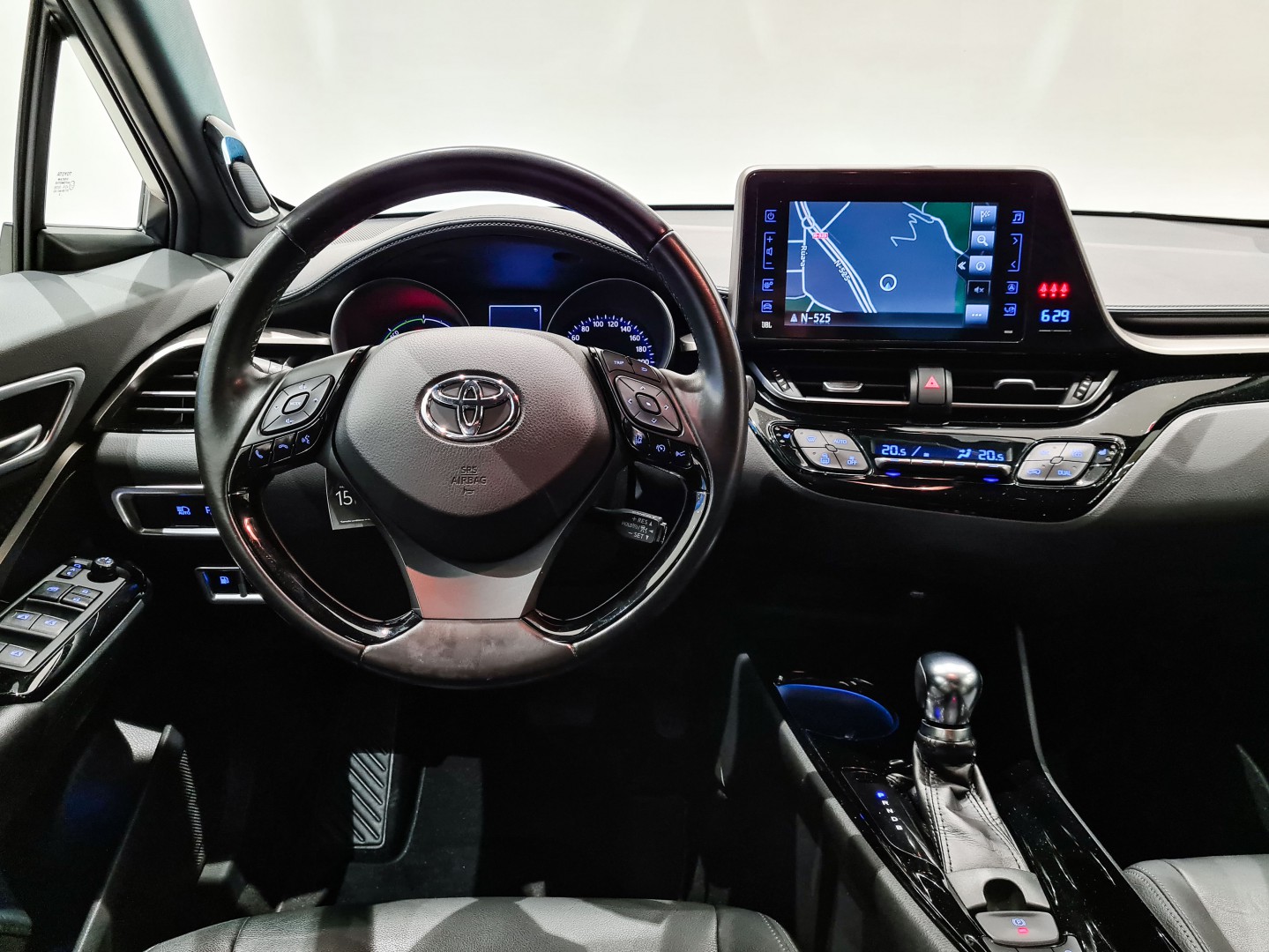
The standard Entune 3.0 multimedia head unit in the 2018 model year remains a common source of user frustration. The system lacks native support for both Apple CarPlay and Android Auto (Apple CarPlay was introduced to North American C-HR models starting in the 2019 model year, with Android Auto following later).
Beyond the lack of smartphone mirroring, physical Entune head unit issues include:
- Frequent System Reboots: The screen turns black and restarts unexpectedly while driving or navigating menus.
- Bluetooth Disconnections: Dropped mobile phone pairing and intermittent audio streaming failures.
- Touchscreen Unresponsiveness: The screen stops accepting touch inputs until the vehicle ignition is cycled.
Dealerships can update Entune firmware via USB to stabilize Bluetooth connectivity and reduce menu lag, though these updates do not add Apple CarPlay or Android Auto functionality to 2018 factory hardware.
Official Recalls and Safety Bulletins (TSBs)
Several official safety recalls were issued by the National Highway Traffic Safety Administration (NHTSA) and Toyota for the 2018 C-HR to address safety-critical mechanical and electronic defects.
| RECALL TOPIC | PRIMARY SAFETY RISK |
|---|---|
| Rear Axle Hub Bearing Fasteners | Loose bolts can lead to wheel detachment |
| Electronic Parking Brake (EPB) | System fails to engage, causing rollaway hazard |
| Denso Low-Pressure Fuel Pump | Engine stall at speed due to pump impeller failure |
| Occupant Classification System | Front passenger airbag may fail to deploy |
Rear Axle Hub Bolt Loosening
In certain 2018 C-HR vehicles, the bolts securing the rear axle hub bearing assemblies may not have been tightened to correct factory torque specifications during production. Over time, these bolts can loosen, resulting in rear suspension noise, wheel wobble, damage to brake components, and in severe cases, detachment of the rear wheel assembly. Toyota dealers inspect and torque the rear hub bolts to factory specification, replacing damaged components free of charge.
Electronic Parking Brake (EPB) Disengagement
A software glitch in the VSC (Vehicle Stability Control) ECU can prevent the Electronic Parking Brake from automatically engaging when the vehicle is placed in Park. Additionally, the system may fail to release properly or disengage unexpectedly. A software update to the VSC ECU resolves this issue.
Denso Fuel Pump Impeller Failure
The 2018 C-HR was included in a broader global recall involving Denso low-pressure fuel pumps. The internal plastic impeller within the fuel pump can absorb fuel, deform, and contact the pump housing. This friction causes the pump to stop functioning, leading to engine hesitation, a illuminated Check Engine light, failure to start, or engine stalling while operating at highway speeds. The remedy requires replacing the fuel pump assembly with an upgraded unit.
Engine Performance, Noise, and Driving Mechanics
The naturally aspirated 2.0-liter 3ZR-FAE engine delivers 144 horsepower and 139 lb-ft of torque. While mechanically durable, the engine's design limits performance under heavy acceleration.
Engine Droning and Acceleration Hesitation
When drivers demand rapid acceleration, the CVTi-S transmission holds the engine at a high RPM band (typically 4,000 to 6,000 RPM) to maximize power output. This creates a persistent high-pitched engine drone inside the cabin. Drivers unfamiliar with CVT dynamics often mistake this sustained high-RPM operation for clutch slippage or transmission malfunction.
Valvematic System Maintenance
The 3ZR-FAE engine utilizes Toyota’s Valvematic system—a continuous variable valve lift mechanism integrated into the cylinder head. While reliable, high-mileage units can experience failure of the Valvematic actuator module due to oil sludge buildup or electrical motor degradation. Symptoms include a sudden loss of engine power, reduced fuel economy, and diagnostic trouble code (DTC) P1047 or P1055. Regular engine oil changes using synthetic 0W-20 oil every 5,000 to 7,500 miles help protect the actuator assembly.
Summary of Common 2018 Toyota C-HR Problems
The following table summarizes the primary mechanical, structural, and electrical issues associated with the 2018 Toyota C-HR, along with common symptoms and estimated repair costs out of warranty.
| Issue / Component | Common Symptoms | Severity Level | Estimated Repair Cost (Out of Warranty) |
|---|---|---|---|
| K118 CVT Transmission | Whining sound, metallic vibration, delayed gear engagement, failure to move | Critical | $4,500 – $6,800 (Full replacement) |
| Windshield Stress Cracks | Spontaneous cracking from outer glass edge without rock impact | Moderate | $900 – $1,500 (Includes TSS-P calibration) |
| Denso Fuel Pump | Engine sputtering, extended cranking, sudden stalling while driving | High | Free under Recall (Otherwise $800 – $1,200) |
| Rear Axle Hub Bolts | Grinding/clunking from rear suspension, wheel instability | Critical | Free under Recall (Otherwise $400 – $800) |
| 12V Auxiliary Battery | Dead battery after short park periods, slow engine crank | Low to Moderate | $180 – $300 (Battery + sleep mode ECU flash) |
| Entune 3.0 Head Unit | Screen reboots, frozen touchscreen, loss of Bluetooth connectivity | Low | $200 (Firmware update) – $1,200 (Replacement) |
| Valvematic Actuator | Check Engine light, limp mode, reduced engine power | Moderate to High | $1,100 – $1,800 |
Pre-Purchase Checklist for Used 2018 Toyota C-HR Buyers
When shopping for a used 2018 Toyota C-HR, complete the following inspection steps to identify costly hidden defects before finalizing a purchase:
Perform a Cold-Start Transmission Test:
- Start the engine when completely cold and accelerate slowly from 0 to 50 mph.
- Listen closely for a high-pitched metallic whining or howling sound coming from the engine bay.
- Vary the throttle input to confirm the sound changes pitch with vehicle speed rather than engine speed.
Inspect Glass Perimeters:
- Examine the edges of the front windshield along the interior and exterior A-pillars.
- Look for hairline cracks that originate underneath the outer black rubber molding without an impact point.
Verify Recall History:
- Obtain the 17-digit Vehicle Identification Number (VIN) and check it against the NHTSA Recalls Database.
- Ensure the fuel pump replacement, rear hub bolt inspection, and Electronic Parking Brake software updates have been completed by an authorized Toyota dealer.
Check Infotainment Functionality:
- Pair a mobile device via Bluetooth, place a phone call, and stream audio for several minutes.
- Cycle through menu screens quickly to check for system lag, screen freezing, or automatic reboots.
Examine Service Records for CVT Maintenance:
- Review past maintenance logs to verify if fluid inspections or fluid drain-and-fill services were performed.
- Avoid vehicles with evidence of heavy towing, as the C-HR is not rated for towing in North America, and added loads accelerate CVT wear.
Frequently Asked Questions
Is the 2018 Toyota C-HR transmission covered under a warranty extension?
Toyota issued warranty coverage extensions and customer support programs for select CVT components on specific vehicle batches, but coverage varies by VIN and country. Standard powertrain coverage lasts 5 years or 60,000 miles from the original in-service date. Contact a local Toyota dealer with your vehicle's VIN to verify active coverage or eligible goodwill programs.
Can Apple CarPlay be added to a 2018 Toyota C-HR?
The factory Entune 3.0 head unit in the 2018 C-HR does not support Apple CarPlay through official Toyota software updates. To gain Apple CarPlay or Android Auto functionality, owners must install an aftermarket double-DIN receiver using an integration harness that retains factory steering wheel controls and backup camera functionality.
Why does my 2018 C-HR feel sluggish when accelerating?
The combination of a 144-horsepower naturally aspirated 2.0-liter engine and a Continuously Variable Transmission prioritizes fuel efficiency over performance. The CVT alters pulley ratios continuously, which can feel less responsive than a traditional step-gear automatic transmission. If acceleration feels exceptionally slow, accompanied by high RPMs and slow vehicle motion, inspect the transmission for internal belt slippage.
How often should the CVT fluid be replaced in a 2018 Toyota C-HR?
While Toyota officially lists the Genuine Toyota CVT Fluid FE as a "lifetime" fluid under standard driving conditions, transmission specialists strongly recommend changing the fluid every 30,000 to 60,000 miles. Regular fluid updates remove suspended metallic micro-particles, reducing wear on internal bearings and pulleys.
What causes the 2018 C-HR windshield to crack without an impact?
Thermal contraction and manufacturing stress along the A-pillars can concentrate physical force on the outer glass edge. Rapid temperature shifts cause these stress points to expand into full windshield cracks.
Final Recommendation
The 2018 Toyota C-HR offers distinctive styling, agile city handling, and a reliable engine block. However, its first-model-year status carries real mechanical risks—most notably early K118 CVT bearing failure and windshield stress cracks.
If you already own a 2018 C-HR, schedule regular CVT fluid service every 45,000 miles, ensure all open NHTSA recalls are completed, and address unusual drivetrain noises early. If you are shopping for a used C-HR, consider prioritizing 2019 or later models, which include factory Apple CarPlay, revised transmission control logic, and reduced rates of early component failure.