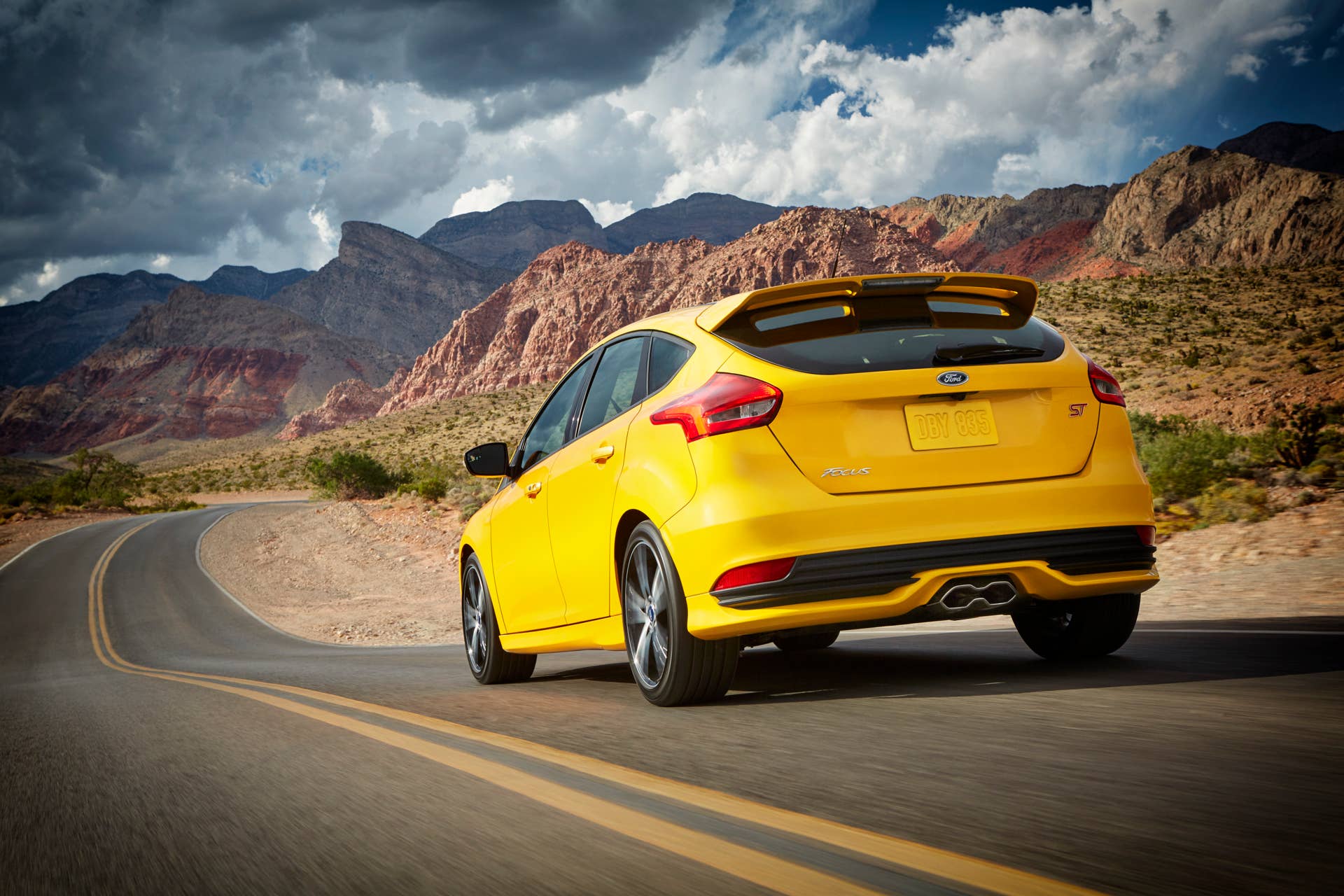
The 2018 Ford Focus ST has a standard curb weight of approximately 3,223 pounds (1,462 kg), varying slightly depending on chosen factory options like the Moonroof or Premium and ST3 equipment packages. This mass directly influences the hot hatchback's agile handling, braking dynamics, and straight-line acceleration metrics.
Evaluating a performance vehicle requires looking beyond raw horsepower figures to examine how mass is distributed and managed. For the final model years of the third-generation Ford Focus ST platform, weight is a critical metric that dictates fuel efficiency, chassis response, track capability, and daily drivability. This guide provides a detailed breakdown of the 2018 Ford Focus ST weight, examining curb weight specifications, weight distribution, structural design influences, and how added cargo or options alter the driving experience.
Overview of the 2018 Ford Focus ST Platform
The 2018 Ford Focus ST sits upon the global C-platform architecture, a structural foundation shared with several compact and midsize Ford vehicles of that era. Designed to accommodate front-wheel-drive configurations while providing rigid torsional stability, this platform balances everyday structural safety with performance capabilities.
Unlike standard Focus models that utilize simpler twist-beam rear suspensions or naturally aspirated engines, the ST variant incorporates unique suspension geometry, performance-tuned steering, and a heavier turbocharged powertrain. The 2.0-liter EcoBoost inline-four engine, coupled with a mandatory six-speed manual transmission, adds a distinct mass signature to the front end of the vehicle. Understanding this architecture helps clarify why hot hatchbacks carry distinct weight penalties compared to standard base-trim hatchbacks.
Verified Curb Weight Specifications
Curb weight refers to the total mass of the vehicle with standard equipment, all necessary operating consumables such as motor oil and coolant, and a full tank of fuel, but without passengers or cargo. For the North American market, the official curb weight for the 2018 Ford Focus ST is rated at 3,223 pounds.
However, factory options can adjust this figure upward. Because curb weight is a baseline measurement, adding high-end comfort and convenience packages introduces additional components that incrementally change the vehicle's mass.
| Trim Level / Package | Base Curb Weight (Approximate) | Notable Added Components |
|---|---|---|
| ST1 (Standard) | 3,223 lbs (1,462 kg) | Cloth Recaro seats, standard audio, baseline electronics |
| ST2 Package | +20 to 40 lbs | Partial leather Recaro seats, SYNC 3 infotainment system, upgraded Sony audio |
| ST3 Package | +60 to 90 lbs | Full leather heated Recaro seats, heated steering wheel, power-adjustable front seats, HID headlamps |
| Optional Moonroof | +40 to 50 lbs | Glass panel, internal sliding sunshade, and heavy-duty roof cassette mechanism |
These incremental additions demonstrate that two identical 2018 Ford Focus ST models can vary in weight by nearly 100 pounds depending strictly on how they were configured at the factory. Enthusiasts tracking their cars or chasing fuel economy often factor these trim-specific weight deltas into their equations.
Weight Distribution and Chassis Dynamics
A vehicle's total mass is only part of the equation; how that mass is distributed across the front and rear axles dictates handling characteristics. Front-wheel-drive hot hatchbacks inherently suffer from front-heavy weight distribution, and the Focus ST is no exception.
The 2018 Ford Focus ST features a front-to-rear weight distribution of approximately 61% front and 39% rear. This heavy front bias stems from several layout realities:
- The placement of the transversely mounted 2.0-liter EcoBoost engine directly over or ahead of the front axle centerline.
- The physical weight of the heavy-duty Getrag 6-speed manual transmission.
- Front-mounted intercoolers, heavy-duty cooling radiators, and complex turbocharging plumbing.
To counteract the natural understeer tendencies created by this front-heavy distribution, Ford Performance engineered specialized chassis tuning. This includes torque vectoring control (which uses braking on the inside front wheel to reduce understeer), variable-ratio steering, and specifically stiffened front and rear stabilizer bars. While the front tires bear a heavy load during hard cornering and acceleration, the relatively lightweight rear end allows the car to rotate eagerly when lifting off the throttle mid-corner.
Comparing the Focus ST to Competitors
To understand the 3,223-pound footprint of the 2018 Ford Focus ST, it is helpful to place it in context against contemporary rivals in the hot hatchback segment. Weight management varies wildly based on drivetrain complexity and structural sizing.
| Make and Model (2018) | Drivetrain | Approximate Curb Weight |
|---|---|---|
| Ford Focus ST | FWD (6-Speed Manual) | 3,223 lbs |
| Volkswagen Golf GTI | FWD (Manual / DSG) | 3,083 to 3,131 lbs |
| Honda Civic Si (Coupe/Sedan) | FWD (6-Speed Manual) | 2,889 to 2,906 lbs |
| Ford Focus RS | AWD (6-Speed Manual) | 3,469 lbs |
| Subaru WRX | AWD (Manual / CVT) | 3,267 to 3,452 lbs |
As illustrated, the Focus ST sits comfortably between lighter competitors like the Honda Civic Si and heavier all-wheel-drive alternatives like its stablemate, the Ford Focus RS. The RS requires an extra 246 pounds to accommodate its complex rear drive unit, driveshaft, and all-wheel-drive differentials. Meanwhile, the Volkswagen Golf GTI manages to undercut the Focus ST by roughly 100 pounds, contributing to a slightly lighter and more nimble feel in tight transitions, though the Focus ST often draws praise for its heavier, more mechanical steering feel.
Payload Capacity, Gross Vehicle Weight Rating (GVWR), and Cargo
Weight specifications extend beyond curb weight. Understanding what the vehicle can safely carry is essential for structural integrity, tire longevity, and suspension performance.
- Gross Vehicle Weight Rating (GVWR): The maximum operating weight allowed for the 2018 Ford Focus ST, including the vehicle's curb weight, all passengers, fuel, and cargo, is approximately 4,285 pounds (1,944 kg).
- Maximum Payload Capacity: By subtracting the base curb weight from the GVWR, the total allowable payload capacity sits at roughly 1,060 to 1,062 pounds. This weight limit applies to the combined mass of all occupants and cargo stashed in the cabin or rear hatch.
- Hatchback Utility vs. Weight: The standard Focus hatchback layout provides 23.8 cubic feet of cargo space behind the rear seats, expanding to 44.8 cubic feet with the rear seats folded flat. While the vehicle can easily swallow bulky items, heavy cargo placed behind the rear axle alters the front-to-rear weight balance, lightening the front steering load and shifting traction dynamics.
Performance Impact: Power-to-Weight Ratio
Weight is directly tied to acceleration. The 2018 Ford Focus ST is powered by a 2.0-liter turbocharged EcoBoost engine producing 252 horsepower and 270 lb-ft of torque.
Calculating the power-to-weight ratio provides a clearer picture of how effectively the engine moves the chassis mass:
- Pounds per Horsepower: With a curb weight of 3,223 pounds and 252 horsepower, the Focus ST carries approximately 12.79 pounds per horsepower.
This favorable ratio allows the hot hatchback to accelerate from 0 to 60 mph in roughly 6.3 seconds. Because maximum torque arrives low in the rev range (at 2,500 rpm), the engine overcomes the vehicle's mass effortlessly from a rolling start, providing responsive throttle delivery during daily commuting and aggressive canyon driving alike.
Weight Reduction Strategies for Enthusiasts
Owners seeking to improve track performance, fuel economy, or handling responsiveness sometimes look for ways to reduce the curb weight of their Focus ST. Because the car is front-heavy, shedding pounds from the front end or reducing rotational mass yields noticeable handling gains.
- Unsprung and Rotational Weight Reduction: Replacing heavy factory stock wheels with lighter flow-formed or forged aluminum wheels significantly reduces rotational inertia. Upgrading to lighter brake rotors or lightweight two-piece setups also aids suspension compliance.
- Exhaust Upgrades: The factory exhaust system includes heavy mufflers and resonators designed to dampen drone. Switching to a mandrel-bent aftermarket cat-back exhaust system often saves 15 to 30 pounds depending on material choices (such as stainless steel versus titanium).
- Interior Modifications: While the ST2 and ST3 leather Recaro seats offer immense comfort, they feature heavy power-adjustment motors and dense bolstering structures. Swapping to fixed-back racing buckets can eliminate considerable weight, though it requires bypassing airbag sensors and losing seat heating functions.
- Rear Seat Delete: For dedicated track-day builds, removing the rear seat bench and associated hardware can drop 40 to 50 pounds from the rear axle, though this alters the vehicle's cargo utility and daily livability.
Drivers must weigh these modifications carefully. Excessive weight stripping can increase cabin noise, reduce structural refinement, and impact resale value.
Frequently Asked Questions
How much does a stock 2018 Ford Focus ST weigh?
The official curb weight of a standard base-trim (ST1) 2018 Ford Focus ST is 3,223 pounds (1,462 kg). Higher trim packages (ST2 and ST3) and optional equipment like a moonroof can increase this baseline figure by 20 to 90 pounds.
Is the 2018 Ford Focus ST heavier than the standard Focus?
Yes. The standard non-ST Ford Focus hatchback (with a naturally aspirated 2.0L engine and automatic transmission) typically weighs around 2,900 to 3,050 pounds. The ST variant carries extra weight due to its heavy-duty 2.0L EcoBoost turbo engine, larger brakes, beefier suspension components, structural chassis reinforcements, and performance cooling systems.
What is the weight distribution of the 2018 Ford Focus ST?
The 2018 Ford Focus ST features a front-biased weight distribution of approximately 61% front and 39% rear. This front-heavy layout is standard for front-wheel-drive performance hatchbacks carrying a heavy transverse-mounted engine and transmission up front.
How does the 2018 Ford Focus ST weight affect its fuel economy?
At 3,223 pounds, the Focus ST is relatively lightweight compared to modern crossovers and all-wheel-drive competitors, helping it achieve an EPA-estimated fuel economy rating of 22 mpg city and 30 mpg highway. Moderate vehicle mass keeps the engine load manageable during steady-state highway cruising.
What is the maximum payload capacity of the 2018 Ford Focus ST?
The maximum payload capacity—which accounts for the combined weight of all passengers, pets, and cargo—is approximately 1,060 pounds, constrained by the vehicle's Gross Vehicle Weight Rating (GVWR) of 4,285 pounds.
Summary Recommendation
Understanding the 3,223-pound curb weight of the 2018 Ford Focus ST helps drivers appreciate its engineering balance. It bridges the gap between lightweight, momentum-based compacts and heavy, traction-dependent all-wheel-drive platforms. When evaluating maintenance, tire wear, or performance modifications, remember that the vehicle's front-heavy bias governs its handling limits. Prioritize quality tires and balanced suspension geometry to maximize the potential of this chassis.