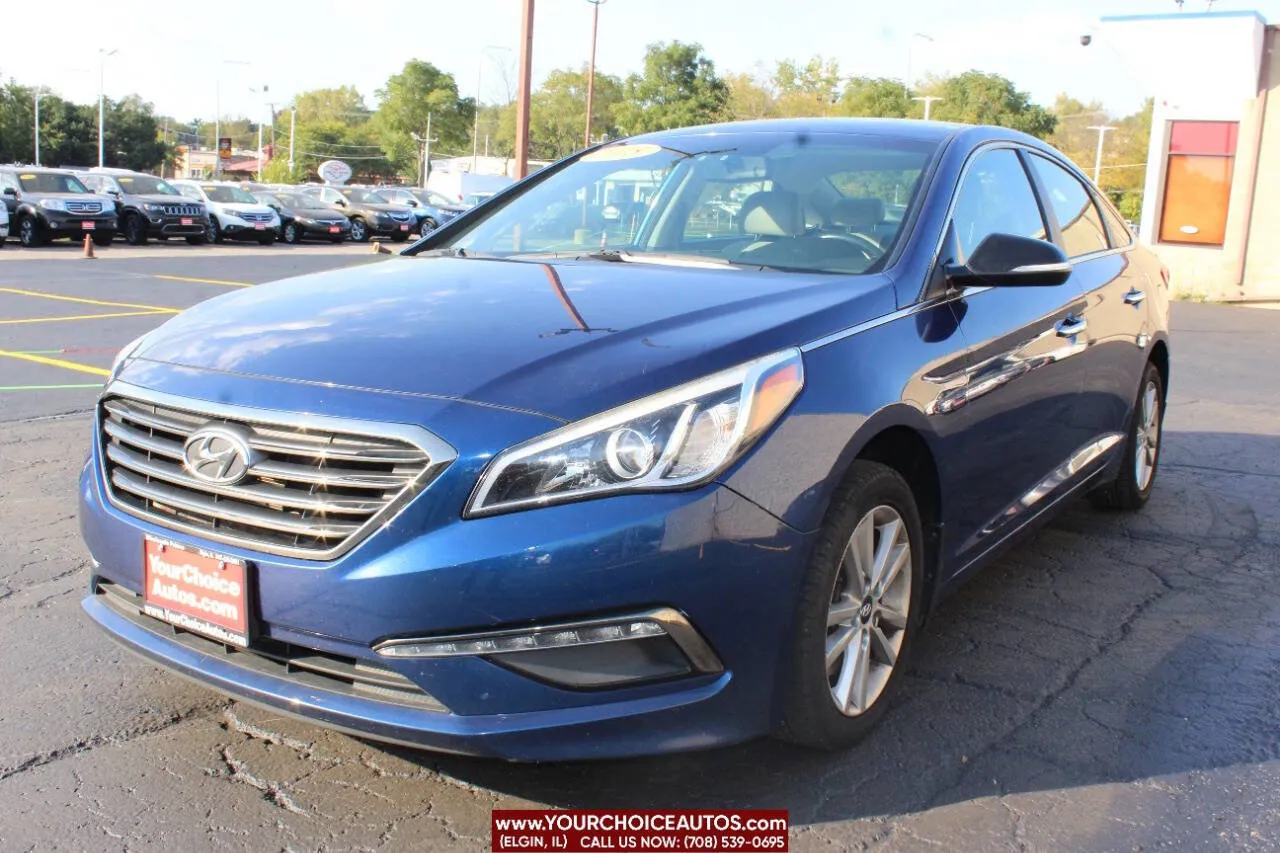
The 2015 Hyundai Sonata Eco Sedan 4D is a specialized trim of Hyundai’s popular midsize family sedan, engineered specifically to prioritize fuel efficiency without sacrificing passenger space or everyday driveability. Powered by a distinctive 1.6-liter turbocharged four-cylinder engine mated to a 7-speed dual-clutch transmission, this variant delivers an EPA-estimated fuel economy of 32 mpg combined, distinguishing it from the standard naturally aspirated 2.4-liter models and the heavier hybrid variants of the same model year.
Introduction to the 2015 Hyundai Sonata Eco
Midsize sedans have long been the backbone of the American family car market, prized for their balanced proportions, ample cabin volume, and predictable road manners. For the 2015 model year, Hyundai rolled out a completely redesigned seventh-generation Sonata, adopting a more mature, European-inspired exterior styling language that the manufacturer dubbed "Fluidic Sculpture 2.0." Within this diverse lineup—which included base SE models, sport-tuned Sport trims, luxury-oriented Limited versions, and fuel-sipping hybrids—the Eco trim carved out a unique engineering niche.
The primary objective behind the 2015 Hyundai Sonata Eco Sedan 4D was to bridge the gap between traditional gasoline-powered midsize sedans and expensive alternative-fuel vehicles. By combining a downsized, forced-induction engine with an advanced dual-clutch transmission, Hyundai aimed to extract higher fuel mileage figures from a standard internal combustion engine platform. This overview examines the engineering decisions, performance dynamics, interior accommodations, safety credentials, and overall ownership value of the 2015 Sonata Eco.
Powertrain and Mechanical Engineering
At the heart of the 2015 Hyundai Sonata Eco is a powertrain combination that set it apart from every other trim in the Sonata family for that model year. While the standard Sonata SE and Limited relied on a 2.4-liter naturally aspirated inline-four, and the Sport 2.0T utilized a punchy 2.0-liter turbo, the Eco model received a smaller 1.6-liter "Gamma" turbocharged inline-four engine.
The 1.6-Liter Turbocharged Engine
This 1.6-liter direct-injection engine produces 177 horsepower at 5,500 rpm and a robust 195 lb-ft of torque available across a remarkably broad band from 1,500 to 4,500 rpm. Because peak torque arrives at such low engine speeds, the Eco model feels responsive and eager away from a stoplight, belying its modest displacement. The use of a twin-scroll turbocharger helps minimize turbo lag, ensuring that power delivery remains linear and predictable during everyday commuting.
The 7-Speed Dual-Clutch Transmission
Pairing the 1.6-liter engine is a 7-speed EcoShift dual-clutch transmission (DCT). Unlike a traditional torque-converter automatic transmission, a dual-clutch setup utilizes two separate clutches to pre-select odd and even gears. This mechanical arrangement minimizes power interruption during shifts, resulting in quicker gear changes and reduced mechanical drag, which directly contributes to the vehicle's superior fuel efficiency.
While dual-clutch transmissions can occasionally exhibit low-speed shudder or hesitation in heavy stop-and-go traffic compared to conventional automatics, Hyundai’s calibration prioritizes smooth engagement. Drivers transitioning from older automatic transmissions will notice crisper gear changes and a direct connection between the accelerator pedal and the drive wheels.
Fuel Economy and Driving Dynamics
Fuel efficiency is the defining characteristic of the 2015 Hyundai Sonata Eco. According to the United States Environmental Protection Agency (EPA), the Eco trim achieves an estimated 28 mpg in the city and 38 mpg on the highway, combining for an impressive 32 mpg in mixed driving conditions. These figures positioned the Eco near the top of its class for non-hybrid midsize sedans during its release year, rivaling dedicated efficiency packages from competitors like the Ford Fusion and Honda Accord.
| Trim Level | Engine | Transmission | EPA City/Highway/Combined (mpg) |
|---|---|---|---|
| Sonata SE / Limited | 2.4L 4-Cylinder | 6-Speed Automatic | 25 / 37 / 29 |
| Sonata Eco | 1.6L Turbo 4-Cylinder | 7-Speed Dual-Clutch | 28 / 38 / 32 |
| Sonata Sport 2.0T | 2.0L Turbo 4-Cylinder | 6-Speed Automatic | 23 / 32 / 26 |
On the road, the driving dynamics of the Eco model mirror the structural improvements made across the entire seventh-generation Sonata lineup. Hyundai engineers increased the use of Advanced High-Strength Steel (AHSS), boosting torsional and bending rigidity by over 40 percent compared to the sixth-generation model. This rigid chassis provides a solid foundation for the MacPherson strut front suspension and multi-link rear suspension.
Steering is managed via a rack-mounted motor-driven power steering (R-MDPS) system, which offers improved precision and weighting over older column-mounted units. While the Eco is tuned primarily for comfort and highway cruising rather than aggressive cornering, it maintains a composed ride over broken pavement, absorbing road irregularities effectively while minimizing cabin intrusion from wind and tire noise.
Interior Comfort, Dimensions, and Cargo Space
One of the most notable achievements of the 2015 Hyundai Sonata redesign was its interior volume. Reclassified by the EPA as a large car due to its expansive cabin dimensions, the Sonata provides passenger space that frequently outmatches direct midsize competitors.
Cabin Layout and Ergonomics
The interior design of the 2015 Sonata adopts a horizontal, driver-centric layout. The center stack is angled slightly toward the driver and features physical buttons and rotary knobs for primary climate and audio controls, favoring tactile usability over purely touchscreen-dependent interfaces. Materials throughout the cabin feature soft-touch plastics, clean graining, and understated metallic accents, creating a refined atmosphere that punches above its price class.
Front-row occupants benefit from supportive seats with ample adjustability. In the Eco trim, standard seating materials consist of durable premium cloth, with power-adjustable driver’s seats commonly equipped. Rear-seat passengers enjoy generous legroom (35.6 inches) and headroom, allowing adults to sit comfortably on long journeys without feeling constrained.
Cargo Capacity
The trunk of the 2015 Hyundai Sonata Eco Sedan 4D offers 16.3 cubic feet of cargo space, which stands as one of the largest capacities in the midsize sedan category. The 60/40 split-folding rear seatbacks fold flat to accommodate longer items, while the available hands-free smart trunk opens automatically when the key fob is detected within close proximity of the rear bumper for more than three seconds—a convenient feature for drivers carrying groceries or luggage.
Exterior Styling and Aerodynamics
The exterior design of the 2015 Sonata Eco embodies Hyundai’s mature aesthetic direction. Eschewing the wild, coupe-like swoops of the previous generation, the seventh-generation Sonata adopted cleaner, more conservative lines that echo European luxury sedans.
The front fascia is anchored by a hexagonal chrome grille flanked by sleek headlamp housings. Aerodynamic efficiency played a critical role in the development of the Eco model specifically; engineers refined underbody paneling, front air curtains, and wheel designs to lower the drag coefficient to 0.29 Cd. These subtle aerodynamic enhancements help the vehicle slice through highway air with minimal resistance, contributing directly to its superior fuel economy ratings.
Safety Ratings and Equipment
Safety was a core priority for Hyundai during the development of the 2015 Sonata platform. The reinforced body structure incorporates structural adhesives and hot-stamped steel components designed to dissipate crash energy away from the passenger cell.
In official testing conducted by the National Highway Traffic Safety Administration (NHTSA), the 2015 Hyundai Sonata earned a 5-star overall safety rating, achieving top marks in frontal and side crash evaluations. Similarly, the Insurance Institute for Highway Safety (IIHS) named the 2015 Sonata a Top Safety Pick+, awarding it the highest rating of "Good" in all crashworthiness tests, including the challenging small-overlap frontal test.
Standard safety equipment across the Sonata lineup includes:
- Electronic Stability Control (ESC) and Traction Control System (TCS)
- Anti-lock Braking System (ABS) with Electronic Brake-force Distribution (EBD) and Brake Assist
- Seven airbags, including a driver’s knee airbag
- Tire Pressure Monitoring System (TPMS) with individual tire pressure display
- Rearview camera (standard or widely equipped via package)
Available advanced driver-assistance technologies for the model year included Blind Spot Detection with Rear Cross-Traffic Alert and Lane Change Assist, as well as Forward Collision Warning and Lane Departure Warning systems.
Ownership Considerations: Reliability, Maintenance, and Value
Evaluating a pre-owned 2015 Hyundai Sonata Eco requires a balanced look at long-term ownership costs, common maintenance items, and historical reliability data.
Powertrain Reliability
The 1.6-liter turbocharged engine and 7-speed dual-clutch transmission represent a distinct mechanical setup compared to the high-volume 2.4-liter models. While the 1.6T engine has generally proven robust, regular maintenance—particularly timely oil changes using manufacturer-specified synthetic oil—is vital to prevent carbon buildup on the intake valves and to protect the turbocharger bearings.
The 7-speed dual-clutch transmission requires an adaptation period for new drivers accustomed to torque-converter automatics. Prospective buyers should test-drive the vehicle to verify smooth engagement in stop-and-go traffic, as clutch actuator calibration or software updates occasionally require attention over high mileage.
Warranty and Resale Value
When purchased new, Hyundai provided its industry-leading 10-year/100,000-mile powertrain warranty, alongside a 5-year/60,000-mile comprehensive warranty. For secondhand buyers in 2026, original powertrain warranties typically do not transfer fully to subsequent owners unless purchased through a Certified Pre-Owned (CPO) program or governed by specific regional exceptions, meaning buyers should verify remaining coverage or budget for independent mechanical maintenance.
Frequently Asked Questions
What makes the Eco trim different from the standard 2015 Hyundai Sonata?
The Eco trim replaces the standard 2.4-liter naturally aspirated engine and 6-speed automatic transmission with a 1.6-liter turbocharged four-cylinder engine and a 7-speed dual-clutch transmission. It also incorporates unique aerodynamic tuning to achieve higher fuel economy ratings.
What kind of fuel economy does the 2015 Sonata Eco get?
The EPA rates the 2015 Sonata Eco at 28 mpg in the city, 38 mpg on the highway, and 32 mpg combined, making it one of the most efficient non-hybrid choices in its class.
Does the 2015 Hyundai Sonata Eco require premium gasoline?
No. The 1.6-liter turbocharged engine is engineered to run on standard regular unleaded (87 octane) gasoline, helping lower everyday operating costs.
How much cargo space does the Sonata Eco provide?
The vehicle offers 16.3 cubic feet of trunk space, which ranks among the largest cargo capacities in the midsize sedan category. 60/40 split-folding rear seats further expand utility for longer objects.
Is the 2015 Hyundai Sonata Eco safe?
Yes. The 2015 Sonata earned a 5-star overall safety rating from the NHTSA and was designated a Top Safety Pick+ by the IIHS, supported by a rigid high-strength steel chassis and comprehensive airbag systems.
Conclusion and Next Actions
The 2015 Hyundai Sonata Eco Sedan 4D represents a well-executed engineering exercise in maximizing internal combustion efficiency without compromising the core attributes of a spacious family sedan. By coupling a torque-rich 1.6-liter turbo engine with an efficient dual-clutch transmission, Hyundai delivered a vehicle that excels at highway cruising while offering generous passenger and cargo room. For buyers evaluating used midsize sedans, verifying the maintenance history of the transmission and turbocharger ensures a reliable ownership experience that capitalizes on the model's inherent strengths.