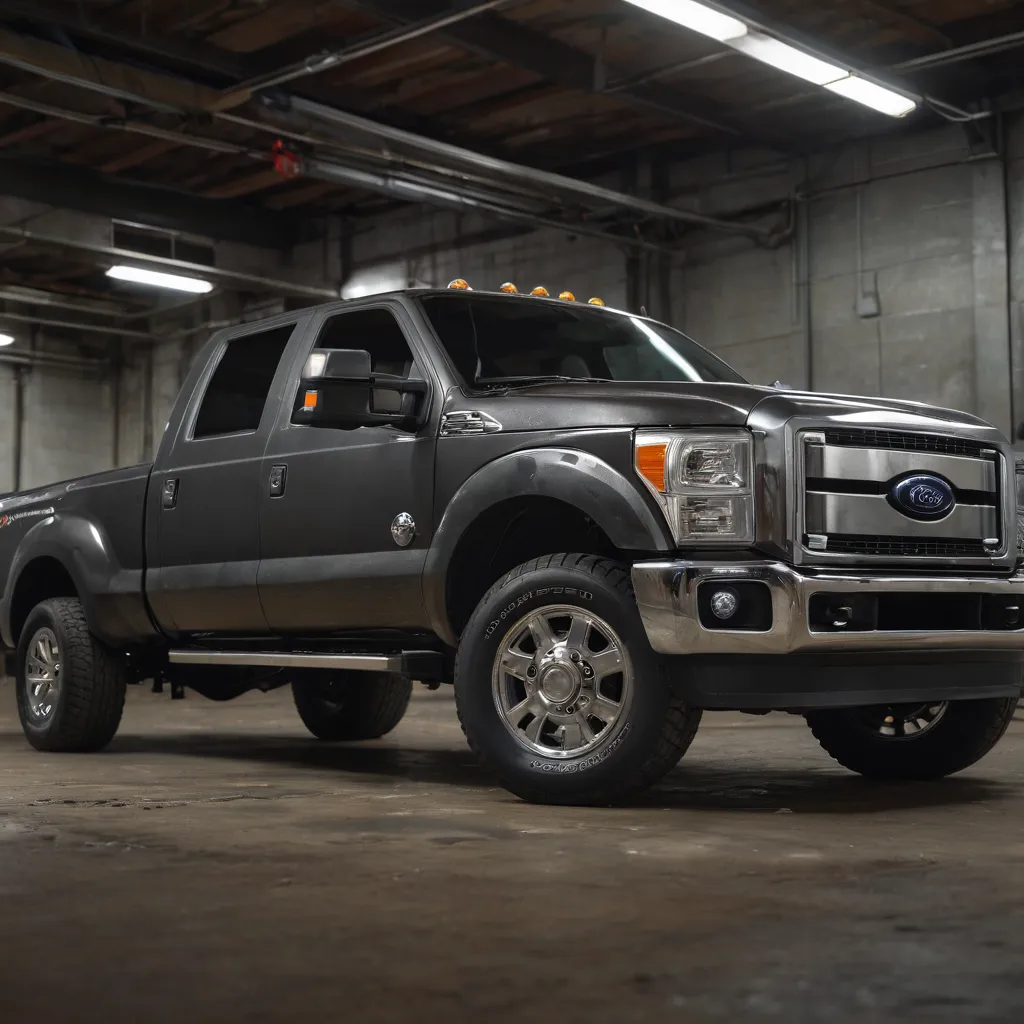
The 2015 Ford F-350 Super Duty, equipped with the 6.7-liter Power Stroke V8 Turbo Diesel engine, delivers immense heavy-load power, boasting 440 horsepower and a massive 860 lb-ft of torque. Engineered specifically for commercial towing and heavy hauling, this platform integrates a robust chassis, high-capacity cooling systems, and an integrated exhaust brake to manage extreme loads safely and efficiently.
Introduction to the 2015 Ford F-350 Super Duty Diesel
Heavy-duty truck buyers demand unwavering reliability, immense towing capacity, and predictable performance under harsh working conditions. When Ford introduced the upgraded 6.7-liter Power Stroke V8 Turbo Diesel for the 2015 model year, it addressed these demands head-on. Positioned squarely in the heavy commercial and recreational towing market, the 2015 Ford F-350 diesel was built to bridge the gap between everyday utility and heavy industrial capability.
Understanding what makes this truck a heavyweight contender requires examining its powertrain upgrades, structural engineering, suspension architecture, and real-world towing dynamics. Whether used on construction sites, agricultural operations, or for cross-country fifth-wheel hauling, the 2015 F-350 diesel remains a benchmark for heavy-load management.
The Powerhouse: 6.7L Power Stroke V8 Turbo Diesel
At the heart of the 2015 Ford F-350's heavy-load capability is its second-generation 6.7-liter Power Stroke V8 Turbo Diesel engine. For the 2015 model year, Ford engineers implemented substantial design changes over the previous iterations, significantly boosting output and enhancing mechanical durability.
Key Engine Specifications and Engineering Upgrades
The 2015 updates pushed engine performance to 440 horsepower at 2,800 RPM and a towering 860 lb-ft of torque at just 1,600 RPM. This low-end torque delivery is critical for moving heavy trailers from a dead stop on steep inclines without straining the drivetrain.
- Compactized Graphite Iron (CGI) Block: The engine block utilizes CGI, providing exceptional structural rigidity while remaining lighter than traditional cast iron, helping manage internal pressures.
- Garrett GT3252VA Turbocharger: Ford moved to a single, larger turbocharger mounted directly to the engine's exhaust deck in a reverse-flow layout. This design shortens the intake and exhaust paths, drastically reducing turbo lag and improving throttle response under load.
- High-Pressure Common Rail Fuel System: Operating at up to 30,000 psi, the fuel system utilizes advanced piezo fuel injectors capable of multiple injection events per combustion cycle, ensuring clean, efficient burns and reduced engine noise.
- Dual-Side Exhaust Manifolds: The layout optimizes exhaust gas flow directly into the turbocharger turbine wheel, maximizing energy capture from exhaust gases.
Cooling and Thermal Management
Hauling heavy loads generates immense heat under the hood. The 2015 F-350 diesel features a sophisticated cooling system with dual radiators—one for high-temperature engine coolant and a secondary low-temperature circuit dedicated to cooling charge air and transmission fluids. This prevents thermal degradation during sustained towing climbs in high ambient temperatures.
Transmission and Drivetrain Integration
An engine with 860 lb-ft of torque requires an equally robust transmission to transfer power to the rear wheels or all four corners. Ford paired the 6.7L Power Stroke with its proven TorqShift 6-speed SelectShift automatic transmission.
TorqShift 6-Speed Automatic Architecture
Built internally by Ford, the TorqShift transmission features heavy-duty gear sets, a robust torque converter, and a selectable manual shift mode.
- Tow/Haul Mode: Engaging Tow/Haul mode alters the transmission shift scheduling to reduce gear hunting when climbing grades. It utilizes intelligent engine braking on downhill descents by downshifting automatically to use engine compression, saving the physical service brakes from overheating.
- Live-Drive Power Take-Off (PTO): For commercial operators running auxiliary equipment like hydraulic pumps, utility cranes, or generators, the TorqShift transmission includes a standard mobile-mode PTO provision that accesses engine power directly from the torque converter turbine shaft.
Chassis, Suspension, and Load-Bearing Capacity
Power is meaningless if the chassis cannot handle the weight. The 2015 F-350 is built on a fully boxed high-strength steel frame that forms the backbone of its towing and payload ratings.
Axles and Suspension Setup
Depending on the single-rear-wheel (SRW) or dual-rear-wheel (DRW / dually) configuration, the truck utilizes heavy-duty solid front axles with coil-spring suspension and rear leaf springs matched with staggered shock absorbers.
- DRW Advantage: Selecting the dual-rear-wheel configuration dramatically increases lateral stability when towing high-profile fifth-wheel or gooseneck trailers in crosswinds.
- Stiff Frame Rails: The high-strength steel frame utilizes up to 10 crossmembers, minimizing frame flex and torsion twisting under eccentric tongue weights.
Towing and Payload Metrics
The heavy load power of the 2015 F-350 translates into impressive capability charts. Depending on axle ratios (such as the standard 3.55 or optional 4.10 electronic locking differentials), cab configurations (Regular, SuperCab, Crew Cab), and bed lengths, maximum towing capacities reach up to 26,500 pounds for conventional trailers and over 26,000 pounds for fifth-wheel/gooseneck setups. Maximum payload ratings exceed 4,000 pounds on properly equipped models.
| Metric / Feature | Single Rear Wheel (SRW) | Dual Rear Wheel (DRW) |
|---|---|---|
| Max Conventional Towing | Up to 15,000 lbs | Up to 18,500 lbs |
| Max Fifth-Wheel / Gooseneck | Up to 15,900 lbs | Up to 26,500 lbs |
| Max Payload Capacity | Up to 4,040 lbs | Up to 4,160 lbs |
| Standard Brake Rotor Size | 15.35 in (Front) / 15.39 in (Rear) | 15.35 in (Front) / 15.39 in (Rear) |
| Standard Alternator Output | Dual 157-amp / 357-amp optional | Dual 157-amp / 357-amp optional |
Braking and Safety Technologies for Heavy Loads
Managing heavy loads safely requires robust stopping power and stability controls. The 2015 F-350 diesel incorporates heavy-duty four-wheel vented disc brakes with anti-lock braking systems (ABS) designed specifically for heavy-duty commercial applications.
Standard and Integrated Safety Systems
- Trailer Sway Control: Works in conjunction with AdvanceTrac with Roll Stability Control (RSC) to sense trailer sway and selectively apply vehicle brakes and reduce engine power to bring the trailer back under control.
- Hill Start Assist: Prevents the truck from rolling backward when stopped on an incline between the release of the brake pedal and the depression of the accelerator.
- Exhaust Brake: Integrated directly into the turbocharger variable vanes, the dashboard-activated exhaust brake creates backpressure in the engine cylinders, using compression resistance to slow the vehicle down without wearing out friction brake pads.
Operational Considerations and Maintenance
Operating a heavy-duty diesel truck requires adhering to strict maintenance schedules and understanding the operational nuances of modern emissions equipment.
Emissions and Aftertreatment Systems
The 2015 F-350 diesel utilizes a diesel particulate filter (DPF) to trap soot and a selective catalytic reduction (SCR) system that injects Diesel Exhaust Fluid (DEF) to reduce nitrogen oxide emissions.
- DPF Regeneration: During extended highway driving, the truck automatically performs passive regeneration. Heavy idling or short trips can necessitate active regeneration, requiring exhaust temperatures to rise to burn off accumulated soot.
- DEF Consumption: DEF fluid must be periodically refilled via the dedicated blue filler cap located next to the diesel fuel inlet. Consumption rates vary based on towing loads and engine work rates.
Routine Maintenance Requirements
- Fuel Filtration: The dual fuel filter system (one primary water separator and one secondary under-hood filter) must be drained and replaced according to mileage intervals to protect the high-pressure fuel injectors from water and particulate contamination.
- Oil Capacity: The 6.7L Power Stroke holds approximately 13 quarts of high-quality CJ-4 or CK-4 synthetic diesel engine oil, requiring regular monitoring and filter replacements.
Frequently Asked Questions
What is the towing capacity of a 2015 Ford F-350 diesel?
The maximum towing capacity depends heavily on the specific configuration (SRW vs. DRW, cab size, and axle ratio). Conventional towing reaches up to 18,500 pounds, while fifth-wheel and gooseneck towing capacities peak at up to 26,500 pounds when properly equipped.
How does the 2015 Power Stroke turbocharger differ from earlier models?
The 2015 model introduced a single, larger Garrett turbocharger mounted in a reverse-flow configuration directly to the exhaust deck. This design shortens the intake and exhaust paths, reducing turbo lag and increasing overall reliability compared to the previous twin-turbo layout used in 2011–2014 models.
Does the 2015 F-350 diesel require Diesel Exhaust Fluid (DEF)?
Yes. Like all modern clean-diesel trucks of its era, the 2015 F-350 uses an SCR catalyst system requiring Diesel Exhaust Fluid to meet federal emissions standards. The vehicle will alert the driver when DEF levels are low and impose speed restrictions if the tank is completely emptied.
What causes turbo lag in this generation, and how was it minimized?
Turbo lag is the delay between pressing the accelerator pedal and feeling boost pressure build. Ford minimized this in the 2015 model by switching to a single variable-geometry turbocharger placed closer to the exhaust ports, which spools up significantly faster than older remote-mounted systems.
Is the 2015 Ford F-350 diesel good for daily driving?
While it can be driven daily, the F-350 is a heavy commercial-grade vehicle. Its firm ride quality when unloaded, large turning radius, and length make parking and urban maneuvering challenging compared to light-duty trucks. It performs best when put to work hauling or towing heavy loads regularly.
Conclusion and Next Actions
The 2015 Ford F-350 diesel remains a powerhouse capable of handling demanding heavy-load tasks with confidence. When evaluating or purchasing a used model, verify the service history, check engine hours relative to mileage, inspect the condition of the emissions aftertreatment system, and ensure the axle ratio aligns with your intended towing requirements. Prioritize professional mechanical inspections focusing on the fuel system and turbocharger to confirm reliable, long-term performance.