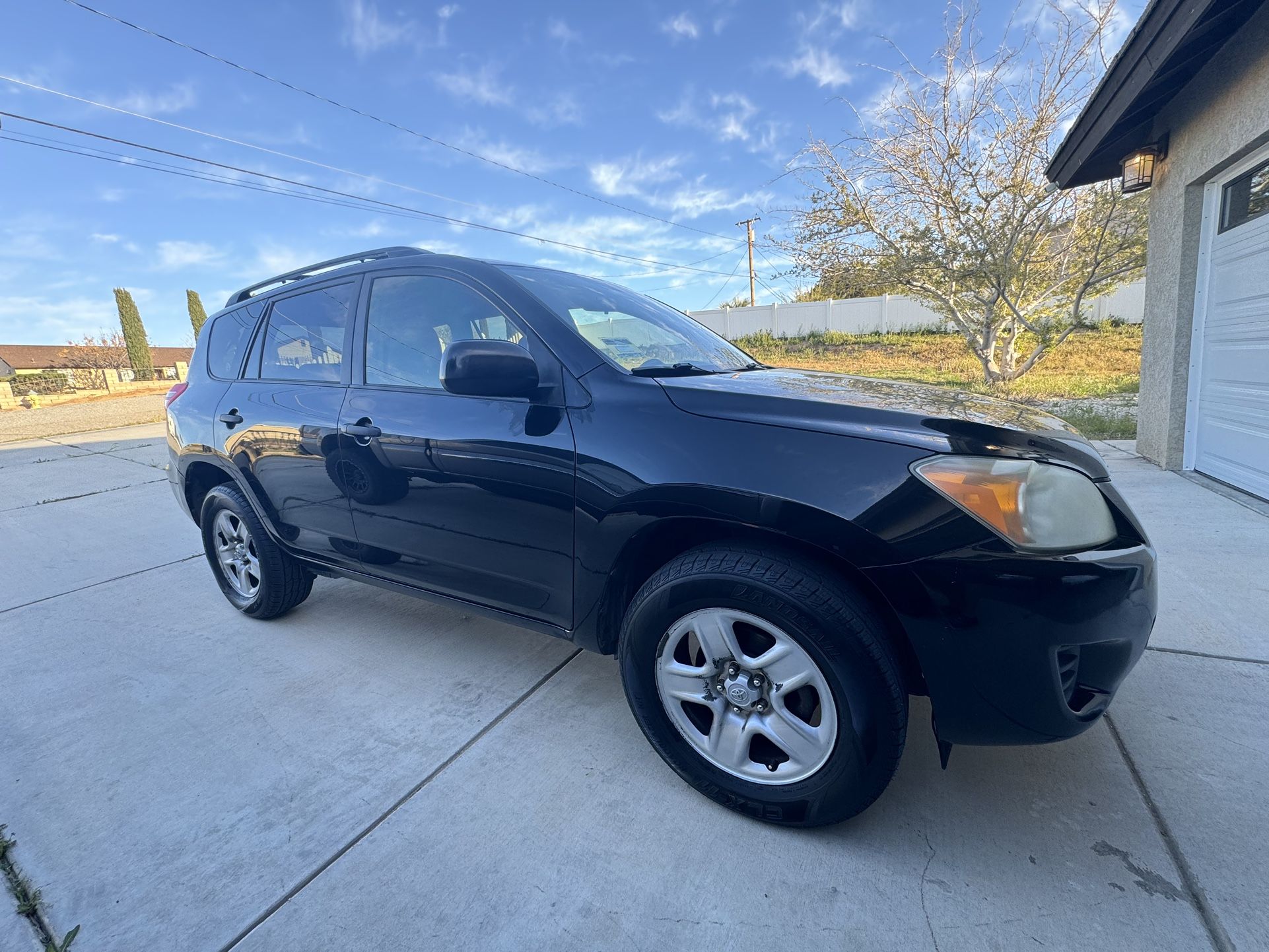
The 2009 Toyota RAV4 offers a reliable and practical driving experience for everyday commuting and family errands, provided buyers carefully choose between the available 2.5-liter four-cylinder and 3.5-liter V6 engines, both of which require an awareness of known mechanical issues such as excessive oil consumption and water pump failures.
Selecting a used vehicle for daily driving requires balancing mechanical durability, fuel economy, maintenance costs, and cabin utility. The 2009 model year represents a pivotal point for the third-generation Toyota RAV4, as it introduced a brand-new four-cylinder engine alongside a carryover V6 option. For drivers seeking a dependable compact SUV to handle daily commuting, school drop-offs, and weekend grocery runs, understanding the performance profile and chronic issues of these powerplants is essential for long-term satisfaction.
Overview of the Third-Generation Toyota RAV4 Platform
The 2009 Toyota RAV4 sits firmly in the middle of the vehicle's third generation, which spanned from the 2006 through 2012 model years. Known for offering a third-row seating option (though quite cramped) and side-hinged rear cargo doors, this generation established the crossover SUV as a primary family vehicle choice. The platform was designed to provide car-like driving dynamics while maintaining optional four-wheel drive capability for adverse weather conditions.
For everyday use, the suspension tuning strikes a balance between ride comfort and body control. The chassis absorbs typical urban potholes and highway expansion joints reasonably well, though the ride can feel firm compared to newer crossovers. Cabin ergonomics prioritize function over luxury, featuring hard-wearing plastics and straightforward climate and audio controls that withstand years of daily wear.
Engine Options: 2.5L Four-Cylinder vs. 3.5L V6
The 2009 model year brought a major mechanical update under the hood, replacing the older 2.4-liter 2AZ-FE engine with a newly developed 2.5-liter power plant in the base and mid-tier trims. Meanwhile, the top-tier trims retained the robust 3.5-liter V6, creating a distinct split in driving character and mechanical temperament.
The 2.5L 2AR-FE Four-Cylinder Engine
Introduced for the 2009 model year, the 2.5-liter four-cylinder engine produces 179 horsepower and 172 lb-ft of torque. Paired with a 6-speed automatic transmission, this configuration delivers responsive throttle tip-in and adequate power for city driving and highway merging.
- Fuel Economy: Generally achieves an EPA-estimated 22 mpg city and 28 mpg highway for front-wheel-drive models, making it economical for high-mileage daily commuters.
- Refinement: Employs dual VVT-i (Variable Valve Timing with intelligence) to smooth out the powerband, though it can still sound buzzy under hard acceleration compared to the V6.
- Reliability Reputation: Unlike its predecessor, the 2.5L 2AR-FE is largely considered bulletproof, avoiding the catastrophic oil consumption defects that plagued the 2.4L engine from 2006 to 2008.
The 3.5L 2GR-FE V6 Engine
For drivers prioritizing effortless acceleration and highway passing power, the 3.5-liter V6 produces an impressive 269 horsepower and 246 lb-ft of torque, mated to a 5-speed automatic transmission.
- Performance: Accelerates from zero to 60 mph in under seven seconds, rivaling many sports sedans of its era and easily handling fully loaded cabin and cargo scenarios.
- Fuel Economy: Naturally sacrifices some efficiency, returning roughly 19 mpg city and 26 mpg highway for front-wheel-drive variants.
- Reliability Reputation: Highly regarded for mechanical longevity, capable of surpassing 200,000 miles with basic fluid maintenance, though it requires attention to specific accessory components.
| Engine Specification | 2.5L Four-Cylinder (2AR-FE) | 3.5L V6 (2GR-FE) |
|---|---|---|
| Horsepower | 179 hp @ 6,000 rpm | 269 hp @ 6,200 rpm |
| Torque | 172 lb-ft @ 4,100 rpm | 246 lb-ft @ 4,700 rpm |
| Transmission | 6-speed automatic | 5-speed automatic |
| EPA Est. Fuel Economy (FWD) | 22 city / 28 hwy | 19 city / 26 hwy |
| Primary Daily Advantage | Lower fuel consumption, newer design | Effortless power, smooth highway cruising |
Everyday Drivability, Ergonomics, and Utility
Evaluating a vehicle for daily use extends beyond engine specifications into how the driver interacts with the machine during routine tasks. The 2009 RAV4 offers high seating visibility, intuitive outward sightlines, and a tight turning radius that simplifies parallel parking in congested urban environments.
The interior layout accommodates daily errands with clever storage solutions, including a dual glove compartment, deep door pockets, and a spacious center console. The rear seats feature a sliding and reclining function, allowing owners to prioritize legroom or cargo space depending on daily hauling needs. The side-hinged rear door can be cumbersome when parked tightly against a wall or another vehicle, a distinct ergonomic quirk that daily drivers must adapt to compared to traditional top-hinged hatchbacks.
Common Mechanical Issues and Maintenance Realities
While Toyota's reputation for longevity holds true for the 2009 RAV4, aging vehicles require proactive maintenance and awareness of known trouble spots. Buyers evaluating a used model should inspect service records for specific historical failure points.
Water Pump Failure on the V6 Engine
The 3.5-liter V6 engine is known for premature water pump failure. The factory water pump can develop bearing noise, coolant leaks, or outright failure, often requiring expensive replacement because the component is labor-intensive to access within the engine bay. Signs of failure include a whining noise from the accessory belt area or pink coolant crust accumulating near the passenger-side inner fender.
Steering Shaft Clunk
A common mechanical annoyance across third-generation RAV4 models is the intermediate steering shaft clunk. Drivers often notice a knocking sensation or sound in the steering wheel when turning at low speeds or driving over rough pavement. While rarely a safety-critical failure, correcting it requires replacing the intermediate steering shaft assembly.
Suspension Component Wear
Given the age of these vehicles, original suspension components such as struts, control arm bushings, and sway bar links frequently require replacement. Worn suspension degrades ride quality, causes uneven tire wear, and introduces clunking noises over bumps, making a pre-purchase inspection by a qualified mechanic crucial.
Operating Costs and Ownership Economics
For everyday drivers, total cost of ownership encompasses fuel, insurance, routine maintenance, and depreciation. Because the 2009 RAV4 has largely depreciated into its practical utility value, the primary financial considerations involve ongoing upkeep rather than rapid market loss.
Routine maintenance is straightforward and inexpensive. Oil changes, spark plug replacements, and brake pad swaps can be performed by most independent repair shops without specialized dealer software. Premium or specialty fluids are rarely required, keeping parts costs manageable. Insurance premiums remain moderate due to the vehicle's strong safety crash ratings from its production era and standard anti-lock braking systems.
Practical Recommendations for Daily Commuters
Purchasing a 2009 RAV4 for daily use requires a methodical approach to vehicle selection. Buyers should prioritize maintenance history over absolute low mileage, as a well-maintained vehicle with 150,000 miles often outperforms a neglected example with 100,000 miles.
- Verify Engine Type: Confirm whether the vehicle features the 2.5L four-cylinder or 3.5L V6 by checking the engine bay or VIN decoder, as maintenance profiles differ.
- Inspect for Leaks: Check the front timing cover and water pump areas for oil or coolant seepage during a pre-purchase inspection.
- Test All Electronics: Ensure power windows, door locks, and the air conditioning compressor function correctly, as aging electrical relays can occasionally fail.
Frequently Asked Questions
Is the 2009 Toyota RAV4 good for daily commuting?
Yes, the 2009 RAV4 excels as a daily commuter due to its upright seating position, excellent outward visibility, reliable mechanical foundation, and efficient four-cylinder engine option that handles stop-and-go traffic comfortably.
Which 2009 RAV4 engine is more reliable for long-term use?
Both engines are exceptionally durable, but the 2.5L four-cylinder avoids the expensive water pump replacement vulnerability inherent to the 3.5L V6, making the four-cylinder slightly cheaper to maintain over high mileage.
Does the 2009 RAV4 require premium fuel?
No, both the 2.5-liter four-cylinder and 3.5-liter V6 engines are designed to run on standard 87-octane regular unleaded gasoline, helping to keep daily fuel operational costs affordable.
How many miles can a 2009 RAV4 engine last?
With proper routine maintenance, including regular oil changes and timely cooling system service, both the four-cylinder and V6 engines routinely exceed 200,000 to 250,000 miles without major internal overhauls.
What are the main signs of a failing water pump on the V6 model?
Warning signs include a high-pitched whining noise originating from the accessory belt area, visible pink coolant residue on nearby engine components, or unexplained coolant loss in the overflow reservoir.
Is the four-wheel-drive system on the 2009 RAV4 reliable?
The electronic on-demand four-wheel-drive system is generally robust, utilizing an electromagnetic coupling on the rear differential, though fluid changes every 60,000 miles are recommended to ensure long-term actuator longevity.