The 2009 Chevrolet TrailBlazer SS stands as a unique high-water mark in American automotive history, combining truck-based utility with Corvette-derived V8 performance. Beneath its subtle exterior lies a specialized chassis, a lowered suspension, and the formidable LS2 engine, making it a highly sought-after modern classic for enthusiasts seeking muscle-car capability in an SUV package.
Introduction and Historical Context of the TrailBlazer SS
The Chevrolet TrailBlazer SS was introduced for the 2006 model year, serving as General Motors' high-performance answer to segment-busting performance SUVs like the Jeep Grand Cherokee SRT8. Developed by GM’s Special Vehicle Operations (SVO) division, the TrailBlazer SS was designed to provide sports-car acceleration and handling while retaining towing utility.
By 2009, which would mark the final year of production for both the TrailBlazer line and its GMT360 platform, the vehicle had already established a dedicated following. Unlike standard midsize SUVs of the era, the SS variant was not merely an aesthetic appearance package. It received extensive mechanical, structural, and powertrain modifications that completely transformed its driving dynamics. Understanding the 2009 Chevrolet TrailBlazer SS requires a close examination of its factory specifications, engineering compromises, and the specific performance hardware that separated it from ordinary base-model TrailBlazers.
Powertrain and Engine Architecture: The LS2 V8
At the heart of the 2009 Chevy TrailBlazer SS is the LS2 6.0-liter small-block V8 engine. Sharing its core architecture with the C6 Chevrolet Corvette and the Pontiac GTO of the same era, this aluminum-block powerplant delivers impressive power figures for a mid-2000s utility vehicle.
- Displacement: 5,967 cc (364 cubic inches)
- Block and Head Material: Cast aluminum block with deep-skirt design; aluminum cylinder heads
- Bore x Stroke: 4.00 in × 3.62 in (101.6 mm × 92.0 mm)
- Compression Ratio: 10.9:1
- Horsepower: 395 hp at 6,000 RPM
- Torque: 400 lb-ft at 4,000 RPM
- Valvetrain: Overhead valve (OHV), 2 valves per cylinder, pushrod design with hydraulic roller lifters
- Fuel Delivery: Sequential multi-port electronic fuel injection (SFI) requiring premium unleaded fuel (91 octane or higher recommended)
The LS2 engine in the TrailBlazer SS differs slightly from its Corvette application due to packaging constraints. It utilizes a unique aluminum intake manifold and a specific exhaust manifold design to clear the GMT360 front crossmember and steering shaft. The oil pan is also uniquely cast with a pass-through design to accommodate the front differential housing on all-wheel-drive variants.
Transmission, Drivetrain, and Axle Ratios
Power is routed from the LS2 engine through a heavy-duty, electronically controlled four-speed automatic transmission. While contemporaries were beginning to adopt five- and six-speed units, the robust nature of the GM 4L70E transmission was deemed capable of handling the high torque output of the LS2 under heavy loads.
- Transmission Model: GM Hydra-Matic 4L70E 4-speed automatic (M70 option code) with overdrive and tow/haul mode
- Torque Converter: High-stall speed torque converter tailored specifically for the SS application to enhance off-the-line launch characteristics
- Drivetrain Configurations: Available in both Rear-Wheel Drive (RWD) and All-Wheel Drive (AWD)
- Transfer Case (AWD Models): BorgWarner 4493 single-speed full-time AWD system with a torque split biased toward the rear wheels
- Rear Axle: Corporate 9.5-inch semi-floating rear differential housing
- Axle Ratio: 4.10:1 final drive ratio standard across all configurations, maximizing acceleration at the expense of highway fuel economy
Suspension, Chassis, and Handling Dynamics
The chassis engineering of the TrailBlazer SS represents a significant departure from standard TrailBlazer models. Engineers focused heavily on reducing body roll and improving high-speed stability.
- Front Suspension: Independent short-long arm (SLA) coil-over-shock setup with a specific stabilizer bar, stiffer coil springs, and uniquely valved monotube dampers.
- Rear Suspension: Five-link solid axle configuration with air-assisted load-leveling springs (RWD models) or coil springs (AWD models), paired with a solid stabilizer bar and stiffer bushings.
- Ride Height: Factory lowered by approximately 1 inch compared to standard TrailBlazer models, giving the vehicle a menacing stance and a lower center of gravity.
- Steering System: Power-assisted rack-and-pinion steering with a quickened ratio, tuned specifically for responsive feedback at highway speeds.
Comprehensive Technical Specifications Table
To provide a clear, side-by-side reference for prospective buyers, collectors, and automotive technicians, the following table outlines the core technical specifications of the 2009 Chevrolet TrailBlazer SS across its primary configurations.
| Technical Parameter | Rear-Wheel Drive (RWD) | All-Wheel Drive (AWD) |
|---|---|---|
| Engine Type | 6.0L V8 LS2 OHV | 6.0L V8 LS2 OHV |
| Horsepower | 395 hp @ 6,000 RPM | 395 hp @ 6,000 RPM |
| Torque | 400 lb-ft @ 4,000 RPM | 400 lb-ft @ 4,000 RPM |
| Transmission | 4-speed automatic (4L70E) | 4-speed automatic (4L70E) |
| Final Drive Ratio | 4.10:1 | 4.10:1 |
| 0–60 MPH Time (Estimated) | ~5.7 seconds | ~5.4 seconds |
| Curb Weight | ~4,680 lbs | ~4,870 lbs |
| Towing Capacity | Up to 6,800 lbs | Up to 6,600 lbs |
| Fuel Tank Capacity | 22.0 gallons | 22.0 gallons |
| EPA Fuel Economy (City/Hwy) | 12 / 16 mpg | 12 / 15 mpg |
Brakes, Wheels, and Tires
Stopping a nearly 5,000-pound SUV traveling at high speeds requires substantial braking hardware. The TrailBlazer SS is equipped with heavy-duty disc brakes derived from GM's larger truck platforms.
- Front Brakes: 12.8-inch vented disc rotors with dual-piston sliding calipers
- Rear Brakes: 13.4-inch vented disc rotors with single-piston sliding calipers
- Brake System Features: Anti-lock Braking System (ABS) with Panic Brake Assist and electronic brake-force distribution (EBD)
- Wheels: Unique 20x8-inch polished aluminum six-spoke wheels
- Tires: Goodyear Eagle RS-A P255/50R20 V-rated all-season performance tires standard front and rear
Exterior Dimensions and Aerodynamics
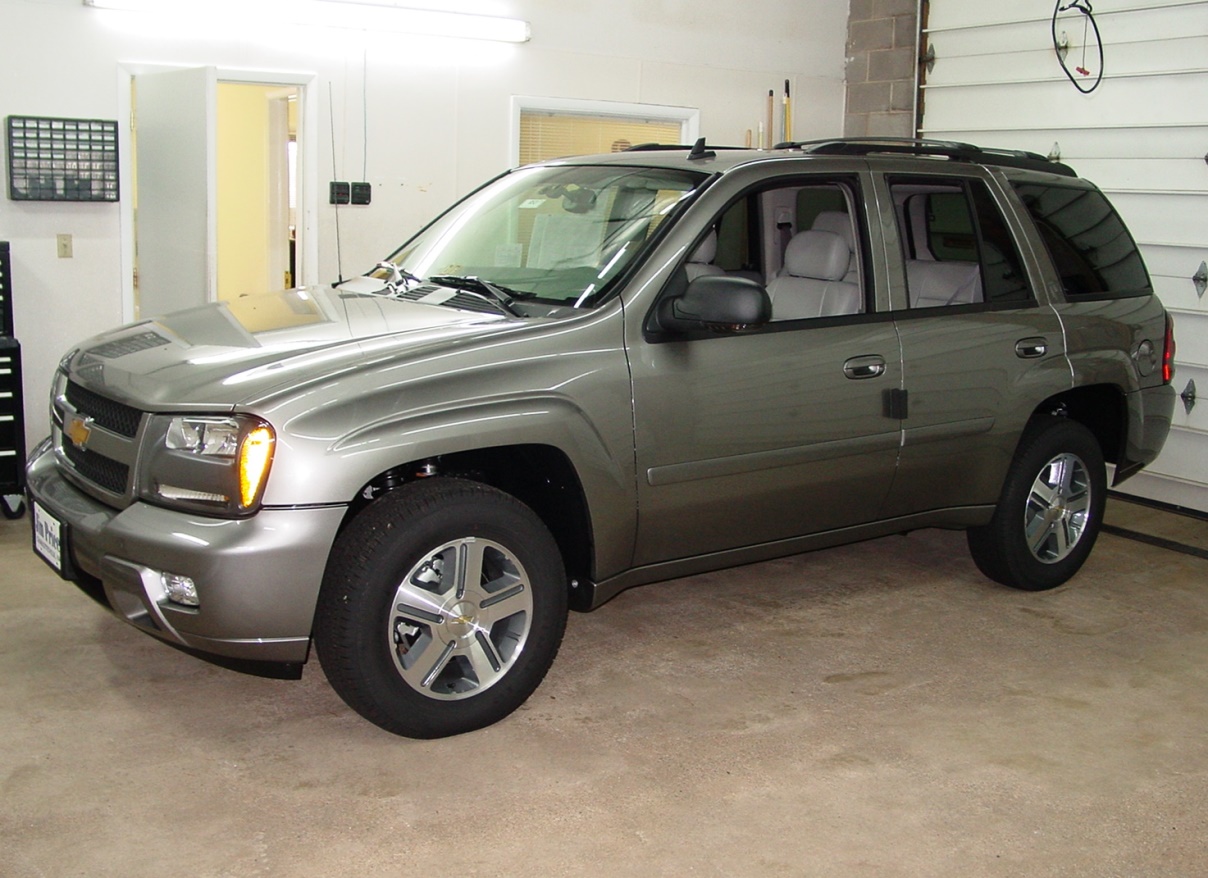
The exterior design of the 2009 TrailBlazer SS balances muscular aggression with aerodynamic cleanliness. Subtle cues distinguish it from lower trim levels.
- Wheelbase: 113.0 inches
- Overall Length: 191.8 inches
- Overall Width: 74.7 inches
- Overall Height: 71.9 inches (approximate, varies slightly with load-leveling suspension)
- Track Width (Front/Rear): 63.4 inches / 63.8 inches
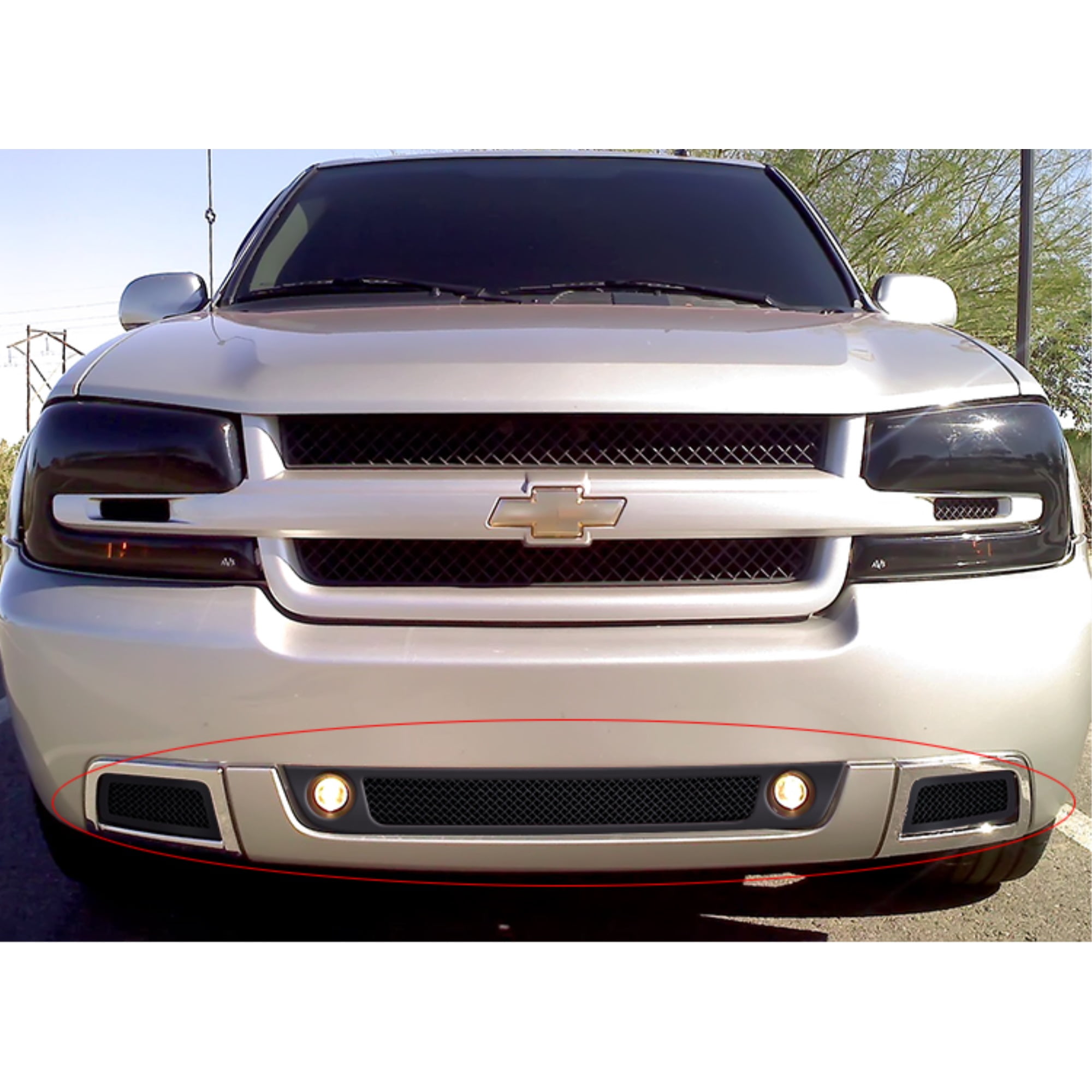
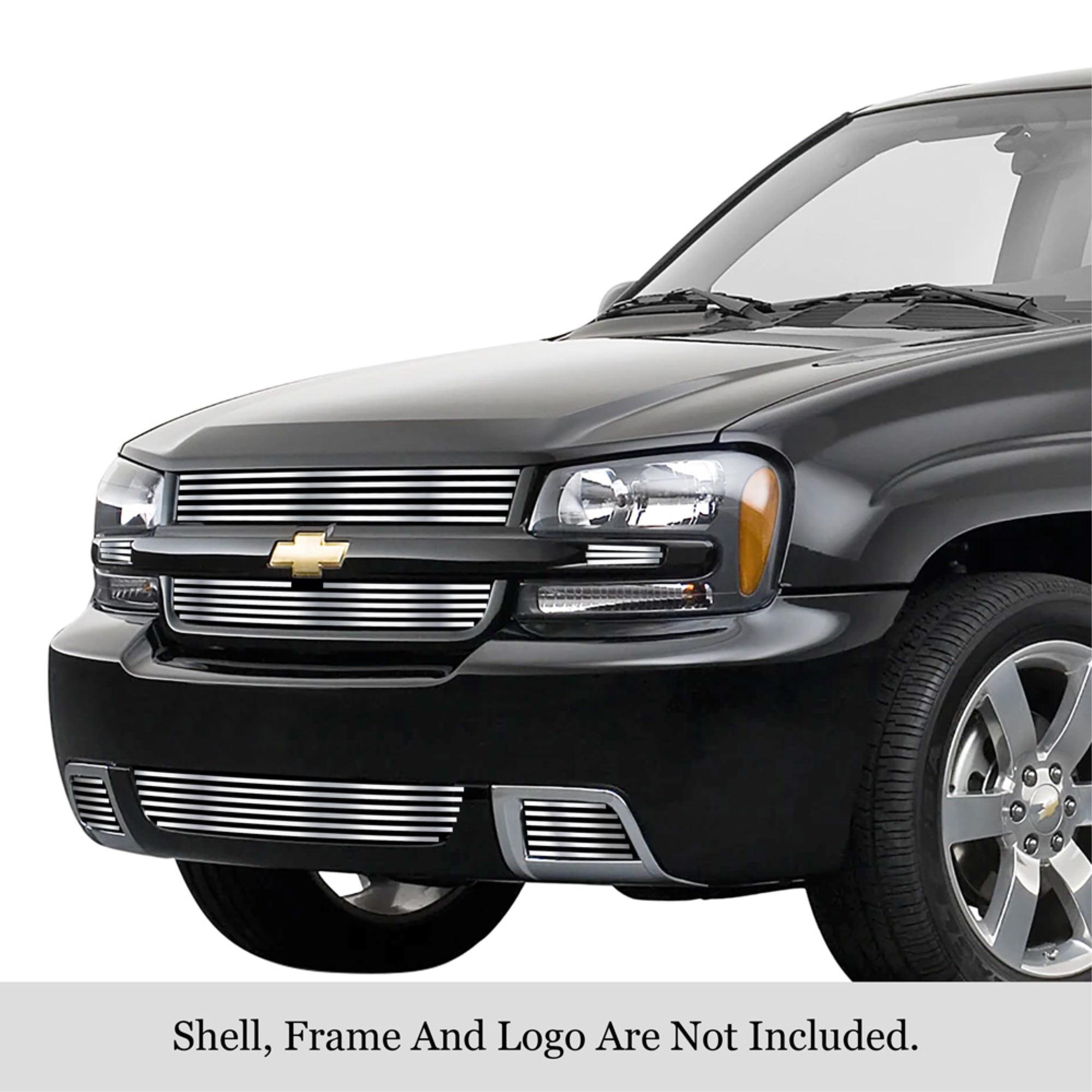
- Exterior Styling Cues: Monochromatic paint scheme, unique front fascia with a larger lower air dam and integrated fog lights, specialized mesh upper and lower grille inserts, color-matched rear bumper, rear roof spoiler, and dual exhaust outlets with polished tips.
Interior Features and Cabin Ergonomics
Inside the cabin, the TrailBlazer SS combines utility-vehicle spaciousness with performance-themed appointments.
- Seating: Front bucket seats featuring unique stitching and embroidered "SS" headrests. Optional leather seating surfaces with suede inserts were widely specified.
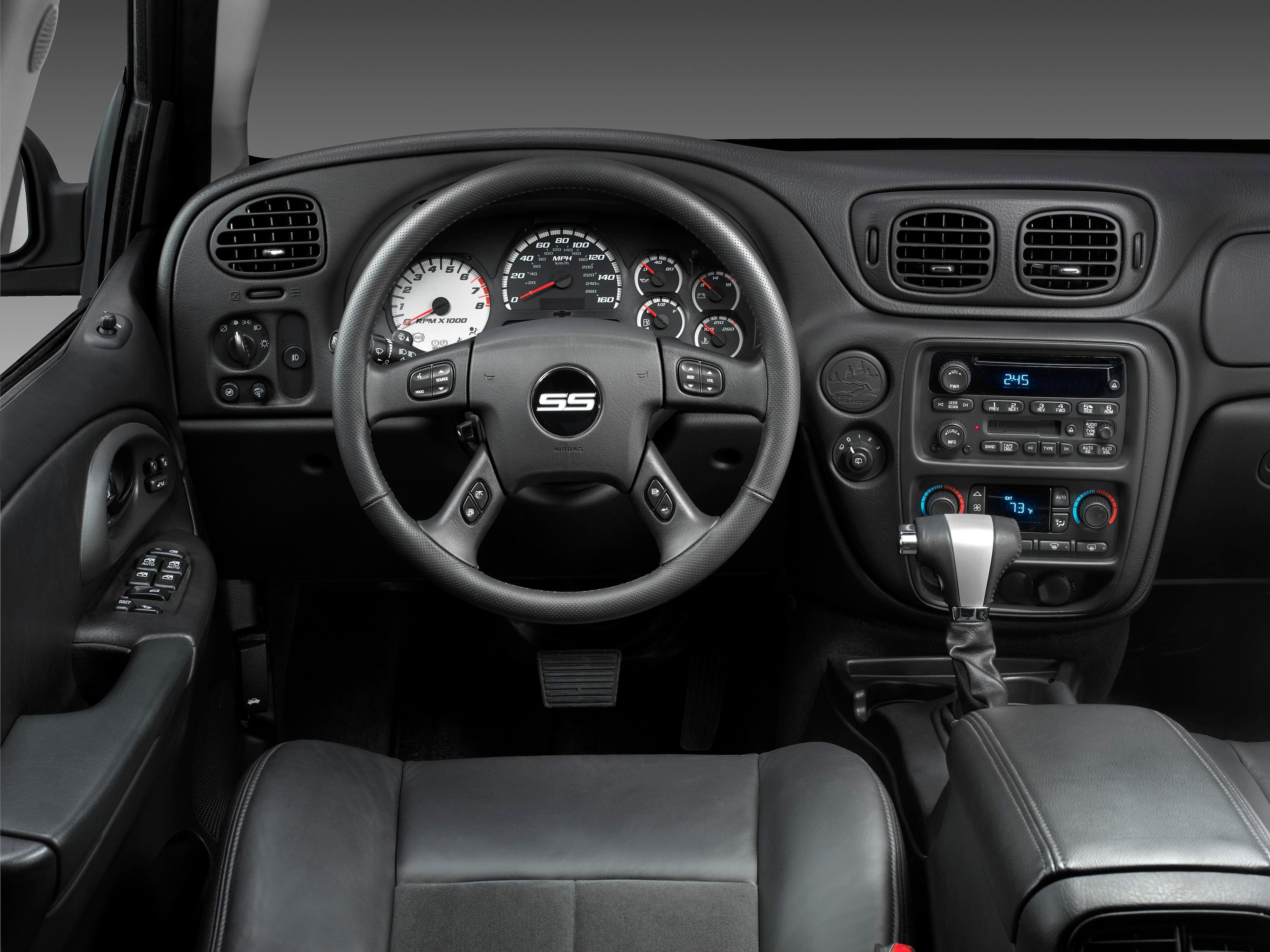
- Instrumentation: Unique instrument cluster featuring a 140-mph speedometer, tachometer with SS logo, and auxiliary gauges for oil pressure, oil temperature, coolant temperature, and fuel level.
- Steering Wheel: Leather-wrapped steering wheel with integrated audio and cruise control switches.
- Cargo Capacity: 43.6 cubic feet behind the second-row seats, expanding to 80.1 cubic feet with the rear seats folded flat.
- Infotainment and Convenience: Standard AM/FM stereo with CD player, auxiliary input jack, and available Bose premium sound system. Dual-zone manual or automatic climate control, power-adjustable pedals, and power driver's seat rounded out the standard convenience features.
Common Mechanical Considerations and Maintenance
Owners and prospective buyers of the 2009 Chevrolet TrailBlazer SS should be aware of several well-documented mechanical tendencies associated with the platform:
- Transmission Longevity: The 4L70E transmission is placed under substantial stress by the 400 lb-ft torque output of the LS2, particularly in AWD models or vehicles subjected to frequent towing or hard launches. Upgraded transmission coolers and reinforced internal components are common preventative modifications.
- Valve Spring Fatigue: Early LS2 engines can experience premature valve spring wear. Many enthusiasts proactively replace factory valve springs with upgraded LS6 or aftermarket beehive springs to prevent valve train failure.
- Timing Chain and Damper: The factory plastic timing chain dampener can degrade over time, prompting owners to upgrade to an LS2/LS3 damper block or aftermarket timing set during routine maintenance.
- Fuel System: The fuel pressure regulator and fuel pump assembly located inside the fuel tank can experience wear, leading to extended crank times upon startup.
Frequently Asked Questions
What engine comes in the 2009 Chevy TrailBlazer SS?
The 2009 Chevy TrailBlazer SS is powered by the GM LS2 6.0-liter aluminum small-block V8 engine, which produces 395 horsepower and 400 lb-ft of torque. This engine shares its fundamental design with the C6 Chevrolet Corvette of the same era.
Was the 2009 TrailBlazer SS available in rear-wheel drive?
Yes, the 2009 TrailBlazer SS was manufactured in both Rear-Wheel Drive (RWD) and All-Wheel Drive (AWD) configurations. The AWD variant utilizes a BorgWarner single-speed full-time transfer case designed to maximize traction during acceleration.
What is the towing capacity of a 2009 TrailBlazer SS?
When properly equipped, the RWD model has a maximum towing capacity of up to 6,800 pounds, while the AWD model is rated for up to 6,600 pounds. The 4.10:1 axle ratio aids significantly in hauling heavy loads, though payload and tongue weight limits must be carefully observed.
How does the 2009 model differ from earlier years of the TrailBlazer SS?
While the core powertrain and suspension remained largely identical across its production run (2006–2009), minor interior trim revisions and the discontinuation of certain options occurred by 2009. Crucially, 2009 marked the final model year of production for the vehicle, making it the rarest and most refined iteration of the GMT360 SS platform.
What fuel economy does the TrailBlazer SS achieve?
According to EPA ratings, the RWD model achieves approximately 12 mpg city and 16 mpg highway, while the heavier AWD model achieves 12 mpg city and 15 mpg highway. Real-world fuel economy frequently varies depending on driving habits and the heavy use of the vehicle's performance capabilities.
Conclusion and Next Actions
The 2009 Chevrolet TrailBlazer SS remains an iconic achievement in American automotive engineering, marrying muscle-car performance with everyday utility. For prospective buyers or restorers, thoroughly inspecting the transmission health, cooling system, and service history is vital prior to purchase. When evaluating a potential acquisition, perform a comprehensive pre-purchase inspection focusing on the front differential seals, transmission shift quality, and structural integrity of the frame to ensure a solid foundation for enthusiast enjoyment.