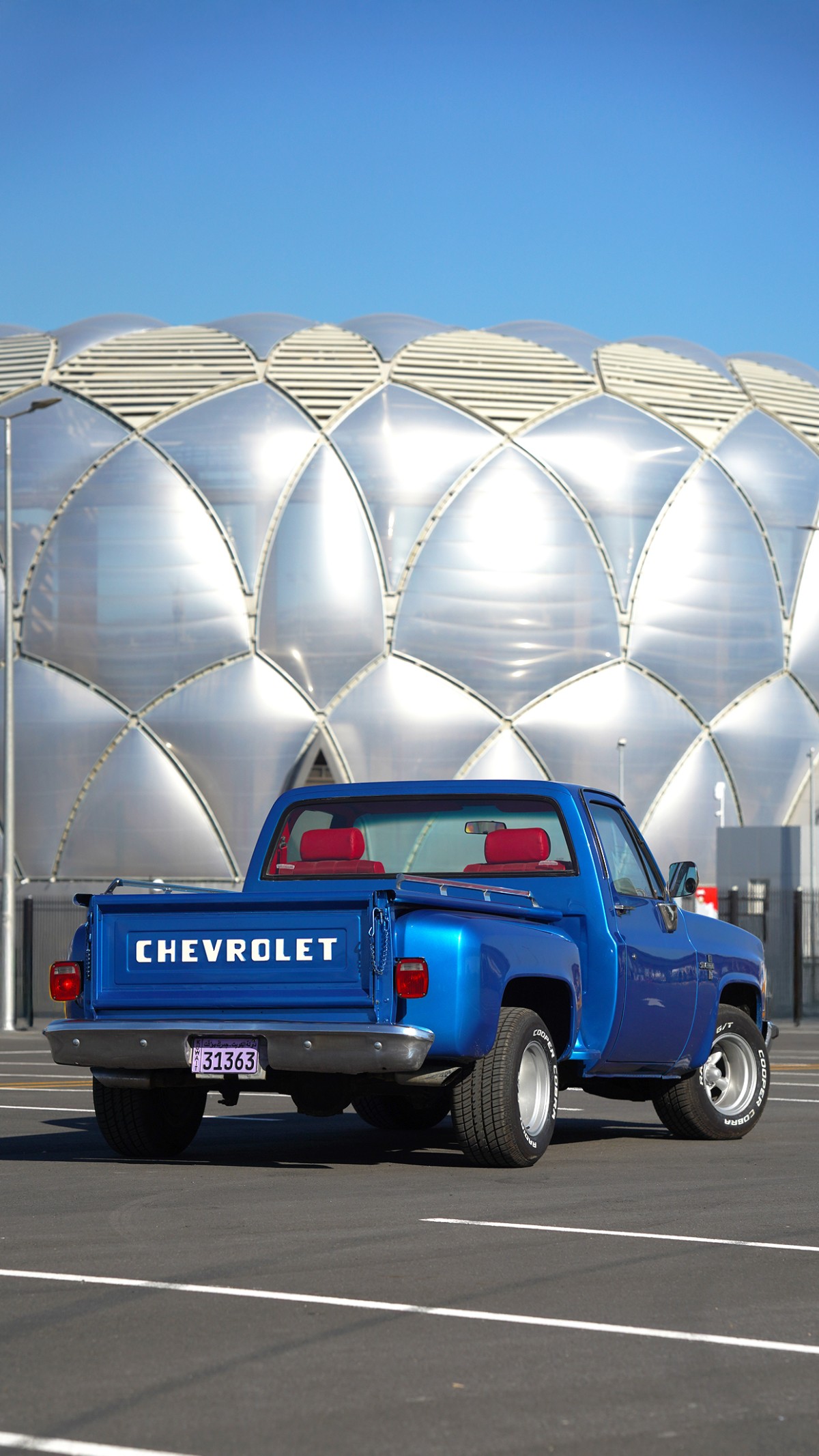
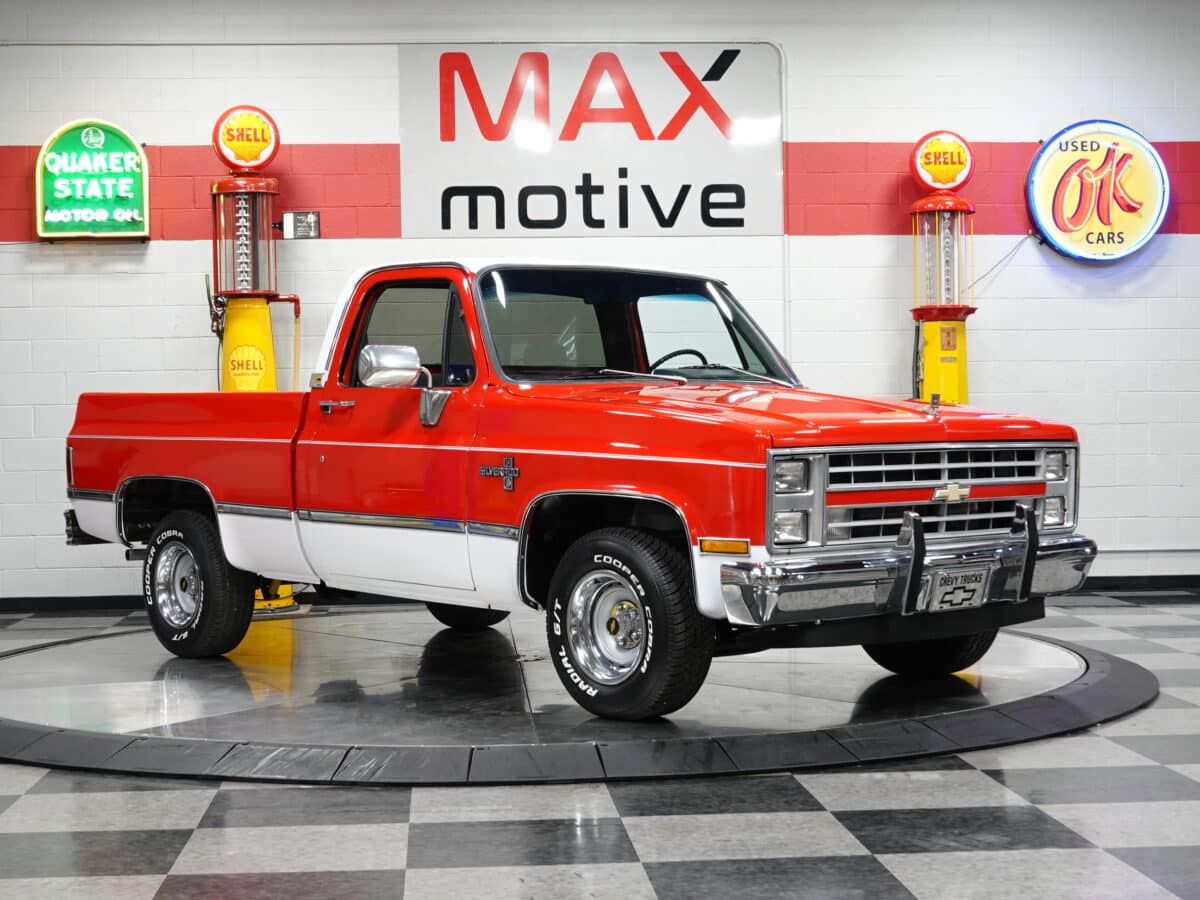
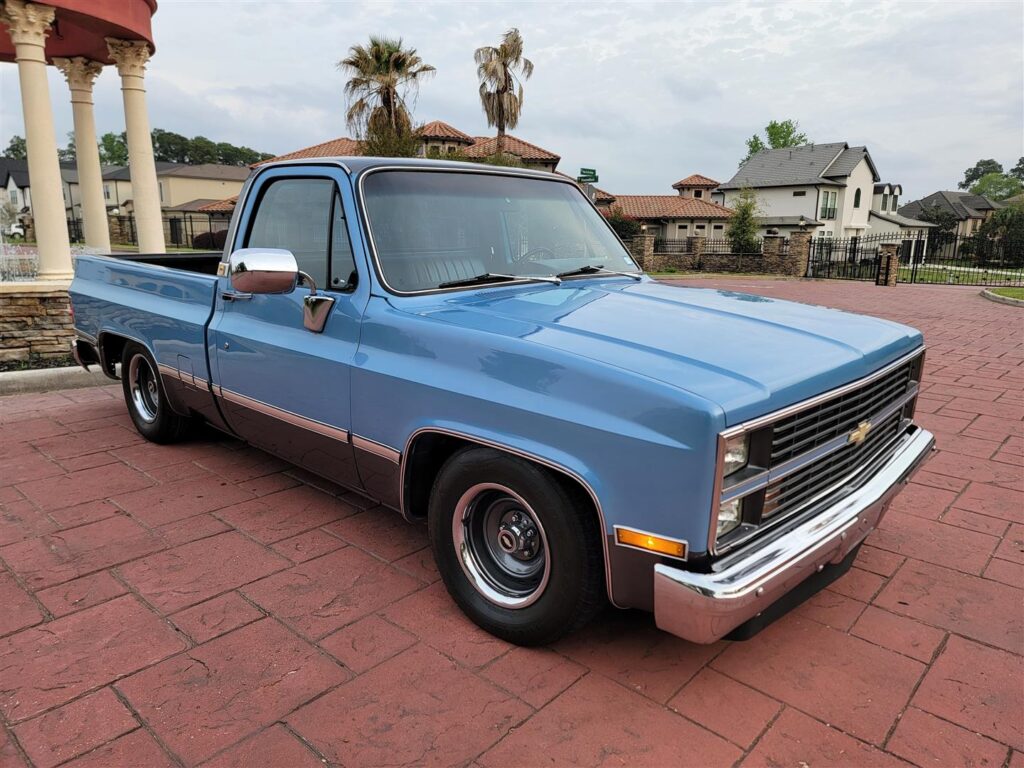
The 1984 Chevrolet Silverado C10 is a cornerstone of the "Square Body" generation, representing the high-water mark of 1980s American pickup design. As a half-ton, two-wheel-drive truck, it combines a rugged ladder-frame chassis with the top-tier Silverado trim, offering a blend of utilitarian capability and surprising interior comfort. In 2026, it remains one of the most coveted platforms for collectors, restorers, and restomod enthusiasts due to its timeless aesthetic and immense aftermarket support.
The Evolution of the Square Body Aesthetic
The 1984 model year falls within the third generation of Chevrolet C/K trucks, a production run that lasted from 1973 to 1987 (and up to 1991 for Blazers and Suburbans). By 1984, Chevrolet had refined the "Rounded Line" design—frequently called the Square Body—to include more aerodynamic front-end treatments and improved interior ergonomics.
The C10 designation specifically refers to the half-ton, rear-wheel-drive chassis. The "C" indicates two-wheel drive, while the "10" denotes the half-ton weight class. The 1984 model is easily identified by its stacked rectangular headlights (on higher trims) and a bold, egg-crate grille that shifted slightly in design from previous years. Buyers could choose between the "Fleetside" bed, which offered a smooth, straight body line, or the "Stepside" bed, featuring flared rear fenders and a narrower cargo area with external steps.
In the mid-1980s, the truck market began shifting from purely agricultural and industrial use toward personal transportation. Chevrolet responded by enhancing the exterior brightwork. The 1984 Silverado featured extensive chrome trim along the side moldings, wheel arches, and windows, distinguishing it from the more Spartan "Custom Deluxe" or "Scottsdale" models.
The Silverado Trim: 1980s Luxury
In 1984, "Silverado" was not a standalone model but rather the highest trim level available for the C10. Choosing the Silverado package transformed the truck from a basic workhorse into a vehicle that rivaled contemporary sedans in terms of features.
Inside a genuine 1984 Silverado, you will find a "brushed aluminum" look on the dash bezel and door trim. The seating usually consisted of a high-quality cloth bench seat with a center fold-down armrest or, more rarely, high-back bucket seats. Standard features for the Silverado trim often included:
- Full Instrumentation: Unlike base models with "idiot lights," the Silverado typically featured a full gauge cluster, including a voltmeter, oil pressure gauge, and coolant temperature gauge.
- Acoustic Insulation: Extra sound-deadening material was added to the floor and firewall to reduce road noise.
- Deluxe Interior Panels: Door panels were fully carpeted on the bottom half and featured map pockets and soft-touch armrests.
- Power Options: By 1984, power windows and power door locks were common on Silverado-trim trucks, a significant luxury for the era.
Verification of a true Silverado is best done by checking the Service Parts Identification (SPID) label, usually located on the inside of the glovebox door. This label lists the RPO (Regular Production Option) codes; the code "YE9" confirms a factory Silverado trim.
Mechanical Specifications and Powertrain Options
The 1984 C10 was offered with a variety of engines, ranging from fuel-efficient (for the time) six-cylinders to heavy-hitting small-block V8s. This was also an era of transition for engine management, as manufacturers dealt with tightening emissions standards.
Engine Lineup
The base engine was the 250 cubic inch (4.1L) Inline-6, known for its reliability but modest power. However, most Silverados were equipped with V8 power. The 305 cubic inch (5.0L) V8 was the most common, often equipped with Electronic Spark Control (ESC) to manage engine knock. For those needing more torque, the 350 cubic inch (5.7L) V8 remained the gold standard.
A notable but less common option was the 6.2L Detroit Diesel V8. While it didn't offer the speed of the gas engines, it provided exceptional fuel economy and longevity for high-mileage drivers.
Transmissions and Drivetrain
By 1984, the four-speed automatic 700R4 transmission had become a staple. This was a significant upgrade over the older three-speed TH350 because it featured a 0.70:1 overdrive ratio. The overdrive allowed the truck to cruise at highway speeds at much lower RPMs, significantly improving fuel economy and reducing engine wear. For those preferring manual control, three-speed and four-speed manuals (often with a "Granny" low first gear) were also available.
The rear axle was typically the GM 10-bolt, with gear ratios often hovering around 2.73:1 or 3.08:1 for highway cruising, though 3.42:1 and 3.73:1 ratios were available for towing packages.
| Feature | Specification (1984 C10 V8 Models) |
|---|---|
| Common Engine | 305 cu in (5.0L) or 350 cu in (5.7L) V8 |
| Horsepower (305 V8) | Approx. 160 hp @ 4,400 RPM |
| Torque (305 V8) | Approx. 235 lb-ft @ 2,000 RPM |
| Transmission | 4-Speed 700R4 Automatic / 4-Speed Manual |
| Wheelbase (Short) | 117.5 inches |
| Wheelbase (Long) | 131.5 inches |
| Fuel Tank Capacity | 16 or 20 gallons (Dual tanks optional) |
| Braking System | Power Front Discs / Rear Drums |
Critical Areas for Inspection: Rust and Wear
For buyers in 2026, the primary concern when evaluating a 1984 C10 is structural integrity. While the mechanical components are famously robust, the steel used in the 1980s was highly susceptible to corrosion.
Common Rust Points
- Cab Corners and Rocker Panels: These are the most frequent failure points. Road debris and moisture get trapped behind the panels, causing them to rot from the inside out.
- Drip Rails: The gutters above the doors often collect water if the factory seam sealer has cracked. If rust is visible here, it is a difficult and expensive repair.
- Bed Floors: Especially in trucks used for work, the valleys in the ribbed bed floor can hold water and rust through.
- Inner Fenders: Battery acid leaks often corroded the passenger-side inner fender over decades of use.
Mechanical "Red Flags"
When test-driving a 1984 C10 with a 700R4 automatic transmission, pay close attention to the shift quality. These early overdrive transmissions rely on a TV (Throttle Valve) cable to regulate internal pressure. If the cable is misadjusted, the transmission can "burn up" its clutches in a matter of miles. Shifts should be firm and predictable; "hunting" between gears or slipping is a sign of an impending rebuild.
The steering in these trucks is a recirculating ball design. Over time, the steering box can develop "slop." While some play is normal for an 80s truck, excessive wandering usually indicates worn tie-rod ends, ball joints, or a steering box that needs adjustment or replacement.
The 2026 Market: Restorations and Restomods
The 1984 C10 has seen a dramatic rise in value over the last decade. In 2026, the market is bifurcated into two main categories: high-fidelity original restorations and modern restomods.
The LS Swap Phenomenon
Perhaps the most popular modification for the 1984 C10 is the LS swap. Replacing the original 305 or 350 V8 with a modern 5.3L or 6.0L LS-series engine from a newer Silverado provides a massive leap in reliability, power, and fuel efficiency. Because the Square Body engine bay is so spacious, these swaps are relatively straightforward, and the aftermarket offers complete "bolt-in" kits including engine mounts, headers, and wiring harnesses.
Suspension and Stance
The "Pro-Touring" look is highly prevalent in 2026. This involves lowering the C10 using drop spindles, lowering springs, or even full air-ride suspension. Because the C10 uses a front independent suspension (coil springs) and a rear leaf-spring setup, it is much easier to make it handle like a modern vehicle compared to the solid-axle K10 4WD variants. Companies like Detroit Speed and RideTech offer chassis components that transform these trucks into corner-carving machines.
Parts Availability
One of the greatest advantages of owning a 1984 C10 is that you can essentially build a brand-new truck from a catalog. Organizations like LMC Truck and Classic Industries stock everything from replacement body panels and glass to factory-correct interior fabrics and dashboard pads. This makes the 1984 C10 an ideal "first classic" for hobbyists.
Operational Limitations and Safety Considerations
While the 1984 Silverado C10 is a capable cruiser, it is important to acknowledge it as a 40-year-old vehicle. By modern standards, safety features are minimal.
- Braking Distance: Even with power-assisted front discs, a loaded C10 requires significantly more stopping distance than a modern pickup. Many owners upgrade to four-wheel disc brake kits for better performance in modern traffic.
- Fuel Economy: Original carbureted V8 models typically achieve 10–14 MPG. Even with the 700R4 overdrive, these are not fuel-efficient vehicles by 2026 standards.
- Safety Tech: There are no airbags, no ABS, and no crumple zones in the modern sense. The fuel tank is located outside the frame rails (under the bed sides), which was a point of controversy and safety recalls in the past. Tank relocation kits that move the fuel cell behind the rear axle are a common safety upgrade.
Frequently Asked Questions
What is the difference between a C10 and a K10?
The "C" denotes two-wheel drive (RWD), while the "K" denotes four-wheel drive (4WD). The C10 features an independent front suspension with coil springs, providing a smoother ride and lower stance. The K10 uses a solid front axle with leaf springs, offering higher ground clearance and off-road capability but a harsher ride on pavement.
How do I know if my 1984 Silverado has a 305 or a 350 V8?
Externally, the 305 and 350 small-block Chevy engines look nearly identical. The most reliable way to tell is by checking the engine casting number located on the rear driver-side ledge of the engine block, where it meets the transmission. You can also check the 8th digit of the VIN: "H" usually denotes a 305, while "M" or "L" can denote a 350, depending on the specific GVWR (Gross Vehicle Weight Rating) of the truck.
Why is 1984 considered a good year for the C10?
1984 is often cited as a "sweet spot" because it benefited from a decade of Square Body refinements. It featured the more modern interior introduced in 1981, improved rust-proofing techniques compared to the early 70s models, and the availability of the 700R4 overdrive transmission, making it more drivable on modern highways.
Can a 1984 C10 be used as a daily driver in 2026?
Yes, provided it has been properly maintained. The mechanical systems are simple and easy to repair. However, many owners choose to upgrade to electronic fuel injection (EFI) systems, such as the Holley Sniper, to eliminate the cold-start and tuning issues associated with 1980s carburetors.
What is the current market value of a 1984 Silverado C10?
As of 2026, a "survivor" in good condition with original paint and the Silverado trim can command between $25,000 and $35,000. Fully restored or LS-swapped examples often exceed $50,000, while project trucks with some rust typically start around $8,000 to $12,000.
Final Recommendations for Buyers
If you are looking to acquire a 1984 Chevy Silverado C10, prioritize the body over the mechanics. Engines and transmissions are easily replaced or rebuilt, but extensive bodywork and rust repair are both labor-intensive and expensive. Seek out a "Short Wide" (short bed, Fleetside) model if you are looking for maximum resale value, as these are the most desirable configurations in the current market. Always verify the SPID label to ensure you are paying for a genuine Silverado and not a base-model "clone."
Once purchased, your first actions should be a complete fluid flush, an inspection of the rubber brake lines, and a careful adjustment of the 700R4 TV cable to preserve the transmission. With proper care, the 1984 C10 is not just a nostalgic relic but a functional piece of American automotive history that can still earn its keep on the road today.