When searching for a dependable professional to fix a pipe leak, clear a clogged drain, or install a new water heater, evaluating a plumber local service requires careful verification of their credentials, pricing structure, reputation, and technical capabilities to protect your home from costly damage.
Finding a reliable residential or commercial plumber can feel overwhelming, especially during an emergency when water is actively damaging your floors and walls. Rather than picking the first option that appears in a search engine, homeowners and property managers must systematically vet local plumbing companies. Evaluating a local plumbing service involves looking past flashy advertisements and checking verifiable credentials such as state licenses, comprehensive liability insurance, and formal worker’s compensation coverage. Furthermore, transparent pricing models, written estimates, warranty guarantees, and authentic customer reviews serve as essential markers of a trustworthy trade professional. By applying a structured evaluation framework, you can distinguish reputable experts from unlicensed handymen and secure quality workmanship for your plumbing system.
1. Verify Active State Licensing and Trade Certification
The foundation of evaluating any local trade professional begins with verifying their licensing status. Plumbers are legally required in most jurisdictions to hold a valid state or municipal license to perform plumbing work.
A license proves that the contractor has completed the necessary apprenticeship hours, passed rigorous written and practical examinations regarding building codes, and understands local safety regulations. Unlicensed operators may offer lower initial rates, but their work often fails to meet code standards, which can void homeowner insurance policies or lead to severe fines and forced removal of completed installations.
To verify a license, visit your state’s department of labor, department of consumer affairs, or state licensing board website. Search the contractor’s name or license number to check for active status, disciplinary actions, or unresolved consumer complaints.
2. Confirm Comprehensive Insurance Coverage
Plumbing involves high-pressure water lines, natural gas connections, and structural penetrations. An accident or mistake can result in thousands of dollars in property damage or physical injury.
Before hiring a local plumbing service, request proof of two essential forms of insurance: general liability insurance and worker’s compensation. General liability insurance protects your home and property if the plumber accidentally causes a flood, structural damage, or a fire while working. Worker’s compensation ensures that if a technician is injured on your property, you will not be held legally or financially liable for their medical bills and lost wages.
Do not simply take a contractor's word for it. Ask their insurance provider to send a certificate of insurance directly to you or verify the policy details online.
3. Examine Local Reputation and Customer Reviews
Online feedback provides a window into a contractor's reliability, punctuality, and quality of work. However, evaluating reviews requires critical thinking to filter out fake testimonials or emotional rants.
Look beyond star ratings on a single platform. Check multiple reputable review sites such as the Better Business Bureau (BBB), Google Business Profile, and specialized local service marketplaces. Pay close attention to how the plumbing business responds to negative reviews. A professional, solution-oriented response indicates a company that values customer satisfaction and stands behind its work. Conversely, defensive or aggressive replies are major red flags.
4. Analyze Pricing Transparency and Fee Structures
Financial surprises are the most common source of friction between homeowners and contractors. A trustworthy local service provider should be entirely transparent about how they structure their pricing.
Inquire whether the company charges a flat rate per job or an hourly rate plus the cost of materials. Reputable plumbers typically charge a dispatch or diagnostic fee to travel to your home and assess the problem. Ensure this fee is clearly explained upfront and ask if it is waived or applied toward the total cost of repairs if you choose to proceed with them. Avoid companies that refuse to provide written estimates or quote broad, highly variable price ranges over the phone without inspecting the physical site.
5. Request Detailed Written Estimates
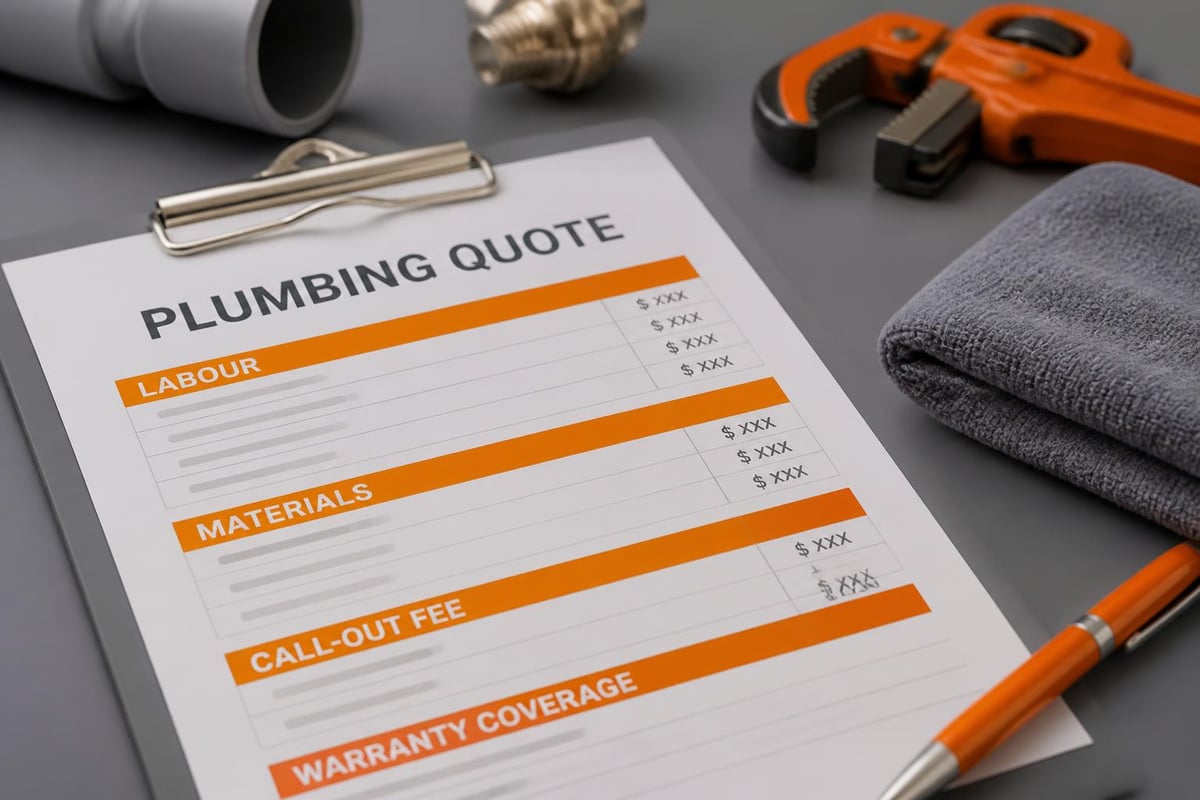
Verbal agreements leave too much room for misunderstanding regarding the scope of work, materials used, and final costs. Always demand a comprehensive written estimate before any work begins.
A professional estimate should break down labor costs, specific materials and parts required, disposal fees, and applicable taxes. It should also include an estimated timeline for completion. Having this document in writing protects you from sudden price inflation partway through a project and gives you a clear baseline against which you can measure the final invoice.
6. Check Experience and Specialization
Not all plumbers possess the same skill set. A technician who excels at clearing residential bathroom drains may not have the specialized commercial training required to repair a multi-story industrial backflow prevention assembly or troubleshoot complex boiler systems.
When evaluating a local service, ask about their specific experience with your particular issue. Inquire how long the business has operated in your local area. Local experience matters because seasoned regional plumbers understand area-specific infrastructure quirks, such as common regional water quality issues (like hard water mineral buildup), local building code amendments, and common soil shifting patterns that affect sewer lines.
7. Evaluate Warranty and Guarantee Policies
Quality workmanship is usually backed by a guarantee. Reputable plumbing companies stand behind their labor and the parts they install by offering robust warranties.
Ask about the warranty terms for both parts and labor. A standard warranty should cover labor defects for at least a year, while manufactured parts (such as water heaters, sump pumps, and faucets) often carry manufacturer warranties ranging from three years to a lifetime. Ensure these guarantees are explicitly stated in your written contract or service agreement. If a plumber refuses to warranty their labor, consider it a warning sign regarding the durability of their work.
8. Assess Communication and Professionalism
First impressions often reflect how a business operates behind the scenes. Evaluate how the company handles your initial inquiry, phone call, or email.
Professional plumbing services employ courteous dispatchers or customer service representatives who listen to your concerns, ask clarifying diagnostic questions, and communicate clearly about appointment windows. The technicians who arrive at your door should be neat, wear identification or company uniforms, use shoe covers to protect your flooring, and treat your property with respect. Poor communication before hiring rarely improves once the contract is signed.
9. Verify Emergency Availability and Response Times
Plumbing emergencies—such as a burst supply line, a backed-up main sewer line, or a failing water heater during freezing weather—rarely happen during convenient business hours.
Determine whether the plumbing service offers genuine 24/7 emergency response or merely utilizes an answering service that takes messages for the next business day. Inquire about their typical emergency dispatch window and whether they charge premium overtime rates for night, weekend, or holiday service calls. Knowing who to call in an urgent situation prevents panic and rushed decision-making during a crisis.
10. Check Professional Affiliations and Industry Certifications
Membership in recognized trade organizations demonstrates a plumbing company's commitment to continuous education, high ethical standards, and industry best practices.
Look for affiliations with organizations such as the Plumbing-Heating-Cooling Contractors Association (PHCC) or local trade guilds. Additionally, inquire if their technicians hold specialized certifications, such as cross-connection control specialist certifications for backflow testing, gas-fitting endorsements, or manufacturer-specific training certifications for high-efficiency tankless water heaters.
11. Review Equipment Quality and Technological Capabilities
Modern plumbing relies heavily on advanced diagnostic technology that saves time and prevents unnecessary property destruction.
Inquire about the tools and equipment the service utilizes. For example, if you are dealing with a recurring drain clog or a suspected sewer line crack, does the company use high-resolution sewer camera inspection equipment to visually locate the problem? Do they use electronic leak-detection equipment to pinpoint hidden pipe failures beneath concrete slabs without tearing up your entire floor? Utilizing modern diagnostic tools indicates a forward-thinking business dedicated to efficient, non-invasive solutions.
12. Inquire About Subcontractors
For larger plumbing projects, such as a complete bathroom remodel, a main sewer line replacement, or a trenchless water line upgrade, some plumbing companies hire outside subcontractors to handle specific tasks like electrical wiring, drywall repair, or concrete excavation.
Always ask whether the plumbing company uses in-house employees or subcontractors. If subcontractors are used, verify that they are also properly licensed, bonded, and insured. You want to ensure that the primary contractor takes full responsibility for coordinating and supervising all third-party workers on your property.
13. Research Permitting and Code Compliance Knowledge
Significant plumbing alterations—such as moving a toilet drain location, installing a new gas line, or replacing a water heater—typically require municipal permits and subsequent inspections to ensure compliance with local building codes.
Ask the plumbing service if they pull the required permits for major jobs. Unscrupulous contractors may suggest skipping permits to save money or time, but this practice leaves you vulnerable. Unpermitted work can cause major legal and financial complications when you attempt to sell your home, as municipal inspectors can force you to tear out and redo non-compliant installations at your own expense.
14. Evaluate Payment Terms and Financing Options
Payment terms are a critical component of any service contract. A trustworthy plumber will never demand full payment upfront before any work has even begun.
Standard industry practice involves paying a modest deposit for major installations or custom-ordered parts, with the balance due only upon satisfactory completion of the work. Be wary of contractors demanding cash-only payments upfront. Furthermore, for expensive emergency repairs or major replacements (such as a full repiping project), check if the company offers flexible financing plans or partnerships with reputable home improvement lending institutions.
15. Compare Local Service Providers Using a Decision Matrix
Evaluating multiple local plumbing services is easiest when you organize your findings systematically. Comparing options side-by-side helps eliminate emotional decision-making.
| Evaluation Criterion | What to Look For | Red Flag to Avoid |
|---|---|---|
| Licensing | Active state/municipal license verified online | Unlicensed or evasive about credentials |
| Insurance | Current general liability and worker's comp | No proof of insurance or expired policies |
| Pricing | Clear flat rates or transparent hourly fees | Refusal to provide estimates or cash-only demands |
| Warranty | Minimum 1-year labor warranty in writing | "No-warranty" policy or verbal-only promises |
| Reviews | Consistent positive feedback and professional replies | Unresolved complaints and aggressive responses |
Frequently Asked Questions
What should I do first when a plumbing emergency happens?
Shut off the main water supply immediately to prevent further property damage, then contain standing water with towels or buckets if safe to do so. Once immediate damage control is complete, contact an emergency local plumbing service that offers rapid dispatching and transparent after-hours pricing.
Is it normal for a plumber to charge a diagnostic fee?
Yes. Professional plumbers typically charge a service, dispatch, or diagnostic fee to cover travel expenses and the technician's time spent troubleshooting your issue. Many reputable companies will apply this fee toward the total cost of repairs if you approve the estimate and let them perform the work.
How can I verify if a plumber's license is active?
Visit your state's department of licensing, department of labor, or state contractor board website. Most state agencies maintain searchable online databases where you can input a contractor's license number or business name to check their current standing and disciplinary history.
Why is hiring an insured plumber so important?
Insurance protects you from financial liability if property damage occurs during a repair or if a worker is injured while on your property. Without valid general liability and worker's compensation insurance, you could be held personally responsible for expensive property repairs or medical lawsuits.
Should I get multiple quotes for plumbing work?
For non-emergency, major plumbing projects—such as water heater replacements, sewer line repairs, or whole-house repiping—obtaining two to three written estimates from different local services allows you to compare pricing, scope of work, and warranty offerings to ensure fair value.
Conclusion
Evaluating a plumber local service requires looking past marketing claims and systematically verifying core credentials, including active licensing, comprehensive insurance, transparent pricing, and robust workmanship warranties. By checking local reviews, demanding written estimates, and confirming code compliance, you can protect your home, avoid costly mistakes, and build a lasting relationship with a dependable trade professional.