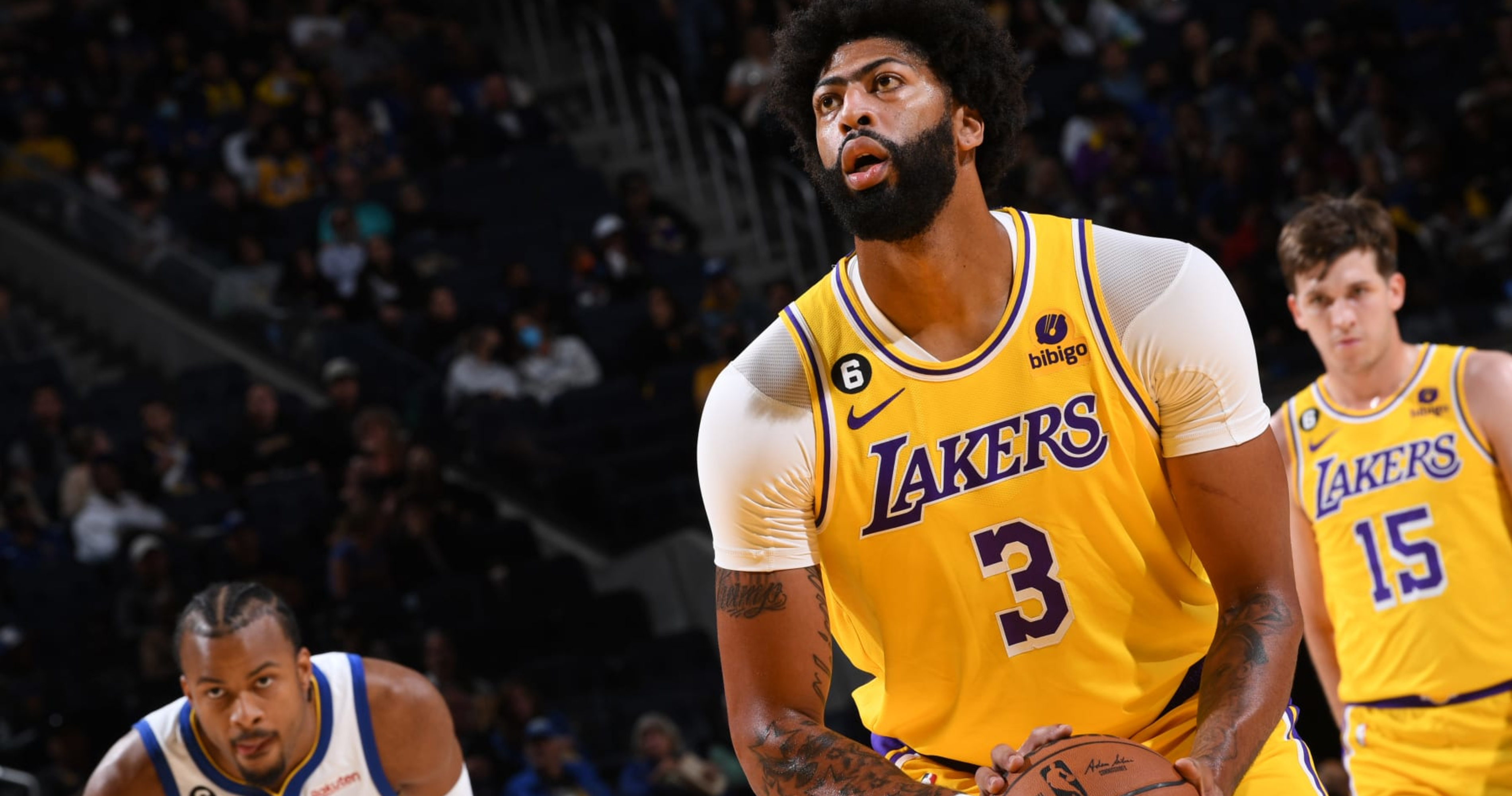
Anthony Davis has maintained a career scoring average of approximately 24 points per game, solidifying his status as one of the most prolific scoring big men in NBA history. This scoring benchmark reflects his elite versatility, combining interior dominance with a refined face-up game that remains effective as of the 2025-2026 season.
The Significance of the 24 PPG Benchmark in NBA History
In the landscape of the National Basketball Association, averaging 24 points per game over a decade-long career is a feat reserved for the upper echelon of talent. For a "big man"—typically defined as a power forward or center—this number is even more significant. While guards often find scoring opportunities through high-volume perimeter shooting and ball-handling, big men like Anthony Davis must rely on a combination of play-finishing, offensive rebounding, and specialized post-up scenarios.
To put 24 points per game in perspective, it places Davis alongside Hall of Fame names and modern superstars. It is a threshold that separates "very good" All-Stars from "transcendent" offensive forces. Maintaining this level of production requires not just physical talent but also an evolving skill set that can adapt to changing defensive schemes, different teammates, and the natural physical toll of the NBA schedule. As of 2026, Davis’s ability to hover around this average despite various injuries and changes in team dynamics speaks to his fundamental scoring gravity.
The "24 PPG" mark also serves as a barometer for team success. When Davis is scoring at or above this average, his teams—specifically the Los Angeles Lakers and previously the New Orleans Pelicans—typically operate with a much higher offensive rating. His scoring forces double-teams, which opens up the floor for perimeter shooters, making him a cornerstone of modern offensive philosophy.
The Evolution of a Scorer: From New Orleans to Los Angeles
Anthony Davis’s journey to a career average of 24 points per game began in New Orleans, where he was the undisputed focal point of the offense. During his tenure with the Pelicans, Davis evolved from a defensive specialist with high-energy "garbage buckets" into a sophisticated triple-threat scorer. By his third season, he was already eclipsing the 24-point mark regularly, peaking at 28.1 points per game during the 2017-2018 campaign.
In New Orleans, Davis utilized his unique "guard-like" upbringing—having been a point guard before a massive growth spurt in high school—to face up slower defenders. He became a master of the mid-range jumper and the "rim-run," where he would beat opposing centers down the court for easy transition layups. This era established the statistical baseline that supports his career average today.
Upon his trade to the Los Angeles Lakers in 2019, his role shifted slightly. Playing alongside LeBron James, Davis became a more efficient "play-finisher." While his raw attempts per game sometimes fluctuated, his impact remained high. During the 2020 championship run, his scoring versatility was on full display in the NBA Bubble, where he shot elite percentages from the mid-range and the free-throw line. Even as he moved into the veteran stage of his career in the mid-2020s, Davis has adjusted his game to remain a 24-point threat by increasing his efficiency in the paint and improving his positioning as a lob threat.
Technical Analysis of Davis’s Scoring Arsenal
What allows Anthony Davis to consistently reach the 24-point threshold is not just one skill, but a diverse "bag" of offensive maneuvers. Unlike traditional centers who might be limited to the low block, Davis operates effectively from three distinct zones on the court.
The Low and Mid-Post
Davis uses a quick-reacting face-up game. Instead of grinding against defenders for five seconds, he often catches the ball, pivots, and shoots over the top using his 7'6" wingspan. His "soft touch" is rare for a player of his size, allowing him to hit high-arc fadeaways that are virtually unblockable.
The Pick-and-Roll and Lob Catching
Perhaps his most efficient scoring method is as a "roller." Davis is arguably the best lob target of his generation. His "catch radius"—the area around the basket where he can successfully retrieve and dunk a pass—is immense. This allows guards to throw the ball into spaces where only Davis can reach it, leading to high-percentage finishes that bolster his PPG and his field goal percentage simultaneously.
Free Throw Proficiency
A quiet but vital component of the 24 PPG average is Davis’s performance at the charity stripe. For much of his career, Davis has shot around 80% from the free-throw line. For a big man who draws a high volume of fouls, this is a massive advantage. On nights when his jump shot isn't falling, Davis can often secure 8 to 10 points simply by driving to the rim and drawing contact, ensuring his scoring average remains stable.
Comparing Davis to Other Elite Scoring Bigs
To understand the weight of Davis’s 24 points per game, it is helpful to compare him to his contemporaries and historical peers. The following table illustrates how Davis stacks up against other elite scoring big men in terms of career production and efficiency (data reflective of career trends leading into 2026).
| Player | Career PPG (Approx.) | Career FG% | Free Throw % | Notable Scoring Peak |
|---|---|---|---|---|
| Anthony Davis | 24.1 | 52.3% | 79.5% | 28.1 PPG (2018) |
| Joel Embiid | 27.5 | 50.1% | 82.6% | 33.1 PPG (2023) |
| Nikola Jokic | 21.0 | 55.4% | 82.7% | 27.1 PPG (2022) |
| Giannis Antetokounmpo | 23.5 | 54.5% | 70.2% | 31.1 PPG (2023) |
| Shaquille O'Neal | 23.7 | 58.2% | 52.7% | 29.7 PPG (2000) |
| Tim Duncan | 19.0 | 50.6% | 69.6% | 25.5 PPG (2002) |
While players like Joel Embiid may have a higher raw PPG, Davis’s longevity and consistent scoring across two different franchises and roles highlight his reliability. Notably, Davis maintains a higher career scoring average than legends like Shaquille O’Neal and Tim Duncan, though those players had longer "decline" phases at the ends of their careers that lowered their final averages.
The Impact of Injuries on Scoring Trends
It is impossible to discuss Anthony Davis's career statistics without acknowledging the "availability" factor. Throughout his time in the NBA, Davis has dealt with numerous lower-extremity injuries that have sidelined him for significant stretches. Analysts often debate whether his scoring average would be even higher if he had stayed consistently healthy.
Conversely, some argue that the time off has allowed him to maintain a high "per-game" average by preventing the physical fatigue that can lead to shooting slumps. However, the data generally shows that Davis is at his most productive when he plays in a rhythm. In seasons where he plays 65+ games, his scoring output tends to be more consistent and his integration into the team's offense more seamless. As he has navigated the 2024 and 2025 seasons, Davis has focused significantly on "durability training," which has helped him maintain his 24-point standard even as he enters his 14th professional season in 2026.
Tactical Defenses and the "AD Rules"
As a consistent 24 PPG scorer, Davis faces specialized defensive schemes designed specifically to slow him down. These often include:
- Fronting the Post: Teams will put a smaller, stronger defender in front of Davis to prevent him from catching the entry pass, forcing him to move away from the basket.
- The "Late Double": Defenses will wait until Davis starts his dribble or pivot before sending a second defender. This is designed to catch him in a vulnerable position where he cannot easily see the pass out.
- Physicality at the Point of Attack: Since Davis is leaner than some traditional centers, opponents often try to "bump" him off his spots.
Davis’s ability to maintain his scoring average despite these "AD Rules" is a testament to his basketball IQ. He has learned to counter these moves by becoming a better passer (increasing his assist numbers over the years) and by moving more without the ball. By scoring on put-backs and in transition, he gets "easy" points that do not require him to battle a set defense.
The Role of Advanced Metrics
Beyond the 24 PPG, advanced metrics provide a clearer picture of Davis’s efficiency. His Player Efficiency Rating (PER) has historically been among the highest in the league, often ranking in the top 10 all-time during his peak years. His True Shooting Percentage (TS%), which accounts for the value of three-pointers and free throws, consistently stays well above the league average for big men.
In 2026, the emphasis on "points per possession" has further validated Davis’s style. He is one of the few players who can generate more than 1.1 points per possession in isolation, post-ups, and as a roll-man. This versatility makes him a "plug-and-play" superstar who can fit into almost any offensive system.
Future Outlook: Can He Maintain the 24 PPG Average?
As Davis moves through the 2025-2026 season, the question of "statistical aging" arises. Most NBA players see a sharp decline in scoring average once they hit their early 30s. However, Davis’s game is well-suited for longevity. Because he does not rely solely on explosive athleticism—instead utilizing high-level shooting mechanics and "length"—he can likely remain a high-volume scorer for several more years.
To keep the 24 PPG career mark intact, Davis will need to continue shooting efficiently from the mid-range. If he can maintain a respectable percentage from the perimeter, it will force defenders to close out on him, opening up driving lanes and foul-drawing opportunities. For fans and analysts, watching the slight fluctuations in this average provides a real-time look at the career trajectory of a first-ballot Hall of Famer.
Frequently Asked Questions
What is Anthony Davis's career-high scoring in a single game?
Anthony Davis scored a career-high 59 points against the Detroit Pistons on February 21, 2016. In that game, he also recorded 20 rebounds, making him one of the few players in NBA history to achieve a 50/20 game. This performance is a prime example of his ability to dominate all facets of the offensive game.
How does Davis's scoring change in the NBA Playoffs?
Historically, Anthony Davis's scoring average actually increases in the playoffs. This is a rare trait, as most players see their efficiency drop against elite postseason defenses. During the Lakers' 2020 championship run, Davis averaged approximately 27.7 points per game, proving that he can elevate his scoring when the stakes are highest.
Has Anthony Davis ever led the NBA in scoring?
While he has consistently been in the top 10, Anthony Davis has not yet won an NBA scoring title. He has come close several times, notably in the 2017-2018 season when he averaged 28.1 PPG. His focus has often been split between elite scoring and being the primary defensive anchor for his team, which sometimes impacts his raw scoring volume compared to "scoring-only" specialists.
How many 40-point games does Anthony Davis have?
As of early 2026, Anthony Davis has recorded over 40 games with 40 or more points. These scoring outbursts often occur when he is utilized heavily in the pick-and-roll or when he is exceptionally aggressive in seeking his own shot from the mid-post.
How does his scoring compare to LeBron James?
While LeBron James is the NBA's all-time leading scorer, Davis has often led the Lakers in scoring on a per-game basis during their time together. James's role as a facilitator often allows Davis to focus on being the primary "finisher," which is why their partnership has been so statistically fruitful for both players.
Expert Recommendation for Following Player Stats
For those looking to track Anthony Davis's scoring trends in real-time through the remainder of the 2026 season, it is recommended to use official league sources such as NBA.com/stats or Basketball-Reference. These platforms offer a granular look at "points by zone" and "efficiency by teammate," which provide much more context than a simple per-game average. Monitoring his Usage Rate is particularly helpful; if his usage stays above 28%, he is likely to maintain his 24 PPG career trajectory.