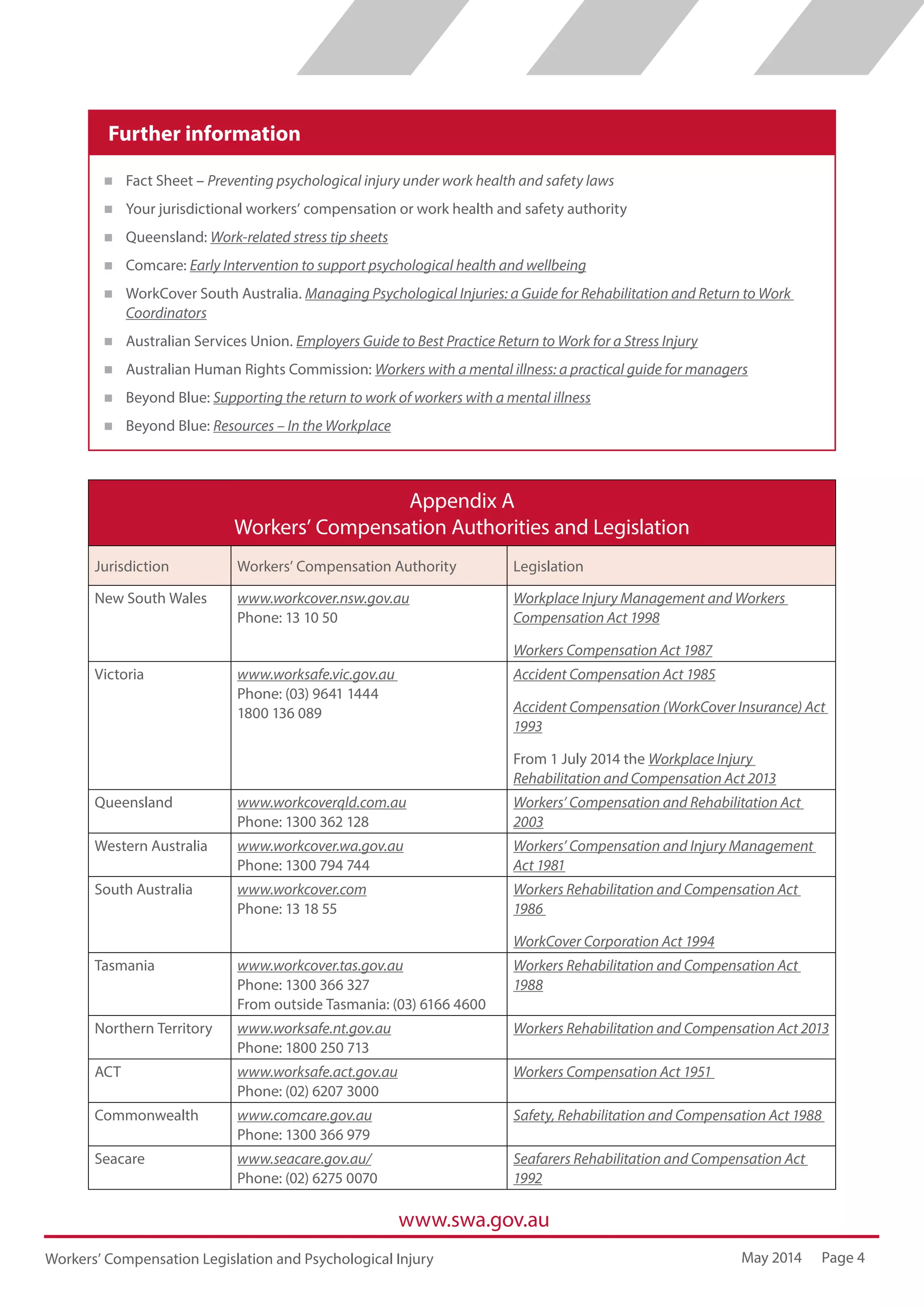
The Workplace Injury Management and Workers Compensation Act 1998 (NSW) is the foundational New South Wales legislation governing how workplace injuries are managed, how injury management plans are established, and how workers' compensation claims are processed, disputed, and resolved across the state.
Introduction to the Legislation and Regulatory Framework
Navigating the landscape of occupational health, safety, and injury compensation in New South Wales requires a clear understanding of the legislative framework that balances the rights of injured workers with the operational obligations of employers. The Workplace Injury Management and Workers Compensation Act 1998 (NSW)—often referred to simply as the 1998 Act—serves as the bedrock statute for handling workplace trauma, rehabilitation, and financial compensation within the state. Operating alongside the Workers Compensation Act 1987 (NSW), the 1998 Act shifts the primary focus of the workers' compensation system from passive financial payouts to active, injury management, early intervention, and safe, durable return-to-work outcomes.
For employers, injured workers, insurers, and legal practitioners, comprehending the structures mandated by this legislation is essential. The Act establishes clear statutory duties for all participants in the workplace ecosystem, defining how injuries must be reported, how injury management plans are formulated, and how disputes regarding liability or benefit entitlements are adjudicated. This comprehensive guide breaks down the core components of the 1998 Act, detailing its operational requirements, obligations, dispute resolution pathways, and the administrative machinery that enforces compliance across New South Wales industries.
Objectives and Core Principles of the 1998 Act
The primary objectives of the Workplace Injury Management and Workers Compensation Act 1998 (NSW) are articulated within the opening sections of the statute. Unlike older legislative models that viewed workers' compensation strictly as an adversarial insurance mechanism, the 1998 Act is explicitly designed to promote proactive injury management and collaborative workplace rehabilitation.
According to statutory provisions, the key objectives include:
- To assist in securing the health, safety, and welfare of workers.
- To provide for the effective management of injuries sustained by workers and to promote their return to work.
- To provide swift, fair, and cost-effective delivery of compensation and other benefits to injured workers.
- To establish an efficient dispute resolution system that minimizes litigation and adversarial friction.
- To ensure that employers maintain adequate insurance coverage or approved self-insurance arrangements to meet liabilities under the law.
These principles shape every administrative action taken under the Act. Injury management is treated not as a reactive administrative chore, but as an integral part of workplace safety management. The legislation places a heavy emphasis on early intervention, recognizing that the likelihood of a successful return to pre-injury duties diminishes significantly the longer a worker remains away from the workplace.
Key Obligations of Employers under the Act
Under the 1998 Act, employers in New South Wales bear strict statutory obligations following a workplace incident. Failing to comply with these requirements can result in substantial financial penalties and regulatory enforcement action by SafeWork NSW or the State Insurance Regulatory Authority (SIRA).
Workplace Injury Management Plans
Employers are required to establish a workplace injury management plan for injured workers as soon as practicable after receiving notice of a significant injury. A "significant injury" is defined under the Act as a workplace injury that is likely to result in the worker being totally or partially incapacitated for work for a continuous period of more than seven days.
This plan must be developed in consultation with:
- The injured worker.
- The worker’s nominated treating doctor (NTD).
- The workplace injury management coordinator (if applicable).
- The insurer providing workers' compensation coverage.
Return-to-Work Coordination
Depending on the size and risk profile of the business, employers are often required to appoint a trained Return-to-Work Coordinator. This individual acts as the primary point of contact between the injured worker, treating medical practitioners, the employer, and the insurer. The coordinator ensures that suitable duties are identified, documented, and made available to facilitate a safe and timely reintegration into the workforce.
Notification of Injuries
Employers must notify their insurer immediately upon becoming aware that a worker has sustained a significant workplace injury. Under Section 44 of the Act, employers must keep a register of injuries, recording all workplace injuries, no matter how minor they may initially appear. Furthermore, employers are legally prohibited from dismissing a worker solely because they have sustained a compensable workplace injury, with specific protections spanning the initial months of incapacity as outlined in the legislation.
Rights and Responsibilities of Injured Workers
While the 1998 Act establishes robust safety nets and compensation pathways for injured workers, it also imposes distinct responsibilities to ensure that the injury management process functions effectively.
Worker Obligations
An injured worker is legally obligated to:
- Notify their employer of any workplace injury as soon as possible after it occurs.
- Nominate a treating doctor (typically a general practitioner) who is prepared to participate in the injury management and return-to-work process.
- Participate actively in the development and implementation of their workplace injury management plan.
- Make reasonable efforts to return to work in suitable employment, as identified in consultation with their treating doctor and employer.
- Authorize their nominated treating doctor to provide relevant medical information to the employer and insurer regarding their capacity for work.
Worker Rights
In exchange for meeting these responsibilities, injured workers maintain statutory rights under the 1998 and 1987 Acts. These include the right to weekly compensation payments for lost earnings (subject to statutory caps and timeframes), the payment of reasonable medical, hospital, and rehabilitation expenses, and access to independent dispute resolution mechanisms if liability or benefit levels are contested by the insurer.
Comparison of Key Statutory Responsibilities
To better understand how responsibilities are distributed under the Workplace Injury Management and Workers Compensation Act 1998 (NSW), the following comparison outlines the core duties of employers, workers, and insurers.
| Stakeholder | Primary Statutory Duty | Key Actionable Requirement | Consequence of Non-Compliance |
|---|---|---|---|
| Employer | Establish injury management and provide suitable duties. | Notify insurer within statutory timeframes; maintain a register of injuries. | Financial penalties, prosecution by SIRA, and increased premium calculations. |
| Injured Worker | Participate in rehabilitation and return-to-work plans. | Nominate a treating doctor; cooperate with medical assessments and suitable duties. | Potential suspension or termination of weekly compensation benefits. |
| Insurer | Manage claims efficiently and fund approved treatment. | Make provisional liability decisions promptly; facilitate injury management coordination. | Regulatory scrutiny, financial penalties, and compliance notices from SIRA. |
Claims Handling, Provisional Liability, and Dispute Resolution
The 1998 Act sets out rigorous procedures for how claims must be lodged, assessed, and, where disagreements arise, resolved. Navigating this administrative lifecycle correctly is critical to avoiding delays in benefit delivery.
Lodging a Claim
A worker initiates a formal claim for compensation by completing an approved workers' compensation claim form, accompanied by a WorkCover Certificate of Capacity issued by their nominated treating doctor. Under Section 260 of the 1998 Act, the claim must be lodged with the employer as soon as practicable after the injury occurs. Once received, the employer is legally obligated to forward the claim documentation to their licensed workers' compensation insurer within statutory deadlines.
Provisional Liability
To prevent financial hardship, the Act provides for provisional liability. Insurers are required to commence weekly payments of compensation and cover reasonable medical expenses provisionally while investigating the claim, even before formal liability is fully accepted. This mechanism ensures that injured workers receive immediate financial support during the crucial initial weeks following an incident.
The Dispute Resolution Pathway
Disputes regarding liability, the quantum of weekly payments, or the appropriateness of medical treatment are managed through structured regulatory channels. Historically processed via the Workers Compensation Commission, disputes are now handled by the Personal Injury Commission (PIC), which was established to streamline dispute resolution across New South Wales compensation schemes.
The PIC operates through two primary divisions:
- The Workers Compensation Division: Resolves disputes concerning liability, weekly benefits, medical expenses, and permanent impairment.
- The Merit Review Service (SIRA): Handles administrative reviews concerning injury management plans and work capacity decisions made by insurers.
Parties are generally encouraged to participate in teleconferences, conciliation, and arbitration before formal determination by a member of the Commission.
Interaction Between the 1998 Act and the 1987 Act
A common point of confusion for practitioners and employers is the dual-act structure governing workers' compensation in New South Wales. While the Workplace Injury Management and Workers Compensation Act 1998 focuses primarily on administration, injury management, claims handling, and dispute resolution, its companion statute—the Workers Compensation Act 1987 (NSW)—deals with substantive benefit entitlements, insurance policy requirements, premium calculations, and employer liability thresholds.
Both statutes must be read and applied in tandem. For example, while the 1998 Act mandates the creation of injury management plans, the 1987 Act dictates the specific financial thresholds, statutory steps, and maximum limits governing how weekly benefits taper down over time for injured workers. Understanding this statutory interplay is essential for ensuring full compliance with New South Wales employment law.
Frequently Asked Questions
What constitutes a significant workplace injury under the 1998 Act?
A significant injury is defined as a workplace injury that results in the worker being totally or partially incapacitated for work for a continuous period of more than seven days. This threshold triggers specific statutory obligations for employers regarding injury management plan creation and insurer notification.
Can an employer dismiss a worker who is on workers' compensation?
Under the 1998 Act, it is illegal to dismiss a worker solely because they have sustained a compensable injury, during a protected period (typically six months from the date the worker becomes unfit for employment). Dismissal outside or inside this period requires strict adherence to employment law and consultation regarding suitable duties.
What is the role of the Nominated Treating Doctor (NTD)?
The NTD is a medical practitioner chosen by the worker to manage their medical treatment and recovery. Under the Act, the NTD plays a central role by issuing Certificates of Capacity, collaborating with the Return-to-Work Coordinator, and approving suitable duties aligned with the worker's functional capacity.
Where should workers' compensation disputes be filed in New South Wales?
Disputes regarding liability, benefit calculations, or medical expenses are managed through the Personal Injury Commission (PIC). Administrative reviews concerning work capacity decisions and injury management plans are generally directed to the State Insurance Regulatory Authority (SIRA) Merit Review service.
Are employers required to keep a register of injuries?
Yes. Section 232 of the 1998 Act requires all employers to maintain a register of injuries at their workplace. Every workplace injury, regardless of perceived severity, must be recorded in this register as soon as possible after the incident occurs.
Conclusion and Practical Next Actions
Compliance with the Workplace Injury Management and Workers Compensation Act 1998 (NSW) is a fundamental legal and operational requirement for all New South Wales businesses. Employers must maintain up-to-date injury registers, establish rapid communication channels with licensed insurers, and foster a workplace culture that prioritizes early intervention and safe, collaborative return-to-work planning.
For employers seeking to ensure full compliance, the immediate next actions should include auditing internal injury management procedures, verifying that Return-to-Work Coordinators are appropriately trained, and ensuring that all supervisors understand their legal obligations upon the occurrence of a workplace incident. Injured workers, meanwhile, should ensure they maintain open communication with their nominated treating doctor and actively engage in rehabilitation pathways to support a sustainable recovery.