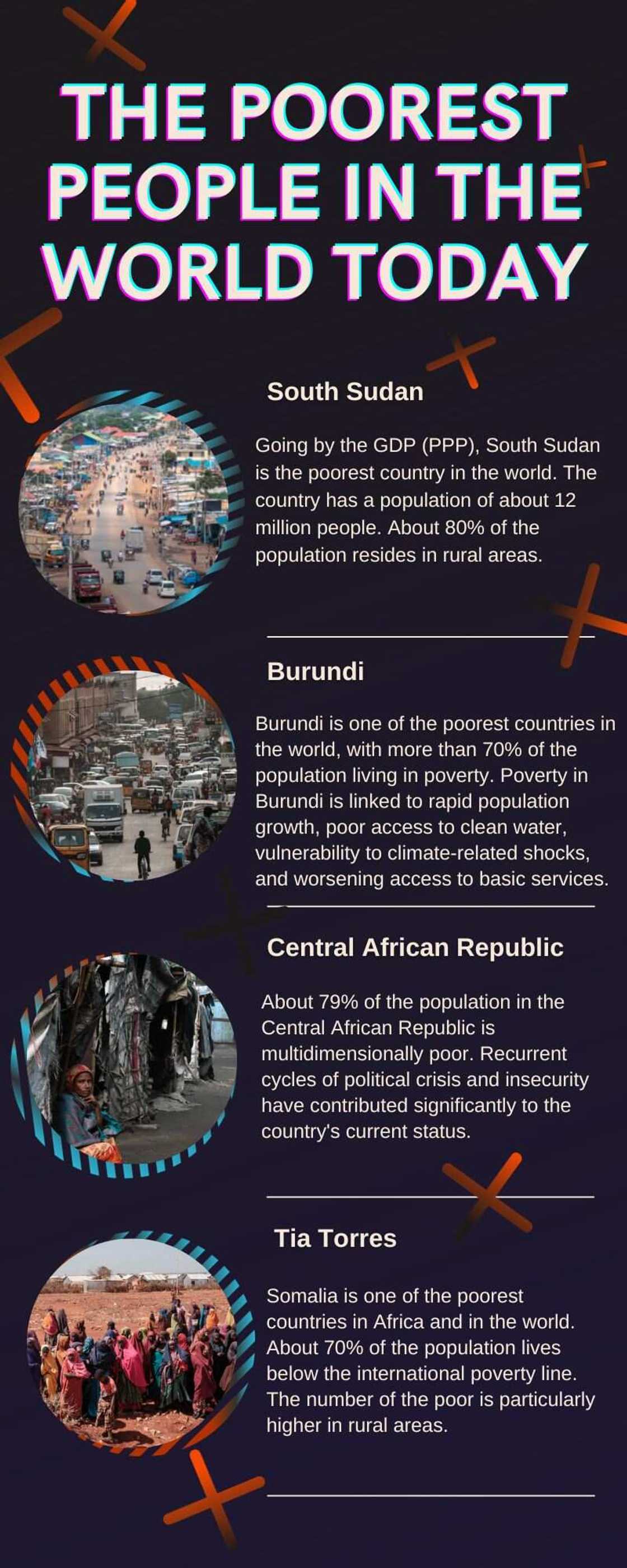
Evaluating the economic standing of nations requires looking beyond simple annual snapshots to understand the complex historical, structural, and geopolitical factors that shape global wealth distribution. When examining the top five poorest countries in the world, economists and international institutions typically rely on Gross Domestic Product (GDP) per capita adjusted for Purchasing Power Parity (PPP). This metric measures the economic output of a country divided by its population while accounting for local living costs and inflation rates, offering a more accurate baseline for comparing standard of living across borders. However, economic output alone only tells part of the story. Persistent poverty is fundamentally intertwined with systemic vulnerabilities, including protracted civil conflict, political instability, geographic landlocks, vulnerability to climate shocks, and limited integration into global trade networks.
Defining Global Poverty and Economic Measurement Metrics
To understand why certain nations consistently rank at the bottom of global economic lists, it is essential to examine how international bodies measure and define national poverty. The primary tool utilized by organizations such as the International Monetary Fund (IMF), the World Bank, and the United Nations Development Programme (UNDP) is Gross Domestic Product (GDP) per capita based on Purchasing Power Parity (PPP).
GDP per Capita vs. Purchasing Power Parity
Gross Domestic Product represents the total monetary value of all finished goods and services produced within a country over a specific time period. Dividing this figure by the total population yields the GDP per capita. However, raw GDP converted into a common currency like US dollars can be misleading because it does not reflect the local cost of living. Purchasing Power Parity adjusts these figures by comparing the cost of a standardized basket of goods and services in different countries.
Even with PPP adjustments, GDP per capita has notable limitations when evaluating human well-being:
- Income Inequality: High national wealth or resource extraction can skew averages while the majority of the population lives in extreme deprivation.
- Informal Economies: A substantial portion of economic activity in developing nations occurs in the informal sector, bypassing official taxation, banking, and statistical recording.
- Non-Market Production: Subsistence agriculture and domestic labor contribute significantly to survival but are difficult to capture accurately in monetary accounting.
The Multidimensional Poverty Index (MPI)
Recognizing the shortcomings of purely financial metrics, the UNDP utilizes the Multidimensional Poverty Index (MPI). The MPI complements monetary poverty measures by capturing severe deprivations that each person faces simultaneously with respect to health, education, and standard of living. By assessing indicators such as child mortality, nutritional status, years of schooling, school attendance, cooking fuel, sanitation, drinking water, electricity, and housing assets, the MPI provides a holistic view of human deprivation.
Overview of the Top Five Poorest Countries
While economic rankings fluctuate slightly year by year due to inflation, currency valuations, and localized crises, a consistent group of nations remains at the lower end of the global GDP per capita (PPP) spectrum. These nations share overlapping structural challenges that impede sustainable economic growth and poverty reduction.
| Country | Primary Economic Sector | Key Structural Challenges | Geographic Context |
|---|---|---|---|
| South Sudan | Subsistence Agriculture, Oil | Civil conflict, institutional fragility, climate shocks | Landlocked in East/Central Africa |
| Burundi | Subsistence Agriculture | High population density, limited arable land, historical conflict | Landlocked in East Africa |
| Central African Republic | Agriculture, Forestry, Mining | Security instability, infrastructure deficits, landlocked trade barriers | Landlocked in Central Africa |
| Democratic Republic of the Congo | Mineral Extraction, Agriculture | Armed conflict, governance challenges, vast infrastructure gaps | Central Africa (limited Atlantic access) |
| Mozambique | Agriculture, Extractive Industries | Climate vulnerability (cyclones), debt burdens, regional insurgency | Coastal Southern Africa |
Detailed Examination of the Five Nations
1. South Sudan
South Sudan gained independence in 2011 following decades of civil war, inheriting an economy almost entirely dependent on subsistence agriculture and oil production. The nation's economy is exceptionally vulnerable to external shocks due to its reliance on petroleum exports for nearly all government revenue and foreign exchange.
The primary driver of severe economic hardship in South Sudan has been internal political instability and localized violent conflict. Armed conflict disrupts agricultural production, displaces rural populations from their lands, and deters foreign direct investment. Furthermore, the country is landlocked, relying heavily on pipelines and transport infrastructure running through neighboring Sudan to export its oil. Regional disruptions directly threaten national fiscal stability. Climate change has compounded these issues, with severe seasonal flooding displacing communities and destroying crops, leading to chronic food insecurity.
2. Burundi
Burundi is a densely populated, landlocked nation in East Africa where the vast majority of the labor force is engaged in subsistence agriculture. Unlike nations rich in extractive resources, Burundi's economy lacks major mineral wealth to leverage on international markets, making it heavily dependent on foreign aid and agricultural exports, primarily coffee and tea.
Several structural factors trap Burundi in extreme poverty:
- Severe Land Scarcity: High population density relative to arable land has led to extreme land fragmentation, declining soil fertility, and intense competition for resources.
- Historical and Political Instability: Periodic political crises and ethnic tensions have disrupted institutional development, damaged infrastructure, and triggered refugee outflows.
- Limited Market Integration: Being landlocked increases transport costs for imports and exports, reducing the competitiveness of Burundian goods on the global market.
3. Central African Republic (CAR)
The Central African Republic possesses significant natural wealth, including diamonds, gold, timber, and fertile agricultural land. Despite these endowments, the nation consistently records one of the lowest GDP per capita figures in the world, illustrating the paradox of resource-rich poverty often referred to as the resource curse.
Prolonged armed conflict and fragility have crippled state institutions and prevented the government from establishing regulatory control over its territory and natural resources. Armed groups frequently control mining and transit routes, depriving the state of legitimate tax revenues. Additionally, the CAR is landlocked, relying on long overland transport corridors through neighboring countries to move goods to and from maritime ports. This geographic disadvantage inflates the cost of imported fuel, equipment, and medical supplies while dampening export revenues.
4. Democratic Republic of the Congo (DRC)
The Democratic Republic of the Congo represents one of the starkest contrasts between natural resource wealth and human poverty. The DRC holds vast global reserves of critical minerals, including cobalt, copper, coltan, and diamonds, which are essential for modern global technology and the green energy transition.
Despite this immense wealth, the country faces profound socio-economic challenges:
- Conflict and Insecurity: Eastern DRC has experienced decades of localized warfare, militia activity, and displacement, undermining security and destroying local economies.
- Infrastructure Deficits: The country spans a massive geographic area with dense rainforests and complex river systems, but it lacks a cohesive national road, rail, and electrical grid infrastructure. Moving goods across the country is logistically difficult and expensive.
- Governance and Corruption: Weak institutional capacity and governance challenges have historically hindered transparent revenue management from mineral extraction, limiting public investment in healthcare, education, and infrastructure.
5. Mozambique
Located in Southern Africa, Mozambique features a long coastline and strategic ports intended to serve as trade gateways for landlocked neighbors like Zimbabwe, Zambia, and Malawi. The economy relies heavily on agriculture, fishing, and increasingly on natural gas and mineral exports.
However, Mozambique's economic progress is continually checked by environmental vulnerabilities and security challenges. The country is highly susceptible to extreme weather events, including recurring tropical cyclones, droughts, and severe flooding that devastate agricultural yields and destroy public infrastructure. In the northern Cabo Delgado province, an ongoing insurgency involving extremist groups has disrupted multi-billion-dollar liquefied natural gas (LNG) projects and displaced hundreds of thousands of people. Compounding these issues, Mozambique has faced macroeconomic instability stemming from historical debt management challenges and high inflation rates.
Common Structural Drivers of Extreme Poverty
Analyzing the commonalities among the world's poorest nations reveals systemic patterns that extend beyond poor governance or simple bad fortune. Understanding these drivers is essential for framing international development strategies and economic policy reforms.
Geography and the Resource Curse
Geographic isolation is a major impediment to economic development. Being landlocked dramatically increases transit costs, delays supply chains, and discourages foreign investment because manufactured goods cannot easily reach global maritime shipping routes. Conversely, abundant natural resources do not automatically guarantee prosperity. In many developing economies, heavy reliance on a single commodity—such as oil, minerals, or timber—exposes the national budget to volatile global market prices. This phenomenon, known as the Dutch disease or the resource curse, often crowds out other productive sectors like manufacturing and agriculture while fueling corruption and rent-seeking behavior.
Fragility, Conflict, and Institutional Capacity
There is a profound, bidirectional relationship between poverty and violent conflict. Poverty increases the risk of civil conflict by limiting state service delivery, fostering horizontal inequalities, and leaving youth vulnerable to recruitment by armed groups. In turn, conflict destroys physical capital, disrupts education and healthcare systems, deters foreign investment, and forces governments to reallocate scarce public funds toward defense and security. Weak state institutions struggle to collect taxes, enforce contracts, protect property rights, and maintain rule of law, creating an environment where formal economic activity cannot thrive.
Climate Vulnerability and Food Security
Developing economies are disproportionately vulnerable to the adverse effects of global climate change. Nations reliant on subsistence agriculture lack the adaptive capacity, irrigation infrastructure, and financial safety nets to withstand prolonged droughts, erratic rainfall patterns, and destructive storms. Climate shocks directly undermine food security, drive rural-to-urban migration, strain urban infrastructure, and trigger humanitarian crises that require emergency international intervention rather than long-term capital investment.
International Frameworks and Pathways Out of Poverty
Addressing extreme poverty requires coordinated efforts between national governments, regional bodies, and international organizations. No single policy can resolve structural poverty, but several interconnected approaches have proven effective in fostering long-term stability and growth.
1. Strengthening Institutions and Governance
Building transparent, accountable state institutions is a prerequisite for sustainable development. This involves improving domestic resource mobilization through efficient tax collection, combating corruption, enforcing anti-money laundering controls, and establishing reliable judicial systems that protect property rights and commercial contracts.
2. Infrastructure Investment and Regional Integration
Bridging infrastructure gaps—particularly in energy generation, transportation networks, and digital connectivity—reduces transaction costs and integrates isolated regions into national and international markets. For landlocked nations, cooperation on transit corridors and customs harmonization with coastal neighbors is vital for trade competitiveness.
3. Human Capital Development
Investing in health, nutrition, and foundational education is essential for breaking intergenerational poverty cycles. A healthy, educated workforce is necessary to transition economies away from low-productivity subsistence farming toward value-added manufacturing, technology services, and modern industry.
4. Climate Resilience and Adaptation
Integrating climate risk management into national planning helps protect vulnerable populations from environmental shocks. Investments in drought-resistant crops, modern irrigation systems, early warning weather networks, and sustainable land management practices are critical for safeguarding food security and rural livelihoods.
Frequently Asked Questions
How is the poverty ranking of a country determined?
International organizations primarily use Gross Domestic Product (GDP) per capita adjusted for Purchasing Power Parity (PPP). This metric divides a nation's total economic output by its population while factoring in local price levels, allowing for more accurate economic comparisons between nations with different cost-of-living standards.
Why do some resource-rich countries remain poor?
This phenomenon is often described as the resource curse. Nations heavily dependent on a single commodity—such as oil, diamonds, or minerals—frequently experience currency appreciation that hurts other export sectors, volatile global prices, and governance challenges related to revenue management, which can fuel corruption and neglect of broad-based human capital development.
What role does geography play in national poverty?
Geographic factors such as being landlocked significantly increase the cost of importing and exporting goods, limiting participation in global trade. Additionally, vulnerability to extreme climate events, lack of navigable rivers, and hostile terrain can severely constrain agricultural productivity and infrastructure development.
Is foreign aid effective in reducing poverty in the poorest nations?
Foreign aid plays a critical role in providing humanitarian relief, funding emergency healthcare, and building basic infrastructure in fragile states. However, its long-term effectiveness depends heavily on the presence of stable governance, transparent institutional frameworks, and coordination between donors and local authorities to avoid dependency and ensure sustainable capacity-building.
How does conflict impact economic development?
Violent conflict destroys physical infrastructure, displaces productive labor forces, deters foreign and domestic investment, and forces governments to divert scarce public funds from education, healthcare, and infrastructure toward security and defense expenditures, creating a persistent cycle of instability and economic stagnation.
Conclusion
Examining the top five poorest countries in the world reveals a complex convergence of historical challenges, geographic disadvantages, structural vulnerabilities, and governance hurdles. While statistical metrics like GDP per capita (PPP) provide a baseline for measuring economic output, sustainable progress requires looking beyond numbers to address the root causes of fragility and deprivation. By prioritizing institutional reform, climate resilience, human capital investment, and regional economic integration, developing nations can build the foundations necessary to escape chronic poverty and foster long-term prosperity.