Business-to-Consumer (B2C) commerce encompasses the direct sale of products and services from businesses to individual end-users. It bridges supply chains and consumer demand through digital storefronts, marketplaces, omnichannel logistics, and targeted marketing models that prioritize frictionless transactions, personalization, and streamlined user experiences.
Defining B2C Commerce in the Modern Marketplace
B2C commerce represents the traditional retail dynamic updated for digital and physical ecosystems. Unlike Business-to-Business (B2B) transactions—which typically involve complex contract negotiations, bulk pricing tiers, and multi-layered approval chains—B2C commerce focuses on high-volume, single-item or small-batch transactions directly with the ultimate consumer.
The primary objective of a B2C framework is to reduce friction at every stage of the customer journey. This requires an integrated approach to brand discovery, catalog browsing, secure checkout processing, fulfillment logistics, and post-purchase customer support. While the concept originated with brick-and-mortar storefronts and mail-order catalogs, modern B2C commerce is overwhelmingly digital, driven by web browsers, mobile applications, social commerce channels, and automated retail technologies.
Core Characteristics of B2C Transactions
To fully grasp the scope of B2C commerce, it is helpful to examine its operational mechanics. These characteristics dictate how companies structure their technology stacks, marketing budgets, and customer service operations:
- Shorter Sales Cycles: Decisions are typically made independently by a single consumer within minutes or days, rather than weeks or months.
- Emotional and Impulse-Driven Purchases: Visual merchandising, persuasive copywriting, targeted advertising, and limited-time offers heavily influence buying behavior.
- High Transaction Volume with Lower Average Order Value (AOV): Merchants process large quantities of orders, necessitating automated inventory management and efficient shipping logistics.
- Standardized Pricing: Products generally feature fixed retail prices, though dynamic pricing algorithms and personalized discount codes are increasingly common.
- Broad Target Audiences: Marketing messaging must appeal to diverse consumer demographics rather than niche procurement committees.
The Evolution from Traditional Retail to Digital B2C Ecosystems
The mechanics of B2C commerce have shifted radically over the past few decades. Understanding this evolution provides context for why modern retail technology operates the way it does.
- Physical Retail Era
- E-Commerce Web Era
- Mobile & Omnichannel Era
- AI & Composable Commerce
1. The Physical Retail Era
Historically, B2C commerce was synonymous with physical real estate. Department stores, specialty boutiques, and shopping malls served as the primary touchpoints between brands and consumers. Geographic proximity dictated market reach, and inventory visibility was limited to what was physically present on shelves or in backrooms.
2. The Early E-Commerce Web Era
The late 1990s and early 2000s introduced static web storefronts. Pioneers digitized product catalogs, allowing consumers to purchase goods online using credit cards for home delivery. However, these early systems suffered from slow page loads, basic payment gateways, and isolated inventory systems that frequently led to stockouts.
3. The Mobile and Omnichannel Era
With the proliferation of smartphones and high-speed mobile internet, B2C commerce fractured into an omnichannel environment. Consumers expected to research products on mobile apps, purchase via desktop computers, pick up orders in physical stores, or return items through third-party drop-off points. Omnichannel synchronization became the benchmark for competitive survival.
4. Modern AI and Composable Commerce
Today, B2C commerce leverages headless architecture—decoupling the front-end user presentation layer from the back-end commerce engine—alongside artificial intelligence. Machine learning algorithms power real-time product recommendations, dynamic pricing, automated fraud detection, and conversational commerce chatbots, creating hyper-personalized experiences at scale.
Key Business Models Within B2C Commerce
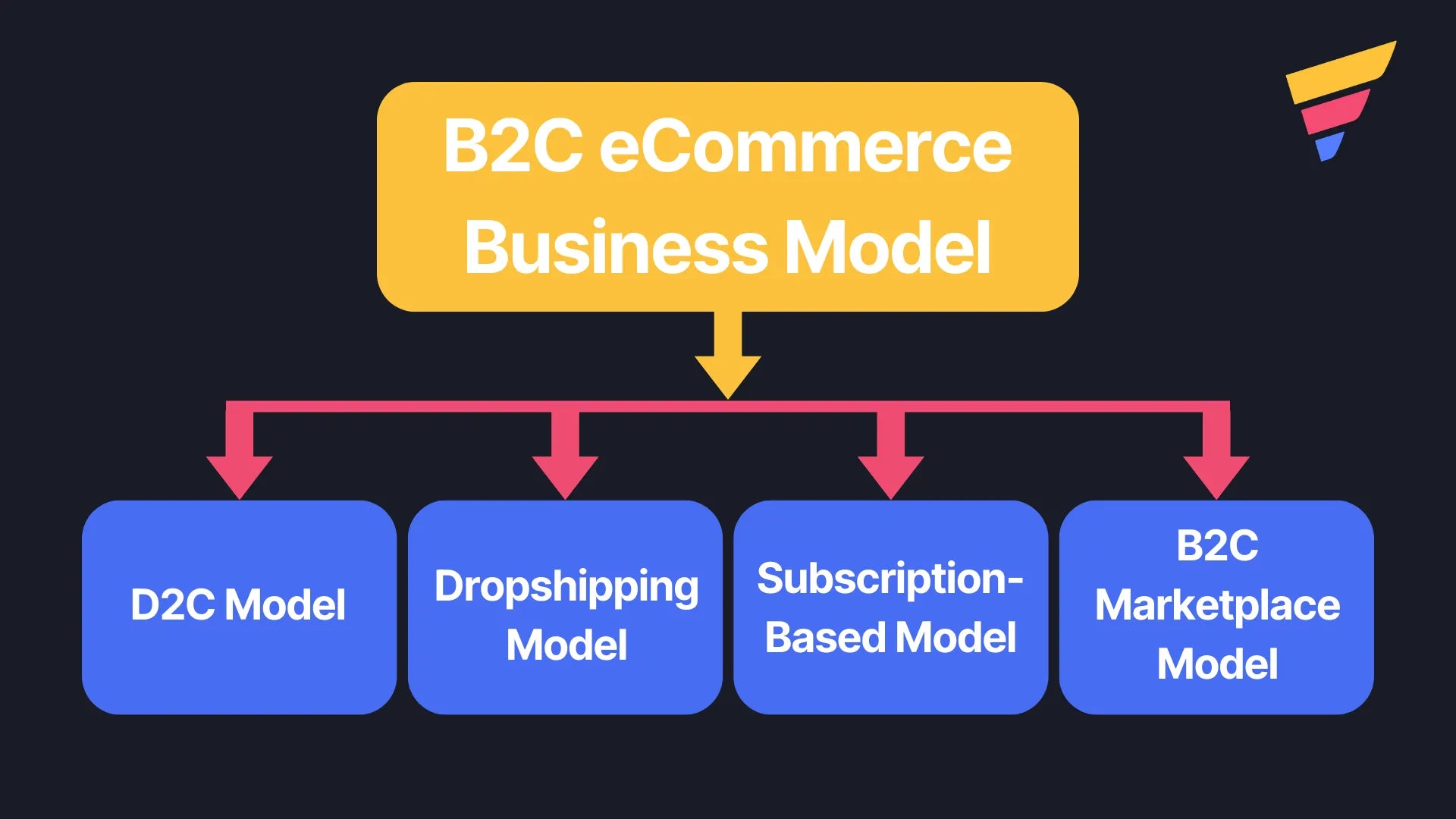
B2C commerce is not a monolith; it encompasses several distinct business models, each with unique supply chain requirements, margin structures, and customer acquisition strategies.
Direct-to-Consumer (D2C)
In a D2C model, manufacturers sell their proprietary products directly to end-users without intermediaries like wholesalers or traditional big-box retailers. This approach allows brands to retain higher profit margins, control their brand narrative, and collect valuable first-party customer data.
Retail E-Commerce (Pure-Play and Brick-and-Click)
- Pure-Play E-Commerce: Retailers operate exclusively online without physical storefronts. They compete heavily on search engine visibility, user experience, and rapid shipping logistics.
- Brick-and-Click: Traditional physical retailers integrate digital storefronts with physical store networks, enabling services like Buy Online, Pick Up In Store (BOPIS) and Ship-from-Store.
Online Marketplaces
Marketplaces act as digital intermediaries that host multiple third-party sellers on a single platform. The marketplace operator provides the infrastructure, payment processing, and traffic acquisition, while individual merchants manage their own product listings and fulfillment.
Subscription-Based Commerce
Subscription models trade one-off transactions for recurring revenue streams. These typically fall into three categories: curation boxes (surprise assortments of niche goods), replenishment services (automated delivery of consumable household items), and access subscriptions (membership models offering perks like free shipping or exclusive content).
Comparative Analysis of B2C Commerce Models
| Model | Primary Advantage | Operational Challenge | Typical Margin Structure |
|---|---|---|---|
| Direct-to-Consumer (D2C) | First-party data ownership; high margins | High customer acquisition costs (CAC) | High |
| Pure-Play E-Commerce | Low overhead compared to physical real estate | Intense price competition; shipping logistics | Moderate |
| Brick-and-Click | Existing brand trust; flexible fulfillment options | Complex inventory synchronization | Moderate to Low |
| Online Marketplaces | Massive built-in traffic; rapid scaling | High platform fees; strict compliance rules | Variable (Commission-based) |
| Subscription Services | Predictable, recurring revenue streams | Customer churn; high fulfillment complexity | High (at scale) |
Critical Components of a B2C Technology Stack
To execute successful B2C transactions, merchants rely on an interconnected ecosystem of software applications. Selecting and integrating these components determines platform stability, conversion rates, and operational efficiency.
E-Commerce Platforms
The foundational software that hosts the product catalog, manages shopping carts, and processes orders. Solutions range from monolithic SaaS platforms (such as Shopify or BigCommerce) to open-source systems (such as WooCommerce or Magento/Adobe Commerce) and enterprise headless architectures.
Customer Relationship Management (CRM) and Marketing Automation
B2C commerce relies on continuous customer engagement. CRM platforms track user interactions across email, SMS, push notifications, and social media, enabling automated behavioral triggers—such as abandoned cart reminders or personalized post-purchase follow-ups.
Payment Gateways and Security Infrastructure
Payment processing must be frictionless yet secure. B2C platforms integrate with payment gateways (such as Stripe, PayPal, or Apple Pay) to support diverse payment methods including credit cards, digital wallets, and Buy Now, Pay Later (BNPL) services. Platforms must maintain compliance with the Payment Card Industry Data Security Standard (PCI-DSS).
Order Management Systems (OMS) and Fulfillment
An OMS orchestrates inventory tracking across multiple warehouses, retail stores, and third-party logistics (3PL) providers. It determines the most cost-effective fulfillment route, generates shipping labels, and updates customers with real-time tracking information.
Operational Challenges and Risk Management in B2C
Operating a B2C commerce enterprise involves navigating significant operational hurdles. Failing to address these challenges can erode profit margins and damage brand reputation.
Customer Acquisition Cost (CAC) vs. Customer Lifetime Value (LTV)
Rising advertising costs on major digital ad platforms have inflated customer acquisition costs. Sustainable B2C businesses must focus on increasing customer lifetime value through retention strategies, loyalty programs, and exceptional post-purchase support rather than relying solely on one-off acquisition.
Reverse Logistics and Returns Management
Returns are an inherent cost of B2C commerce, particularly in apparel and footwear categories where sizing uncertainty is high. Processing, inspecting, and restocking returned merchandise requires dedicated labor and logistics infrastructure. Merchants must establish clear return policies that balance consumer convenience with operational cost control.
Fraud Prevention and Cybersecurity
Digital transactions are vulnerable to chargeback fraud, stolen credit card credentials, and bot-driven inventory hoarding during flash sales. Merchants deploy machine learning fraud detection tools to screen transactions in real time without creating excessive friction for legitimate buyers.
Frequently Asked Questions About B2C Commerce
What is the main difference between B2C and B2B commerce?
B2C commerce involves selling products or services directly to individual consumers for personal use, characterized by short sales cycles and fixed pricing. B2B commerce involves transactions between businesses, featuring complex contract negotiations, bulk ordering, tiered pricing structures, and multiple decision-makers.
What does headless commerce mean in a B2C context?
Headless commerce is an architectural approach that separates the front-end user interface (what the customer sees and interacts with) from the back-end commerce engine (inventory, checkout, and order management) via APIs. This allows brands to deliver highly customized shopping experiences across mobile apps, smart devices, and IoT displays without rebuilding their core commerce infrastructure.
How do B2C companies calculate customer lifetime value?
Customer Lifetime Value (LTV) is calculated by multiplying the average purchase value by the average purchase frequency rate, and then multiplying that figure by the average customer lifespan. In B2C commerce, tracking LTV helps businesses determine how much they can afford to spend on customer acquisition.
Why is omnichannel strategy critical for modern B2C brands?
Modern consumers frequently switch between digital devices and physical stores during their shopping journey. An omnichannel strategy unifies inventory, customer data, and brand messaging across all touchpoints, ensuring a seamless experience whether a customer buys via an Instagram ad, a mobile app, or in a physical store.
Strategic Next Steps for B2C Operations
For organizations evaluating or scaling their presence in the B2C sector, the immediate priority should be auditing the customer journey from discovery to post-purchase fulfillment.
- Evaluate Platform Scalability: Ensure current e-commerce architecture can handle peak traffic periods without latency issues.
- Optimize Mobile Conversion: Review mobile checkout flows to eliminate unnecessary form fields and integrate one-click digital wallet payments.
- Refine Logistics Partnerships: Audit 3PL agreements and shipping SLAs to protect delivery speeds while managing freight costs.
- Strengthen Data Privacy Compliance: Verify that data collection practices align with regional privacy regulations such as GDPR and CCPA.