The ICD-10-CM code I11.0 is the specific diagnosis code used to report hypertensive heart disease with heart failure. According to the 2026 ICD-10-CM Official Guidelines for Coding and Reporting, this code requires an additional secondary code from category I50 (Heart failure) to identify the specific type and stage of heart failure present.
Hypertension is a chronic condition that serves as a primary driver for various cardiovascular complications. When a patient presents with both hypertension and heart failure, the medical coding process becomes specialized due to the presumed causal relationship between these two conditions. As of 2026, the clinical documentation must be precise to ensure that the severity of the patient's condition is accurately reflected in their medical record and subsequent insurance claims.
The Clinical Definition of I11.0
Code I11.0 represents a combined diagnosis. In clinical terms, hypertensive heart disease refers to the changes in the heart muscle and coronary arteries caused by chronically high blood pressure. This often manifests as left ventricular hypertrophy (LVH), coronary artery disease, or heart failure.
When a physician documents that a patient has heart failure due to hypertension, or simply documents both conditions, the ICD-10-CM classification system assumes a link. This "presumed link" is a cornerstone of cardiovascular coding. Unless the provider specifically states that the heart failure is unrelated to the hypertension, the coder is directed to use the combination code I11.0.
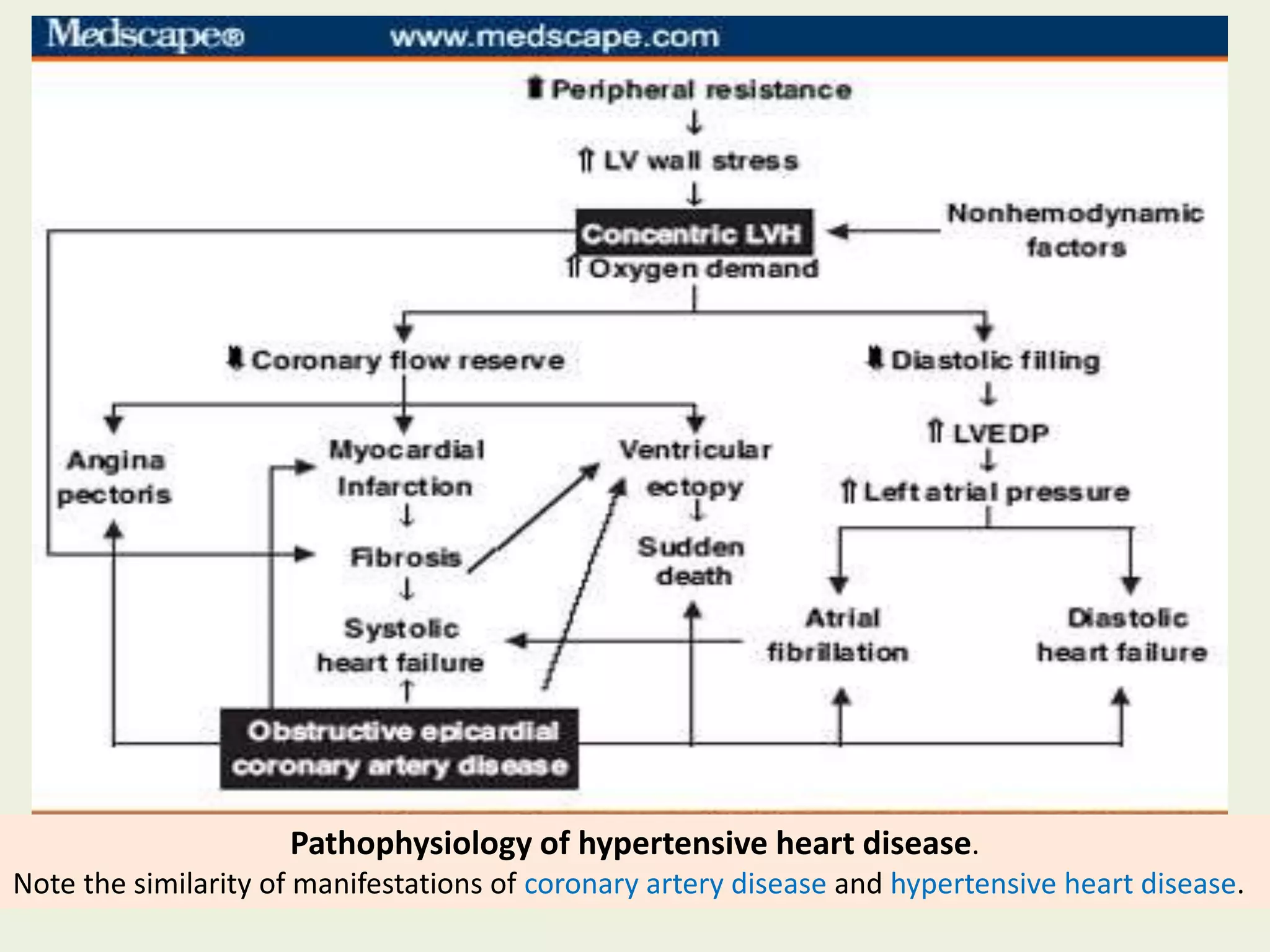
Pathophysiology of Hypertensive Heart Disease
To understand the importance of this code, one must look at the physiological progression it represents. Chronic hypertension increases the afterload on the heart, forcing the left ventricle to work harder to pump blood into the systemic circulation. Over time, this results in:
- Myocardial Hypertrophy: The walls of the heart thicken to compensate for the pressure, leading to decreased elasticity.
- Diastolic Dysfunction: The stiffened heart muscle cannot relax properly, preventing the chambers from filling with enough blood.
- Systolic Dysfunction: Eventually, the heart muscle may weaken and stretch (dilation), leading to an inability to pump blood effectively.
When these stages culminate in the clinical syndrome of heart failure—where the heart cannot meet the metabolic demands of the body—the diagnosis shifts from simple hypertension (I10) to hypertensive heart disease with heart failure (I11.0).
Coding Guidelines and Sequencing for I11.0
The ICD-10-CM manual contains specific "Instructional Notes" that dictate how I11.0 must be reported. Following these rules is essential for compliance and to avoid claim denials.
The "Use Additional Code" Instruction
One of the most critical aspects of using I11.0 is the instruction to "use an additional code" to identify the type of heart failure. You cannot report I11.0 in isolation if the specific type of heart failure is known. The secondary code will come from the I50.- category.
Common secondary codes include:
- I50.2-: Systolic (congestive) heart failure.
- I50.3-: Diastolic (congestive) heart failure.
- I50.4-: Combined systolic and diastolic (congestive) heart failure.
- I50.9: Heart failure, unspecified.
The "With" Rule in ICD-10-CM
The word "with" in the ICD-10-CM Alphabetic Index is a term of art. It dictates that hypertension and heart failure should be coded as related even if the provider does not explicitly link them with phrases like "due to" or "caused by." This assumption stands unless the documentation clearly states they are unrelated (e.g., heart failure due to a different etiology like chemotherapy or a distinct viral myocarditis).
Sequencing Priority
In most clinical encounters where the focus is the management of hypertensive heart failure, I11.0 is sequenced as the primary (first-listed) diagnosis. The specific heart failure code (category I50) follows as a secondary diagnosis. This hierarchy informs the payer that the underlying cause of the cardiac failure is the patient's chronic hypertensive state.
Comparison of Related ICD-10 Codes
Because cardiovascular conditions often overlap, it is easy to confuse I11.0 with other hypertensive or cardiac codes. The following table highlights the differences between I11.0 and its closely related counterparts in the 2026 code set.
| ICD-10 Code | Description | When to Use |
|---|---|---|
| I10 | Essential (primary) hypertension | Use when the patient has high blood pressure without heart or kidney involvement. |
| I11.0 | Hypertensive heart disease with heart failure | Use when both hypertension and heart failure are present; requires a code from I50. |
| I11.9 | Hypertensive heart disease without heart failure | Use when hypertension has caused heart changes (like LVH) but the patient is not in heart failure. |
| I13.0 | Hypertensive heart and chronic kidney disease with heart failure and stage 1-4/unspecified CKD | Use when the patient has hypertension, heart failure, and chronic kidney disease. |
| I13.2 | Hypertensive heart and chronic kidney disease with heart failure and stage 5 CKD or ESRD | Use for the most severe triad of hypertension, heart failure, and end-stage renal disease. |
| I50.9 | Heart failure, unspecified | Use only as a secondary code to I11.0 if the specific type (systolic/diastolic) is not documented. |
Documentation Requirements for 2026
For a medical coder to accurately assign I11.0, the physician's documentation must be robust. In the current 2026 healthcare environment, there is a heavy emphasis on specificity to support Hierarchical Condition Categories (HCC) and value-based care models.
Specificity in Heart Failure
Physicians should avoid simply writing "CHF" or "Heart Failure." To maximize the accuracy of the coding, the documentation should specify:
- Acuity: Is the heart failure acute, chronic, or acute on chronic?
- Type: Is it systolic (reduced ejection fraction), diastolic (preserved ejection fraction), or combined?
For example, a complete diagnostic statement would be: "Chronic systolic heart failure due to hypertensive heart disease." This allows the coder to assign I11.0 followed by I50.22 (Chronic systolic heart failure).
Left Ventricular Hypertrophy (LVH)
While LVH is a component of hypertensive heart disease, if heart failure is present, I11.0 takes precedence. If a patient has hypertension and LVH but not heart failure, the correct code would be I11.9 (Hypertensive heart disease without heart failure). Coders must look for signs of pulmonary edema, orthopnea, or decreased ejection fraction in the clinical notes to determine if the move from I11.9 to I11.0 is justified.
Impact on Risk Adjustment (HCC Coding)
In 2026, the use of I11.0 is significant for Medicare Advantage and other risk-adjusted payment models. Hypertensive heart disease with heart failure carries a higher Risk Adjustment Factor (RAF) score than hypertension alone.
Because I11.0 represents a multi-system complication, it indicates a higher level of complexity and resource consumption. If a coder misses the relationship between the hypertension and the heart failure—coding them as separate, unrelated conditions (e.g., I10 and I50.9)—the health plan or provider group may be underfunded for the actual care required by that patient. Proper use of the combination code ensures that the severity of illness (SOI) and risk of mortality (ROM) are correctly captured.
Common Coding Errors and How to Avoid Them
Even experienced coders can encounter pitfalls with hypertensive heart disease. Avoiding these common mistakes ensures cleaner claims and better data integrity.
1. Failing to Code the Heart Failure Type
As mentioned, I11.0 is almost never used alone. A frequent error is omitting the I50.- code. Without the secondary code, the diagnosis is incomplete, and the level of detail regarding the patient's cardiac function is lost.
2. Misusing I11.0 for Secondary Hypertension
I11.0 is intended for essential (primary) hypertension. If the patient's high blood pressure is caused by another condition (such as renal artery stenosis or an endocrine disorder), you must use codes from category I15 (Secondary hypertension) instead. In those cases, the heart failure would be coded separately, and the "presumed link" rule does not apply in the same way.
3. Overlooking Chronic Kidney Disease (CKD)
If a patient has hypertension, heart failure, and CKD, you must skip the I11 category and move to the I13 category (Hypertensive heart and chronic kidney disease). Category I13 acts as a "super-combination" code that captures all three conditions. Using I11.0 when the patient also has CKD is a sequencing error.
Practical Examples of I11.0 Application
To clarify the application of these rules, consider the following scenarios:
Scenario A: A patient is admitted for an exacerbation of their chronic diastolic heart failure. The patient has a long history of essential hypertension.
- Primary Code: I11.0 (Hypertensive heart disease with heart failure)
- Secondary Code: I50.32 (Chronic diastolic heart failure)
- Note: Even though the "exacerbation" might suggest an acute code, the coder must verify if the physician documented "acute on chronic."
Scenario B: A patient is seen for a routine check-up. The doctor notes the patient has "hypertension and compensated CHF."
- Primary Code: I11.0 (Hypertensive heart disease with heart failure)
- Secondary Code: I50.9 (Heart failure, unspecified)
- Note: Because the specific type of CHF (systolic vs. diastolic) is not mentioned, the unspecified code is used, but the combination code I11.0 is still required.
Frequently Asked Questions
What is the difference between I11.0 and I50.9?
I11.0 identifies the cause of the heart failure as hypertension, while I50.9 is a generic code for heart failure that doesn't specify an etiology or type. In ICD-10-CM, when hypertension and heart failure coexist, I11.0 must be used as the primary code, and I50.9 (or a more specific I50 code) is used as a secondary code.
Can I11.0 be used if the physician says the heart failure is due to CAD?
No. If the physician explicitly states that the heart failure is due to Coronary Artery Disease (CAD) and not hypertension, the "with" rule is overridden. You would code the CAD and the heart failure separately, and hypertension (I10) would be an additional secondary diagnosis.
Is I11.0 an HCC code?
Yes, I11.0 is a significant code in the Hierarchical Condition Category (HCC) model. It maps to specific categories that influence the risk-adjusted payment for patients, particularly in Medicare Advantage plans, because it denotes a chronic, complex condition.
Does I11.0 include pulmonary hypertension?
No. Pulmonary hypertension is coded to category I27 (Other secondary pulmonary heart diseases). I11.0 is strictly for systemic essential hypertension affecting the heart.
Why do I need two codes for hypertensive heart failure?
The ICD-10-CM structure uses the first code (I11.0) to establish the systemic link between the high blood pressure and the cardiac damage. The second code (from category I50) provides the clinical detail about how the heart is failing (e.g., is it a pumping problem or a filling problem?). Both are necessary for a complete clinical picture.
Final Recommendations for Accurate Coding
To ensure the highest level of accuracy when using ICD-10 code I11.0 in 2026, healthcare organizations should focus on the following actions:
- Enhance Provider Documentation: Encourage physicians to specify the type of heart failure (systolic, diastolic, or combined) and the acuity (acute, chronic, or acute on chronic).
- Verify the Presence of CKD: Always check the patient's creatinine and GFR levels. If CKD is present along with hypertensive heart failure, the code must shift from I11.0 to the I13 category.
- Audit Causal Relationships: While the "with" rule allows for a presumed link, coders should still look for documentation that might attribute heart failure to non-hypertensive causes to ensure the most accurate diagnostic mapping.
- Stay Updated on Guidelines: Coding guidelines can see minor adjustments annually. Always reference the most recent Official Guidelines for Coding and Reporting provided by the CDC and CMS.
By adhering to these standards, medical professionals ensure that their coding accurately reflects patient complexity, supports medical necessity for treatments, and maintains compliance with national healthcare regulations.