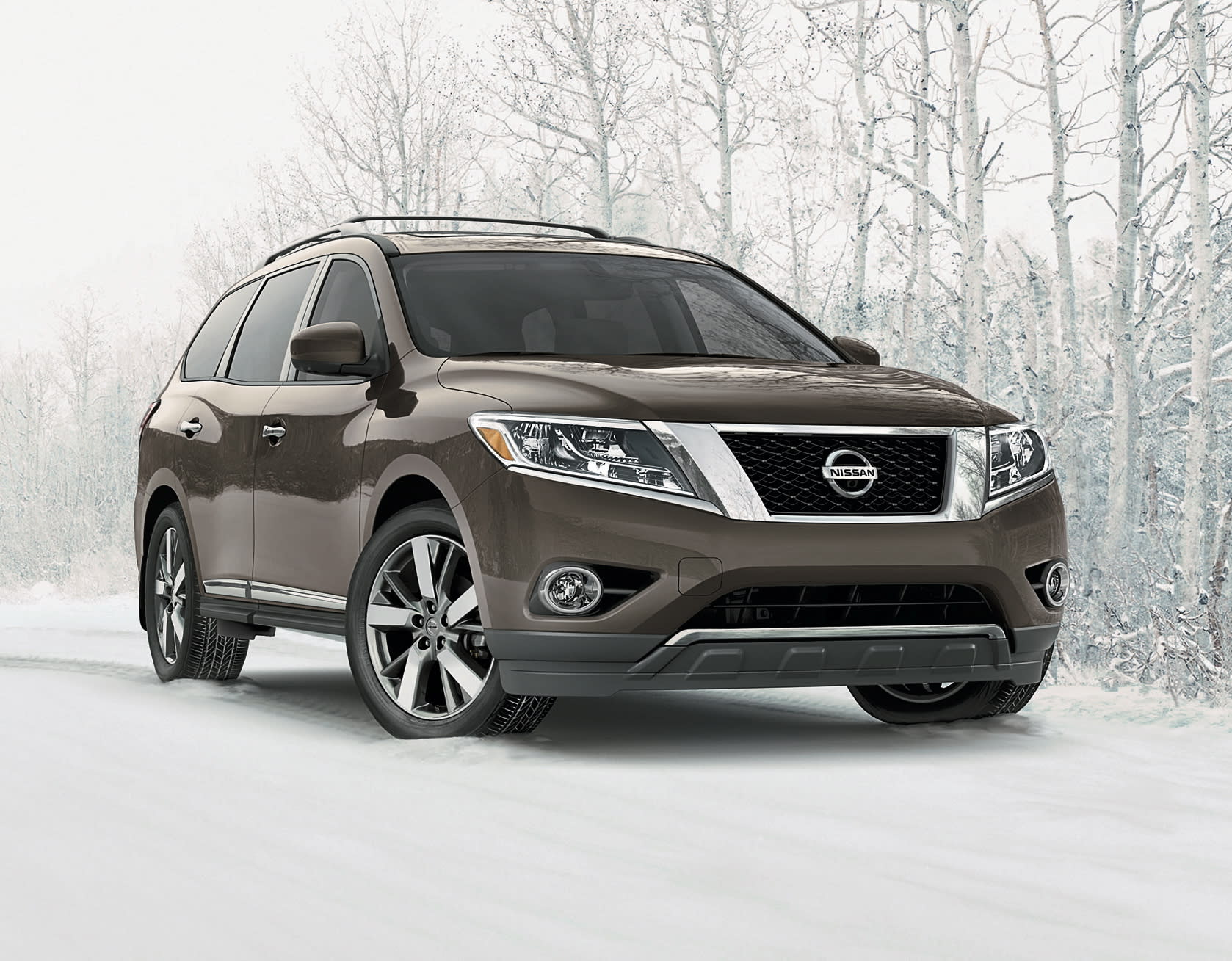
The 2017 Nissan Pathfinder has been subject to several significant safety recalls involving fire risks, airbag failures, and mechanical hazards. As of 2026, it is vital for current owners and used car buyers to verify that critical repairs, particularly the ABS actuator and hood latch replacements, have been performed by an authorized Nissan technician to ensure vehicle safety and longevity.
The 2017 Nissan Pathfinder represents a midpoint in the fourth generation of Nissan’s popular mid-size SUV. While it offered significant improvements in towing capacity and engine performance over previous years, its legacy has been somewhat complicated by a series of high-profile safety recalls. For owners and prospective buyers in 2026, understanding these recalls is not just a matter of maintenance—it is a critical safety requirement. Federal law requires manufacturers to provide recall repairs free of charge, regardless of the vehicle's age or mileage, provided the vehicle is within the 15-year window from the original sale date.
Identifying and Verifying Recalls for Your Vehicle
Before diving into the technical specifics of the 2017 Pathfinder’s history, every owner must know how to verify their specific vehicle's status. Recalls are often issued based on specific production dates, assembly plants, or component batches. Therefore, not every 2017 Pathfinder is affected by every recall listed below.
The most reliable method for verification is the Vehicle Identification Number (VIN). This 17-character code is unique to your SUV and can be found on the driver’s side dashboard (visible through the windshield) or on the driver’s side door jamb sticker.
How to Check Your VIN Status
- NHTSA Recall Tool: Visit the National Highway Traffic Safety Administration (NHTSA) website and enter your VIN. This database provides real-time information on any "open" recalls—those that have been issued but not yet repaired on your specific vehicle.
- Nissan Owner Portal: Nissan maintains a dedicated recall lookup tool on its official website. This tool often provides more specific details regarding the availability of parts at local dealerships.
- The MyNissan App: For modern owners, the official Nissan mobile application can track vehicle health and alert you to new safety campaigns.
If an open recall is found, the remedy must be performed by a franchised Nissan dealership. Independent mechanics cannot "clear" a federal safety recall in the official database, nor are they reimbursed by the manufacturer for these specific repairs.
Critical Recall: ABS Actuator Pump and Fire Risk
Perhaps the most severe issue facing the 2017 Nissan Pathfinder involves the Anti-lock Braking System (ABS) actuator. This recall (NHTSA Campaign Number 19V807000, which expanded upon earlier 2018 campaigns) addressed a catastrophic failure point where the internal seal of the ABS actuator pump could leak brake fluid onto the system's internal circuit board.
Technical Failure Mode
Brake fluid is essential for hydraulic pressure, but it is also chemically corrosive and, under certain conditions, conductive. When the seal in the pump fails, fluid seeps into the electronics. This leads to a short circuit in the ABS control unit. Because this component is constantly powered to monitor the vehicle’s braking readiness, a short circuit can occur even while the vehicle is turned off and parked.
The Warning Signs
Owners were traditionally told to look for the ABS Warning Lamp on the dashboard. If this light remains illuminated for more than a few seconds after starting the engine, it indicates a system fault. In the context of this recall, a lit ABS light coupled with a "burning" smell or smoke from the engine compartment is an emergency.
The Remedy in 2026
Nissan’s fix involves inspecting the serial number of the ABS actuator. If the part falls within the defective batch, the dealer will replace the entire actuator assembly with a redesigned unit that features improved sealing. In 2026, if you are buying a used Pathfinder, this is the first item to verify, as unaddressed units remain a legitimate fire hazard.
Airbag Safety: The Occupant Classification System (OCS)
Airbag technology relies on sophisticated sensors to determine when and how to deploy. The 2017 Pathfinder was part of a massive Nissan recall (NHTSA Campaign 16V244000) involving the Occupant Classification System (OCS).
The Nature of the Defect
The OCS is designed to detect whether a person is sitting in the front passenger seat and to estimate their weight. This is a safety feature intended to prevent an airbag from deploying with full force (or at all) if a small child or an empty seat is detected. In affected Pathfinders, the OCS software could incorrectly classify an adult passenger as a child or as an empty seat.
If the system misclassifies an adult, the passenger-side frontal airbag will be deactivated. In the event of a collision, this passenger would have no airbag protection, significantly increasing the risk of injury or death.
Resolution and Verification
The fix for this issue was primarily a software recalibration. Dealers update the OCS control unit with new logic to more accurately distinguish between passengers and objects. Unlike mechanical recalls, this software fix leaves no visible change to the vehicle, making a VIN check the only way to confirm completion.
The Hood Latch Corrosion Issue
In 2022, Nissan issued a recall (NHTSA Campaign 22V439000) for several model years of the Pathfinder, including the 2017 edition, regarding the secondary hood latch. This recall highlights how environmental factors can turn a small mechanical part into a major safety liability.
Why the Latch Fails
The secondary hood latch is a safety backup. If the primary latch (the one you release from inside the cabin) fails or is not fully closed, the secondary latch is supposed to catch the hood and prevent it from flying open while the vehicle is in motion.
Nissan found that the bell crank of the secondary latch could accumulate dust and road salt, leading to corrosion. This corrosion can cause the latch to bind in the "open" position. If the primary latch is released accidentally or fails, the hood can flip up against the windshield, completely obstructing the driver's view and potentially causing a high-speed accident.
Long-term Maintenance for 2026
The official remedy involves cleaning and lubricating the latch or replacing it if it shows signs of excessive wear. For owners in 2026, especially those in "Salt Belt" states where road de-icing is common, regular inspection of this latch during oil changes is a recommended best practice, even if the recall has already been performed.
Brake Light Switch and Transmission Issues
A less life-threatening but highly disruptive recall (NHTSA Campaign 21V020000) concerned the brake light switch. This component is located near the brake pedal and tells the vehicle when the brakes are applied.
Symptoms of Failure
A faulty brake light switch in the 2017 Pathfinder can lead to several problematic scenarios:
- Constant Brake Lights: The exterior brake lights may stay on even when the pedal is not depressed, confusing other drivers.
- Battery Drain: Because the brake lights remain on, the battery can die overnight.
- Shift Interlock Issues: The driver may find it impossible to shift the vehicle out of "Park" because the computer does not "see" that the brake is being pressed.
- Engine Start Failures: For push-button start models, the engine may refuse to start for the same reason.
The Fix
Nissan dealers replace the faulty switch and adjust the position of the switch bracket. This ensures proper electrical contact and prevents the mechanical sticking that caused the initial failure.
2017 Nissan Pathfinder Recall Summary Table
The following table summarizes the primary safety recalls associated with the 2017 Nissan Pathfinder. This data is current as of 2026.
| Component | NHTSA Campaign # | Potential Consequence | Remedy |
|---|---|---|---|
| ABS Actuator | 19V807000 | Engine compartment fire | Inspection and replacement of ABS pump |
| Airbag (OCS) | 16V244000 | Airbag non-deployment in a crash | Software update/reprogramming |
| Secondary Hood Latch | 22V439000 | Hood opening while driving | Cleaning, lubrication, or replacement |
| Brake Light Switch | 21V020000 | Constant brake lights / Start failure | Switch replacement and adjustment |
| Rearview Camera | 19V710000 | Loss of rear visibility | Software update for infotainment unit |
Beyond Recalls: Technical Service Bulletins (TSBs)
While recalls are federally mandated for safety issues, Technical Service Bulletins (TSBs) are internal communications from Nissan to its technicians regarding common non-safety problems. For the 2017 Pathfinder, several TSBs are of equal importance to owners in 2026, particularly regarding the Continuously Variable Transmission (CVT).
The 2017 model year features an improved Xtronic CVT compared to earlier versions (2013–2015), but it is not immune to issues. Owners often report "judder" or "shuddering" during acceleration. Nissan has released several TSBs (such as NTB17-039) that provide specific diagnostic steps for these vibrations. In many cases, a software update to the Transmission Control Module (TCM) can resolve the issue, but in others, a sub-assembly replacement is required.
Unlike recalls, TSB repairs are typically only covered under the original powertrain warranty (5 years/60,000 miles) or an extended service contract. By 2026, most 2017 Pathfinders will be out of the standard warranty period, making these repairs out-of-pocket expenses unless a specific warranty extension was granted.
Safety and Financial Implications for Owners in 2026
Ignoring a recall is a significant risk that extends beyond physical safety. In 2026, the used car market is highly sensitized to vehicle history reports. An "open" recall on a vehicle history report (like CARFAX or AutoCheck) can significantly reduce the trade-in or resale value of your Pathfinder.
Furthermore, insurance companies may, in some jurisdictions, investigate whether unaddressed recalls contributed to a claim. For example, if a fire occurs due to the ABS actuator after the owner was notified of the recall but failed to act, the insurance company might scrutinize the claim.
Steps to Take If You Own a 2017 Pathfinder
- Verify Status: Use your VIN on the NHTSA website.
- Contact a Dealer: Even if you are the third or fourth owner, the dealer is obligated to perform the fix for free.
- Request a Loaner: For long-duration repairs like the ABS actuator, ask the dealer if Nissan corporate provides rental car assistance.
- Keep Records: Ensure you receive a paper receipt showing the recall was "Closed" or "Completed."
Frequently Asked Questions
Do I have to pay for recall repairs on a 10-year-old car?
No. Under federal law, safety recalls are free of charge for the owner as long as the vehicle is less than 15 years old from the date of the original sale. Since the 2017 Pathfinder is approximately nine years old in 2026, all safety recalls remain free of charge at authorized Nissan dealerships.
What if the dealer says the parts for the ABS recall are on backorder?
Parts availability can sometimes be an issue for older models. If a dealer cannot perform a safety-critical repair (like the ABS fire-risk recall) due to lack of parts, you should contact Nissan North America Consumer Affairs. They may provide a loaner vehicle or prioritize your VIN for the next available shipment of parts.
Can I get reimbursed if I already paid for these repairs?
Yes, in many cases. If you paid an independent shop to fix a problem that was later turned into an official Nissan recall (such as the brake light switch or ABS pump), you may be eligible for reimbursement. You will need to provide original receipts and proof of payment to Nissan’s reimbursement portal.
Does the 2017 Pathfinder have a recall for the transmission?
While there have been class-action lawsuits and many TSBs regarding the Xtronic CVT, there is currently no federal safety recall for the transmission itself. Recalls are generally reserved for items that cause immediate safety hazards (fire, crashes, or lack of control), whereas transmission failure is usually classified as a mechanical reliability issue.
Is the 2017 Nissan Pathfinder a safe car to buy used in 2026?
Provided that all major recalls—specifically the ABS actuator, the OCS software, and the hood latch—have been addressed, the 2017 Pathfinder remains a competitive mid-size SUV. It received high safety ratings from the IIHS at the time of its release. However, a pre-purchase inspection (PPI) focused on the CVT and the secondary hood latch is strongly recommended.
Final Recommendations
The 2017 Nissan Pathfinder is a capable vehicle, but its safety profile in 2026 depends entirely on its maintenance history. If you are an owner, do not delay in checking your VIN status. The fire risk associated with the ABS actuator is a "park outside" level of concern that should never be ignored. If you are a buyer, insist on seeing a "Recall Clearance" report from a Nissan dealer before finalizing any transaction. By addressing these known engineering flaws, you can ensure that this SUV remains a safe and reliable mode of transportation for years to come.