The United States government is a federal constitutional republic and representative democracy established by the U.S. Constitution. It operates through three co-equal branches—the legislative, executive, and judicial—designed to provide a system of checks and balances that prevents any single entity from gaining absolute power while ensuring the protection of individual liberties.
The Constitutional Foundation of American Governance
The framework of the United States government is rooted in the Constitution, which was signed on September 17, 1787, and became the supreme law of the land. As of 2026, this document remains the oldest written national constitution still in use. It establishes the basic structure of the federal government and defines the relationship between the federal authorities and the individual states.
The Constitution begins with the Preamble, which outlines the purposes of the government: to form a more perfect union, establish justice, ensure domestic tranquility, provide for the common defense, promote the general welfare, and secure the blessings of liberty. To achieve these goals, the document utilizes the principle of "separation of powers," a concept influenced by Enlightenment philosophers like Montesquieu. This ensures that the authority to make laws, enforce laws, and interpret laws is distributed among different bodies.
Furthermore, the Bill of Rights—the first ten amendments—was added shortly after ratification to explicitly protect individual freedoms such as speech, religion, and the right to a fair trial. Over more than two centuries, the Constitution has been amended only 27 times, reflecting its durability and the rigorous process required for change.
The Legislative Branch: Article I
The legislative branch, known as the United States Congress, is the primary lawmaking body of the federal government. It is a bicameral legislature, meaning it consists of two distinct chambers: the House of Representatives and the Senate. This structure was a compromise between larger and smaller states during the Constitutional Convention.
The House of Representatives
The House is designed to be the "people's house," reflecting the population distribution of the country. As of 2026, there are 435 voting members, with the number of representatives from each state determined by the decennial census. Representatives serve two-year terms, making them more directly responsive to the immediate concerns of their constituents. The House has the exclusive power to initiate revenue bills, impeach federal officials, and elect the President in the event of an Electoral College tie.
The Senate
The Senate provides equal representation for every state, regardless of size, with each state electing two senators. Senators serve six-year terms, which are staggered so that one-third of the Senate is up for election every two years. This design was intended to make the Senate a more deliberative and stable body. The Senate holds the power to "advise and consent" on presidential appointments, including Cabinet members and federal judges, and to ratify treaties. It also conducts the trial for impeached officials.
The Lawmaking Process
The primary function of Congress is to draft, debate, and pass legislation. A bill must be passed by a simple majority in both the House and the Senate before it is sent to the President for signature. If the President vetoes the bill, Congress can override the veto with a two-thirds majority in both chambers. This process is intentionally arduous to ensure that laws are thoroughly vetted and reflect a broad consensus.
The Executive Branch: Article II
The executive branch is responsible for carrying out and enforcing the laws passed by Congress. It is headed by the President of the United States, who serves as both the head of state and the head of government, as well as the Commander-in-Chief of the armed forces.
The Presidency and Vice Presidency
The President is elected every four years through the Electoral College system and is limited to two terms by the 22nd Amendment. The President’s powers include signing or vetoing legislation, commanding the military, negotiating treaties, and issuing executive orders to manage federal operations. The Vice President serves as the President of the Senate, casting a tie-breaking vote when necessary, and is first in the line of succession should the President be unable to serve.
The Cabinet and Executive Departments
To manage the vast responsibilities of the federal government, the President relies on the Cabinet, which consists of the heads of 15 executive departments. These departments include:
- Department of State: Handles foreign policy and international relations.
- Department of the Treasury: Manages federal finances, taxes, and currency.
- Department of Defense: Oversees the military and national security.
- Department of Justice: Led by the Attorney General, it enforces federal laws.
As of 2026, these departments, along with numerous independent agencies like the Environmental Protection Agency (EPA) and the Social Security Administration (SSA), form the "administrative state." These entities create specific regulations that interpret and implement the broader mandates established by congressional statutes.
The Judicial Branch: Article III
The judicial branch is responsible for interpreting the laws of the United States and ensuring that they align with the Constitution. It consists of a system of federal courts, with the Supreme Court of the United States (SCOTUS) at the apex.
The Supreme Court
The Supreme Court is the highest court in the land. It typically hears cases that have been appealed from lower federal courts or state supreme courts, particularly those involving constitutional questions or conflicting interpretations of federal law. The Court consists of nine justices who are appointed for life by the President and confirmed by the Senate. This life tenure is intended to insulate the judiciary from political pressure.
Judicial Review
The most significant power of the judicial branch is "judicial review," established by the landmark case Marbury v. Madison (1803). This allows the courts to declare acts of Congress or actions of the executive branch unconstitutional. Through this mechanism, the judiciary serves as a final check on the other two branches, ensuring that no law or policy violates the fundamental principles of the Constitution.
Lower Federal Courts
Below the Supreme Court are the U.S. Courts of Appeals (circuit courts) and the U.S. District Courts (trial courts). District courts handle the initial trials for federal civil and criminal cases, while the appellate courts review the decisions of the district courts to ensure the law was applied correctly.
The System of Checks and Balances
The brilliance of the American system lies in the interdependence of the three branches. No branch can function entirely on its own, and each has specific tools to limit the power of the others.
| Branch | Primary Role | Check on Legislative | Check on Executive | Check on Judicial |
|---|---|---|---|---|
| Legislative | Makes Laws | N/A | Can impeach President; can override vetoes; approves appointments. | Can impeach judges; creates lower courts; confirms appointments. |
| Executive | Enforces Laws | Can veto legislation; can call special sessions of Congress. | N/A | Appoints Supreme Court and federal judges. |
| Judicial | Interprets Laws | Can declare laws unconstitutional (Judicial Review). | Can declare executive actions unconstitutional. | N/A |
For example, while Congress passes the federal budget, the President must sign it. If the President believes a law is harmful, they may veto it. However, if there is overwhelming support for the law, Congress can override that veto. Even then, if the law is challenged in court, the Judicial branch may find it violates the Constitution and strike it down. This "triangular" tension is designed to promote stability and prevent the rise of autocracy.
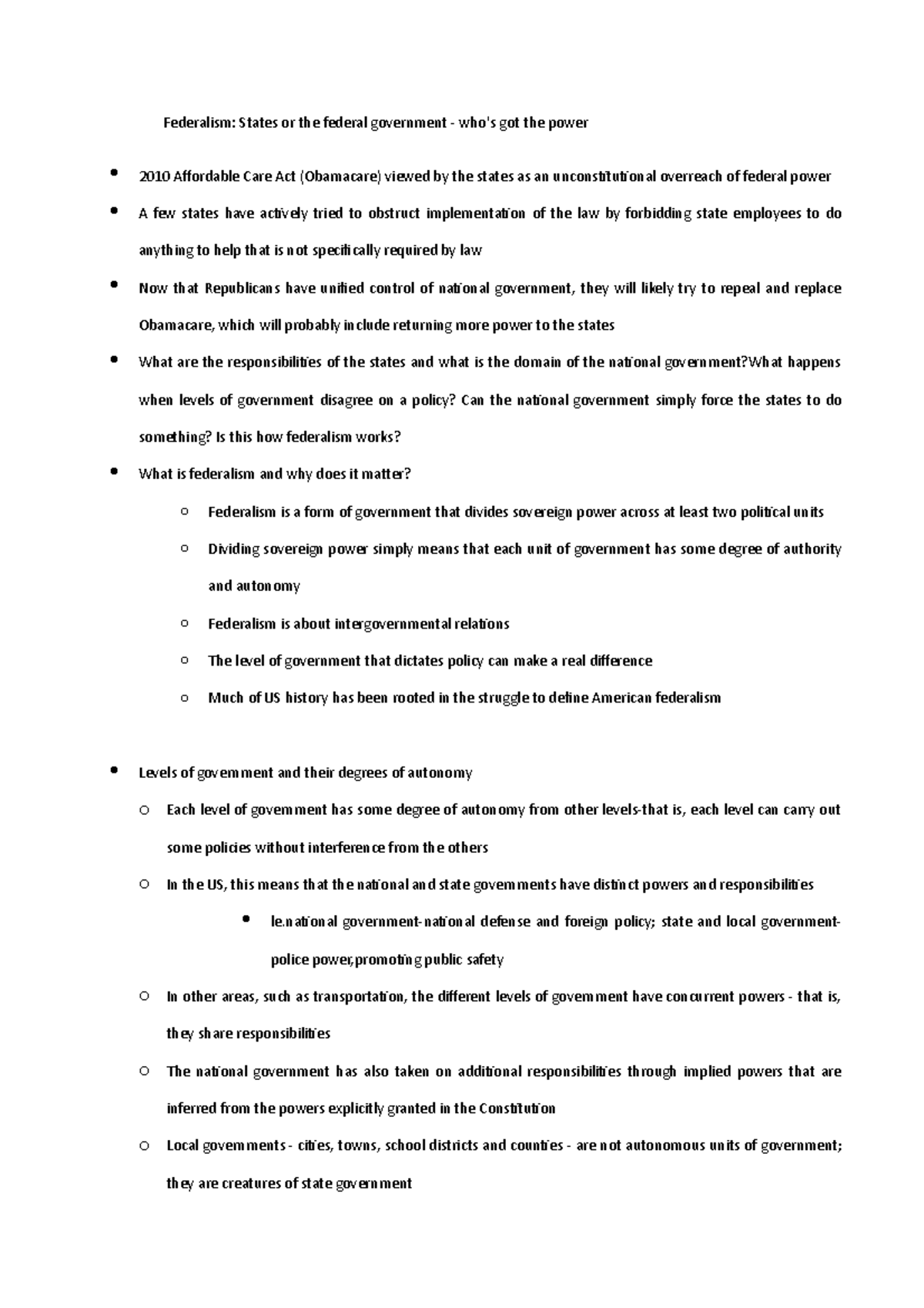
Federalism: The Division of Power
A summary of the US government would be incomplete without discussing federalism—the division of power between the national (federal) government and the individual state governments.
Federal Powers
The federal government holds "enumerated powers" specifically listed in the Constitution, such as the power to coin money, declare war, regulate interstate commerce, and manage foreign relations. These are areas where a single national voice and standard are necessary for the country to function as a unified entity.
State Powers
According to the 10th Amendment, any powers not specifically delegated to the federal government are reserved for the states or the people. States have primary authority over many aspects of daily life, including education, public health, law enforcement (within state lines), and the regulation of property and contracts. This allows for a "laboratory of democracy," where states can experiment with different policies to see what works best for their specific populations.
Concurrent Powers
Some powers are shared by both levels of government. These "concurrent powers" include the power to tax, build infrastructure (like highways), and establish courts. This dual-sovereignty model can lead to legal conflicts, which are ultimately resolved by the federal courts using the "Supremacy Clause" of Article VI, which states that federal law takes precedence over state law when they are in direct conflict.
The Role of Elections and the Democratic Process
The U.S. government is a representative democracy, meaning citizens do not vote on every law directly but instead elect officials to represent their interests.
- Voter Eligibility: U.S. citizens aged 18 and older have the right to vote. This right has been expanded over time through the 15th, 19th, and 26th Amendments, as well as the Voting Rights Act.
- The Electoral College: While members of Congress are elected by a direct popular vote in their districts or states, the President is elected via the Electoral College. Each state is assigned a number of "electors" equal to its total congressional delegation (Senators plus Representatives).
- Political Parties: While not mentioned in the Constitution, political parties (primarily the Democratic and Republican parties) play a central role in organizing elections, mobilizing voters, and structuring debates within the government.
As of 2026, the election process remains a cornerstone of government accountability, allowing the public to change the direction of the country by replacing representatives who no longer serve their interests.
Frequently Asked Questions
What is the primary purpose of the "checks and balances" system?
The primary purpose of the checks and balances system is to ensure that no single branch of government becomes too powerful. By giving each branch the ability to limit or influence the actions of the others, the founders sought to prevent tyranny and encourage deliberation and compromise. For instance, the President can check Congress through the veto, while the Supreme Court can check both through judicial review.
How long are the terms for various federal officials?
Term lengths vary depending on the office to reflect different levels of accountability. Members of the House of Representatives serve two-year terms to remain close to the people's will. Senators serve six-year terms to provide stability. The President serves a four-year term (limited to two terms total). Federal judges, including Supreme Court justices, serve life terms "during good behavior" to ensure their independence from political shifts.
Can the U.S. Constitution be changed?
Yes, the Constitution can be changed through the amendment process outlined in Article V. An amendment can be proposed by a two-thirds vote in both the House and the Senate, or by a constitutional convention called for by two-thirds of the State legislatures. Once proposed, the amendment must be ratified by three-fourths of the states. This high threshold ensures that only changes with broad national support are made.
What is the difference between federal and state laws?
Federal laws apply to everyone in the United States, regardless of which state they live in, and usually involve matters of national concern like immigration, civil rights, or federal taxes. State laws apply only within the boundaries of a specific state and cover local issues like traffic regulations, marriage licenses, and school curricula. Under the Supremacy Clause, if a state law conflicts with a federal law, the federal law prevails.
Who can become President of the United States?
To serve as President, a person must be a natural-born citizen of the United States, at least 35 years of age, and a resident of the United States for at least 14 years. These requirements are set forth in Article II of the Constitution to ensure that the leader of the executive branch has a deep and primary connection to the nation.
Final Recommendations for Further Engagement
Understanding the summary of the US government is the first step toward active citizenship. To further your knowledge or resolve specific issues, consider the following actions:
- Identify Your Representatives: Use official resources like House.gov and Senate.gov to find your local representatives. Contacting their offices is the most direct way to voice concerns or request assistance with federal agencies.
- Monitor the Federal Register: For those interested in the "administrative state," the Federal Register provides daily updates on proposed and final regulations from executive agencies.
- Review Supreme Court Opinions: To understand how laws are being interpreted in 2026, you can read the full text of judicial opinions at SupremeCourt.gov.
- Participate in Local Government: Remember that federalism means much of the power affecting your daily life resides at the state and local levels. Engaging with city councils and state legislatures is equally vital.
By staying informed about these structures, citizens can more effectively navigate the complexities of American law and contribute to the ongoing evolution of the republic.