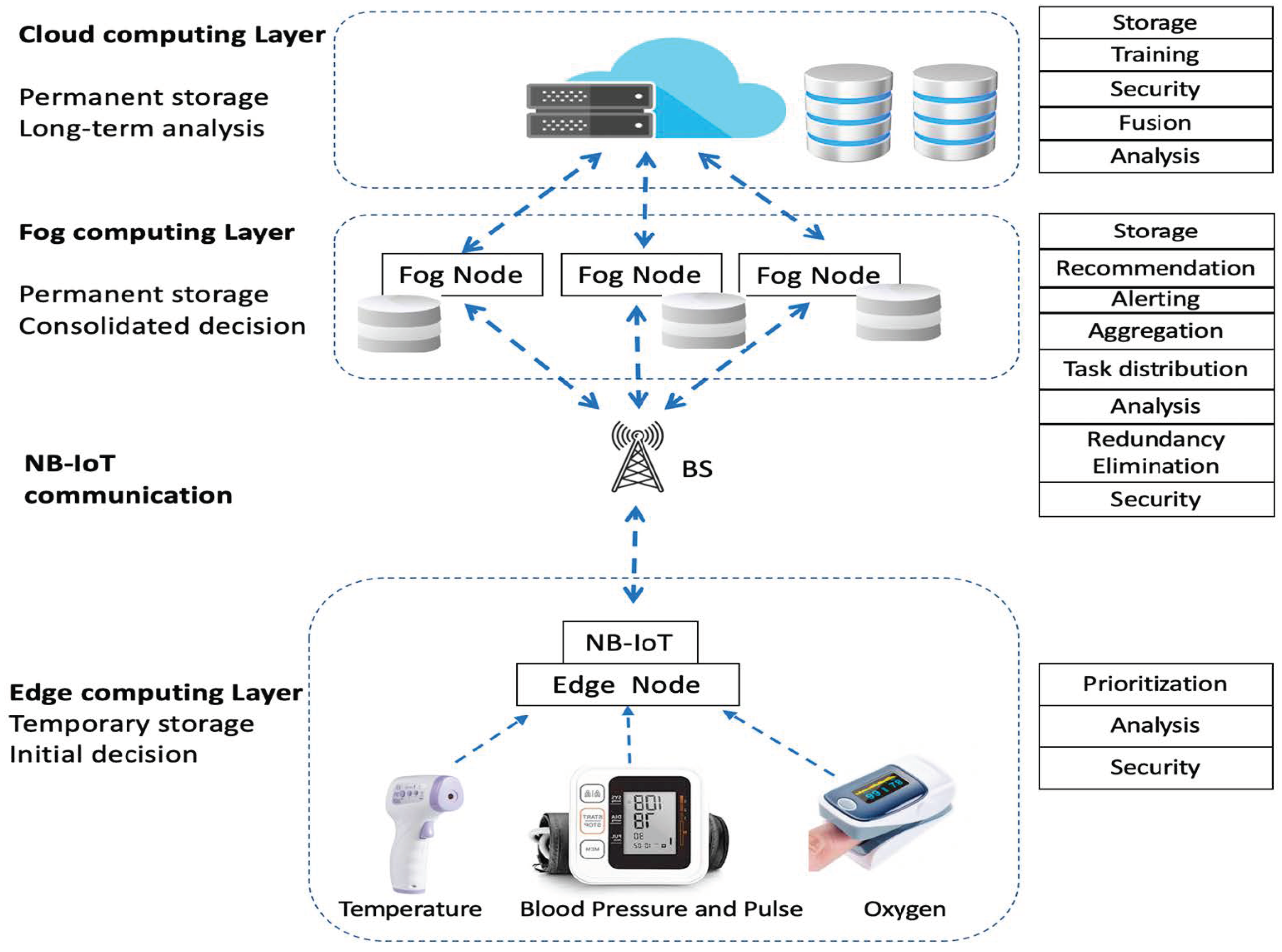
A QoS-driven approach for cloud computing addressing performance and security provides a systematic framework for balancing stringent service-level objectives with robust protection mechanisms. By integrating Quality of Service (QoS) parameters—such as latency, throughput, and jitter—directly into the security stack, cloud architects can ensure that security overhead does not compromise the functional performance required by enterprise applications.
Understanding the QoS-Security Equilibrium
The intersection of Quality of Service (QoS) and cloud security creates a complex design environment. Traditionally, security measures such as encryption, deep packet inspection (DPI), and multi-factor authentication are viewed as "costs" that consume computational cycles, storage, and network bandwidth. In many cloud architectures, the introduction of rigorous security protocols leads to increased latency and reduced system throughput, which can violate established Service Level Agreements (SLAs).
A QoS-driven approach shifts the paradigm from treating security as an afterthought to embedding it as a primary performance metric. This methodology involves defining service-level objectives for both security posture and application performance. By implementing a multi-tier governance model, cloud service providers and enterprise architects can dynamically prioritize resources based on the sensitivity of the data and the real-time requirements of the workload.
The Role of Performance Metrics in Cloud Security
To effectively address performance while maintaining security, architects must focus on measurable metrics. Standard metrics such as Round Trip Time (RTT), Packet Loss, and Jitter provide the performance baseline. Security metrics, conversely, often involve time-to-detect, cryptographic overhead, and policy enforcement latency. A QoS-driven architecture bridges these two sets by utilizing intelligent resource allocation policies that account for the processing cost of security services.
Core Components of a QoS-Driven Framework
Designing a system that treats performance and security as a unified challenge requires a modular approach. The framework typically relies on four primary components: the Service Level Agreement (SLA) manager, the dynamic traffic shaper, the adaptive security controller, and the monitoring engine.
The SLA Manager
The SLA manager serves as the policy engine. It defines the minimum acceptable thresholds for performance and the maximum acceptable levels of risk. When a cloud resource—such as a virtual machine or a containerized microservice—is deployed, the SLA manager attaches specific QoS tags. These tags dictate the path the traffic takes and the level of security intervention required.
Dynamic Traffic Shaping
Traffic shaping, or packet scheduling, ensures that high-priority, latency-sensitive traffic does not get bottlenecked by heavy security processing. For instance, voice-over-IP (VoIP) data might require minimal security inspection to maintain low latency, whereas database synchronization traffic might undergo intensive encryption and verification, tolerating higher latency as a trade-off.
Adaptive Security Controllers
Adaptive controllers move away from static security configurations. Instead of applying the same firewall rules or encryption standards to all traffic, these controllers adjust the security depth based on the current system load and the specific QoS requirements of the active sessions. This ensures that when the system is under stress, it can gracefully degrade security inspection without compromising the core integrity of the data.
Challenges in Balancing Performance and Security
Despite the theoretical benefits of a QoS-driven approach, practical implementation faces significant hurdles. The primary challenge is the "security tax"—the unavoidable consumption of CPU and memory resources required for modern cryptographic standards like AES-256 or TLS 1.3.
Resource Contention and Latency
When high-security demands meet high-performance requirements, resource contention is inevitable. If the cloud infrastructure does not have sufficient underlying hardware acceleration—such as Intel QuickAssist or specialized GPU offloading—the security processing will inevitably throttle throughput. Architects must account for the physical hardware capabilities when defining what constitutes an "acceptable" QoS level in their policy documentation.
Policy Propagation Delays
In a distributed cloud environment, updating security policies across thousands of nodes takes time. If a QoS-driven system requires real-time policy adjustments, propagation latency can lead to "policy drift," where some parts of the system are under-protected while others are over-throttled. Establishing an asynchronous, eventually-consistent policy distribution model is often necessary to minimize these delays.
Comparative Framework: QoS vs. Security Priorities
The following table illustrates how different application classes require different balances between QoS performance metrics and security enforcement depths.
| Application Type | Latency Sensitivity | Security Requirement | Priority Strategy |
|---|---|---|---|
| Real-time Analytics | High | Moderate | Prioritize bandwidth; utilize lightweight encryption |
| Financial Transactions | Low | Extreme | Prioritize integrity/encryption; tolerate higher latency |
| General Web Content | Moderate | Moderate | Load balance; use edge-based security policies |
| IoT Data Streaming | High | Low | Optimize throughput; use authenticated headers |
Implementation Steps for Cloud Architects
To successfully deploy a QoS-driven approach within a cloud environment, organizations should follow a structured development lifecycle:
- Baseline Assessment: Document current performance metrics (latency, jitter) and existing security overhead costs.
- Classification: Categorize workloads by their sensitivity and criticality. Distinguish between mission-critical data that cannot tolerate latency and background tasks that are flexible.
- Policy Mapping: Define the specific QoS parameters for each workload class. Ensure that security policies are mathematically bounded so their maximum processing time is known.
- Hardware Offloading: Utilize hardware-level acceleration for encryption tasks to offload the main compute cycles, thereby protecting the overall system throughput.
- Continuous Monitoring: Implement real-time telemetry to track how security policy changes affect performance KPIs. Use feedback loops to automatically adjust traffic shaping when performance drops below the established SLA.
Troubleshooting Performance Bottlenecks
When implementing this framework, common issues often arise during the integration of third-party security appliances or virtualized network functions (VNFs).
Detecting Over-Inspection
One common mistake is the "chaining" of security devices. If traffic passes through an Intrusion Detection System (IDS), followed by a Web Application Firewall (WAF), and then an encrypted VPN tunnel, the cumulative latency can become unacceptable. If monitoring tools show high packet processing times, consider consolidating these functions into a unified software-defined perimeter (SDP) to reduce the number of hop-points.
Managing False Positives
Strict QoS enforcement can sometimes lead to the premature dropping of packets if the traffic pattern does not perfectly match the expected profile during a security scan. Ensure that security controllers are tuned to allow "bursty" traffic that may briefly exceed nominal rates, provided it does not pose a security threat.
Frequently Asked Questions
What is the primary trade-off in a QoS-driven security approach? The primary trade-off is between the depth of security inspection and the time required to process data packets. As inspection depth increases to catch sophisticated threats, latency naturally rises, potentially impacting the user experience or real-time application requirements.
How does cloud infrastructure offloading improve QoS? Hardware offloading moves cryptographic calculations from the main CPU to dedicated chips or specialized co-processors. By doing so, the main compute resources remain available for application logic, preventing the security stack from creating a performance bottleneck.
Can QoS policies dynamically change during a cyberattack? Yes. An adaptive system can detect an ongoing anomaly or attack and shift into a "Hardened Mode," where performance takes a back seat to security, or a "Load-Shedding Mode," where low-priority traffic is dropped to maintain connectivity for critical, highly-secured services.
Are there standardized metrics for measuring security-induced latency? While no single universal metric exists, organizations often use "Security Latency Overhead" (SLO), which measures the delta between traffic latency with full security enabled versus a baseline state of raw, unencrypted transit.
Does a QoS-driven approach eliminate the need for traditional firewalls? No. It integrates them. Rather than replacing traditional firewalls, it defines how they interact with the flow of data to ensure that security measures do not act as an unmanaged barrier to system throughput.
Final Recommendation
To implement a QoS-driven approach effectively, begin by auditing your current workload latency overhead caused by security protocols. Focus on identifying "bottleneck nodes" where security processing consumes more than 15% of the total request lifecycle. Once these are identified, shift these specific processes to hardware-accelerated instances and utilize traffic-shaping policies to ensure that your security enforcement scales linearly with your performance demands. Success in this area is not about choosing between performance and security, but about building a deterministic, balanced architecture that respects both.