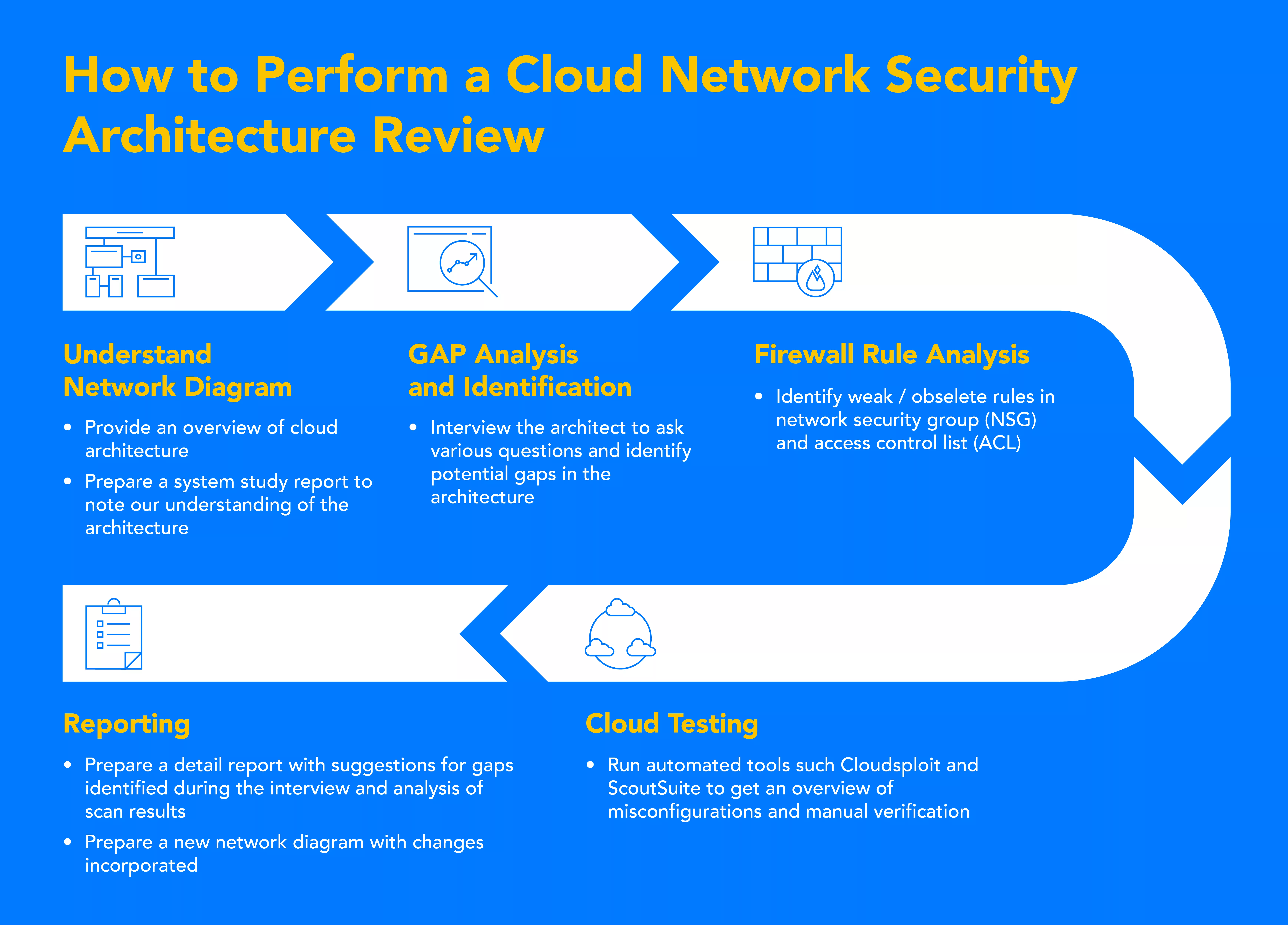
A networking review is a systematic audit of an organization’s digital infrastructure, evaluating hardware, logical configurations, security protocols, and performance metrics. By identifying bottlenecks, outdated firmware, and security vulnerabilities, the review ensures that the network remains resilient, scalable, and capable of supporting high-bandwidth demands such as AI processing and multi-gigabit wireless environments.
In the professional landscape of 2026, the term "networking review" is occasionally used to describe the assessment of professional career connections. However, in a technical and business operations context, it primarily refers to a Network Infrastructure Audit. This guide focuses on the technical execution of a network review, providing a framework for IT managers, network engineers, and business owners to evaluate their connectivity ecosystems.
The Scope and Objectives of a Modern Networking Review
A comprehensive networking review is not merely a "health check" but a deep-dive analysis into how data moves within and outside an organization. As we operate in 2026, the complexity of networks has shifted from simple local area networks (LANs) to hybrid environments involving on-premises hardware, edge computing, and multi-cloud integrations.
The primary objectives of a networking review include:
- Infrastructure Inventory: Documenting every physical and virtual asset, including routers, switches, firewalls, and access points.
- Performance Optimization: Identifying latency issues or throughput limitations that hinder user productivity.
- Security Validation: Ensuring that encryption standards, access controls, and threat detection mechanisms are up to date.
- Compliance and Governance: Verifying that the network meets industry-specific standards such as GDPR, HIPAA, or PCI-DSS.
- Scalability Planning: Assessing whether the current architecture can handle projected growth over the next 24 to 36 months.
Without a periodic review, networks suffer from "configuration drift," where small, undocumented changes over time lead to a fragile environment prone to outages and exploitation.
Phase 1: Physical Layer and Hardware Assessment
The physical layer, or Layer 1 of the OSI model, remains the foundation of all connectivity. A networking review must begin with a physical inspection of the environment.
Cabling and Connectivity Standards
In 2026, the standard for high-performance wired networking has transitioned firmly toward Cat6a and Cat8 for copper, and OM4/OM5 for fiber optics. During the review, engineers must inspect cable runs for physical integrity. Factors such as "bend radius" violations or proximity to high-voltage power lines (which causes electromagnetic interference) can significantly degrade performance.
A review should verify that the cabling plant supports current hardware capabilities. For instance, if an organization has upgraded to 10Gbps switches but is still utilizing legacy Cat5e cabling, the resulting "packet retransmissions" will negate the benefits of the expensive hardware.
Rack Management and Environmental Controls
The state of the server room or network closet is a leading indicator of network reliability. A review includes:
- Power Redundancy: Testing Uninterruptible Power Supplies (UPS) and ensuring that battery health is sufficient to allow for graceful shutdowns during outages.
- Thermal Management: Measuring the ambient temperature and airflow around high-density switches. Overheating is a primary cause of premature component failure.
- Labeling and Documentation: Ensuring that every port on a patch panel corresponds accurately to a documented wall jack.
Phase 2: Logical Configuration and Traffic Management
Once the physical assets are verified, the review moves to the logical layer. This involves examining how data is routed and segmented within the network software.
VLAN Segmentation and Subnetting
One of the most common issues discovered during a networking review is a "flat network," where all devices reside on a single broadcast domain. This architecture is a significant security risk and a performance killer. In 2026, best practices dictate strict VLAN (Virtual Local Area Network) segmentation.
Guest Wi-Fi, IoT devices (such as smart thermostats or security cameras), and sensitive internal servers should all exist on isolated segments. The review analyzes the "Access Control Lists" (ACLs) between these segments to ensure that an infected guest laptop cannot communicate with the corporate database.
Routing Protocols and Convergence
For larger networks, the review evaluates the efficiency of routing protocols like OSPF (Open Shortest Path First) or BGP (Border Gateway Protocol). The goal is to minimize "hops" and ensure fast convergence—the speed at which a network reroutes traffic if a link fails. If the review finds that traffic is taking suboptimal paths across the WAN (Wide Area Network), it can lead to noticeable lag in real-time applications like VOIP or video conferencing.
Phase 3: Wireless Infrastructure and Wi-Fi 7 Integration
As of 2026, Wi-Fi 7 (802.11be) has become the standard for enterprise wireless deployments. A networking review must specifically address the wireless spectrum and coverage.
Signal Density and Heat Mapping
A "site survey" is a critical component of the wireless review. Using specialized software, technicians map the signal strength (RSSI) and Signal-to-Noise Ratio (SNR) across the office. This identifies "dead zones" or areas of excessive "co-channel interference," where too many access points are fighting for the same frequency.
Multi-Link Operation (MLO) Verification
Wi-Fi 7 introduced MLO, allowing devices to send and receive data across different frequency bands (2.4GHz, 5GHz, and 6GHz) simultaneously. The review checks if the current controller configurations and client devices are actually utilizing these features to reduce latency and increase reliability in high-density environments.
Phase 4: Cybersecurity and Edge Defense
A networking review is incomplete without a rigorous security audit. In 2026, the focus has shifted from "perimeter defense" to Zero Trust Architecture (ZTA).
Firewall Rules and Firmware Status
The review examines the firewall's "rule base." Over time, many organizations accumulate "legacy rules" that were created for temporary projects but never deleted. These "shadow rules" create holes in the defense. Furthermore, the review verifies that all network appliances are running the latest patched firmware. Unpatched vulnerabilities in routers are a primary entry point for ransomware.
SASE and Remote Access
With the permanence of hybrid work, the review must evaluate how remote employees access the network. Legacy VPNs are increasingly being replaced by SASE (Secure Access Service Edge) solutions. The review assesses the performance of these "tunnels" and ensures that multi-factor authentication (MFA) is enforced at every entry point.
| Component | Assessment Metric | 2026 Target Standard |
|---|---|---|
| Wired Speed | Throughput (Gbps) | 10Gbps to the desktop / 40-100Gbps Backbone |
| Wireless | Protocol / Latency | Wi-Fi 7 (802.11be) / < 5ms Jitter |
| Cabling | Category / Shielding | Cat6a (minimum) / Cat8 or Fiber for uplinks |
| Security | Framework | Zero Trust / SASE with Always-On MFA |
| Management | Automation Level | AI-Driven Analytics (AIOps) |
| Redundancy | Uptime | 99.999% ("Five Nines") |
Phase 5: Performance Metrics and Stress Testing
The final technical phase of a networking review involves active testing. This isn't just about whether the network is "up," but how it behaves under heavy load.
Latency, Jitter, and Packet Loss
Using tools like Iperf3 or specialized network probes, engineers measure the "quality of service" (QoS).
- Latency: The time it takes for a data packet to travel from source to destination.
- Jitter: The variation in the delay of received packets. High jitter causes "choppy" audio in calls.
- Packet Loss: If the network is dropping even 1% of packets, it can cause massive slowdowns as the TCP protocol constantly requests retransmissions.
MTU and Fragmentation Issues
A common but often overlooked issue is an incorrect MTU (Maximum Transmission Unit) setting. If the MTU is mismatched between different parts of the network, packets must be "fragmented," which consumes CPU cycles on routers and slows down the entire system. A review validates that MTU settings are consistent across the fabric.
The Role of AIOps in 2026 Networking Reviews
In 2026, the manual "clipboard and console" review has been augmented by AIOps (Artificial Intelligence for IT Operations). Modern networking platforms from vendors like Cisco, Juniper, and Aruba now provide continuous "assurance" data.
During a networking review, these AI tools are used to analyze months of historical data. They can point out "intermittent" issues that a manual review might miss, such as a specific switch port that only fails on Tuesday mornings due to a scheduled backup job that saturates the link. The review report should leverage these insights to move from "reactive" fixing to "predictive" maintenance.
Common Pitfalls and Mistakes to Avoid
Even experienced teams can stumble during a networking review. Avoiding these common errors ensures a more accurate result:
- Ignoring the "Shadow IT": Many reviews only look at the official inventory. However, "rogue" devices—like an unmanaged 5-port switch hidden under someone’s desk—often cause loops that can bring down an entire VLAN.
- Focusing Only on Speed: While bandwidth is important, "reliability" and "predictability" are more critical for business operations. A 10Gbps link that drops for 2 seconds every hour is less valuable than a rock-solid 1Gbps link.
- Neglecting Documentation: The greatest value of a review is the updated network map. If the review ends without a clear, updated diagram (Visio or Lucidchart), the knowledge gained will be lost within months.
- Underestimating IoT Risks: In 2026, the number of connected sensors, lights, and badges has exploded. Treating these as "low priority" is a mistake; they are often the weakest link in the security chain.
Steps to Take After the Review
A networking review is only as good as the actions that follow it. The typical post-review workflow includes:
- Prioritization (The MoSCoW Method): Categorize findings into "Must-fix" (critical security holes), "Should-fix" (performance bottlenecks), "Could-fix" (future-proofing), and "Won't-fix" (low ROI).
- Budgeting for EOL Hardware: If the review identifies "End-of-Life" (EOL) equipment, the organization must plan for replacement cycles before manufacturer support ceases.
- Policy Updates: If the review found that security policies were being bypassed, it’s time to update the "Acceptable Use Policy" and re-train staff on network hygiene.
- Scheduled Re-review: A networking review is not a one-time event. In the fast-moving tech environment of 2026, these audits should occur at least annually, or after any major infrastructure change.
Frequently Asked Questions
How often should a company conduct a networking review?
Most mid-sized to large organizations should conduct a comprehensive networking review annually. However, high-security environments (finance, healthcare) or companies undergoing rapid growth should consider quarterly "mini-reviews" to ensure that the infrastructure is scaling correctly and remaining secure.
Can a networking review be performed remotely?
While many logical aspects—such as firewall configurations, traffic analysis, and firmware audits—can be performed remotely via network management software, a physical inspection is still essential. A remote review cannot detect a frayed fiber optic cable, a failing UPS battery, or an overheating server room. A hybrid approach is generally the most effective.
What is the average cost of a professional networking review in 2026?
Costs vary significantly based on the number of endpoints and locations. For a single-site mid-sized office (approx. 100 users), a professional third-party audit typically ranges from $5,000 to $12,000. This cost includes specialized testing equipment, the expertise of a senior network engineer, and a detailed remediation roadmap.
Does a networking review cause downtime?
A well-planned review should cause minimal to no downtime. Most assessment tools are "passive," meaning they listen to traffic without interrupting it. Active stress testing or firmware updates should be scheduled during maintenance windows (usually after business hours) to prevent any impact on production services.
What is the difference between a network review and a penetration test?
A networking review focuses on infrastructure health, performance, and best practices across the entire stack. A penetration test (Pen-test) is a specialized security exercise where a "white-hat" hacker attempts to break into the network to find exploitable holes. While they overlap, the review is about "optimization and stability," while the pen-test is about "offensive security."
Final Recommendations
To get the most value out of a networking review in 2026, organizations should treat it as a strategic investment rather than a technical chore. Start by defining the "business goals" of the network—whether that is supporting 4K video conferencing for a remote workforce or ensuring zero-latency data transfer for an AI-driven manufacturing floor.
Once the review is complete, prioritize the remediation of security vulnerabilities and firmware updates first. These offer the highest immediate return on safety. Following that, address performance bottlenecks that have a direct impact on employee productivity. By maintaining a disciplined review cycle, you ensure that your network remains an asset that drives the business forward, rather than a liability that holds it back.