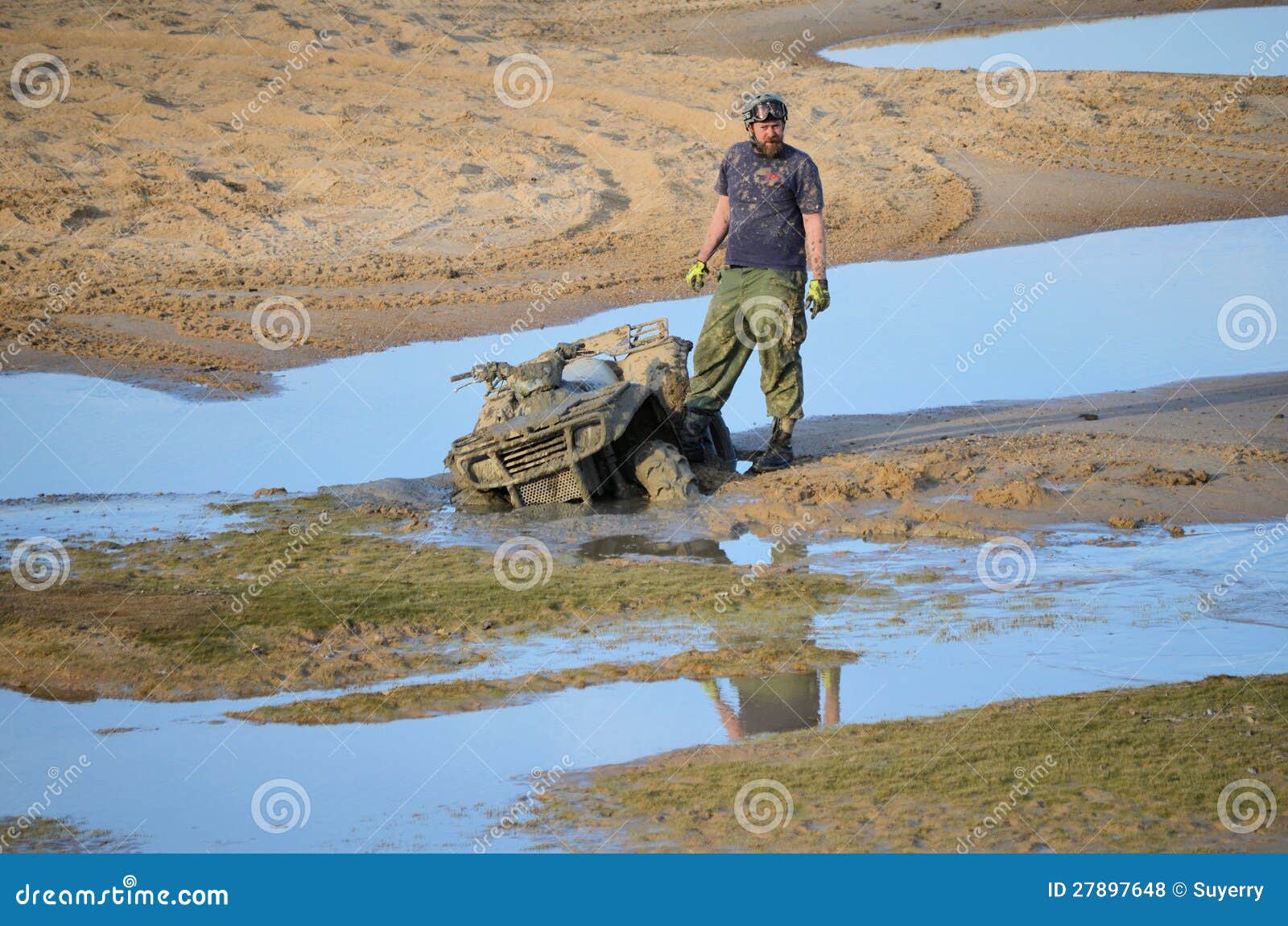
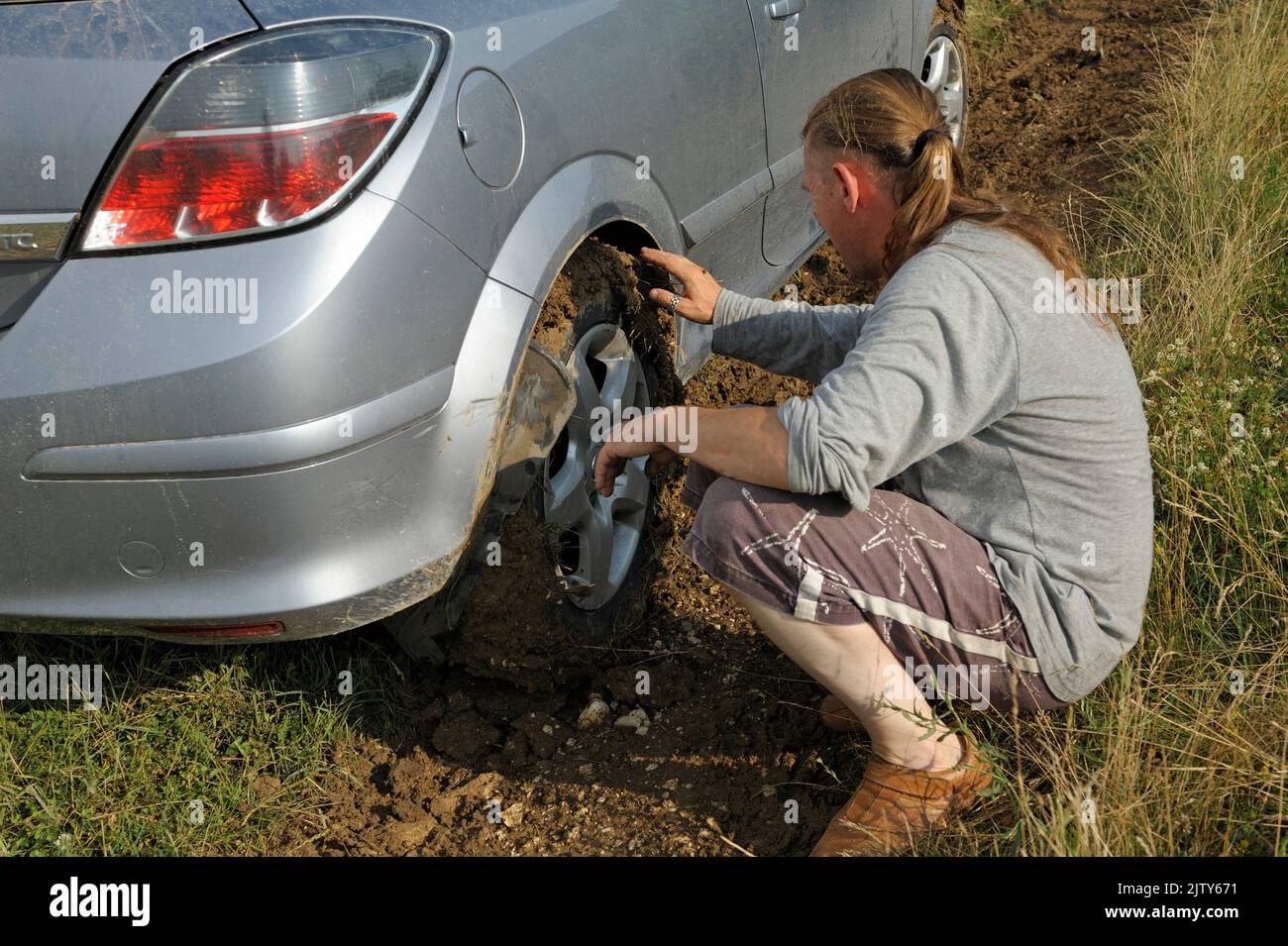
If a man is stuck in mud, the most effective way to escape is to remain calm, lean backward to distribute body weight over a larger surface area, and slowly wiggle the legs to allow water to seep down and break the vacuum seal. Avoid pulling legs straight up with force, as this increases the suction and can lead to exhaustion or injury.
Being "stuck in the mud" is often used as a metaphor for stagnation, but in a physical sense, it is a life-threatening emergency. Whether it occurs on a tidal flat, a construction site, or a marshy hiking trail, the physics of mud entrapment—specifically in thixotropic soils—can render a person completely immobile within seconds. As of 2026, search and rescue protocols emphasize that the primary danger is not usually "sinking to the bottom" like in a movie, but rather the secondary effects: incoming tides, hypothermia, or the sheer physical exhaustion of trying to break a vacuum seal that can exert hundreds of pounds of pressure.
The Physics of Mud Entrapment: Why Movement Often Fails
To understand how to help a man stuck in mud, one must understand the science of the medium. Most mud entrapments occur in thixotropic mixtures. These substances are "shear-thinning," meaning they behave like a liquid when agitated or under stress but turn into a thick, viscous semi-solid when left still.
When a person steps into deep mud, their weight applies pressure, causing the mud to liquefy and allowing them to sink. Once they stop moving, the mud "sets" around their legs. The real danger begins when the person tries to pull a foot straight out. This action creates a partial vacuum beneath the foot. Because the mud is thick and cohesive, air and water cannot easily rush in to fill the space where the foot was. The atmospheric pressure and the weight of the mud above essentially "clamp" the limb in place.
According to fluid mechanics, the force required to pull a foot out of deep mud at a moderate speed can be equivalent to the force needed to lift a mid-sized car. This is why brute strength is rarely the solution and why panic-induced struggling often leads to the person sinking deeper as they displace the mud beneath them.
Immediate Steps for Self-Rescue
If you find yourself stuck, the first 60 seconds are critical. Your objective is to transform your body from a "vertical anchor" into a "horizontal float."
1. Stop Moving and Shed Weight
The more weight you carry, the deeper you will sink. Immediately drop any backpacks, heavy gear, or tools. If you are wearing a heavy coat and it is not freezing, consider removing it if it restricts your movement, though in most cases, keeping it on for buoyancy and warmth is preferred unless it is waterlogged.
2. Distribute Your Weight
The "Man Stuck in Mud" scenario becomes fatal when the pressure (force divided by area) is too high. You must increase your surface area. Slow and deliberate movement is key. Lean your torso backward onto the surface of the mud. By lying on your back, you distribute your weight across a much larger area, which prevents further sinking and starts to break the suction on your legs.
3. The "Cycling" Motion
Once your upper body is as horizontal as possible, do not pull your legs straight up. Instead, wiggle one leg in a circular or "cycling" motion. This movement creates a small gap between your leg and the mud, allowing water to trickle down. Water acts as a lubricant and breaks the vacuum seal. It may take several minutes of patient wiggling to free a single foot.
4. Crawl to Safety
Once your legs are free, do not attempt to stand up immediately. The mud nearby is likely just as unstable. Stay on your hands and knees (or better yet, your belly) and "swim" or crawl toward firmer ground or vegetation. Use a "backstroke" motion if you are on your back to push yourself toward the shore.
How to Assist a Person Stuck in Mud
If you encounter a man stuck in mud, your first instinct may be to run toward him. Do not do this. You will likely become a second victim, doubling the rescue challenge for emergency services.
The "Reach, Throw, Row, Go" Principle
Adapted from water rescue, this protocol ensures the rescuer stays safe:
- Reach: Find a long branch, a ladder, or a pole. Extend it to the victim while staying on firm ground.
- Throw: Toss a rope, a life jacket, or even a spare tire to the person. This gives them something to hold onto and can provide buoyancy.
- Row: Use a boat or a specialized mud-sled if available.
- Go: This is a last resort and should only be performed by trained professionals with specialized equipment.
Using "Spreaders"
In professional 2026 rescue operations, teams use "mud mats" or inflatable walkways. If you are a bystander, you can use pieces of plywood, car floor mats, or large flat debris to create a "bridge" toward the victim. This allows you to get closer without sinking, distributing your weight across the debris.
Breaking the Vacuum with Water or Air
The most effective professional technique for a man stuck in deep mud is hydro-evacuation or air injection. By inserting a small tube (a "mud lance") alongside the victim's leg and pumping in water or compressed air, rescuers can break the vacuum seal instantly. Once the seal is broken, the person can be lifted out with minimal effort.
Comparison of Terrain and Entrapment Risks
Understanding where you are can dictate the urgency of the rescue. Tidal flats, for instance, carry a much higher mortality rate than inland marshes due to the speed of the incoming tide.
| Terrain Type | Primary Danger | Suction Level | Recommended Strategy |
|---|---|---|---|
| Tidal Flats | Drowning (Incoming Tide) | High | Rapid extraction; prioritize airway and flotation. |
| Quicksand | Hypothermia/Exhaustion | Moderate | Lean back immediately; slow leg wiggling. |
| Construction Slurry | Chemical burns/Crush | High | Professional rescue required; avoid skin contact. |
| Peat Bogs | Hypothermia/Acidity | Variable | Use "backstroke" method; reach for vegetation. |
| River Delta Mud | Displacement/Currents | Moderate | Secure with ropes to prevent being swept away. |
Medical Considerations After Extraction
Extricating a man stuck in mud is only half the battle. Once the person is on firm ground, several medical issues must be addressed immediately.
Hypothermia
Mud is often much colder than the surrounding air. Because the victim is immobilized, their body cannot generate heat through movement. Even in 2026, hypothermia remains a leading complication in mud rescues. Remove wet clothing immediately and wrap the victim in dry blankets or a space blanket.
Crush Syndrome (Traumatic Rhabdomyolysis)
If a person has been stuck for several hours, the pressure of the mud against their limbs can restrict blood flow. When they are suddenly freed, toxins that have built up in the compressed muscle tissue can rush into the bloodstream, potentially causing kidney failure or cardiac arrest. If the entrapment was prolonged (more than 2-3 hours), the victim should be monitored by paramedics during and after extraction.
Aspiration and Infection
If the person was stuck in a face-down position or if mud entered their lungs, there is a high risk of bacterial pneumonia or "aspiration pneumonitis." Mud is teeming with bacteria; any cuts or abrasions sustained during the struggle should be thoroughly cleaned and treated by a medical professional.
Professional Equipment and 2026 Rescue Standards
Modern search and rescue (SAR) teams now utilize specialized equipment that has significantly improved the survival rates for mud entrapment.
- Inflatable Rescue Paths: These are long, air-filled walkways that can be deployed across soft mud in seconds, allowing multiple rescuers to reach a victim safely.
- Mud Lances: These specialized probes inject a mixture of air and water at the base of the entrapment point to neutralize the vacuum.
- Portable Winch Systems: Used in conjunction with tripod systems, these allow for a slow, controlled vertical lift once the vacuum is broken.
- Thermal Imaging Drones: In 2026, drones are routinely used to locate victims in large marshy areas or tidal flats by detecting the heat signature of the person against the colder mud.
Prevention and Environmental Awareness
The best way to handle a "man stuck in mud" scenario is to prevent it from happening.
- Check Tide Tables: If walking on coastal flats, always know when the tide is coming in. Ensure you have a clear exit path that remains dry.
- Test the Ground: Use a walking stick or "trekking pole" to prod the ground ahead of you. If the pole sinks easily with little resistance, the ground cannot support your weight.
- Recognize the Signs: Look for "rippled" sand or mud, standing water in depressions, or areas where the ground appears to "shiver" when you step nearby. These are classic indicators of unstable, water-saturated soil.
Frequently Asked Questions
Can you actually sink all the way under in quicksand or mud?
Generally, no. The human body is less dense than mud or quicksand, meaning you will naturally float—usually around waist or chest deep—provided you don't panic and push yourself down. The danger is not "disappearing" under the surface, but being unable to move while environmental factors (like the tide or cold) take their toll.
Should you pull someone out with a vehicle or a winch?
No. Never use a vehicle to pull a person directly out of deep mud. The vacuum seal is so strong that the force of a vehicle can cause "disarticulation" (pulling limbs out of sockets) or severe spinal injuries. The vacuum must be broken manually or with air/water injection before any significant vertical force is applied.
Why is it so hard to move your legs?
The mud creates a perfect seal around your boot or leg. When you try to lift your leg, you are trying to lift the entire column of air and mud above it, while fighting a vacuum below. This is known as "hydrostatic suction."
What if I am stuck and the tide is coming in?
This is a high-stakes emergency. Call 112/911 immediately. Focus entirely on getting your torso horizontal. If you can get your legs free, great; if not, your goal is to keep your head above water. Use any available floating debris to tuck under your arms to provide extra buoyancy as the water rises.
Is it better to keep your shoes on or take them off?
If your foot is sliding out of the shoe, let the shoe go. It is much easier to free a bare foot or a foot in a sock than a heavy, suction-prone boot. However, don't waste energy trying to unlace boots if they are already deep; focus on the cycling motion to free the entire leg.
Final Recommendation
If you see a man stuck in mud, call emergency services immediately before attempting a rescue. Your primary role as a bystander is to maintain visual contact with the victim and provide emotional support to keep them calm. If you are the one stuck, remember: Lean back, stay still, and wiggle. Patience is your most effective tool for breaking the vacuum and ensuring a safe escape.