A graphic design career path is a structured journey involving the mastery of visual communication, technical software proficiency, and iterative professional development. Designers typically progress from entry-level production roles to specialized design, art direction, and strategic leadership positions, with success depending on a combination of technical skill, a curated professional portfolio, and consistent networking within the creative industry.
Understanding the Landscape of Graphic Design
The field of graphic design is not a single, monolithic career trajectory but rather a branching ecosystem of disciplines. In 2026, the industry continues to integrate sophisticated digital tools with timeless principles of typography, color theory, and layout. Understanding your potential path requires recognizing that design is as much about problem-solving as it is about aesthetic creation.
Most designers begin by identifying their preferred niche, which might include print media, user interface (UI) design, branding, motion graphics, or packaging. While generalist skills are valuable during the early years, the long-term career path often rewards deep expertise in a specific area. Before embarking on this path, you must assess whether your focus is on client-facing agency work, in-house corporate design, or the autonomy of a freelance career.
Phase 1: Educational Foundations and Skill Acquisition
The traditional entry point into a graphic design career is through formal education, such as a Bachelor of Fine Arts (BFA) or a Bachelor of Science (BS) in Graphic Design. These programs provide a critical framework of art history, design theory, and critique culture. However, by 2026, the barrier to entry has evolved to include intensive bootcamps, self-directed learning paths, and specialized certifications that focus heavily on software competency.
Foundational skills you must acquire include:
- Visual Literacy: Understanding the grid system, hierarchy, scale, and negative space.
- Typography: Mastering font pairing, kerning, tracking, and the technical aspects of font file management.
- Technical Software Suite: Proficiency in industry-standard tools remains non-negotiable. This includes the Adobe Creative Cloud suite—specifically Illustrator for vector graphics, Photoshop for image manipulation, and InDesign for layout—as well as modern collaborative tools like Figma for web and interface design.
- Color Theory: The ability to work within additive (RGB) and subtractive (CMYK) color spaces is vital for ensuring physical prints match digital mockups.
Phase 2: Building the Essential Portfolio
Your portfolio is the most critical asset in your career path. It functions as a verifiable record of your capabilities. Employers and clients do not prioritize your resume as much as they prioritize your ability to execute a brief.
To build a professional-grade portfolio, prioritize quality over quantity. Include 5–8 high-quality projects that demonstrate your process from ideation to final product. If you lack professional experience, create "spec" (speculative) work that solves real-world problems. For example, redesigning a local business's logo or creating a full UI kit for a hypothetical mobile app displays far more initiative than generic assignments.
Phase 3: Early-Career Progression
Entering the workforce usually begins with roles such as Junior Graphic Designer or Production Designer. At this stage, your responsibility is to learn the "how" of professional workflows. You will focus on file preparation, prepress requirements, and maintaining brand consistency under the supervision of senior team members.
This phase is often the most demanding in terms of time, as you must adapt to tight deadlines and the iterative nature of client feedback. It is essential to develop a "thick skin" early. Graphic design is inherently collaborative, and your work will be subject to critique by non-designers—such as project managers and stakeholders. Learning how to translate client needs into design solutions, rather than taking criticism personally, is the hallmark of a professional.
Comparison of Career Trajectories
The following table outlines the typical progression within a corporate or agency environment.
| Career Level | Focus | Primary Responsibilities |
|---|---|---|
| Junior Designer | Production | Executing layouts, file cleanup, basic photo editing, and asset management. |
| Mid-Level Designer | Execution | Managing individual projects, client communication, and brand system application. |
| Senior Designer | Strategy | Leading complex campaigns, mentoring juniors, and managing stakeholder expectations. |
| Art Director | Concept | Conceptualizing visual direction, overseeing team output, and high-level strategy. |
| Creative Director | Vision | Defining the visual identity of a brand or agency and managing overall department goals. |
Phase 4: Specialization and Upskilling
As you advance past the mid-level, you will likely choose between a management track and a technical specialization track.
The management track leads to Art Direction and Creative Direction, where the focus shifts from software proficiency to leadership, budgeting, and client relationship management. You will spend less time in software and more time in meetings and strategy sessions.
The technical specialization track allows you to become a subject matter expert. Common specializations in 2026 include:
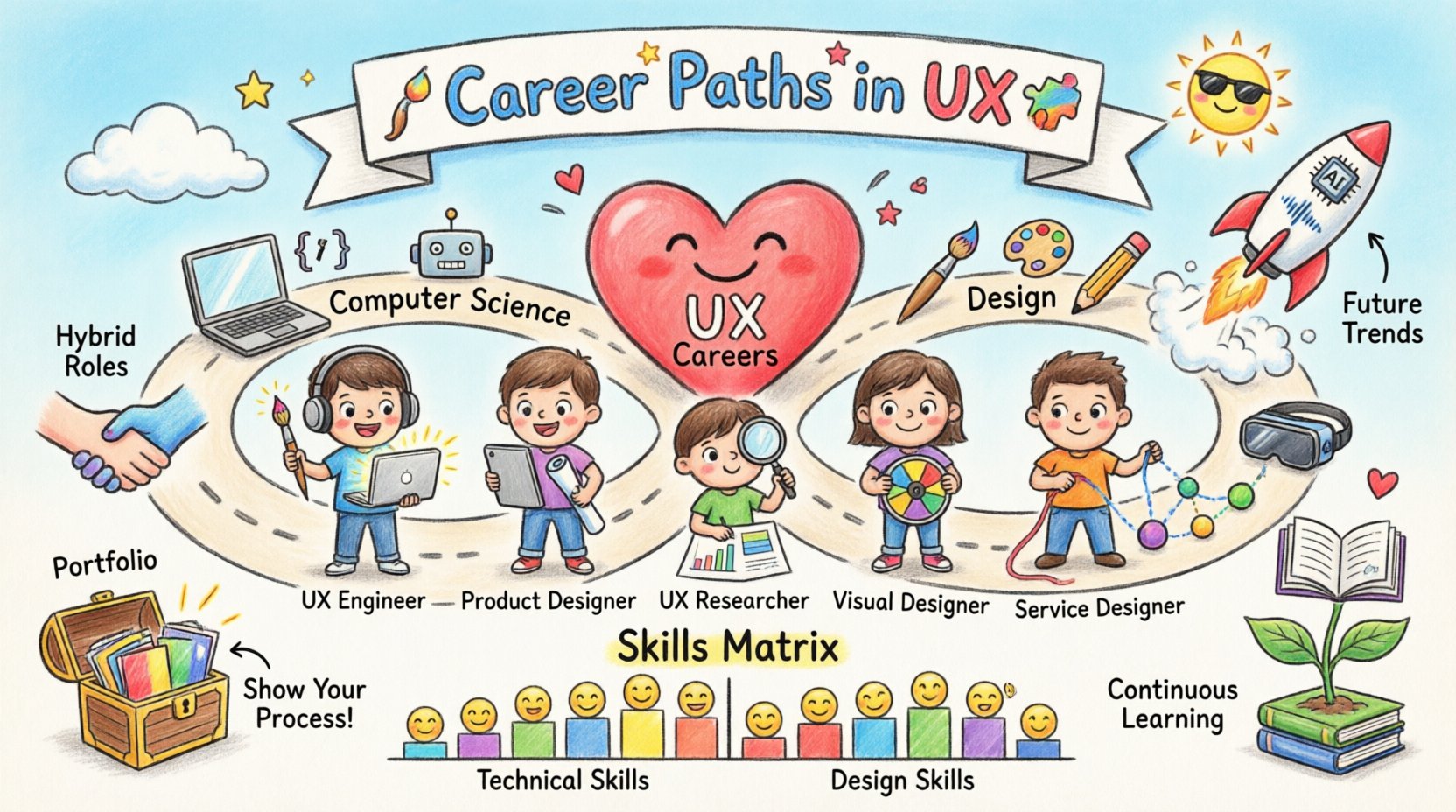
- Product/UX Designer: Focusing on user behavior, wireframing, and usability testing.
- Motion Designer: Specializing in animation, kinetic typography, and video assets.
- Brand Identity Designer: Creating holistic systems including logos, iconography, and brand voice guidelines.
- Environmental Designer: Focusing on physical spaces, signage, and wayfinding.
Common Pitfalls and Troubleshooting
A common mistake in a graphic design career path is stagnating in software-only learning. While knowing the latest version of a tool is necessary, it is not sufficient. Design trends shift rapidly, but the principles of communication remain stable. If you find your progress stalled, consider these troubleshooting steps:
- Lack of Feedback: If you are a freelancer or working in isolation, join professional associations like the AIGA (American Institute of Graphic Arts). They provide peer review and networking that can unblock your creative growth.
- Portfolio Fatigue: If your portfolio feels dated, execute a "passion project" that utilizes new technologies or design styles you haven't yet mastered.
- Burnout: Design can be high-pressure. Maintain a clear distinction between professional work and personal creative time to avoid losing interest in the field.
Frequently Asked Questions
Is a university degree necessary to become a graphic designer? While a degree is not legally required to work in the industry, it provides structured critique and networking opportunities. Many successful designers are self-taught, provided they possess a high-quality portfolio that demonstrates professional-grade skills.
How often do I need to update my technical skills? The industry standard is to engage in continuous learning. You should aim to refine your existing skills annually and dedicate time to learning new tools or workflows every 6–12 months, particularly as generative AI and automated design tools become more integrated into professional pipelines.
What is the most important skill for a long-term design career? Communication. The ability to articulate why a design choice works and how it serves the business objective is more valuable than just being the fastest user of a software application.
How do I transition from print design to digital or UX design? The transition involves learning the constraints of digital, such as responsiveness, accessibility (WCAG standards), and front-end interaction. Start by taking a bridge course in UI/UX and applying those principles to small, personal projects before seeking a role change.
Is freelancing a viable career path? Yes, but it requires a different skill set than agency work. Freelancers must master time management, invoicing, contract negotiation, and self-promotion. It is often recommended to gain 2–3 years of in-house or agency experience before going fully independent to build a professional network and industry reputation.
Final Recommendation
To successfully navigate your career path, document your professional journey starting today. Audit your current skills against the requirements of the roles you desire, and build a project roadmap that fills the gaps in your portfolio. Whether you choose the path of the creative leader or the deep-dive technical expert, your success will be anchored in your ability to marry constant learning with a rigorous approach to visual problem-solving. Start by identifying your target sub-sector, curating your portfolio to align with that goal, and seeking out mentors who have already traversed the path you wish to follow.