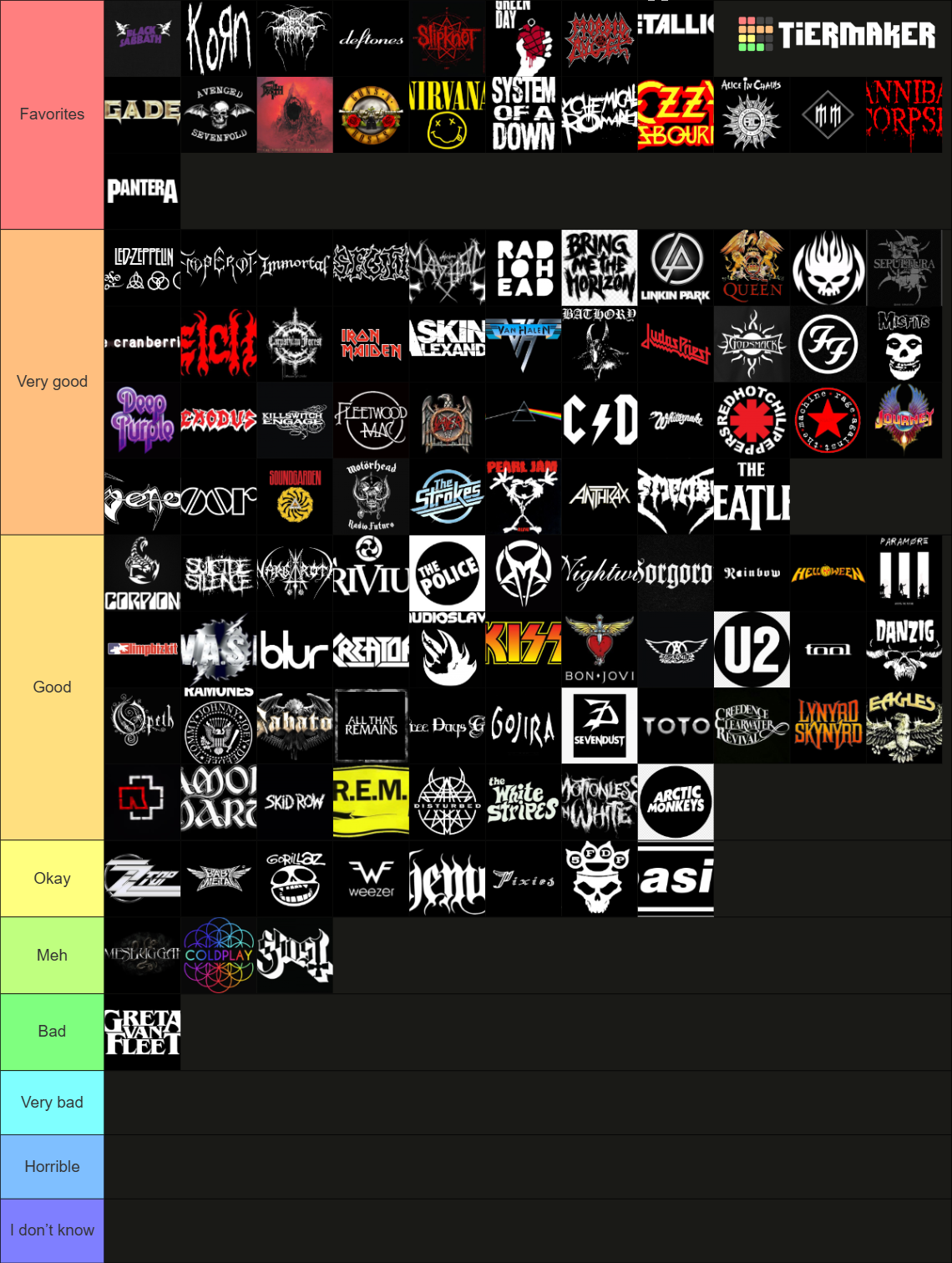
Heavy metal is a multifaceted genre characterized by distorted guitars, emphatic rhythms, and diverse subgenres ranging from traditional power metal to extreme death metal. This curated list identifies the most influential groups based on their historical impact, technical innovation, and enduring legacy within the global music landscape, spanning from the genre's inception to 2026.
The Foundations of the Heavy Metal Sound
To understand a curated list of heavy metal groups, one must first recognize the "Architects of the Riff." Heavy metal did not emerge in a vacuum; it was an amplification and distortion of the blues-rock and psychedelic movements of the late 1960s. The curation of any serious list begins with the groups that defined the sonic palette of the genre: the heavy, low-tuned riffs and the occult or dark lyrical themes.
Black Sabbath remains the undisputed progenitor. Formed in Birmingham, the band’s use of the "tritone" (the augmented fourth, traditionally known as the diabolus in musica) created a sense of dread that separated them from their contemporaries. Tony Iommi’s guitar work, necessitated by a factory accident that forced him to use thimbles and lower string tension, birthed the heavy, sludgy tone that eventually influenced doom, stoner, and sludge metal.
Alongside Sabbath, Judas Priest refined the aesthetic. While Sabbath provided the weight, Priest provided the "leather and studs" visual identity and the twin-guitar harmony attack. Rob Halford’s multi-octave vocal range set the standard for what a metal vocalist could achieve. This era represents the "Traditional Heavy Metal" (Trad Metal) pillar, focusing on mid-to-fast tempos, clean but powerful vocals, and clear song structures.
The New Wave of British Heavy Metal (NWOBHM)
By the late 1970s and early 1980s, the genre underwent a massive revitalization known as the New Wave of British Heavy Metal. This movement stripped away the bluesy remnants of 70s rock, replacing them with increased speed and punk-rock energy while maintaining high-level musicianship.
Iron Maiden stands as the pinnacle of this movement. Their inclusion in any curated list is mandatory due to their sophisticated songwriting, galloping bass lines by Steve Harris, and complex, historical, and literary lyrical themes. They proved that heavy metal could be "intelligent" and epic in scope.
Saxon and Diamond Head are also critical entries. While Saxon embodied the working-class spirit of the genre, Diamond Head’s technical compositions—most notably "Am I Evil?"—provided the blueprint for the thrash metal explosion that would follow in the United States. Curation in this category prioritizes bands that influenced the transition from hard rock to the more aggressive subgenres of the 1980s.
The Thrash Metal Revolution: Speed and Precision
The 1980s saw the emergence of "The Big Four," a grouping of bands that moved heavy metal into faster, more aggressive territory. Thrash metal is characterized by palm-muted guitar riffs, double-bass drumming, and socially conscious or nihilistic lyrics.
- Metallica: The most commercially successful metal band in history. Their early work (Kill 'Em All through ...And Justice for All) revolutionized rhythmic complexity and song structure.
- Slayer: Represented the extreme end of thrash. Their focus on chromaticism, atonality, and transgressive themes regarding religion and warfare influenced the entire death and black metal scenes.
- Megadeth: Led by Dave Mustaine, this group emphasized technical proficiency and intricate lead guitar work, often outperforming their peers in sheer musical complexity.
- Anthrax: Introduced a distinct New York energy, blending thrash with crossover punk and even early elements of hip-hop, proving the genre’s versatility.
Beyond the Big Four, European thrash groups like Kreator and Sepultura (from Brazil) are essential for a global curated list. They added a level of "grit" and "heaviness" that bordered on the proto-death metal sound, expanding the genre’s geographic and sonic boundaries.
The Extreme Frontier: Death and Black Metal
As the 1990s approached, heavy metal fractured into "extreme" subgenres. These groups pushed the boundaries of what was considered music, utilizing guttural vocals, blast beats, and highly distorted, tremolo-picked guitars.
Death Metal
Death metal focused on technicality and morbid themes. Death, led by Chuck Schuldiner, is the most significant group in this category. Their evolution from raw gore-metal to progressive, technical masterpieces like Symbolic showcased the genre's potential for high-art expression. Morbid Angel and Cannibal Corpse followed, with the former emphasizing occultism and complex polyrhythms, and the latter becoming the face of the genre's shocking, cinematic horror elements.
Black Metal
Black metal prioritized atmosphere, lo-fi production (initially), and anti-religious sentiment. The "Second Wave" from Norway is the most influential period. Mayhem and Darkthrone defined the "necro" sound—cold, thin, and haunting. Emperor eventually brought symphonic elements into the fold, proving that even the most extreme music could possess a grand, orchestral scale.
Progressive, Technical, and Alternative Evolutions
In the late 90s and through the early 2000s, metal began to merge with other genres, leading to highly technical or experimental forms.
Opeth is a standout curated group because of their seamless blend of 70s progressive rock and Swedish death metal. Their ability to transition from beautiful acoustic passages to crushing heaviness redefined "Progressive Death Metal." Similarly, Tool brought a mathematical, psychedelic approach to the genre, focusing on unconventional time signatures and visual storytelling.
Mastodon and Gojira represent the modern "Technical Metal" vanguard. Gojira, in particular, has become one of the most respected groups in the 2020s, known for their environmental themes and "pick scrapes" that have become a signature sound in modern production.
Curated List of Essential Heavy Metal Groups
The following table provides a snapshot of the most influential groups across the spectrum of metal, categorized by their primary subgenre and their most historically significant contribution.
| Band Name | Primary Subgenre | Landmark Album | Key Contribution |
|---|---|---|---|
| Black Sabbath | Traditional / Doom | Paranoid (1970) | Created the heavy metal blueprint and tritone riffing. |
| Judas Priest | Traditional / Speed | British Steel (1980) | Defined the leather-and-studs look and dual-lead harmony. |
| Iron Maiden | NWOBHM | The Number of the Beast (1982) | Introduced epic, historical narratives and galloping rhythms. |
| Metallica | Thrash | Master of Puppets (1986) | Set the standard for structural complexity in thrash metal. |
| Slayer | Thrash / Extreme | Reign in Blood (1986) | Pushed the limits of speed and transgressive lyrical themes. |
| Death | Technical Death Metal | Symbolic (1995) | Pioneered the death metal sound and its technical evolution. |
| Pantera | Groove Metal | Vulgar Display of Power (1992) | Reinvigorated metal in the 90s with heavy, rhythmic "grooves." |
| Opeth | Progressive Metal | Blackwater Park (2001) | Perfected the fusion of extreme metal and prog-rock. |
| Gojira | Technical / Progressive | From Mars to Sirius (2005) | Brought eco-conscious themes and modern technicality to the fore. |
| Nightwish | Symphonic Metal | Once (2004) | Defined the operatic, cinematic symphonic metal subgenre. |
| Sleep Token | Alternative / Post-Metal | Take Me Back to Eden (2023) | Modern genre-blending (pop, metal, R&B) for the 2020s. |
The State of Heavy Metal in 2026
As of 2026, the heavy metal landscape is characterized by a "Grand Unification." The rigid boundaries between subgenres have softened. Modern groups like Spiritbox and Lorna Shore are curated into lists because they successfully integrate elements of metalcore, deathcore, and electronic music, reaching a broader audience while maintaining technical intensity.
Digital production has allowed for a level of sonic clarity that was impossible in the 80s, but there is also a counter-movement toward "Old School Death Metal" (OSDM) revival, where bands like Blood Incantation utilize analog recording techniques to capture the raw energy of the early 90s. The 2026 festival circuit shows a healthy balance between "Legacy Acts" (Iron Maiden, Metallica) and the "New Vanguard" (Sleep Token, Bad Omens), proving the genre's multi-generational appeal.
Navigating Curation: Criteria for Selection
When curating a list of heavy metal groups, several technical and cultural factors are considered:
- Sonic Innovation: Did the group introduce a new guitar technique (e.g., Eddie Van Halen’s tapping, though he is hard rock, influenced metal; or the djent "thall" sound)?
- Cultural Impact: Did the band change the way metalheads dress, act, or organize?
- Longevity vs. Intensity: Some bands are included for a decades-long career, while others, like Hellhammer, are included for a brief but explosive influence on future subgenres.
- Compositional Complexity: The use of non-standard scales (Phrygian dominant, Locrian) and varying time signatures (7/8, 11/4) often separates "curated" technical acts from standard radio-rock.
Frequently Asked Questions
What is the difference between Heavy Metal and Hard Rock?
While the terms are often used interchangeably by the general public, heavy metal is distinguished by a higher level of distortion, more aggressive drumming (often utilizing double-kick pedals), and a lack of the "swing" or "blues" feel found in hard rock. Metal tends to focus on darker, more epic, or more technical themes rather than the bluesy, sex-and-drugs themes prevalent in 70s rock.
Why are some influential bands like Led Zeppelin often excluded from metal lists?
Led Zeppelin is frequently cited as a "progenitor." While they were incredibly heavy for their time, their foundation remained firmly rooted in blues and folk. Most curators classify them as "Hard Rock" or "Heavy Rock," reserving the "Heavy Metal" label for bands like Black Sabbath, who moved entirely away from the blues-rock aesthetic.
Is "Nu-Metal" considered real heavy metal?
In 2026, the debate over "real metal" has largely subsided. While Nu-Metal (Korn, Limp Bizkit) was criticized in the late 90s for lacking guitar solos and incorporating hip-hop, its influence on the current generation of "Alternative Metal" and "Metalcore" is undeniable. It is generally included in comprehensive lists as a significant commercial and stylistic branch of the metal family tree.
What is "Djent" and is it a subgenre?
Djent started as a descriptive term for a specific high-gain, palm-muted, low-pitch guitar sound popularized by Meshuggah. Over time, it evolved into a subgenre characterized by complex polyrhythms and the use of 7, 8, or even 9-string guitars. It is a cornerstone of technical metal curation in the 21st century.
How do I start listening to heavy metal if I’m a beginner?
The best approach is to follow the chronological "Trunk of the Tree." Start with Black Sabbath's Paranoid to understand the roots, move to Iron Maiden's The Number of the Beast for the melodic peak, and then Metallica's Master of Puppets for the introduction of speed and aggression. From there, you can branch into the subgenres (Symphonic, Death, Folk, or Doom) that resonate most with your personal taste.
Next Steps for Discovery
To further explore this curated list, listeners should utilize high-fidelity streaming services that support lossless audio, as the dense production of modern metal (2020-2026) requires high bitrates to distinguish individual instrument tracks. Attending "Destination Festivals" such as Wacken Open Air in Germany or Hellfest in France remains the best way to experience the breadth of these groups in a single setting, observing the live technical execution that defines the genre.