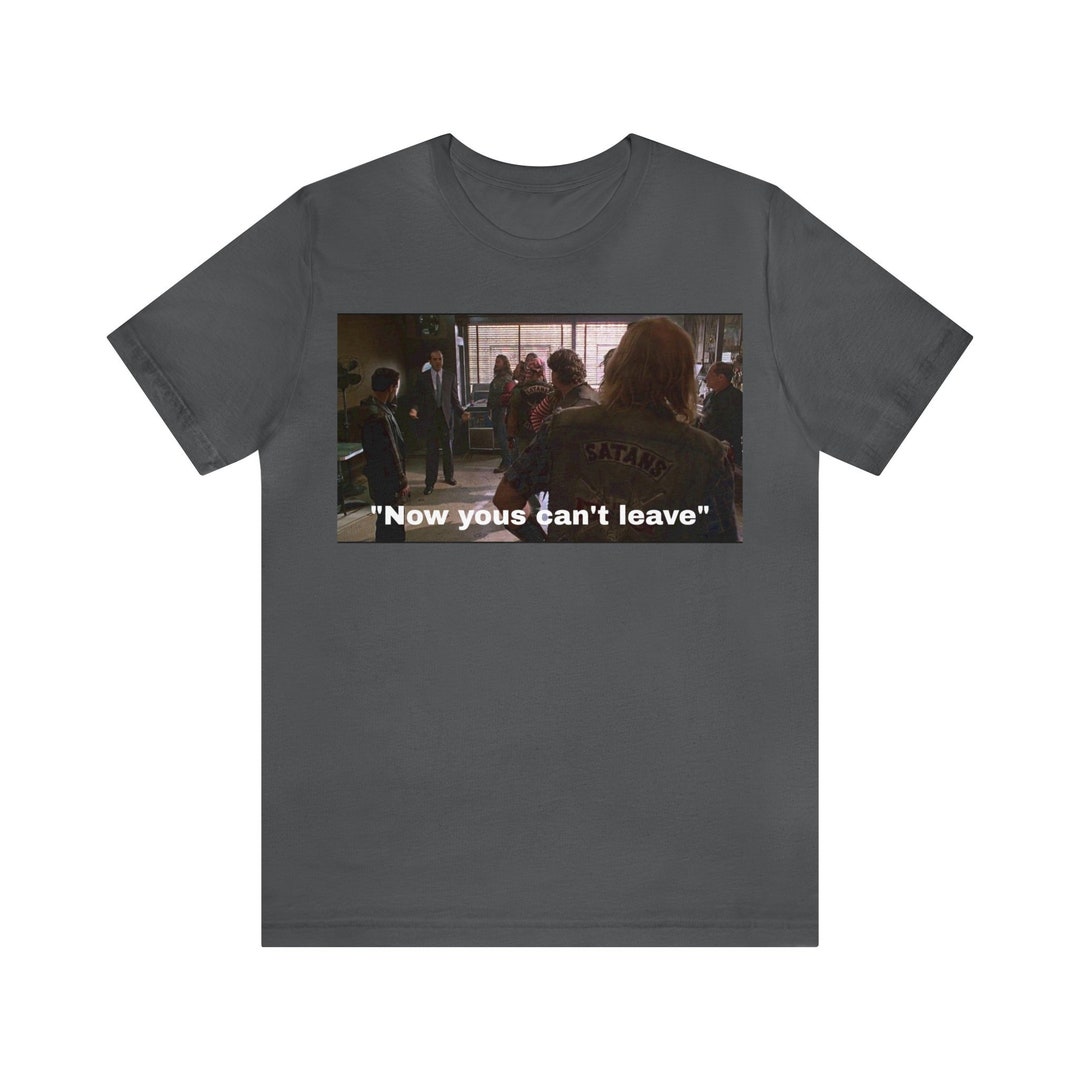
The "Now you can't leave" scene in the 1993 film A Bronx Tale is a pivotal cinematic moment where the local mob boss, Sonny LoSpecchio, locks the door of the Chez Bippy bar to confront a group of unruly bikers. It serves as a masterclass in establishing power dynamics, neighborhood territorialism, and the contrast between organized crime and disorganized chaos.
As of 2026, A Bronx Tale remains a cornerstone of American cinema, particularly within the coming-of-age and gangster genres. While many viewers remember the film for its "wasted talent" mantra or the "door test," the barroom confrontation stands as the most visceral demonstration of Sonny’s philosophy and the absolute control he exerted over his domain. This deep dive explores the historical context, the psychological subtext, and the technical execution of one of the most celebrated scenes in movie history.
The Genesis of the Scene: From Stage to Screen
To understand the weight of the "Now you can't leave" moment, one must look at the origins of the story. Written by Chazz Palminteri as an autobiographical one-man play, A Bronx Tale was a raw reflection of his childhood in the Belmont neighborhood of the Bronx during the 1960s. When Robert De Niro saw the play, he recognized its potential, marking it as his directorial debut.
The transition from a one-man stage show to a feature film required expanding internal monologues into visual set pieces. The bar scene was designed to show, rather than tell, the audience who Sonny was. In the play, Palminteri described the atmosphere of the neighborhood; in the film, De Niro used the bar scene to crystallize the concept of "the neighborhood" as a closed ecosystem. In this ecosystem, respect is the currency, and those who do not trade in it—like the visiting bikers—are quickly and violently liquidated.
The casting was equally important. Lillo Brancato Jr., who played the teenage Calogero ("C"), possessed a naturalistic quality that allowed the audience to see the scene through the eyes of an impressionable youth. When Sonny locks that door, the audience feels Calogero’s mixture of fear, awe, and burgeoning realization of what real power looks like.
Breaking Down the "Now You Can't Leave" Sequence
The scene begins with a group of bikers entering the Chez Bippy, a local social club and mob hangout. Their presence is an immediate sensory mismatch; they are loud, dressed in leather, and carry an air of entitled rebellion that contrasts sharply with the silent, suit-clad men sitting at the bar.
The Disruption of Order
The bikers' mistake isn't just their rowdiness; it is their failure to recognize the hierarchy of the space they have entered. They treat the bar like a generic roadside tavern, ignoring the subtle cues of authority. When Sonny (played by Palminteri himself) initially asks them to leave politely, he is offering them a "grace period." This is a crucial element of the scene’s tension. Sonny isn't looking for a fight; he is maintaining the equilibrium of his business.
The Literal and Symbolic Locking of the Door
The turning point occurs when the bikers refuse to leave and one makes a derogatory comment. Sonny walks to the door, clicks the lock, and utters the legendary line: "Now you can't leave."
This action transforms the bar from a public space into a private arena. By locking the door, Sonny assumes total liability for what happens next while ensuring that his "guests" cannot escape the consequences of their disrespect. In the world of A Bronx Tale, the door is a recurring motif (seen again in the "door test" for Calogero's girlfriend), representing the barrier between who belongs and who does not.
The Mechanics of the Confrontation
The fight that follows is not a cinematic "brawl" in the traditional sense. It is a systematic dismantling. The mobsters use everyday objects—pool cues, bottles, and chairs—with a calculated efficiency that reflects their lifestyle. Unlike the bikers, who fight with a chaotic energy, the wise guys move with a practiced, almost bored lethalness. This distinction highlights the difference between "tough guys" and "professional men of violence."
The Psychology of Respect vs. Fear
A central theme of the deep dive into this scene is the juxtaposition of fear and respect. Sonny famously asks Calogero, "Is it better to be loved or feared?" This scene provides the answer. Sonny doesn't want the bikers' love; he demands their respect for his territory. When that respect is withheld, fear becomes the substitute.
The scene also illustrates the "neighborhood code." The bikers are outsiders. In the 1960s Bronx portrayed in the film, the neighborhood was a fortress. The mob provided a perverse form of security for the residents, acting as a buffer against outside interference. When Sonny protects the bar, he isn't just protecting his business; he is reinforcing the idea that within these few blocks, he is the law, the judge, and the executioner.
Technical Execution and De Niro’s Direction
Robert De Niro’s direction in this scene is notable for its restraint followed by explosive movement. As a director, De Niro opted for mid-to-wide shots during the initial confrontation to show the spatial relationship between the two groups. He wanted the audience to see how the wise guys slowly surrounded the bikers without them even noticing.
Sound Design and Atmosphere
The sound design plays a major role in the scene’s impact. Before the fight breaks out, the bar is relatively quiet—the jukebox isn't blaring, and the dialogue is delivered in low, menacing tones. The click of the door lock is amplified, serving as the "starting bell" for the violence. During the fight, the sound of glass breaking and wood splintering is prioritized over music, making the violence feel grounded and "dirty" rather than stylized.
The Use of Silence
One of the most effective parts of the scene is the silence that follows the violence. Once the bikers are beaten and thrown out, the wise guys simply go back to what they were doing. There is no celebration, no "high-fiving." This lack of reaction reinforces the idea that this was just a chore—a necessary bit of "housecleaning." For Calogero, watching this from the sidelines, the silence is perhaps more terrifying than the noise of the fight itself.
Scene Analysis: Character Roles and Symbolic Weight
The following table breaks down the roles and symbolic contributions of the key players during the Chez Bippy confrontation:
| Entity | Role in the Scene | Symbolic Meaning |
|---|---|---|
| Sonny LoSpecchio | The Instigator/Authority | Represents the absolute law of the neighborhood. |
| The Bikers | The Antagonists/Outsiders | Represent chaos and the lack of "neighborhood" values. |
| Calogero (C) | The Witness | Represents the audience; the "wasted talent" caught between worlds. |
| The Door Lock | The Catalyst | The threshold between civil society and the "jungle" of the streets. |
| The Chez Bippy | The Setting | A sanctuary for the mob; a seat of power that must remain unsullied. |
Comparative Analysis: A Bronx Tale vs. Other Mob Classics
When performing a deep dive into "Now you can't leave," it is helpful to compare it to similar scenes in the genre. For instance, the "Funny how?" scene in Goodfellas (1990) also deals with the sudden shift from camaraderie to lethal tension. However, where Goodfellas focuses on the volatility and paranoia of the mob, A Bronx Tale focuses on the order and structure of it.
In The Godfather, violence is often a cold business transaction. In A Bronx Tale, the bar fight is personal but disciplined. Sonny isn't killing the bikers; he is teaching them a lesson. This "educational" aspect of the violence is what separates the film from its peers. It frames the mob not just as a criminal enterprise, but as a misguided paternal force in the community.
The Enduring Legacy in 2026
Over thirty years since its release, the "Now you can't leave" scene has transcended the film itself. It has become a shorthand for any situation where an arrogant outsider realizes they have entered a trap of their own making. In the digital age, the scene is frequently shared in short-form media as a "satisfaction" clip—a testament to the universal human desire to see bullies get their comeuppance.
Furthermore, Chazz Palminteri’s performance remains the definitive portrayal of a "gentleman gangster." His ability to flip from a calm, almost welcoming host to a cold-blooded enforcer within the span of a single sentence is what makes the scene endlessly rewatchable. The scene is also a staple of film schools, used to teach students about tension-building and the use of physical space in cinematography.
Frequently Asked Questions
Was the "Now you can't leave" scene based on a real event?
Yes. Chazz Palminteri has stated in various interviews, including those archived on the American Film Institute and in his own memoirs, that the majority of A Bronx Tale is based on his real-life experiences growing up in the Bronx. While some cinematic flourishes were added for the 1993 film, the core experience of witnessing neighborhood figures handle outside "troublemakers" was a reality for him.
Where was the bar scene filmed?
Although the movie is set in the Bronx (specifically on 187th Street and Belmont Avenue), much of the filming actually took place in Astoria, Queens, and parts of Brooklyn. The production team chose these locations because they better preserved the 1960s aesthetic that had been lost to urban development in the actual Bronx by the early 1990s.
Why didn't the police intervene after the fight?
The film portrays a specific era and location where the police and the mob had a complex, often hands-off relationship. In the Belmont neighborhood of the 1960s, "street justice" was often preferred over legal intervention. For the residents, having Sonny handle the bikers was more efficient than calling the authorities, and the "omertà" (code of silence) ensured that no one reported the incident.
What is the significance of the "Now you can't leave" quote today?
In modern pop culture, the quote is used to describe a "point of no return." It has been referenced in sports, politics, and other movies to signify that a conflict has moved from a verbal disagreement to an inevitable physical or tactical confrontation.
Who played the lead biker in the scene?
The bikers were largely played by character actors and stuntmen to ensure the fight choreography looked realistic. While they are not the central stars of the film, their casting was essential to provide a believable physical threat that Sonny and his crew had to overcome.
Summary and Next Steps
The "Now you can't leave" scene is the heart of A Bronx Tale because it encapsulates the film's complex morality. It shows Sonny at his most "heroic" (protecting his neighborhood) and his most "villainous" (using brutal violence to solve a problem). For the viewer, it serves as a reminder that power is not just about strength, but about the control of one's environment.
To fully appreciate the nuances of this scene, viewers should:
- Watch the 1993 Film: Pay close attention to the sound of the lock and the lack of music during the fight.
- Compare to the Stage Play: Listen to Palminteri’s original 1989 audio recordings of the play to see how he initially envisioned the dialogue.
- Explore the Soundtrack: Notice how the upbeat 60s music (like "I Wonder Why") is used throughout the film to contrast with the dark reality of Sonny’s world.
By studying this scene, one gains a deeper understanding of the "neighborhood" as a character in its own right—a place with rules that must be followed, or else the door will be locked, and you won't be able to leave.