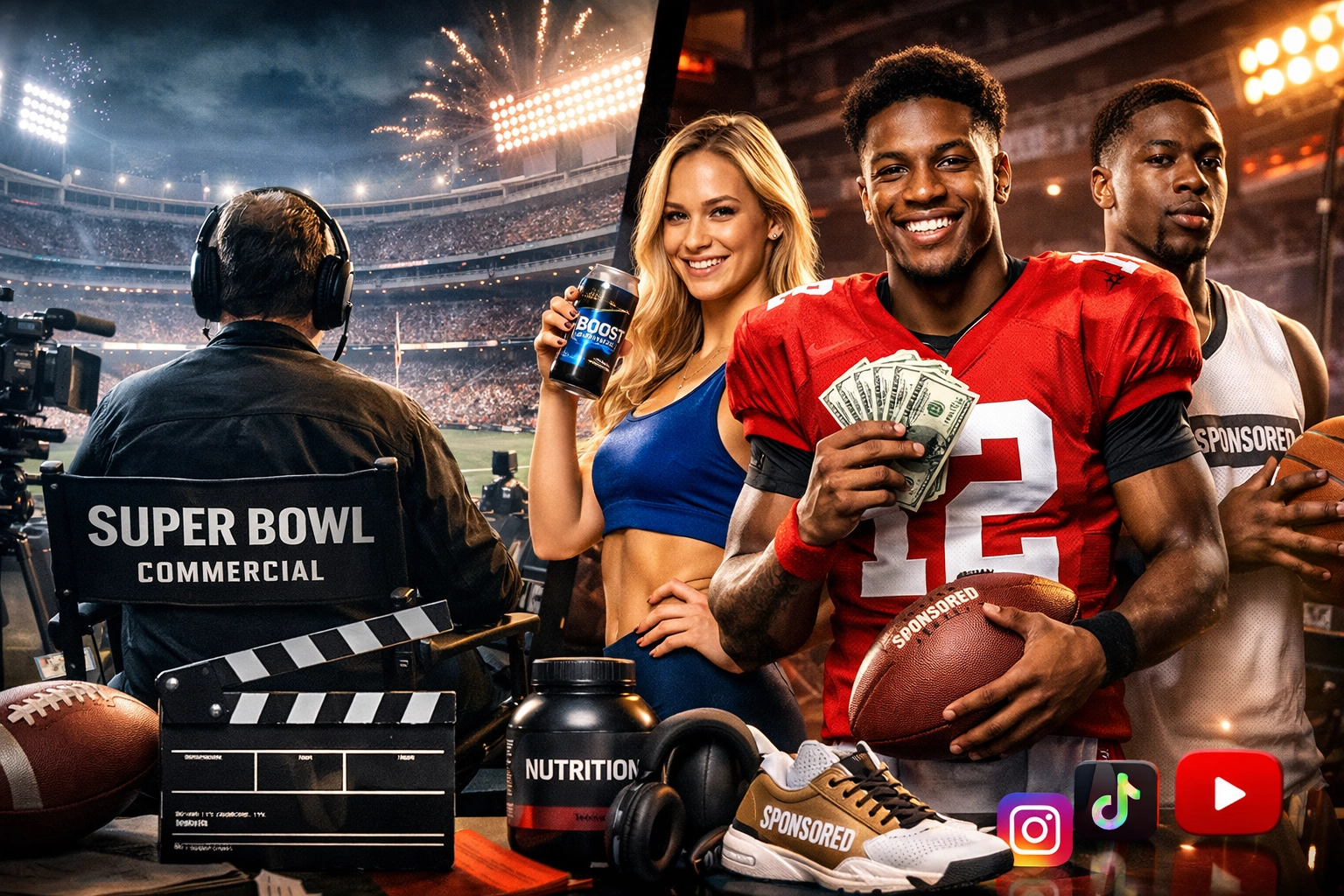
In 2026, athletes in commercials shape brand narratives by serving as living embodiments of a brand’s core values, bridging the gap between product utility and emotional aspiration. Through authentic storytelling and cultural alignment, athletes transform commercial messages into compelling life narratives that drive consumer loyalty, establish social proof, and redefine market positioning.
The Psychological Architecture of Athlete Branding
The efficacy of using athletes in commercials is rooted in deeply established psychological principles. When a brand selects an athlete as the face of a campaign, they are not merely purchasing a recognizable face; they are "renting" the athlete’s hard-earned credibility and emotional equity. This process is primarily driven by the Source Credibility Model, which suggests that the effectiveness of a message depends on the perceived expertise and trustworthiness of the source.
In the context of 2026’s advertising landscape, this has evolved into a more sophisticated "narrative transport." Consumers are no longer passive recipients of ads; they are participants in a story. When an athlete like a championship-winning quarterback or a breakout Olympic sprinter appears in a commercial, the audience projects the athlete’s attributes—perseverance, excellence, or resilience—onto the product itself. This creates a halo effect where the brand is perceived as a tool that facilitates such high-level performance.
Furthermore, Social Identity Theory plays a critical role. Fans do not just watch athletes; they identify with them. By incorporating an athlete into a commercial, a brand positions itself as a part of the "in-group" for that athlete’s fanbase. This creates a shortcut to brand loyalty that would otherwise take years of traditional advertising to build.
From Spokesperson to Symbol: The Historical Shift
To understand how athletes shape narratives today, one must look at the transition from the "spokesperson" era to the "symbolic partner" era. In the mid-20th century, athletes often appeared in commercials as simple endorsers, frequently for products unrelated to their sport, such as tobacco or sugary cereals. The narrative was simple: "I am famous, and I use this product."
The paradigm shift began in the 1980s, most notably with the partnership between Nike and Michael Jordan. This collaboration moved beyond endorsement into the realm of co-branding. The "Air Jordan" narrative wasn't just about a shoe; it was about the defiance of gravity and the pursuit of greatness. This laid the groundwork for the modern era, where the athlete’s personal journey is interwoven with the brand’s mission statement.
By 2026, this evolution has reached a point of "narrative integration." Brands no longer ask athletes to read a script; they build the script around the athlete’s genuine history. This shift is a response to an increasingly skeptical consumer base that values authenticity above all else. A commercial featuring an athlete overcoming a career-threatening injury to return to the field provides a powerful metaphor for a brand’s "durability" or "reliability."
Navigating the NIL Landscape in 2026
The legalization of Name, Image, and Likeness (NIL) rights in college athletics earlier this decade fundamentally changed how brands construct narratives. In 2026, the market is no longer dominated solely by professional superstars. Student-athletes have become hyper-local narrative drivers.
For regional brands, a college athlete provides a "hometown hero" narrative that feels more accessible and grounded than a global icon. These commercials often focus on the "grind"—the early mornings, the academic balance, and the community connection. This shapes a brand narrative of "support" and "potential."
The technical execution of NIL commercials in 2026 often involves a multi-platform approach. A 30-second television spot might establish the high-production narrative, while the athlete’s personal social media channels provide the "behind-the-scenes" reality. This creates a 360-degree brand story where the athlete is the primary narrator, making the commercial feel less like an intrusion and more like a documentary snippet.
Strategic Alignment: Matching Athlete Archetypes to Brand Personas
A brand’s narrative is only as strong as its alignment with the athlete’s public persona. Misalignment can lead to "narrative dissonance," where the audience feels the partnership is forced or purely transactional. Marketers in 2026 use sophisticated data analytics to match athletes with specific brand archetypes.
The Maverick
Athletes who challenge the status quo or play with a unique flair are often paired with disruptive tech brands or fashion houses. The narrative here is one of innovation and breaking boundaries.
The Underdog
The "comeback" or "scrappy" athlete is the perfect vehicle for brands wanting to emphasize value, resilience, or "punching above one's weight." This is a common strategy for challenger brands trying to take market share from established leaders.
The Professional
Athletes known for their consistency, leadership, and "clean" public image are favored by financial institutions and luxury brands. The narrative focuses on stability, long-term success, and precision.
| Narrative Type | Core Theme | Athlete Archetype | Example Brand Goal |
|---|---|---|---|
| Performance-Driven | Peak human achievement | Elite Gold Medalist | Demonstrate product technical superiority |
| Lifestyle/Aspirational | Success off the field | Fashion-Forward Star | Expand brand into premium/luxury markets |
| Purpose-Led | Social change/Impact | Activist Athlete | Build brand equity through shared values |
| Relatability | The "Everyman" struggle | Emerging Rookie / NIL Star | Increase accessibility and consumer trust |
The Impact of Digital Integration on Commercial Storytelling
In 2026, the "commercial" is no longer confined to a television screen. Digital integration has allowed athletes to shape brand narratives through interactive and immersive formats. High-production commercials now serve as the "tentpole" for broader digital campaigns.
For instance, a commercial might feature a QR code or an augmented reality (AR) trigger that allows the viewer to "step into" the athlete's training environment. This deepens the narrative from a passive observation of greatness to an active participation in it. The athlete becomes a mentor or a coach, and the brand is the medium through which this interaction happens.
Furthermore, the "short-form" revolution (TikTok, Reels, and their 2026 successors) has forced commercials to become more punchy and visual. Athletes are uniquely suited for this because their physical movements—a perfect swing, a precise dive, a powerful sprint—are inherently cinematic and require little dialogue to convey a message of excellence.
Risk and Resilience: When Narratives Diverge
One of the most complex aspects of using athletes to shape brand narratives is the inherent risk of human fallibility. When an athlete's personal narrative takes a negative turn—due to legal issues, performance drops, or controversial statements—the brand narrative they represent is immediately threatened.
In 2026, brand contracts have become increasingly sophisticated regarding "morality clauses" and "narrative pivot" strategies. However, the most successful brands have learned that authenticity sometimes requires standing by an athlete during a low point. This creates a narrative of "loyalty" and "humanity," which can resonate more deeply with consumers than a perfect, sterile image.
The decision to stay with or cut ties with an athlete is a critical moment in brand narrative management. For example, if a brand’s narrative is built on "perfection," a scandal is often fatal to the partnership. If the narrative is built on "resilience" or "growth," a well-managed comeback story can actually strengthen the brand’s connection with its audience.
Metrics of Influence: Measuring the Narrative Shift
How do brands know if an athlete is actually shaping their narrative effectively? In 2026, measurement goes far beyond simple view counts or "likes."
- Sentiment Analysis: Using AI to scan social media and review platforms to see if the keywords associated with the athlete (e.g., "fast," "honest," "strong") are beginning to be associated with the brand.
- Brand Lift Studies: Measuring the change in consumer perception of the brand's "personality" before and after the campaign.
- Conversion Attribution: Tracking how much of the sales growth can be directly linked to the athlete’s presence, particularly through "referral codes" or athlete-specific landing pages.
- Long-term Equity: Assessing whether the brand can maintain its premium pricing or market position even after the specific commercial campaign has ended.
The most successful athlete-brand narratives are those that result in Brand Salience—the degree to which a brand is thought of or noticed when a customer is in a buying situation. If a consumer thinks of "stamina" and immediately pictures a specific athlete in a specific commercial for a specific energy drink, the narrative has been successfully shaped.
Case Study: The 2026 World Cup and Narrative Globalization
The 2026 FIFA World Cup in North America serves as a primary example of how athletes shape global narratives. Brands have utilized players from diverse backgrounds to create a story of "global unity" and "cultural fusion." Commercials in this era often minimize spoken language, relying instead on the universal language of sport and the recognizable faces of international stars.
By focusing on the athlete’s journey from a small local club to the world’s biggest stage, brands align themselves with the narrative of "the global dream." This allows a brand to feel local in dozens of different markets simultaneously, simply by virtue of the athlete they choose to feature.
Frequently Asked Questions
Why are athletes more effective than actors in commercials?
Athletes bring an inherent level of "unscripted" reality. While an actor is paid to pretend, an athlete’s success is based on measurable, physical reality. This creates a higher level of trust. When an athlete says a shoe helps them jump higher, there is a perceived physical evidence behind the claim that an actor cannot replicate.
How has the NIL era changed the way small businesses use athletes?
Before NIL, only major corporations could afford athlete endorsements. In 2026, small businesses can partner with local college or even high school athletes to create "community-first" narratives. This has democratized athlete branding, allowing a local gym or car dealership to shape a narrative of supporting local talent.
Does an athlete's performance on the field affect the commercial's success?
Yes, significantly. There is a "performance correlation" in brand narratives. When an athlete is winning, the narrative of "success" and "excellence" is reinforced. If an athlete's performance declines, the brand may pivot the narrative to "perseverance" or "the comeback," but the immediate impact on brand sentiment is usually tied to the athlete's current competitive standing.
What is the biggest mistake brands make when using athletes?
The most common mistake is "narrative mismatch"—choosing an athlete based solely on their fame rather than their alignment with the brand’s values. If a luxury watch brand uses an athlete known for being "unpolished" or "rebellious," the narrative becomes muddled, and consumers may view the partnership as insincere.
How do virtual or AI athletes fit into brand narratives in 2026?
AI athletes are beginning to be used for high-risk or highly technical commercials where human physical limits or scheduling are an issue. However, they lack the "human soul" and "real-life stakes" that make traditional athletes so effective at shaping narratives. Most brands use AI athletes for technical demonstrations while keeping human athletes for the emotional heart of the story.
Practical Recommendations for Brand Narrative Development
For brand managers and marketers looking to leverage athletes in 2026, the focus must be on narrative longevity rather than short-term "buzz."
First, conduct a deep audit of your brand’s "core truth." What is the one thing your brand stands for above all else? Once that is identified, seek an athlete whose personal history and public persona naturally mirror that truth.
Second, involve the athlete in the creative process. In 2026, the most effective commercials feel like collaborations. Allow the athlete to influence the dialogue or the setting to ensure it feels authentic to their actual life.
Finally, plan for the long term. A single commercial is a data point; a multi-year partnership is a narrative. The most iconic brand stories—like Nike and Jordan or Gatorade and Serena Williams—were built over decades, not weeks. Consistency is the key to turning a commercial appearance into a lasting brand narrative.