The Asr prayer is the third of the five mandatory daily prayers (Salah) in Islam, performed in the late afternoon. It consists of four units (Rak'ahs) recited silently. To perform it, one must be in a state of ritual purity (Wudu), face the Qibla, and complete the physical movements of standing, bowing, and prostrating while reciting specific Arabic supplications.
The Asr prayer holds a unique position within the Islamic faith, often identified by scholars as "Al-Salat al-Wusta" or the "Middle Prayer." This designation comes from the Quranic command to "Guard strictly your (habit of) prayers, especially the Middle Prayer" (Quran 2:238). For English-speaking Muslims or those interested in learning the practice, understanding both the physical actions and the spiritual meanings behind the Arabic recitations is essential for a fulfilling worship experience. In 2026, with the increasing availability of digital learning tools, mastering the nuances of this silent prayer has become more accessible, yet the fundamental requirements remains rooted in centuries of tradition.
Prerequisites for the Asr Prayer
Before beginning the Asr prayer, several conditions must be met to ensure the validity of the worship. These prerequisites prepare the mind and body for standing before the Creator.
Ritual Purity (Wudu)
The most critical prerequisite is Wudu (ablution). One cannot perform Salah without being in a state of ritual purity. This involves washing the hands, mouth, nostrils, face, arms up to the elbows, wiping the head, and washing the feet up to the ankles. If one has entered a state of major ritual impurity (Janaba), a full-body bath (Ghusl) is required. Maintaining Wudu is not just a physical requirement but a spiritual cleansing that signals the transition from worldly activities to divine worship.
Covering the Awrah
The Awrah refers to the parts of the body that must be covered during prayer. For men, this generally includes the area from the navel to the knees, though it is highly recommended to cover the shoulders as well. For women, the entire body must be covered except for the face and hands. The clothing should be loose-fitting and not transparent, ensuring that the focus remains on the spiritual act rather than the physical form.
Facing the Qibla
All prayers must be directed toward the Kaaba in Makkah, Saudi Arabia. In 2026, most practitioners use high-precision GPS-based mobile applications or integrated smart-home devices to determine the exact direction of the Qibla from their current location.
Intention (Niyyah)
The intention is a silent act of the heart. You do not need to say it out loud, but you must be mentally aware that you are performing the four Rak'ahs of the Fard (obligatory) Asr prayer for the sake of Allah. Without this conscious intention, the movements are merely physical exercise rather than an act of worship.
The Timing of Asr Prayer
Understanding when to perform Asr is crucial, as the window for this prayer is shorter than Dhuhr (the noon prayer) and ends strictly at sunset.
Start Time
The start of Asr time begins when the shadow of an object is equal to its length (plus the length of its shadow at noon). This is the standard view held by the Shafi'i, Maliki, and Hanbali schools of jurisprudence. However, the Hanafi school traditionally posits that Asr begins when the shadow of an object is twice its length. Most modern prayer timetables and apps in 2026 provide both "Standard" and "Hanafi" timings to accommodate these legal interpretations.
End Time and the Disliked Period
The preferred time for Asr ends when the sun begins to turn pale or yellow. While the prayer remains valid until the sun actually starts to set, it is considered Makruh (highly disliked) to delay the prayer until the sun is low on the horizon and the light is fading, unless there is a legitimate excuse. It is strictly forbidden to pray exactly during the moments of sunset.
According to a narration in Sunnah.com, the Prophet Muhammad (peace be upon him) emphasized the importance of the time, noting that whoever misses the Asr prayer, it is as if he has lost his family and property.
Step-by-Step Guide to the Four Rak'ahs of Asr
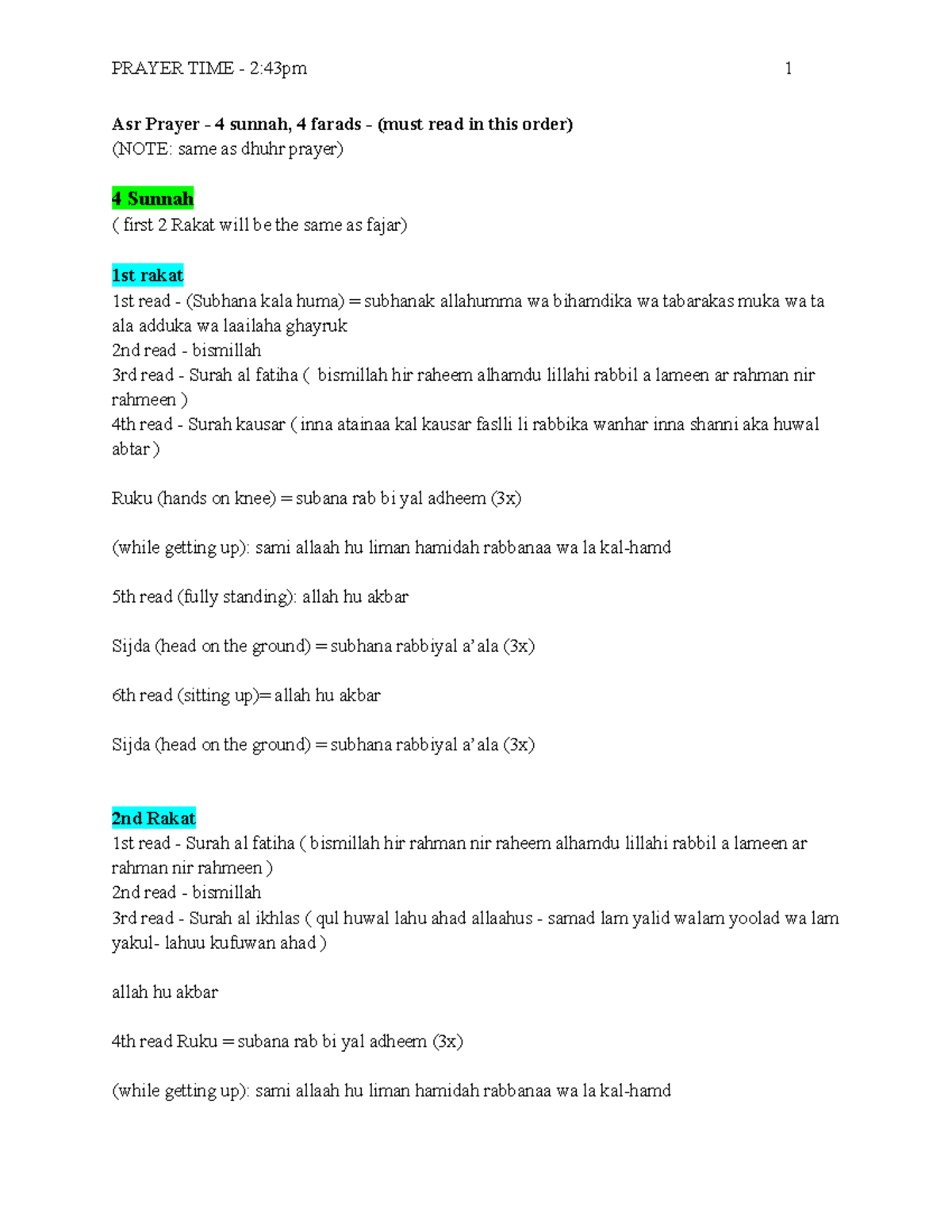
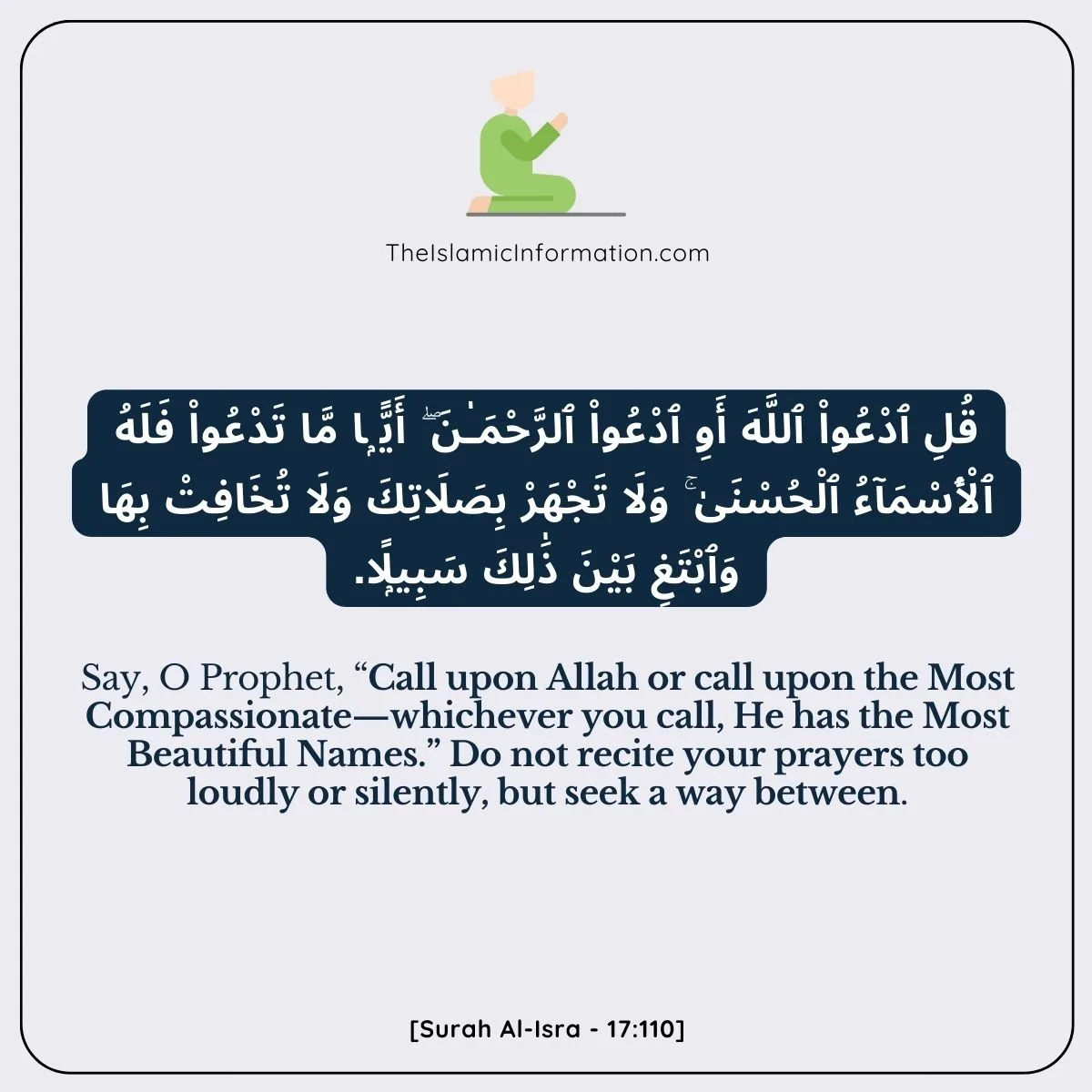
Asr is a Sirri prayer, meaning the recitation is done silently. You should move your lips and tongue to form the words, but you should not produce a sound that others can hear.
The First Rak'ah
- Takbiratul Ihram: Raise your hands to your ears (or shoulders) and say "Allahu Akbar" (Allah is the Greatest). This enters you into the state of prayer. Place your right hand over your left on your chest or above the navel.
- Sana (Optional): Recite the opening supplication silently: "Subhanakal-lahumma wa bihamdika wa tabarakasmuka wa ta'ala jadduka wala ilaha ghayruk" (Glory be to You, O Allah, and all praise. Blessed is Your name and exalted is Your majesty. There is no god besides You).
- Al-Fatiha: Recite the Opening Chapter of the Quran. This is a pillar of the prayer.
- Additional Surah: Recite any other portion of the Quran (e.g., Surah Al-Ikhlas or Surah Al-Kawthar).
- Ruku (Bowing): Say "Allahu Akbar" and bow down, placing your hands on your knees. Keep your back straight. Say silently three times: "Subhana Rabbiyal Azeem" (Glory be to my Lord, the Supreme).
- I'tidal (Standing up): Rise back to a standing position while saying: "Sami’Allahu liman hamidah" (Allah hears those who praise Him). Once standing, say: "Rabbana lakal hamd" (Our Lord, all praise is Yours).
- Sujud (Prostration): Say "Allahu Akbar" and place your forehead, nose, palms, knees, and toes on the floor. Say silently three times: "Subhana Rabbiyal A'la" (Glory be to my Lord, the Most High).
- Jalsa (Sitting): Say "Allahu Akbar" and sit up momentarily.
- Second Sujud: Say "Allahu Akbar" and perform a second prostration exactly like the first.
The Second Rak'ah
Stand up for the second Rak'ah saying "Allahu Akbar." Repeat the steps of the first Rak'ah (Al-Fatiha, a Surah, Ruku, and Sujud). However, after the second Sujud of this Rak'ah, do not stand up yet. Instead, sit for the First Tashahhud.
The First Tashahhud
While sitting, recite the At-Tahiyyat: "At-tahiyyatu lillahi was-salawatu wat-tayyibat. As-salamu 'alayka ayyuhan-nabiyyu wa rahmatullahi wa barakatuh. As-salamu 'alayna wa 'ala 'ibadillahis-salihin. Ashhadu alla ilaha illallah, wa ashhadu anna Muhammadan 'abduhu wa rasuluh."
(All compliments, prayers, and pure words are due to Allah. Peace be upon you, O Prophet, and the mercy of Allah and His blessings. Peace be upon us and upon the righteous servants of Allah. I bear witness that there is no god but Allah, and I bear witness that Muhammad is His servant and messenger.)
The Third and Fourth Rak'ahs
After the First Tashahhud, stand up for the third Rak'ah. In the third and fourth Rak'ahs of an obligatory (Fard) prayer like Asr, you only recite Surah Al-Fatiha. You do not recite an additional Surah. Complete the Ruku and Sujud for both units as usual.
The Final Tashahhud and Taslim
After the second Sujud of the fourth Rak'ah, remain seated for the Final Tashahhud. Recite the At-Tahiyyat again, followed by the Salawat (sending blessings upon the Prophet):
"Allahumma salli 'ala Muhammadin wa 'ala ali Muhammadin, kama sallayta 'ala Ibrahima wa 'ala ali Ibrahima, innaka Hamidun Majid. Allahumma barik 'ala Muhammadin wa 'ala ali Muhammadin, kama barakta 'ala Ibrahima wa 'ala ali Ibrahima, innaka Hamidun Majid."
Once finished, you may offer personal supplications (Duas). Finally, conclude the prayer with the Taslim:
- Turn your head to the right and say: "Assalamu 'alaykum wa rahmatullah" (Peace and mercy of Allah be upon you).
- Turn your head to the left and say: "Assalamu 'alaykum wa rahmatullah."
Summary Table: Asr Prayer Structure
| Component | Requirement | Recitation Style | Key Notes |
|---|---|---|---|
| Rak'ahs | 4 (Fard/Obligatory) | Silent (Sirri) | Mandatory daily requirement. |
| Sunnah Prayer | 4 (Optional) | Silent | Performed before the Fard; highly recommended. |
| Recitation 1st & 2nd Rak'ah | Al-Fatiha + Surah | Silent | Moving lips is required. |
| Recitation 3rd & 4th Rak'ah | Al-Fatiha only | Silent | Do not add a Surah after Al-Fatiha. |
| First Sitting | After 2nd Rak'ah | Silent | Recite At-Tahiyyat only. |
| Final Sitting | After 4th Rak'ah | Silent | Recite At-Tahiyyat and Salawat. |
| Time Period | Late Afternoon | N/A | Ends at the start of sunset. |
Transliteration and English Meanings for Beginners
For those who are not yet fluent in Arabic, using transliteration is a standard way to perform the prayer while learning. The objective is to eventually memorize the Arabic, as the prayer must be performed in the language of the Quran.
- Allahu Akbar: Allah is [the] Greatest.
- Subhana Rabbiyal Azeem: Glory be to my Lord, the Magnificent.
- Sami’Allahu liman hamidah: Allah hears the one who praises Him.
- Rabbana lakal hamd: Our Lord, to You belongs all praise.
- Subhana Rabbiyal A'la: Glory be to my Lord, the Most High.
- Assalamu 'alaykum wa rahmatullah: Peace and mercy of Allah be upon you.
Understanding these meanings transforms the prayer from a set of ritualized movements into a conscious conversation with the Divine. In 2026, many English translations emphasize the "Supreme" or "Most High" attributes to help practitioners develop Khushu (humility and focus).
The Spiritual Significance of Asr
The Asr prayer is uniquely emphasized in Islamic tradition due to its timing. The late afternoon is often the busiest part of the day, where people are finishing work, commuting, or managing household affairs. Stopping everything to pray Asr is a powerful testament to a believer's priority of God over worldly gains.
Many Hadiths highlight the rewards of Asr. For instance, according to Sahih Bukhari, the angels of the night and the angels of the day meet at the time of the Asr and Fajr prayers. When they return to Allah, He asks them about His servants, and they reply, "We left them while they were praying and we reached them while they were praying."
Furthermore, missing the Asr prayer is considered a grave loss. In the context of 2026's fast-paced, hyper-connected world, the Asr prayer serves as a necessary spiritual "reset," preventing the stresses of the day from consuming the soul before the evening begins.
Common Mistakes to Avoid
Even experienced practitioners can fall into habits that may diminish the reward or validity of their prayer.
- Reciting Aloud: Since Asr is a silent prayer, some beginners mistakenly recite it aloud like Fajr, Maghrib, or Isha. While the prayer is still valid, it is against the Sunnah.
- Rushing the Movements: Each position (Ruku, Sujud, Standing) must be held long enough for the body to settle and for the required phrases to be said clearly. Rushing through the prayer "like a bird pecking seeds" is discouraged.
- Adding a Surah in the Last Two Rak'ahs: This is a common point of confusion. In the Fard (obligatory) portion of Asr, only the first two Rak'ahs include a second Surah after Al-Fatiha.
- Ignoring the Sunnah before Asr: While not mandatory, the Prophet (peace be upon him) said, "May Allah have mercy on a person who prays four Rak'ahs before Asr." Neglecting this consistently means missing out on a specific supplication for mercy.
Frequently Asked Questions
What should I do if I join the Asr prayer late in congregation?
If you join the Imam while he is in Ruku, that Rak'ah counts as yours. If you join after he has risen from Ruku, that Rak'ah is missed. You should follow the Imam until he completes the Taslim, then stand up (without saying the Taslim yourself) to complete the Rak'ahs you missed.
Can I combine Asr with Dhuhr?
Combining Dhuhr and Asr is permissible under specific circumstances, such as being a traveler (Musafir) or during extreme weather conditions (like heavy rain or snow) that make it difficult to reach the mosque. In these cases, you pray them together, either during Dhuhr time or Asr time.
Is the 4 Rak'ah Sunnah before Asr mandatory?
No, the 4 Rak'ahs before the Fard Asr prayer are Sunnah Ghair-Mu'akkadah (non-emphasized Sunnah). This means they are highly recommended and carry great reward, but you are not sinful if you skip them. They are usually performed in sets of two.
What if I forget which Rak'ah I am on?
If you lose count, you should act upon the lower number you are certain of. For example, if you are unsure if you are on the second or third Rak'ah, assume you are on the second and complete the prayer from there. At the end, before the Taslim, you should perform two extra prostrations of forgetfulness (Sajdah Sahw).
What is the latest I can pray Asr?
Technically, the time for Asr lasts until the sun starts to set. However, it is strongly discouraged to delay it until the sun turns orange/yellow (the "pale" sun). Once the sun begins to dip below the horizon, the time for Asr has ended, and the time for Maghrib begins.
Final Recommendations for Practitioners
To make the most of your Asr prayer in 2026, consider the following practical steps:
- Set Alerts: Use a reliable prayer time app that provides "Athan" or "Adhan" alerts specifically for the Asr window, especially if you follow the Hanafi or Standard timing.
- Learn the Meanings: Spend time reading the English translation of the Surahs you recite. Knowing that you are saying "Allah hears those who praise Him" as you stand up from bowing adds a layer of depth to the experience.
- Prepare Early: Start your Wudu five minutes before the prayer time begins. This removes the "rush" factor and allows you to enter the prayer with a calm heart.
- Consistency: The Asr prayer is often the hardest to maintain due to work schedules. If possible, negotiate a 10-minute "spiritual break" during your workday; in 2026, many workplaces recognize this as part of standard wellness and religious accommodation policies.
By guarding the Asr prayer, you are fulfilling a specific divine command and ensuring that the busiest part of your day is anchored in spiritual discipline.