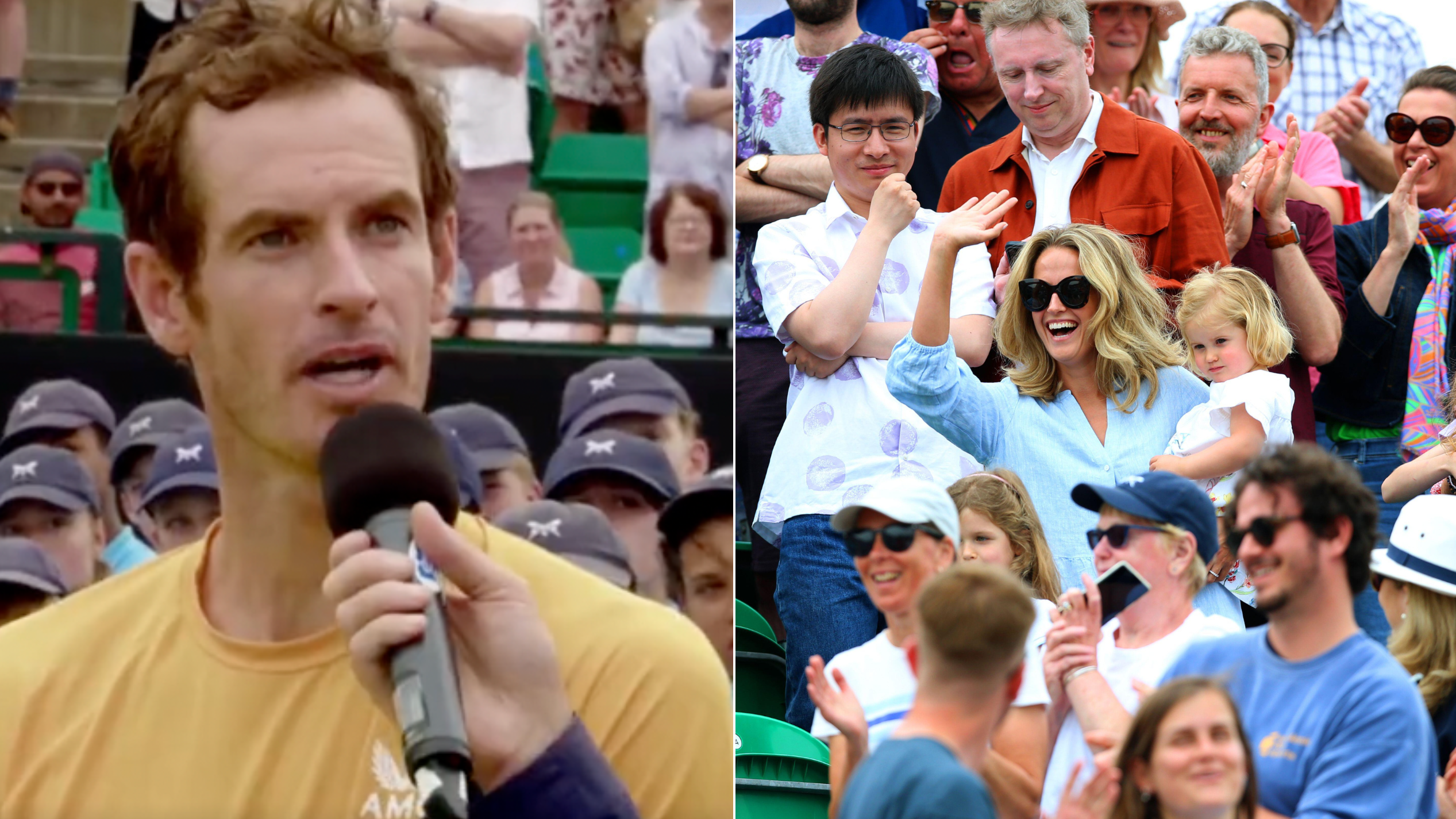
The relationship between Andy Murray and his father, Willie Murray, is defined by a quiet, steadfast support that counterbalances the high-profile public coaching legacy of Andy's mother, Judy. While often staying out of the media spotlight, Willie provided the domestic stability and logistical foundation essential for Andy’s rise to become a three-time Grand Slam champion and World No. 1.
For decades, the narrative surrounding the development of British tennis legend Andy Murray has been dominated by his mother, Judy Murray. As a professional coach and a constant fixture in the player’s box, Judy’s influence on Andy and his brother Jamie’s technical skills is well-documented. However, as we look back from the perspective of 2026, it has become increasingly clear that the "other half" of the Murray success story—his father, Willie Murray—was equally foundational. Willie’s role was not one of tactical instruction, but of emotional and structural resilience, providing a "normal" anchor during a turbulent childhood and an unprecedented professional career.
The Formative Years in Dunblane: A Foundation of Resilience
To understand the bond between Andy Murray and his father, one must look back to their home town of Dunblane, Scotland, in the mid-1990s. Willie Murray worked as a regional manager for the newsagent chain RS McColl, a position that required a steady work ethic and provided a middle-class upbringing for his two sons. Unlike the stereotypical "tennis parent" who pushes for professional glory from infancy, Willie’s initial contributions were rooted in traditional parenting and community involvement.
Navigating the Family Split (1996)
A pivotal moment in the family’s history occurred in 1996 when Willie and Judy separated. At the time, Andy was nine years old and Jamie was ten. This period was doubly traumatic for the family, as it coincided with the tragic Dunblane primary school shooting, an event that deeply affected the entire community.
Following the separation, the boys stayed with their father for a significant period. While Judy pursued her coaching career and eventually moved away to work with the national tennis programs, Willie remained the primary domestic figure in Dunblane. He was responsible for the day-to-day upbringing—cooking meals, managing school schedules, and ensuring the boys had a sense of normalcy despite the breakdown of their parents' marriage. This period of living with Willie is often overlooked in mainstream media profiles, yet Andy has frequently credited this time with fostering the independence and grit that would later define his playing style.
The Stability of a Non-Tennis Parent
In the high-pressure world of elite sports, having a parent who is not emotionally or professionally invested in the "business" of the sport can be a psychological lifeline. Willie Murray represented the world outside of the baseline. When Andy returned home from grueling junior tournaments, Willie was the figure who didn't want to talk about unforced errors or second-serve percentages.
By maintaining his career in the retail sector, Willie provided a financial and emotional safety net. He ensured that the boys knew their value was not tied solely to their performance on the court. This "quiet anchor" approach allowed Andy to develop a professional identity that was distinct from his family identity, a luxury many young prodigies are never afforded.
Willie Murray’s Role: The Quiet Anchor vs. The Public Coach
The contrast between Willie and Judy Murray’s public personas created a balanced ecosystem for Andy’s development. While Judy was the face of the "Murray brand," navigating the complexities of the LTA (Lawn Tennis Association) and media scrutiny, Willie remained a private figure. He rarely gave interviews and almost never commented on Andy’s technical coaching or coaching changes.
Providing Stability Outside the Lines
Willie’s presence in the stands during major tournaments was characterized by a stoic, low-key demeanor. While the cameras often sought out the high-energy reactions of Judy or Andy’s wife, Kim Sears, Willie could often be found tucked away in a less conspicuous seat, watching with a calm intensity.
This lack of public interference was a deliberate choice. Willie understood that Andy was surrounded by experts, coaches, and physiotherapists. His role was to be the "Dad"—the person Andy could turn to for a sense of perspective. Experts in sports psychology often point to this dynamic as the ideal "support team" structure: one parent providing the professional drive and the other providing the unconditional, non-sport-related support.
Handling the Media Narrative
For years, the British press struggled to categorize Willie. Because he was not a "character" in the same way Judy was, some early reports erroneously suggested he was absent or less involved. This couldn't have been further from the truth. Willie was present at nearly every major milestone, from Andy’s US Open win in 2012 to his historic Wimbledon titles in 2013 and 2016. The fact that he chose not to seek the limelight was a testament to his priority: protecting his son’s privacy and maintaining his own quiet life in Scotland.
Landmark Moments: Seeing Andy Through Willie’s Eyes
There are specific moments in Andy Murray's career where the depth of his relationship with his father became visible to the public. These instances broke through the barrier of Willie’s privacy and showed the emotional core of their bond.
The 2013 Wimbledon Victory
When Andy Murray ended the 77-year wait for a British male Wimbledon champion in 2013, the emotional release was felt globally. After the final point against Novak Djokovic, Andy famously climbed into the players' box. In the chaos of the celebration, he initially forgot to hug his mother, Judy, before being reminded. However, the footage of him embracing his father, Willie, showed a different kind of release—a quiet acknowledgement of the long journey they had taken from the courts of Dunblane.
For Willie, that victory was the culmination of years of logistical support, from driving the boys to local tournaments in the rain to supporting Andy's move to Barcelona as a teenager to train at the Sánchez-Casal Academy. It was a validation of the sacrifices made by a working-class father to give his children a chance at a global stage.
The 2016 Knighthood and World No. 1
By the time Andy reached the pinnacle of the world rankings in late 2016, his relationship with Willie had evolved into one of mature mutual respect. Willie was present when Andy received his knighthood, standing as a proud father of a son who had not only conquered his sport but had become a national icon. Throughout this period, Willie continued to live in Scotland, maintaining his own identity and career, which served as a constant reminder to Andy of his roots.
Comparing Parental Roles in the Murray Household
The following table outlines the distinct but complementary roles Willie and Judy Murray played in Andy's life and career. This division of labor is often cited by sports analysts as a key reason for the longevity and success of both Murray brothers.
| Feature | Willie Murray | Judy Murray |
|---|---|---|
| Primary Role | Domestic Stability & Emotional Anchor | Technical Development & Career Strategy |
| Public Visibility | Low (Private, avoids interviews) | High (Media personality, spokesperson) |
| Professional Background | Retail Management (RS McColl) | Professional Tennis Coach / Fed Cup Captain |
| Post-Separation Focus | Primary domestic caregiver in Dunblane | National coaching and talent identification |
| Communication Style | Stoic, private, direct | Articulate, public-facing, analytical |
| Key Contribution | Normalcy and "non-tennis" perspective | Professional pathway and elite standards |
Willie’s Private Life and Second Marriage
While Andy's life was lived in the glare of center court, Willie Murray successfully navigated his own personal life with dignity. In 2016, Willie married his long-term partner, Sam Watson. The wedding, held at Dunblane Cathedral, was a major family event that saw Andy and Jamie serve as "ushers" or best men.
The relationship between Andy and his stepmother has been described as very positive, further solidifying the family unit. For Andy, seeing his father find happiness and a stable partnership in his later years was a source of great personal satisfaction. By 2026, the extended Murray family—including Willie’s grandchildren—remains a tight-knit group, frequently gathering in Scotland away from the prying eyes of the London-centric media.
Common Misconceptions About Willie Murray
Given his private nature, several myths have persisted regarding Willie Murray. It is important to clarify these points to understand the true nature of his influence.
- The "Absent Father" Myth: Because Judy was more visible, some early observers assumed Willie was less involved. In reality, Andy and Jamie lived with Willie for several years following the parents' split, and he was the one managing their daily lives during their most formative years.
- The "Lack of Interest" Myth: Some interpreted Willie’s stoicism as a lack of passion for the sport. On the contrary, Willie is a keen observer of the game and has a deep understanding of the mental toll it takes on his sons. His "quietness" was a strategy to lower the pressure, not a lack of engagement.
- The "Conflict" Myth: While divorce is always difficult, Willie and Judy have maintained a functional and respectful co-parenting relationship for the sake of their sons. They are frequently seen in the same player's box, supporting Andy and Jamie without the drama that often plagues high-profile divorced families.
The Multi-Generational Impact: Andy as a Father in 2026
As of 2026, Andy Murray has transitioned from his playing days into a new chapter of his life, dominated by his role as a father to his four children. It is here that Willie’s influence is perhaps most visible. Andy has often spoken about his desire to provide his children with a "normal" upbringing, shielded from the excesses of his fame.
This philosophy is a direct reflection of Willie’s parenting. Just as Willie kept his job and his quiet life in Dunblane, Andy has made a concerted effort to keep his home life private and grounded. The lessons of resilience, humility, and the importance of family over fame are the primary exports from Willie to Andy, and now from Andy to the next generation of Murrays.
FAQs
Did Willie Murray coach Andy Murray?
No, Willie Murray was never Andy's tennis coach. His mother, Judy, handled the early coaching and technical development. Willie provided the domestic and emotional support, maintaining a career in retail management while raising the boys in Dunblane.
Why was Willie Murray less famous than Judy Murray?
Willie Murray is a naturally private individual who consciously chose to stay out of the spotlight. Unlike Judy, who had a professional career within the tennis industry (as a coach and Fed Cup captain), Willie's professional life was outside of sports, and he preferred to support his son as a father rather than a public figure.
How did the 1996 Dunblane tragedy affect Willie and Andy's relationship?
The tragedy deeply bonded the family. Coming at the same time as Willie and Judy's separation, the event necessitated a strong, stable presence at home. Willie provided that stability, and the shared experience of moving through such a dark time as a family unit created an unbreakable bond of trust between him and his sons.
Is Willie Murray still involved in Andy’s life in 2026?
Yes. Although Andy has retired from professional play by 2026, Willie remains a central figure in the family. He is a grandfather to Andy’s four children and continues to reside in Scotland, where the family frequently visits to maintain their roots away from the public eye.
What was Willie Murray's job?
Willie Murray spent the majority of his career as a regional manager for RS McColl, a well-known Scottish newsagent and convenience store chain. His "regular" job was instrumental in keeping the family grounded during Andy and Jamie's rise to fame.
Practical Guidance for Parents of Aspiring Athletes
The relationship between Willie and Andy Murray offers a masterclass in how to support a high-achieving child without becoming an "overbearing" sports parent.
Recommendation: If you are a parent of a talented young athlete, consider adopting Willie Murray’s "quiet anchor" approach. Allow one parent or a professional coach to handle the technical stresses, while the other focuses on providing a safe, non-judgmental space where the child is valued for who they are, not just what they achieve on the scoreboard. Maintaining your own career and interests—as Willie did—demonstrates to the child that the world is larger than the sport they play, which is the ultimate defense against burnout and identity crisis.