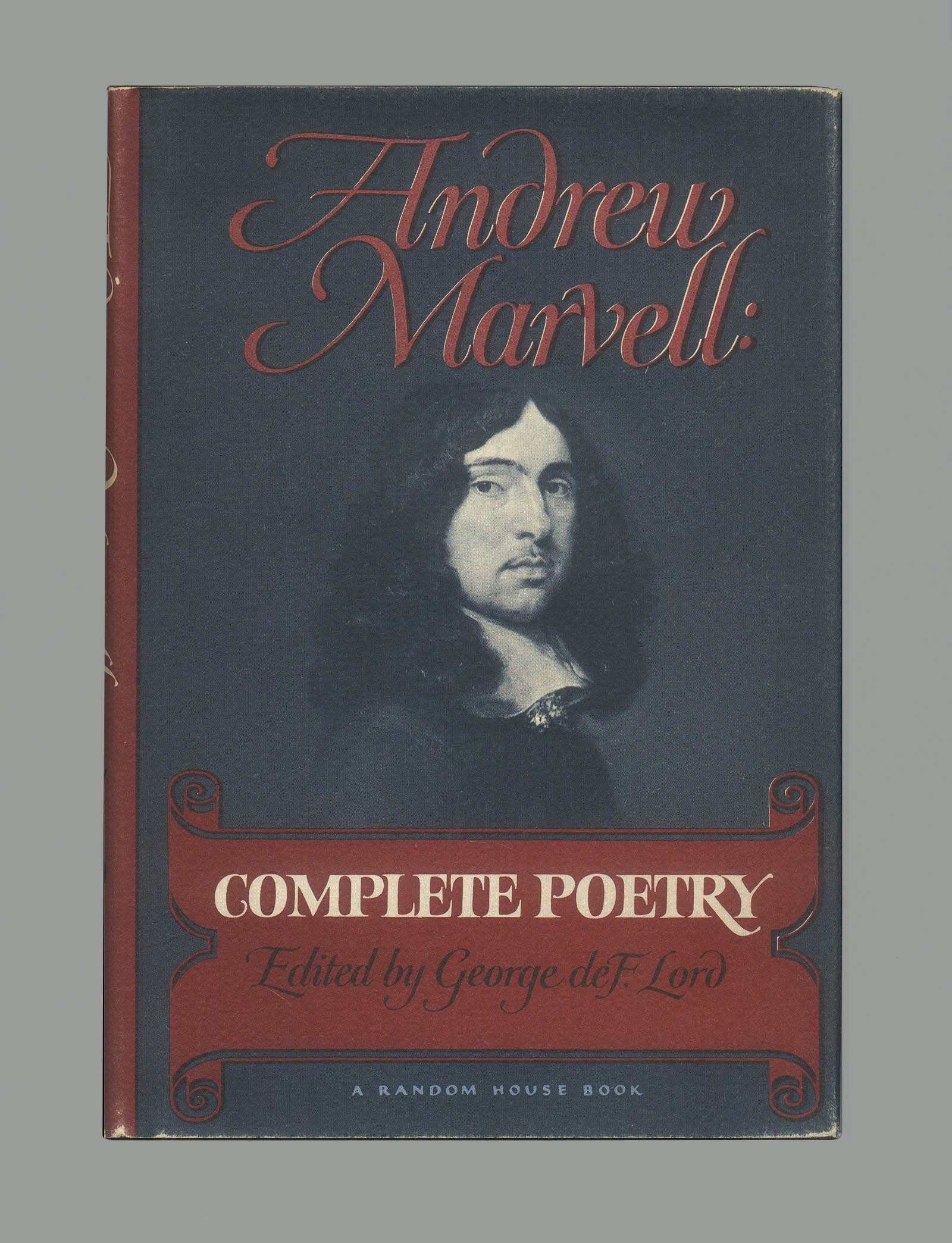
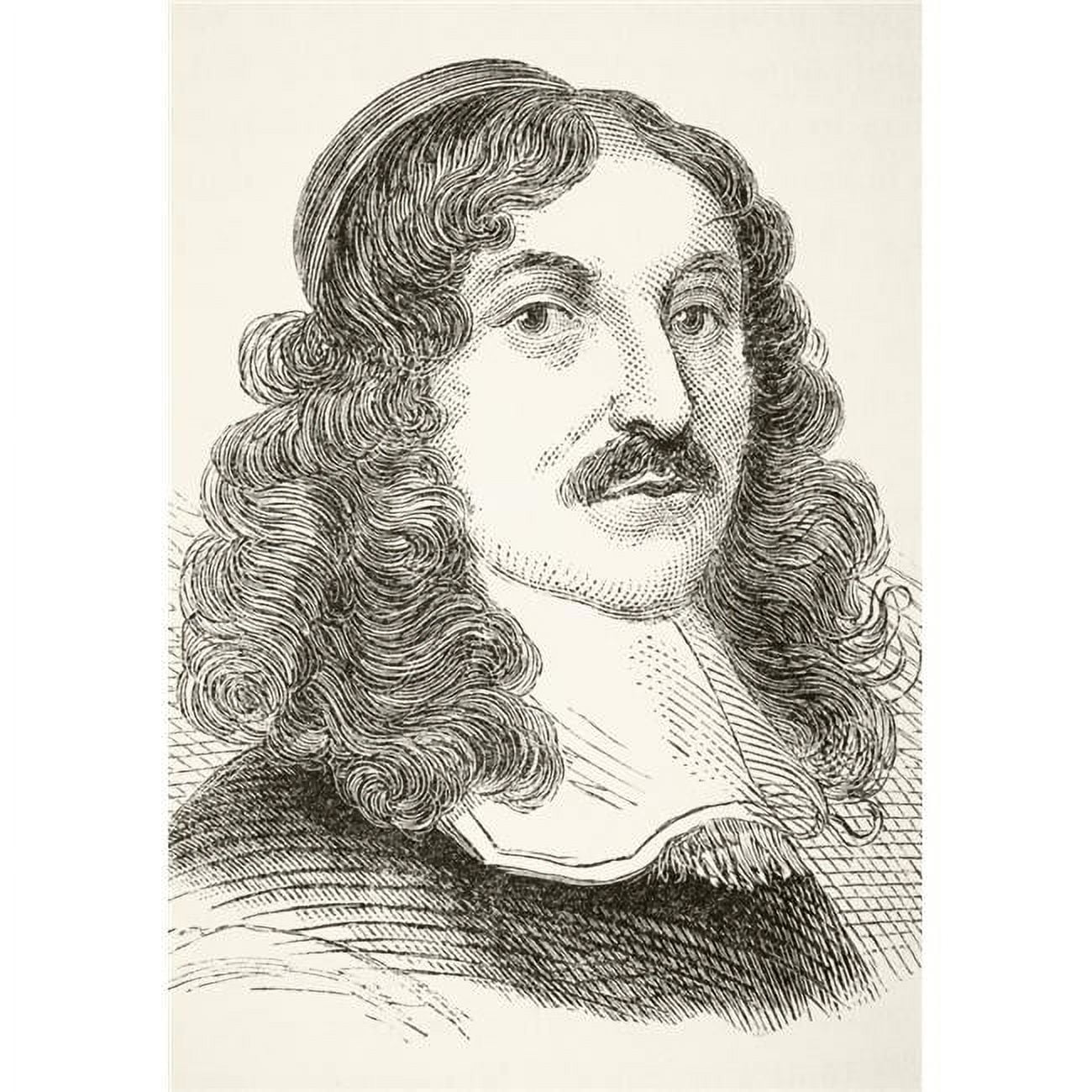
Critical interpretation of Andrew Marvell’s poetry has shifted dramatically over three centuries, evolving from an eighteenth-century view of Marvell as a incorruptible political satirist to the twentieth-century celebrated Metaphysical poet of complex ironic wit, and finally to modern historicist, ecocritical, and queer readings that highlight his political ambivalence and ideological fluidity.
The Historical Evolution of Marvellian Criticism
The critical history of Andrew Marvell (1621–1678) presents one of the most dynamic trajectories in English literary studies. Because Marvell published very little of his lyric poetry during his lifetime, his reputation underwent radical transformations depending on which texts were available to contemporary readers and the political priorities of subsequent eras.
- 17th–18th Century: Political Satirist & Civic Defender of Liberty
- Early–Mid 20th Century: Metaphysical Lyricist & Master of Ironic Wit
- Late 20th Century–Present: Historicist, Ecocritical, & Queer Re-evaluation
The 17th and 18th Centuries: The Patriot and Satirist
During his lifetime and throughout the eighteenth century, Marvell was recognized almost exclusively as a prose polemicist, political satirist, and devoted Member of Parliament for Kingston upon Hull. Works such as The Rehearsal Transpros'd (1672) established him as a defender of religious toleration and civil liberty against ecclesiastical tyranny.
When his posthumous collection, Miscellaneous Poems, was published in 1681 by his housekeeper Mary Palmer (claiming to be his widow), it attracted limited immediate aesthetic commentary. For over a hundred years, readers valued Marvell as "the British Aristides"—an uncorruptible patriot who stood against the vices of the Restoration court of Charles II. His delicate lyric poems, such as "To His Coy Mistress" or "The Garden," were largely overshadowed by his prose attacks on church authority and his verse satires like The Last Instructions to a Painter.
The 19th Century: Romantic Rediscovery of Nature Verse
The nineteenth century marked the beginning of a re-evaluation of Marvell's lyric output. Romantic essayists, notably Charles Lamb and Leigh Hunt, began anthologizing his nature poetry. Critics valued Marvell’s descriptions of gardens and rural landscapes, aligning him with Romantic sensibilities regarding natural retirement and solitary contemplation.
However, Victorians often viewed Marvell’s work through a selective lens. They praised the lush imagery of "The Garden" and "Bermudas" while largely setting aside the darker, more politically fraught paradoxes embedded within those same texts. The prevailing view treated Marvell as a minor lyric poet whose verse offered a serene escape from political turmoil.
The 20th Century: T. S. Eliot and the New Critical Revival
The defining turning point in Marvell scholarship occurred in 1921. Marking the tercentenary of Marvell’s birth, T. S. Eliot published an influential essay in The Times Literary Supplement that permanently altered Marvell's place in the literary canon. Eliot situated Marvell alongside John Donne and George Herbert as a master of Metaphysical poetry, defining his signature quality as a combination of "wit" and "magnanimity."
For Eliot and the New Critics who followed—such as Cleanth Brooks and William Empson—Marvell became the exemplar of poetic tension, irony, paradox, and self-conscious poise. New Criticism isolated the text from biographical and historical contexts, focusing instead on internal verbal structures:
- "To His Coy Mistress" was analyzed not merely as a carpe diem seduction poem, but as a rigorous logical syllogism masking a terrifying confrontation with mortality and time.
- "The Garden" was read as a sophisticated meditation on mind, matter, and the limits of sensory experience.
- "An Horatian Ode upon Cromwell's Return from Ireland" was celebrated as a masterpiece of balanced political neutrality, holding Oliver Cromwell and King Charles I in exquisite aesthetic equilibrium.
Core Ongoing Debates in Marvellian Scholarship
Contemporary Marvell scholarship has largely moved past the New Critical tendency to isolate the poems from their historical moment. Present-day researchers draw upon new archival discoveries, contextual histories, and critical theories to debate the unresolved paradoxes of Marvell’s life and work.
1. The Politics of Ambiguity: Cromwell, Charles I, and Ideological Allegiance
One of the most persistent debates in early modern studies centers on Marvell’s true political convictions during the English Civil War, the Commonwealth, the Protectorate, and the Restoration. Marvell served as tutor to Mary Fairfax (daughter of the Parliamentary general Thomas Fairfax) and William Dutton (a ward of Oliver Cromwell), served alongside John Milton as Latin Secretary to the Council of State, and later represented Hull in Parliament for nearly two decades.
The central battleground for this debate remains "An Horatian Ode upon Cromwell's Return from Ireland" (1650). Critics divide sharply over its fundamental posture:
"An Horatian Ode" (1650) Interpretation
- Pro-Parliament / Machiavellian: Praises Cromwell as an unstoppable force of nature and providential agent.
- Royalist Sympathy & Tragic Grief: Portrays Charles I as a dignified martyr on the "Royal Actor's" stage.
- Realpolitik / Ironic Balance: Acknowledges providence and power while warning of ongoing military force.
The Providential / Machiavellian View: Scholars like Blair Worden argue that Marvell viewed Cromwell as a necessary force of nature and divine providence—an agent of historical destiny whose raw power rendered traditional royal legitimacy obsolete.
The Royalist Sympathy View: Other critics stress the tragic dignity accorded to Charles I on the scaffold in the famous lines describing the King's execution. They argue Marvell retained a deep-seated constitutional monarchism and expressed profound anxiety over military rule.
The Realpolitik / Pragmatic View: Recent work by scholars like Derek Hirst and Steven Zwicker suggests Marvell was an ideological chameleon whose political writing reflects calculated adaptation to shifting power structures rather than unwavering allegiance to a single doctrine.
2. The "Two Marvells" Problem: Unifying Lyric Wit and Public Satire
For decades, literary historians struggled to reconcile the gentle, contemplative lyricist of the early 1650s with the fiercely aggressive political satirist of the 1660s and 1670s. This split was often described as the "Two Marvells" problem.
Modern historicist scholars, led by Nigel Smith (editor of the Longman Annotated English Poets: Charles II and the Restoration edition of Marvell's work), have largely dismantled this dichotomy. Current consensus holds that Marvell's lyric poetry and satire share the same foundational techniques:
- Shared Rhetorical Strategies: Both modes rely on sudden shifts in perspective, intense irony, and a deep skepticism toward absolute claims of authority.
- Continuity of Political Engagement: Poems long considered purely private—such as "Upon Appleton House"—are now recognized as deeply political interventions that address national division, retirement versus public action, and the restructuring of English land ownership.
3. Gender, Sexuality, and Erotic Autonomy
In recent years, feminist, queer, and gender-theory approaches have transformed how scholars read Marvell’s representations of bodily desire, isolation, and gender roles. Unlike many of his Cavalier contemporaries, Marvell frequently depicts desire as fraught, destructive, or deliberately avoided.
- Enclosure and Autonomy: In poems like "The Garden" and "Upon Appleton House", the speaker expresses a preference for solitude over heterosexual union, famously celebrating a state where the mind is "Creating other worlds, than this" and asserting that "Two paradises 'twere in one / To live in paradise alone."
- Queer Readings and Homosocial Spaces: Critics analyze the intense homosocial bonds in Marvell's life and the non-normative eroticism in his poetry. The fluidity of nature in "Upon Appleton House", where the speaker asks to be bound by woodbines and briers, is frequently examined through the lens of modern queer ecology and non-binary desire.
- The Mower Poems: The figures of Damon and the Mower demonstrate how human sexual longing interrupts harmony with the natural world, transforming the meadow from a space of labor into an arena of violence and self-destruction.
4. Ecocriticism and Environmental Agency
The growth of environmental humanities has sparked a major resurgence of interest in Marvell's depictions of agriculture, botany, and landscape architecture. Early readers saw Marvell’s flora as mere allegorical props; modern ecocritics analyze them as active agents.
| Traditional Allegorical Reading | Modern Ecocritical Interpretation |
|---|---|
| Nature is a passive canvas reflecting human emotional or political states. | Plants, meadows, and rivers possess agency and actively resist human domination. |
| Gardens represent Edenic purity or human mastery over wild wilderness. | Gardens reveal the violence of human intervention, grafting, and enclosure. |
| The Mower is a symbolic pastoral figure representing death or fallen humanity. | The Mower represents environmental disruption caused by agricultural labor and desire. |
Scholars emphasize how Marvell highlights the artificiality of human garden-making. In "The Mower against Gardens", the speaker criticizes human modification of nature through grafting and hybridization, accusing gardeners of corrupting natural purity. Ecocritical readings position Marvell as a key early modern recorder of the transition from feudal land stewardship to early capitalist land exploitation and environmental manipulation.
Comparative Overview of Interpretive Eras
The table below summarizes the key eras in Marvell criticism, detailing their primary analytical focus, representative scholars, and foundational views of the poet.
| Critical Era | Dominant Focus | Key Scholars / Influences | Primary Conception of Marvell |
|---|---|---|---|
| 17th – 18th Century | Political Prose & Verse Satire | Jonathan Swift, Whig historians | The "Patriot": A incorruptible defender of Protestant liberty and parliamentary governance. |
| 19th Century | Pastoral Imagery & Nature Lyricism | Charles Lamb, Leigh Hunt | A minor, delicate lyric poet of natural solitude and garden retirement. |
| Mid-20th Century | Verbal Irony, Metaphysical Wit, Textual Paradox | T. S. Eliot, Cleanth Brooks, William Empson | Master of Metaphysical irony; an artist of balanced ambivalence and intellectual detachment. |
| Late 20th Century | Historicism, Civil War Politics, Canon Integration | Christopher Hill, Warren Chernaik, Blair Worden | An engaged political thinker whose lyric and satirical works actively respond to Civil War and Restoration crises. |
| 21st Century | Ecocriticism, Gender/Queer Theory, Textual Editing | Nigel Smith, Derek Hirst, Steven Zwicker | An ideologically fluid, ecologically conscious poet exploring complex desire, identity, and power structures. |
Textual Transmission and Attribution Debates
Beyond thematic interpretation, Marvell scholarship is defined by rigorous textual debate surrounding attribution and editorial history. Because Marvell did not oversee an authoritative collected edition of his verse during his life, determining what he actually wrote remains an active area of study.
The 1681 Miscellaneous Poems and Censors
The primary source for Marvell’s lyric poetry is the 1681 folio Miscellaneous Poems. However, this volume presents several textual challenges:
- Censorship of Cromwell Poems: In almost all surviving copies of the 1681 folio, three major poems concerning Oliver Cromwell—"An Horatian Ode," "The First Anniversary of the Government Under His Highnesse the Lord Protector," and "A Poem Upon the Death of His Late Highnesse the Lord Protector"—were excised by the printer to avoid prosecution under the newly restored monarchy. Only a single unique copy (now held in the British Library, C.59.i.8) preserves these poems intact.
- Authorial Intent vs. Commercial Printing: Questions remain about how closely the manuscript sources used for the 1681 folio reflect Marvell's final revisions or chronological development, as Mary Palmer possessed limited literary control over the printing process.
The Satirical Canon and Disputed Attributions
During the late seventeenth century, political satires circulated anonymously in manuscript form and in clandestine printed anthologies known as Poems on Affairs of State. Many verse satires were loosely attributed to Marvell simply because of his reputation as an anti-court wit.
Modern digital humanities tools, stylometric analysis, and historical evidence have re-examined these attributions:
- Confirmed / Broadly Accepted: The Last Instructions to a Painter (1667) is recognized as Marvell's masterwork of political satire, deploying vivid visual aesthetics to attack government corruption and naval incompetence during the Second Anglo-Dutch War.
- Disputed or Rejected: Poems previously assigned to Marvell, such as Advice to a Painter or certain harsh satires against religious dissenters, have been re-attributed to contemporaries or designated as collaborative, multi-authored scribal texts.
Methodological Frameworks for Reading Marvell
For literature students and early modern researchers, navigating Marvell's complex texts requires synthesizing multiple interpretive frameworks. Rather than relying on a single critical school, modern research draws upon a combination of analytical approaches.
- Key Frameworks for Analyzing Marvell
- Close Reading & Syntax: Unpack double-meanings & unresolved irony.
- Materialist Historicism: Examine Civil War & Restoration contexts.
- Ecocritical Analysis: Map early modern land use, non-human agency & gardens.
- Queer & Gender Lens: Analyze isolation, body politics & non-normative desire.
1. Interrogating Syntactical Ambiguity
Marvell’s grammar is deliberately open-ended. When analyzing lines such as the description of Cromwell in "An Horatian Ode" ("So restless Cromwell could not cease / Having his private plots impaired"), pay close attention to whether "plots" refers to agricultural land, political conspiracies, or both. Double-meanings in Marvell are rarely accidental; they serve as structural devices that hold opposing viewpoints in tension.
2. Contextualizing Political Allusions
Lyric poems that appear purely personal often contain hidden political references. When reading "Upon Appleton House", map Marvell's descriptions of the ruined nunnery, the flooded meadows, and the timber-clearing mowers against the real-world seizure of church lands during the Reformation and the military factionalism of the early 1650s.
3. Examining Non-Human Agency
Look closely at how Marvell portrays plants, animals, and physical environments. Rather than treating nature as a passive backdrop for human action, analyze how elements like the green light in "The Garden" or the mown grass in "Damon the Mower" actively transform human thought and emotional states.
Frequently Asked Questions
Why is T. S. Eliot’s 1921 essay considered a turning point in Marvell scholarship?
T. S. Eliot’s tercentenary essay reframed Marvell’s literary legacy by elevating his lyric poetry over his political prose. Eliot identified Marvell as a key figure in the Metaphysical tradition, coining terms that defined how the New Critics analyzed Marvell’s work for decades: as a supreme example of complex irony, wit, and formal poise.
What is the primary debate surrounding "An Horatian Ode upon Cromwell's Return from Ireland"?
The main debate centers on whether the poem is a pro-Parliamentarian celebration of Oliver Cromwell’s power, a Royalist lament for the executed King Charles I, or a pragmatically neutral analysis of raw political force. Scholars continue to argue whether Marvell ultimately approves of Cromwell’s rise or warns against the dangers of military dictatorship.
What is the "Two Marvells" problem?
The "Two Marvells" problem refers to the historical division in criticism between Marvell the delicate, solitary lyric poet of the 1650s and Marvell the fierce, aggressive political satirist and Member of Parliament of the 1660s and 1670s. Modern scholarship has largely unified these two sides, demonstrating that both genres share the same underlying political awareness and ironic strategies.
How do modern ecocritical scholars read Marvell's garden poems?
Ecocritical scholars read Marvell's garden and mower poems as early modern meditations on human intervention in the natural world. Instead of seeing nature as a passive backdrop, they highlight how Marvell critiques artificial practices like grafting and enclosure, emphasizing the agency of the non-human environment and the disruptive impact of human desire and labor.
Why are there doubts about the authorship of some poems attributed to Marvell?
Because Marvell’s verse satires circulated anonymously in handwritten manuscripts and covert printed collections to avoid political persecution, many satires were wrongly attributed to him after his death. Modern stylometric analysis and archival editing have helped clarify his canon, confirming core works like The Last Instructions to a Painter while removing several misattributed poems.
Next Steps for Research and Study
To explore current debates in Marvell studies further, consider these practical avenues for research:
- Consult Standard Editions: Primary readings should be conducted using authoritative textual editions, primarily Nigel Smith's revised Longman edition (The Poems of Andrew Marvell) and the multi-volume Prose Works of Andrew Marvell edited by Annabel Patterson et al. (Oxford University Press).
- Explore Archival Resources: Investigate the digitized holdings of the British Library to examine surviving copies of the 1681 Miscellaneous Poems and analyze how early modern printers handled censored material.
- Engage with Contemporary Journals: Review recent articles in journals such as Marvell Studies (the official journal of the Andrew Marvell Society), ELH, Studies in Philology, and Renaissance Quarterly to stay informed on emerging historicist, ecocritical, and digital attribution methodologies.