Andrew McCollum is one of the five original co-founders of Facebook, serving as the company’s primary graphic designer and an early software engineer from its inception at Harvard University in February 2004 until his departure in September 2006. Alongside Mark Zuckerberg, Eduardo Saverin, Dustin Moskovitz, and Chris Hughes, McCollum helped build the platform's initial infrastructure, create its iconic early logo, and launch its first major side project, Wirehog.
Who Is Andrew McCollum? The Harvard Origins of Facebook
Andrew McCollum was an undergraduate student at Harvard University studying computer science when the social media revolution began in early 2004. Living in the same academic ecosystem as Mark Zuckerberg, McCollum possessed a unique combination of user interface design instincts and software engineering capability. When Zuckerberg began outlining the concept for "TheFacebook" in late 2003 and early 2004, he reached out to McCollum to handle the visual identity and graphic design elements of the platform.
While Mark Zuckerberg focused on core coding and architecture, Eduardo Saverin provided initial business funding, Dustin Moskovitz assisted with backend programming and server scaling, and Chris Hughes managed user experience and community outreach, McCollum bridged the gap between aesthetics and function. His work ensured that the early site was not only operational but visually distinct from existing campus directories and primitive social platforms like Friendster.
McCollum’s presence within the founding group highlights the multidisciplinary nature of early startup teams. Rather than operating strictly as a developer, he took on roles spanning graphic design, front-end implementation, and product experimentation. His early involvement established the initial branding that defined Facebook during its pivotal transition from an exclusive Harvard directory to an ivy-league network and eventually a nationwide college platform.
Key Contributions to Early Facebook (2004–2006)
During his two-and-a-half-year tenure at Facebook, Andrew McCollum left a distinct mark on the platform's initial branding, feature roadmap, and auxiliary experiments.
- The Original Facebook Founders (Harvard 2004)
- Mark Zuckerberg: Lead Engineer
- Eduardo Saverin: Business/Fund
- Andrew McCollum: Design/Visuals
- Original Logo (Al Pacino)
- Wirehog Co-Dev (P2P Service)
- Dustin Moskovitz: Architecture/OS
- Chris Hughes: UX/Spokesman
Designing the Original "Al Pacino" Logo
McCollum’s most recognized visual contribution to internet history is the original logo of "TheFacebook." Tasked with creating a header image for the landing page, McCollum sourced a digital image of actor Al Pacino, which he manipulated and overlaid with binary code (ones and zeros).
This blue-and-white graphic, featuring a stylized pixelated face obscured by data streams, served as the primary header for the website from February 2004 until the platform rebranded from "TheFacebook" to "Facebook" in 2005. Known informally around campus and in early tech lore as the "Facebook Guy," the design reflected the cyber-aesthetic of the mid-2000s and established the signature navy-and-white color palette that the platform retains in its corporate identity today.
Front-End Engineering and User Interface Support
Beyond graphic design, McCollum contributed to the software codebase. As the user base expanded rapidly beyond Harvard to Columbia, Stanford, Yale, and eventually hundreds of higher-education institutions across North America, the site required constant front-end updates and interface tweaks. McCollum assisted in building early profile modules, photo display grids, and settings menus, ensuring the user experience remained clean and performant despite massive daily traffic spikes.
The Wirehog Experiment
In late 2004, while living with Zuckerberg and Moskovitz in Palo Alto, California, McCollum co-developed Wirehog. Designed as a peer-to-peer (P2P) file-sharing application linked directly to a user's Facebook profile, Wirehog allowed college students to transfer media files, music, and documents directly between friends.
McCollum and Zuckerberg envisioned Wirehog as a central media extension of the social network. However, as Facebook grew, concerns over copyright infringement, potential lawsuits from the Recording Industry Association of America (RIAA), and resource constraints forced the founders to deprioritize the project. Wirehog was officially shut down in 2006, allowing the team to focus 100% of their operational capacity on Facebook’s core social utilities, including the newly introduced News Feed.
Comparing the Five Original Facebook Co-Founders
Understanding Andrew McCollum’s role requires looking at how responsibilities were distributed among the original Harvard founding team during the 2004–2006 period.
| Founder | Primary Role at Launch | Key Contributions (2004–2006) | Departure Year | Primary Post-Facebook Endeavor |
|---|---|---|---|---|
| Mark Zuckerberg | Founder & CEO | Core codebase, product vision, strategic leadership | N/A (Current Meta CEO) | Meta Platforms (formerly Facebook) |
| Eduardo Saverin | Co-founder & Business Manager | Initial seed financing ($1k–$15k), business entity incorporation | 2005 | B Capital Group (Venture Capital) |
| Dustin Moskovitz | Co-founder & VP of Engineering | Server architecture, infrastructure scaling, backend engineering | 2008 | Asana (Co-founder & CEO) |
| Chris Hughes | Co-founder & Spokesperson | User experience design, beta testing, site communications | 2007 | 2008 Barack Obama Campaign / Author & Analyst |
| Andrew McCollum | Co-founder & Lead Graphic Designer | Original logo design, P2P Wirehog co-development, UI development | 2006 | Philo (CEO) / Venture Investor |
Each member brought a distinct skill set. Saverin provided early capital for server purchases; Moskovitz taught himself PHP to help scale the infrastructure; Hughes focused on user experience and expansion strategies; Zuckerberg drove product strategy; and McCollum gave the early platform its aesthetic identity while writing critical interface code.
Why Andrew McCollum Left Facebook in 2006
Unlike Mark Zuckerberg and Dustin Moskovitz, who opted to drop out of Harvard permanently to move operations to Palo Alto, California, Andrew McCollum remained deeply committed to completing his academic degree.
Returning to Harvard
In the summer of 2004, McCollum traveled to Palo Alto with Zuckerberg, Moskovitz, and early team members to work out of the famous Casa Real house. During this intensive period, the startup transitioned from a college project into a venture-backed tech company with investments from Peter Thiel and Accel Partners.
However, as the fall 2004 semester approached, McCollum chose to return to Cambridge to continue his studies. Although he continued working for Facebook remotely and spent subsequent breaks in California, the physical distance created operational separation. By late 2006, as Facebook reached tens of millions of users and began expanding beyond high schools and colleges to the general public, McCollum realized his long-term passions lay outside of building a massive corporate social network.
He officially resigned from his position at Facebook in September 2006, returning to Harvard full-time. He completed his Bachelor of Science in Computer Science in 2007 and later earned a Master’s Degree in Education from the Harvard Graduate School of Education.
Public Profile and Portrayal in Media
McCollum’s quiet departure in 2006 meant he largely stepped away from the intense corporate legal battles and public spotlight that later defined Facebook’s history. For example, in Aaron Sorkin’s 2010 film The Social Network, McCollum’s character was omitted entirely, with his real-life contributions either merged into other characters or left out to simplify the cinematic narrative.
Despite his lower public profile compared to Zuckerberg or Saverin, McCollum maintained positive relationships with his co-founders and retained early equity in the company, securing his financial independence.
Post-Facebook Career: Venture Capital and Philo CEO
After graduating from Harvard, Andrew McCollum leveraged his tech background, startup experience, and capital to invest in emerging technology companies and lead new ventures.
- Andrew McCollum Career Timeline
- 2004–2006: Co-Founder & Lead Designer at Facebook
- 2006–2007: Completed B.S. in Computer Science at Harvard
- 2009–2011: Co-Founder of JobSpice (Resume Platform)
- 2011–2014: Entrepreneur-in-Residence (Flybridge Capital / NEA)
- 2014–Present: CEO of Philo (TV Streaming Service)
JobSpice and Venture Investing
In 2009, McCollum co-founded JobSpice, a web application designed to help job seekers create professional resumes and web portfolios easily. Though JobSpice achieved modest traction among university career centers, it faced stiff competition in the online resume creation space and eventually wound down primary operations.
McCollum subsequently transitioned into venture capital and startup advisory. He served as an Entrepreneur-in-Residence (EIR) at major venture firms, including Flybridge Capital Partners and New Enterprise Associates (NEA). In these roles, he evaluated early-stage technology investments, mentored young founders, and advised startups on product design, scaling, and team composition.
Taking the Helm at Philo
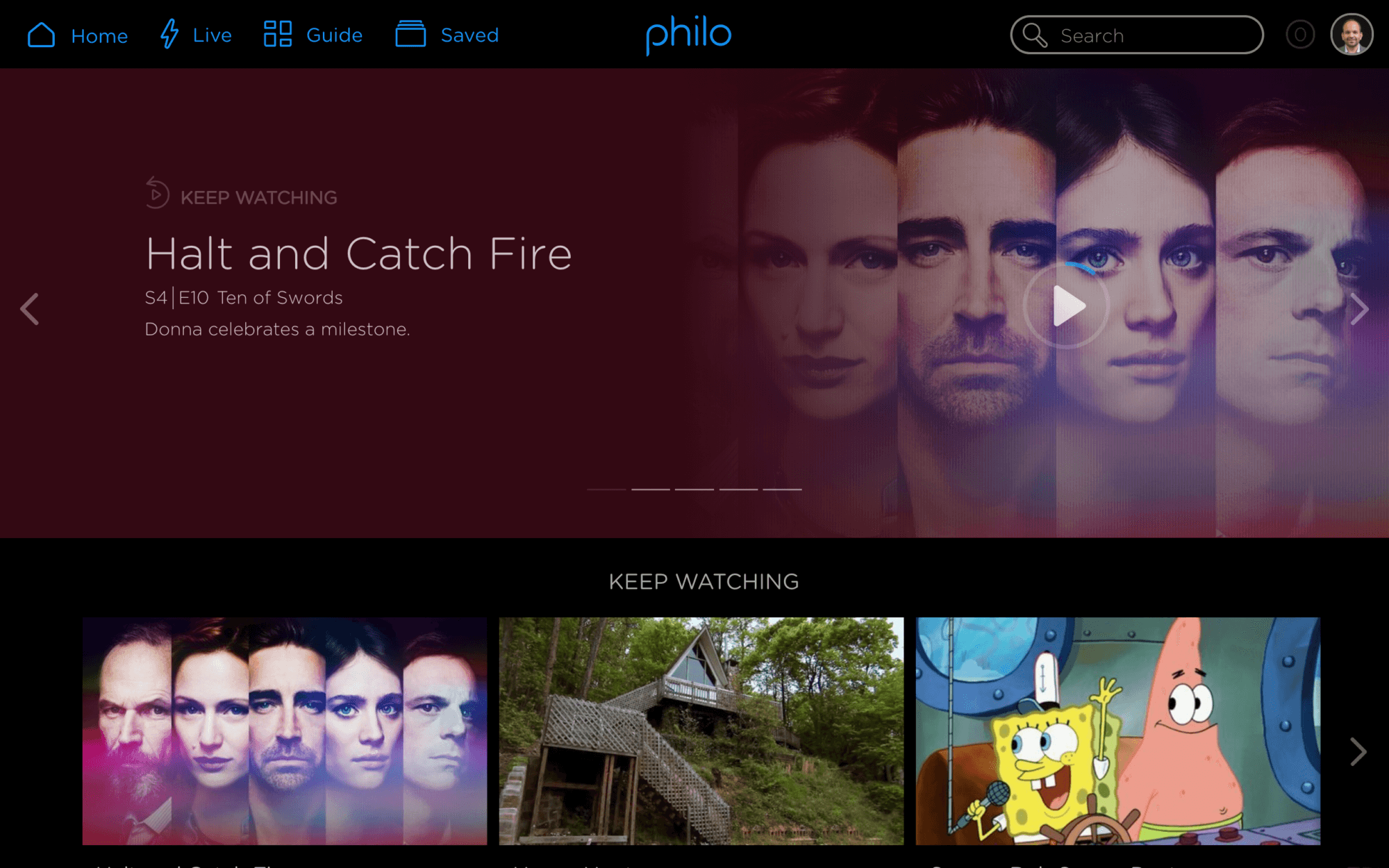
In 2014, McCollum stepped into his most prominent post-Facebook role by becoming the Chief Executive Officer of Philo, a television streaming service initially created by Harvard students Tye McCall and Nicholas Lindquist in 2010.
Under McCollum’s executive leadership, Philo evolved from an experimental university campus network into a national virtual Multichannel Video Programming Distributor (vMVPD). McCollum refocused Philo’s strategy on providing an affordable, entertainment-focused bundle of live TV channels—deliberately excluding costly sports networks to keep monthly subscription fees lower than competitors like YouTube TV, Hulu + Live TV, and Fubo.
Key strategic milestones under McCollum's leadership include:
- Major Media Partnerships: Securing distribution deals and investment backing from media conglomerates including AMC Networks, Paramount Global (formerly ViacomCBS), Warner Bros. Discovery, and A+E Networks.
- Product-Led Growth: Building a user interface emphasizing unlimited cloud DVR functionality, deep search integration, and multi-platform availability across smart TVs, mobile devices, and streaming sticks.
- Market Position: Positioning Philo as a budget-friendly alternative in the pay-TV ecosystem, serving millions of subscribers across North America.
Andrew McCollum’s Financial Stake and Equity in Facebook
A frequent point of inquiry regarding early Facebook founders centers on equity distribution and net worth.
When Facebook was incorporated in 2004, equity was split among the initial founders. While Mark Zuckerberg retained majority voting control and the largest ownership share, early team members who contributed during the Harvard era received equity grants that grew immensely valuable following Facebook's initial public offering (IPO) in May 2012.
Although McCollum left the company in 2006—prior to Facebook's explosive growth and monetization phases—his early equity stake remained intact. While exact individual holdings of non-executive co-founders are not fully detailed in public SEC filings past the IPO phase, financial analysts estimate McCollum's early stake made him a multi-millionaire, with net worth estimations placing his wealth in the hundreds of millions of dollars depending on his asset diversification over time.
This financial independence enabled McCollum to fund Philo during its early growth stages, back promising tech startups as an angel investor, and pursue philanthropic initiatives in education and technology access.
Practical Takeaways for Tech Entrepreneurs and Founders
Andrew McCollum’s trajectory offers several distinct lessons for early-stage startup founders, software engineers, and product designers:
- Early Team Diversity Matters: A founding team cannot consist purely of backend engineers or business developers. McCollum’s early focus on graphic design and visual identity gave Facebook a polished visual anchor that helped set it apart from basic text directories.
- Knowing When to Pivot or Sunset Projects: The failure of Wirehog demonstrates the importance of focus. When legal risks and resource demands threatened to derail Facebook's primary platform, the founders abandoned Wirehog to double down on the core social network.
- Founder Alignment and Exit Strategy: Leaving a high-growth company early is a personal choice. McCollum chose to prioritize completing his degree at Harvard and pursuing personal interests over remaining in Silicon Valley during Facebook's aggressive corporate expansion.
- Leveraging Early Success for Long-Term Impact: Rather than retiring after Facebook’s public launch, McCollum reinvested his expertise and capital into venture capital, education, and taking on operational leadership as CEO of Philo.
Frequently Asked Questions
Did Andrew McCollum design the original Facebook logo?
Yes. Andrew McCollum designed the original header logo for "TheFacebook" in 2004. The logo featured a pixelated image of actor Al Pacino overlaid with binary code in blue and white. This design was used until the platform dropped "The" from its name and updated its branding in 2005.
Why was Andrew McCollum not included in The Social Network movie?
The 2010 film The Social Network focused heavily on the legal disputes involving Mark Zuckerberg, Eduardo Saverin, and the Cameron and Tyler Winklevoss twins. To streamline the narrative for a two-hour theatrical release, screenwriter Aaron Sorkin condensed several real-life roles and omitted Andrew McCollum entirely.
What is Andrew McCollum's current role?
Andrew McCollum serves as the Chief Executive Officer (CEO) of Philo, an entertainment-focused live TV streaming service. He has held this executive leadership position since 2014.
What was Wirehog, and what was McCollum's involvement?
Wirehog was a peer-to-peer (P2P) file-sharing software project developed in late 2004 by Mark Zuckerberg and Andrew McCollum. It was designed to allow Facebook users to share music and files directly with friends listed on their profiles. The project was shut down in 2006 due to copyright concerns and to keep team resources focused on Facebook’s main platform.
When did Andrew McCollum leave Facebook?
Andrew McCollum left Facebook in September 2006 to return to Harvard University full-time, where he completed his Bachelor of Science degree in Computer Science in 2007.
Recommended Next Actions
For readers exploring startup founding teams, tech history, or corporate structure, consider the following next steps:
- Study Early Branding Strategies: Analyze how early tech startups balance product design with technical execution by reviewing the visual evolution of platforms like Facebook, Twitter, and LinkedIn.
- Explore Philo’s Business Model: Review how Philo carved out a profitable niche in the competitive streaming market by avoiding sports licensing fees—a case study in targeted market segmentation led by McCollum.
- Examine Early Equity Structures: Research how early equity split decisions impact startup founders who depart before an IPO or major acquisition event.