An American soldier's total compensation for 2026 is a combination of basic pay, tax-free allowances for housing and food, and special incentive pays. While basic pay is determined by rank and years of service, total earnings often exceed civilian salaries due to significant tax advantages, comprehensive healthcare benefits, and various retirement contributions.
Understanding the Structure of American Soldier Compensation
To understand how an American soldier is paid, one must look beyond the monthly "basic pay" figure. Unlike most civilian jobs, military compensation is a multifaceted package designed to provide for the service member's basic needs while rewarding longevity, responsibility, and specialized skills. This system is governed by the Department of Defense (DoD) and is updated annually through the National Defense Authorization Act (NDAA).
The compensation package is generally divided into three primary categories: cash compensation, allowances, and indirect benefits. Cash compensation includes basic pay and special pays. Allowances are typically tax-free payments intended to cover costs like housing and groceries. Indirect benefits include full medical coverage, education assistance, and retirement savings. By 2026, the focus of military pay has shifted heavily toward retention, particularly in technical and high-demand roles, leading to more robust incentive structures than seen in previous decades.
Basic Pay Scales for 2026
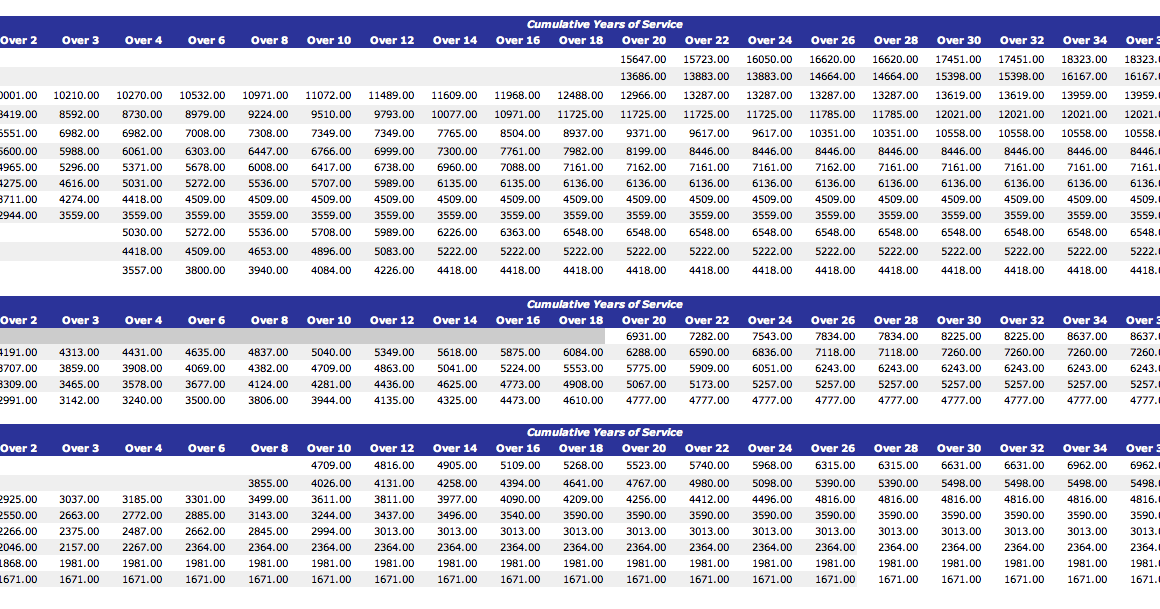
Basic pay is the core component of a soldier’s salary. It is standardized across all branches of the U.S. Armed Forces, including the Army. Two factors determine a soldier’s basic pay: their rank (pay grade) and the number of years they have served in the military.
Pay grades are categorized into three groups:
- Enlisted (E): Ranks from E-1 (Private) to E-9 (Sergeant Major of the Army).
- Warrant Officers (W): Technical experts ranging from W-1 to W-5.
- Commissioned Officers (O): Leadership roles ranging from O-1 (Second Lieutenant) to O-10 (General).
As of 2026, pay scales reflect recent cost-of-living adjustments designed to keep pace with inflation. For a soldier entering the service at the E-1 level, the starting pay provides a baseline that increases significantly as they promote and reach service milestones, typically occurring every two years.
2026 Monthly Basic Pay Estimates (Select Grades)
| Pay Grade | Years of Service: <2 | Years of Service: 4 | Years of Service: 10 | Years of Service: 20+ |
|---|---|---|---|---|
| E-2 (PV2) | $2,420 | $2,420 | $2,420 | $2,420 |
| E-4 (SPC/CPL) | $2,760 | $3,210 | $3,520 | $3,520 |
| E-6 (SSG) | $3,350 | $3,980 | $4,710 | $5,250 |
| O-1 (2LT) | $4,120 | $5,180 | $5,180 | $5,180 |
| O-3 (CPT) | $5,350 | $6,950 | $8,200 | $8,750 |
| O-5 (LTC) | $6,950 | $7,950 | $9,400 | $11,500 |
Note: Figures are estimated based on projected 2026 cost-of-living adjustments and the most recent NDAA data. Actual amounts may vary slightly based on final legislative approval.
The Role of Allowances: BAH and BAS
One of the most significant advantages of military pay is the provision of tax-free allowances. For many soldiers, these allowances can account for 30% to 45% of their total take-home pay. Because this money is not subject to federal or state income tax, its "real-world" value is much higher than a comparable amount in a civilian salary.
Basic Allowance for Housing (BAH)
BAH is intended to provide service members with housing compensation equivalent to the local civilian market when government quarters are not provided. The amount of BAH a soldier receives depends on three factors:
- Rank: Higher ranks receive higher allowances.
- Geographic Location: A soldier stationed in New York City or San Francisco will receive a much higher BAH than one stationed at Fort Sill, Oklahoma, to account for the difference in rental costs.
- Dependency Status: Soldiers with dependents (a spouse or children) receive a higher rate of BAH than single soldiers.
In 2026, BAH continues to be a critical component of the "Regular Military Compensation" (RMC). It ensures that soldiers can afford safe, adequate housing for their families regardless of where the Army stations them.
Basic Allowance for Subsistence (BAS)
BAS is a monthly allowance meant to offset the cost of the soldier's meals. Unlike BAH, BAS is not dependent on location. It is generally a flat rate based on whether the service member is an officer or enlisted. In 2026, enlisted BAS is approximately $480 per month, while officers receive approximately $330 per month. The logic behind the lower officer rate is that officers are expected to have a higher base salary to cover more of their personal living expenses.
Special and Incentive (S&I) Pays
Beyond basic pay and allowances, soldiers may be eligible for Special and Incentive (S&I) pays. These are designed to compensate soldiers for specific duties that are hazardous, require specialized skills, or involve working in difficult environments.
- Hardship Duty Pay (HDP): Paid to soldiers serving in locations where the quality of life is substantially below the standard found in the continental United States.
- Hostile Fire Pay / Imminent Danger Pay (HFP/IDP): Provided to soldiers serving in designated combat zones or areas with a high risk of physical harm.
- Hazardous Duty Incentive Pay (HDIP): This includes "jump pay" for paratroopers, flight pay for aircrews, and demolition pay for those working with explosives.
- Special Responsibility Pay: Granted to soldiers in specific leadership positions or those with high-demand technical certifications, such as cyber security or linguistics.
- Retention Bonuses: In 2026, the Army continues to offer substantial lump-sum bonuses for soldiers in "critically short" military occupational specialties (MOS) who choose to reenlist. These can range from $5,000 to over $50,000 depending on the rank and specialty.
The Value of Military Benefits and Healthcare
When analyzing an American soldier's salary, the value of the benefits package is often underestimated. TRICARE, the military's healthcare program, provides comprehensive medical and dental coverage for the soldier at virtually no cost. For soldiers with families, TRICARE offers low-cost or no-cost premiums, which can save a family $10,000 to $20,000 annually compared to equivalent private-sector health insurance plans.
Additionally, the military provides:
- Servicemembers' Group Life Insurance (SGLI): Low-cost term life insurance coverage up to $500,000.
- Education Benefits: The Post-9/11 GI Bill covers full tuition and fees at public universities, a monthly housing allowance, and a stipend for books for those who serve at least 36 months of active duty.
- Tuition Assistance (TA): While on active duty, soldiers can receive up to $4,500 per year to pay for college courses, allowing them to earn degrees without touching their GI Bill benefits.
Retirement Systems: BRS vs. Legacy
The retirement landscape for the American soldier in 2026 is defined by the Blended Retirement System (BRS). While some older service members may still be under the "Legacy" High-3 system, almost everyone who entered after 2018 is enrolled in BRS.
The BRS is a "modernized" approach that combines a traditional pension with a 401(k)-style investment plan:
- Thrift Savings Plan (TSP) Contributions: The government automatically contributes 1% of the soldier's basic pay to their TSP. The government will also match the soldier's contributions up to an additional 4%, totaling a 5% government contribution.
- The Pension (Defined Benefit): If a soldier serves for 20 years, they receive a monthly lifetime pension. Under BRS, this is calculated as 2% multiplied by the years of service, multiplied by the average of the highest 36 months of basic pay. For 20 years, this results in 40% of the base pay.
- Continuation Pay: A one-time mid-career bonus (usually at the 12-year mark) offered to soldiers in exchange for a commitment to serve additional years.
This system ensures that even soldiers who do not stay for a full 20-year career leave the military with some retirement savings, a significant change from the previous "all or nothing" model.
Tax Advantages and "Regular Military Compensation" (RMC)
A common mistake in comparing military salaries to civilian ones is looking only at the gross pay. To get an accurate comparison, one must calculate Regular Military Compensation (RMC). RMC is the sum of basic pay, BAH, BAS, and the federal tax advantage resulting from the fact that allowances are not taxed.
Because BAH and BAS are tax-free, a soldier would need a significantly higher civilian salary to have the same amount of "disposable" income. For example, an E-5 Sergeant with five years of service and a family might have a basic pay of $40,000, but when $25,000 in tax-free BAH and BAS are added, their "civilian equivalent" salary might exceed $80,000 depending on their tax bracket and location.
The military provides an official RMC calculator through the Department of Defense website, which allows soldiers to see exactly how their pay compares to the private sector by factoring in the federal income tax they don't have to pay on their allowances.
Frequently Asked Questions
Do soldiers pay federal and state taxes on their entire salary?
No. Soldiers only pay federal and state income taxes on their Basic Pay and certain special pays. Allowances like BAH (Housing) and BAS (Food) are entirely tax-free. Additionally, if a soldier is serving in a designated Combat Zone Tax Exclusion (CZTE) area, their entire monthly pay—including basic pay—is typically exempt from federal income tax.
How often do soldiers receive pay raises?
Soldiers typically receive three types of pay raises. First, there is the annual Cost of Living Adjustment (COLA) approved by Congress, which usually takes effect on January 1st. Second, soldiers receive automatic raises as they reach longevity milestones (years of service), usually every two years. Third, soldiers receive a significant pay increase whenever they are promoted to a higher rank.
What is the difference between "base pay" and "take-home pay"?
Base pay is the taxable amount based on rank and years of service. Take-home pay is the amount deposited into the soldier's bank account after taxes are deducted from the base pay, and after tax-free allowances (BAH/BAS) and special pays are added. Because allowances are so substantial, take-home pay is often much closer to the gross "base pay" than it would be in a civilian job.
Is military pay the same for all branches?
Yes. The basic pay rates are standardized across the Army, Navy, Air Force, Marine Corps, Space Force, and Coast Guard. The only differences in total compensation between the branches usually stem from the specific Special and Incentive Pays unique to that branch's mission (e.g., Sea Pay for the Navy or Flight Pay for the Air Force).
How does deployment affect a soldier's salary?
Deployment usually increases a soldier's salary significantly. In addition to their normal pay and allowances, they may receive Hostile Fire Pay ($225/month), Hardship Duty Pay, and a Family Separation Allowance ($250/month) if they have dependents. Furthermore, if the deployment is in a designated combat zone, the soldier’s income for those months is generally tax-exempt.
Summary of Next Actions for Financial Planning
For those currently serving or considering enlistment in 2026, the best way to maximize an American soldier's salary is to focus on three areas:
- Promotion and Education: Higher ranks and technical certifications yield the largest permanent increases in basic pay and special incentives.
- TSP Maximization: Ensure you are contributing at least 5% to your Thrift Savings Plan to receive the full government match; failing to do so is essentially turning down free money.
- RMC Comparison: Use the official DoD Regular Military Compensation calculator before making career decisions. Often, what looks like a higher-paying civilian job actually results in less take-home pay once healthcare premiums and the lack of tax-free allowances are factored in.