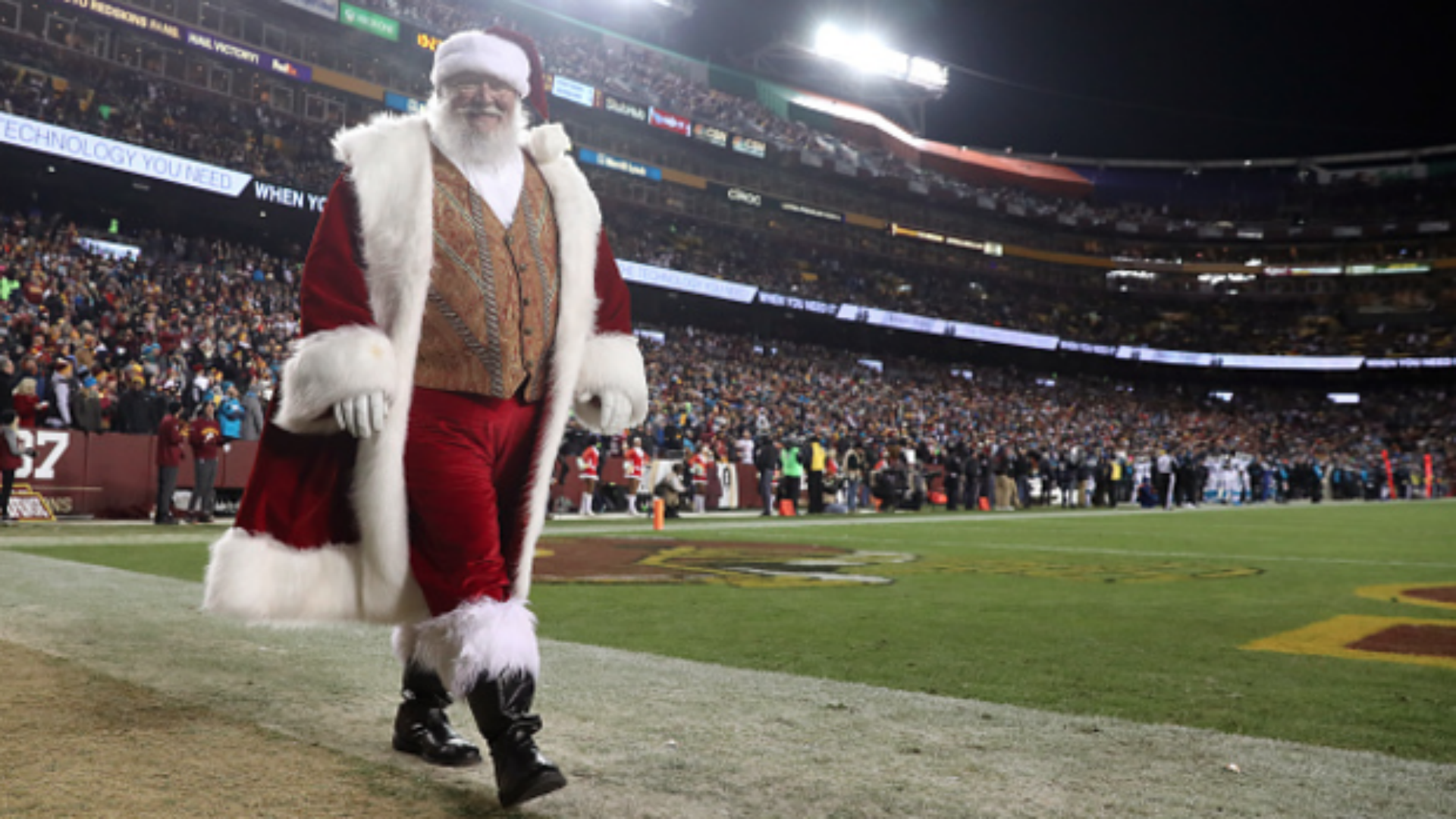
The Alvin Kamara Christmas cleats controversy refers to two separate instances, in 2017 and 2020, where the New Orleans Saints star running back was fined by the NFL for wearing non-regulation, holiday-themed footwear. While the league cited violations of its strict uniform policy, the incidents became a flashpoint for discussing player expression and charitable giving.
The intersection of professional sports, rigid corporate branding, and individual player personality often creates friction, but few instances have resonated as strongly as Alvin Kamara’s "Christmas Cleats" saga. As a cornerstone of the New Orleans Saints' offense for years, Kamara has always been known for his flair, both in his running style and his fashion choices. However, when that flair clashed with the National Football League's (NFL) Rule 5, Section 4, it resulted in a series of fines that the player transformed into a massive win for the New Orleans community.
To understand why a pair of shoes caused such a stir, one must look at the specific details of the incidents, the technicalities of the NFL’s uniform requirements, and the cultural shift that followed. Looking back from 2026, these moments are often cited as pivotal examples of how players began to leverage league penalties for social good.
The 2017 Incident: The "Santa Boot" Debut
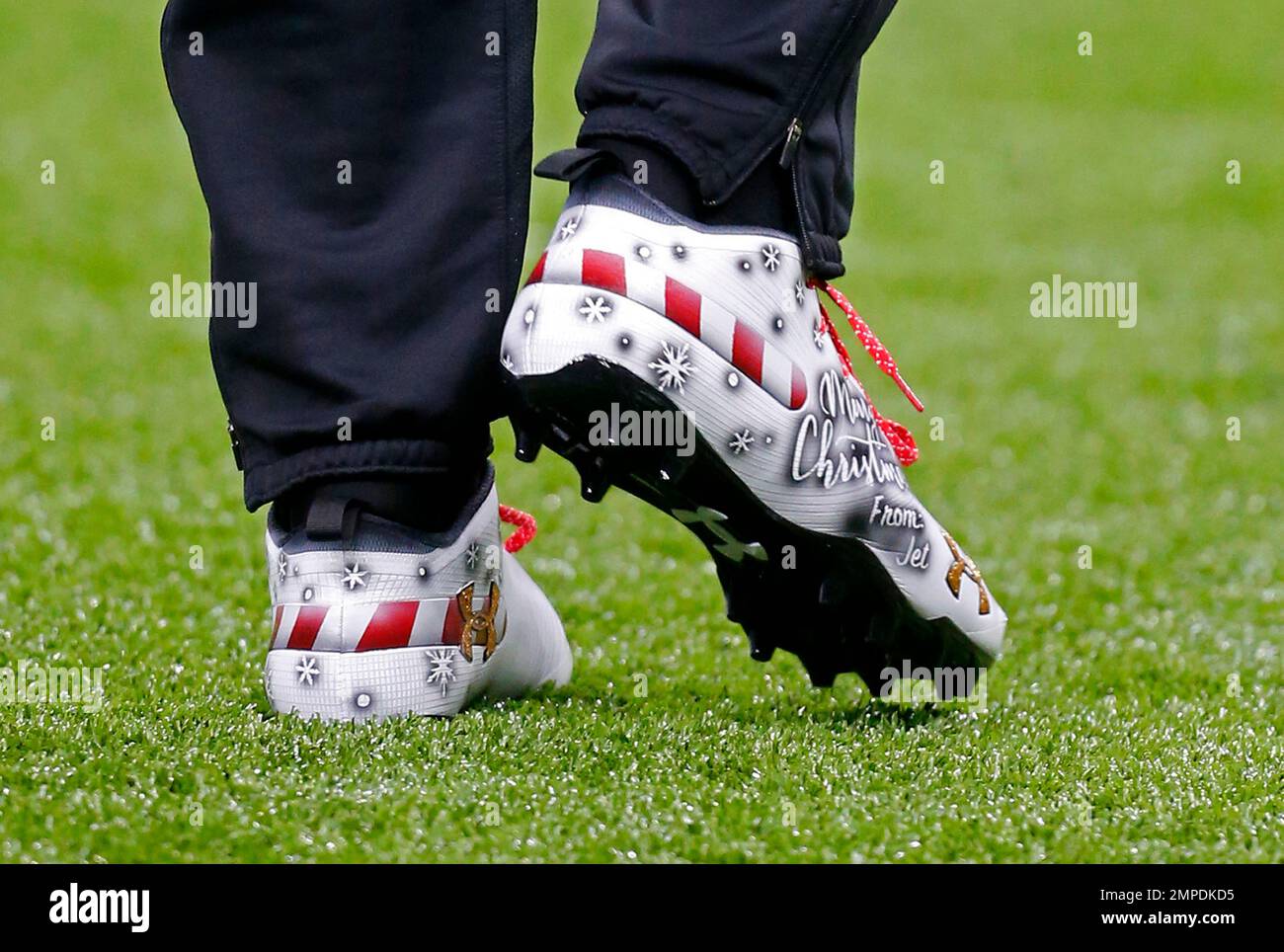
On December 24, 2017, during a crucial Week 16 matchup against the Atlanta Falcons, Alvin Kamara took the field at the Mercedes-Benz Superdome wearing a pair of custom Adidas cleats designed to look like Santa Claus's boots. The cleats featured a vibrant red base, white fur-like trim around the ankles, and gold accents.
At the time, Kamara was in the midst of a historic rookie season that would eventually earn him the NFL Offensive Rookie of the Year award. His performance on the field was undeniable, but his choice of footwear immediately drew the attention of the league’s uniform inspectors. Under the NFL’s rules, players are required to wear shoes that follow a specific color scheme dictated by the team’s primary colors—in the Saints' case, black, gold, and white.
The Fine and the "Grinch" Response
Following the game, which the Saints won 23-13, the NFL issued a fine to Kamara in the amount of $6,079. The league categorized the infraction as a "uniform violation" because the cleats did not conform to the Saints' official colors and had not been pre-approved under any specific league-wide initiative like "My Cause, My Cleats."
Kamara’s response was swift and calculated. He famously referred to the NFL as the "Grinch" for fining him for spreading holiday cheer. However, rather than simply paying the fine and moving on, Kamara launched a GoFundMe campaign with the goal of raising money to cover the fine, with any additional proceeds going to charity. The campaign went viral, raising over $21,000 in a matter of days.
Impact on the Willie Hall Playground
The "controversy" shifted from a story about a rebellious rookie to a story about community support. Kamara donated the excess funds to the Willie Hall Playground in New Orleans. This gesture solidified his status as a local hero and demonstrated a new blueprint for how players could handle the league's disciplinary actions. The playground, which serves local youth in a city often struggling with infrastructure and recreation funding, became the primary beneficiary of the NFL's strict enforcement.
The 2020 Incident: A Record-Breaking Performance
Three years later, the NFL scheduled a rare Friday game on Christmas Day 2020, featuring the New Orleans Saints against the Minnesota Vikings. Seizing the moment, Kamara once again decided to wear holiday-themed footwear. This time, he wore "mismatched" cleats: one vibrant red and one bright green, both featuring festive designs.
The game itself became one of the most statistically significant performances in the history of the sport. Kamara rushed for six touchdowns, tying an NFL record set by Ernie Nevers in 1929. The image of Kamara crossing the goal line six times in his red and green cleats became an iconic sports photograph, making it nearly impossible for the NFL to ignore the uniform violation.
The Second Fine and "Worth It" Sentiment
Despite the historical significance of the game, the NFL stuck to its protocol. Kamara was fined $5,000 for the 2020 incident. When asked about the fine after his 155-yard, 6-touchdown performance, Kamara told reporters, "If they fine me, I’ll just match it and donate it to charity. You know, the Grinch’s heart grew three sizes, I hope the NFL’s does the same."
The 2020 fine was slightly lower than the 2017 fine, which caused some confusion among fans. This discrepancy is usually attributed to the NFL's structured fine schedule, which can fluctuate based on the specific categorization of the uniform hit and the collective bargaining agreement (CBA) in place at the time.
Technical Breakdown: NFL Rule 5, Section 4
The core of the controversy lies in the technicalities of the NFL Rulebook, specifically Rule 5, Section 4, Article 3, which governs "Equipment, Uniforms, Player Appearance." The NFL maintains these rules to protect its branding and its multi-billion-dollar apparel contracts with companies like Nike.
Why the NFL Enforces Strict Uniform Codes
The league's stance is built on several pillars:
- Brand Consistency: The NFL treats its teams as "on-field products." For the broadcast to look professional and uniform, every player must adhere to the same aesthetic standards.
- Sponsorship Protection: Major apparel sponsors pay for exclusivity. When a player wears custom cleats from a different brand or with non-standard designs, it can potentially dilute the value of those sponsorships.
- Competitive Advantage (Theoretical): While a Santa boot doesn't provide a speed boost, the league argues that maintaining a standard prevents players from experimenting with "gimmick" gear that could theoretically offer a physical edge or distract opponents.
| Aspect of the Policy | Rule Requirement | Violation in Kamara's Case |
|---|---|---|
| Color Dominance | Cleats must be 80% team colors (Black/Gold/White). | Red and Green were not part of the Saints' palette. |
| Branding | Only approved manufacturer logos (Nike/Adidas/Under Armour) allowed. | The custom "Santa trim" obscured standard branding. |
| Approval Window | Custom designs must be approved 2 weeks in advance. | Designs were rogue "personal expressions." |
| League Initiatives | Custom cleats allowed only during "My Cause, My Cleats" week. | Christmas games usually fall outside the specific window. |
The "My Cause, My Cleats" Comparison
The irony of the Kamara controversy is that the NFL actually has a mechanism for custom footwear. The "My Cause, My Cleats" initiative was launched in 2016 to allow players to showcase causes important to them through custom-designed shoes.
However, this initiative is strictly limited to a specific window—usually Week 13 or 14 of the regular season. Because Kamara’s Christmas games fell during Week 16 (2017) and Week 16 (2020), they did not qualify for the exemption. This led to criticism that the NFL was being overly pedantic. Critics argued that if the league could allow custom cleats for charity in Week 13, it was nonsensical to penalize a player for spreading holiday cheer (and subsequently raising money for charity) in Week 16.
The Evolution of Player Expression
Looking back at the trajectory of the NFL's uniform policy, the Kamara incidents served as a catalyst for change. Between 2017 and 2026, the league faced increasing pressure from players and fans to allow more individual expression. Players like Odell Beckham Jr., Stefon Diggs, and Alvin Kamara proved that custom gear generates social media engagement and fan interest that far outweighs the "distraction" of non-uniform colors.
While the league has not completely abolished its uniform rules, there has been a noticeable loosening of enforcement for holiday-themed or social-justice-oriented gear, provided the player coordinates with the league office beforehand. Kamara’s willingness to "pay the price" for his creativity showed other athletes that the fine was a manageable cost for the branding and charitable benefits that followed.
The Role of Customizers
The controversy also highlighted the work of professional cleat customizers. Artists like Marcus Rivero (SolesBySir) and others became household names in the sports world by designing the very shoes that the NFL was fining. The visibility of Kamara's cleats provided these artists with a global platform, turning footwear into a medium for storytelling and personal branding.
Summary of the Financial and Charitable Impact
The following table summarizes the two major incidents that define the Alvin Kamara Christmas cleats history:
| Year | Game Date | Opponent | Fine Amount | Primary Charity Beneficiary | Outcome/Legacy |
|---|---|---|---|---|---|
| 2017 | Dec 24 | Falcons | $6,079 | Willie Hall Playground | Raised over $21k; began "Grinch" narrative. |
| 2020 | Dec 25 | Vikings | $5,000 | Various NOLA charities | Tied record with 6 TDs; cleats became iconic. |
Frequently Asked Questions
Why did the NFL fine Alvin Kamara for the Christmas cleats?
The NFL fined Kamara because his cleats violated Rule 5, Section 4 of the league’s uniform policy. This policy requires that all players on a team wear footwear that matches the team's official color scheme (for the Saints: black, gold, and white). Since Kamara's cleats were bright red and green, they were considered "non-conforming" equipment.
Did Alvin Kamara win his appeal for the fines?
In both instances, the fines were upheld. The NFL rarely rescinds fines for clear-cut uniform violations because the rules are objective (the shoes either match the colors or they don't). However, Kamara effectively "offset" the fines by using the publicity to raise significantly more money for charity than the cost of the penalty itself.
What happened to the cleats Kamara wore during his 6-touchdown game?
Following the historic 2020 Christmas Day game, the cleats became highly sought-after memorabilia. While many players keep their record-breaking gear, Kamara has used his platform to display them at various events and has donated other game-worn items to help raise funds for youth programs in New Orleans.
Is "My Cause, My Cleats" the same as the Christmas cleats?
No. "My Cause, My Cleats" is a specific league-approved window (usually one week in December) where the NFL waives uniform rules to allow players to support registered charities. Kamara’s Christmas cleats were worn outside of this designated window, which is why they resulted in fines rather than being celebrated by the league.
How much money did Alvin Kamara raise for charity from the 2017 incident?
Kamara's GoFundMe campaign raised approximately $21,000. After paying the $6,079 fine, the remaining balance (roughly $15,000) was donated to the Willie Hall Playground to fund sports programs and equipment for local children.
Moving Forward: Lessons from the Controversy
For fans and players, the takeaway from the Alvin Kamara Christmas cleats controversy is that authenticity often comes with a price—but it is a price worth paying. Kamara’s ability to turn a negative league interaction into a positive community outcome changed the way the public views NFL fines. Instead of being seen as a "bad boy" for breaking the rules, Kamara was viewed as a festive philanthropist who was willing to challenge a rigid system for a good cause.
If you are an aspiring athlete or a sports marketer, the lesson is clear: Personal branding and community engagement are powerful tools. By aligning his personal style with charitable action, Kamara created a legacy that far outlasted the statistics of the games he played. For the NFL, the controversy served as a reminder that while rules are necessary for order, flexibility is necessary for growth and fan connection in a modern, player-centric era.