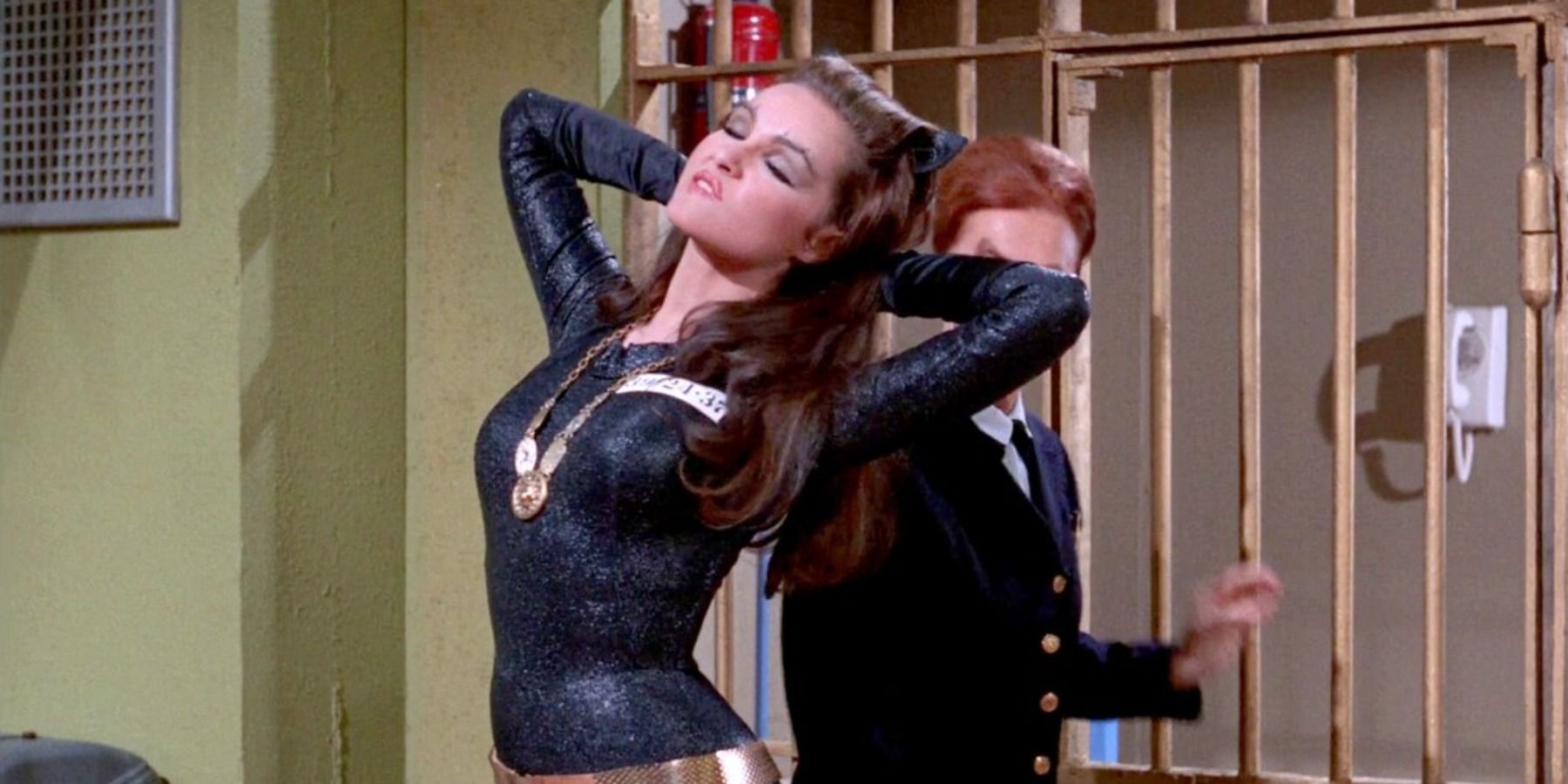
Since her debut in 1940, Catwoman has remained one of the most complex figures in the DC Universe. The transition of Selina Kyle from the comic book page to live-action media has seen seven decades of evolution, involving diverse casting choices, groundbreaking costume designs, and shifts in narrative tone that reflect the changing landscape of cinema and television.
From the campy charm of the 1960s to the gritty realism of the 2020s, the "Catwoman" mantle has been worn by a lineage of powerhouse performers. Behind the silver screen, these productions faced technical hurdles—ranging from restrictive latex suits that required vacuum sealing to the social pressures of breaking racial barriers in mid-century television. As of 2026, the character continues to be a focal point for exploring the intersection of villainy, heroism, and femininity in the superhero genre.
The 1960s Television Icons: Establishing the Blueprint
The 1966 Batman television series and its accompanying feature film introduced the general public to the first live-action iterations of Catwoman. During this era, three different actresses played the role, each bringing a distinct flavor to the character while navigating the restrictive "camp" aesthetic of the decade.
Julie Newmar: The Original Seductress
Julie Newmar was the first actress to bring Selina Kyle to life on screen. A trained dancer and inventor, Newmar’s influence went beyond her performance. She famously modified her own costume, moving the gold belt from her waist to her hips to emphasize her statuesque 5'11" frame. Behind the scenes, Newmar viewed the character as a "musical" role, focusing on feline movement and a purring vocal delivery that became the gold standard for the character's early years.
Lee Meriwether: The Cinematic Transition
When the 1966 Batman movie went into production, Newmar was unavailable due to a scheduling conflict with the film Monsieur Lecoq. Lee Meriwether, a former Miss America, stepped into the role. Meriwether’s portrayal was unique because she spent much of the film in a second disguise as "Miss Kitka," a Soviet journalist. This added a layer of espionage to the character, though she maintained the high-camp energy required by the Adam West-led production.
Eartha Kitt: Breaking the Color Barrier
In the third season of the television series, Eartha Kitt took over the role, making history as one of the first Black women to play a major comic book character on television. Kitt’s Catwoman was arguably the most "feline" of the era; her natural growl and sharp delivery brought a genuine sense of danger to the role. Behind the scenes, her casting was a bold move by producer William Dozier during the Civil Rights movement, proving that the character’s essence transcended race.
Michelle Pfeiffer and the Birth of the Modern Anti-Heroine (1992)
When Tim Burton decided to include Catwoman in Batman Returns, the character underwent a radical transformation. Moving away from the thief-in-spandex trope, the 1992 version became a gothic, resurrected spirit of vengeance.
The Technical Challenges of the Latex Suit
The costume worn by Michelle Pfeiffer is arguably the most famous in the character’s history. Created by designers Bob Ringwood and Mary Vogt, the suit was made of thin latex that was brushed with liquid silicone to give it a wet look.
Behind the scenes, the suit was a physical nightmare for Pfeiffer. It was so tight that it had to be vacuum-sealed onto her body, and she could only wear it for short periods to avoid fainting or dehydration. Furthermore, the mask was so restrictive that she often struggled to hear her own voice, forcing her to adjust her vocal projection during filming.
Masterclass in Stunt Work
Pfeiffer insisted on performing many of her own stunts, including the famous scene where she uses a whip to cut the heads off mannequins. She trained for months with a professional whip master to achieve the necessary precision. Perhaps most famously, she performed the stunt where a live bird flies out of her mouth in a single take—a feat that modern CGI has made largely unnecessary but which remains a testament to her commitment to the role.
The 2004 Departure: Halle Berry and the "Patience Phillips" Experiment
In 2004, Warner Bros. released a standalone Catwoman film starring Halle Berry. This version was a significant departure from DC lore, as it did not feature Selina Kyle or any connection to Gotham City. Instead, it followed Patience Phillips, a graphic designer who gains cat-like powers through Egyptian mysticism.
Production and Critical Reception
Behind the silver screen, the film was plagued by a "development hell" cycle that lasted over a decade. Originally intended as a spin-off for Michelle Pfeiffer, the project changed directors and scripts multiple times. By the time it reached Berry, the tone had shifted into a stylized action-thriller that failed to resonate with audiences or critics.
Despite the film’s failure, Halle Berry’s professionalism was noted when she famously showed up in person to accept her Golden Raspberry Award (Razzie) for Worst Actress, holding her Oscar in one hand and the Razzie in the other. This moment remains a significant part of the character’s "behind the scenes" history, showcasing the grace required to navigate a high-profile box office disappointment.
Realism and the Heist: Anne Hathaway in the Nolanverse
For the conclusion of Christopher Nolan’s trilogy, The Dark Knight Rises (2012), the production sought to ground Catwoman in a world of high-stakes larceny and political unrest.
The Utilitarian Aesthetic
Anne Hathaway’s portrayal of Selina Kyle emphasized her skills as a world-class grifter. Behind the scenes, Nolan was adamant that the "ears" on her costume have a functional purpose. The solution was a pair of high-tech night-vision goggles that, when flipped up onto her head, created the silhouette of cat ears.
Hathaway underwent grueling physical training, citing the role as her most physically demanding to date. She studied the movements of screen legends like Hedy Lamarr (the original inspiration for Catwoman in 1940) to capture a sense of timeless, effortless grace that hid a lethal skill set.
Television’s Long-Form Origin: Gotham’s Selina Kyle
From 2014 to 2019, the TV series Gotham provided the first long-form exploration of Selina Kyle’s adolescence. Camren Bicondova played the character for the majority of the series, focusing on her life as a street-smart orphan.
Evolution Over Five Seasons
The challenge for the Gotham production team was to show a slow-burn transformation. Behind the scenes, Bicondova (a professional dancer) used her athleticism to perform parkour-inspired stunts, emphasizing that this version of Catwoman learned her skills through survival on the streets rather than through gadgets or mysticism. In the series finale, the role was handed over to Lili Simmons to portray an adult Selina, marking a rare instance where two actresses shared the role within the same continuity to show the passage of time.
The Batman (2022) and Zoë Kravitz’s Neo-Noir Interpretation
Matt Reeves’ The Batman reintroduced Selina Kyle as a noir-inspired femme fatale. This version, played by Zoë Kravitz, focused on her search for a missing friend and her complicated relationship with her father, Carmine Falcone.
Casting and Chemistry
Zoë Kravitz had previously voiced Catwoman in The LEGO Batman Movie, but the live-action role required a much darker approach. Behind the scenes, Kravitz and Robert Pattinson underwent extensive chemistry reads to ensure the "Bat and Cat" dynamic felt authentic.
The costume design by Jacqueline Durran was intentionally "lo-fi." Since the film takes place during Batman's second year, Selina’s outfit consisted of practical motorcycle gear and a balaclava with subtle points, suggesting a costume in its infancy. Kravitz also spent time observing how cats fight—focusing on their speed and the way they use their claws—to develop a combat style that felt distinct from Batman’s heavy-hitting brawling.
Comparison of Live-Action Catwoman Portrayals
| Actress | Production | Year(s) | Primary Medium | Key Costume Feature |
|---|---|---|---|---|
| Julie Newmar | Batman (TV) | 1966–1967 | Television | Lurex jumpsuit, hip-slung belt |
| Lee Meriwether | Batman (Film) | 1966 | Film | Sparkled cowl and domino mask |
| Eartha Kitt | Batman (TV) | 1967–1968 | Television | Suit modified for dance-like movement |
| Michelle Pfeiffer | Batman Returns | 1992 | Film | Stitched-together vacuum-sealed latex |
| Halle Berry | Catwoman | 2004 | Film | Shredded leather and whip-braided straps |
| Anne Hathaway | The Dark Knight Rises | 2012 | Film | Night-vision goggles as "ears" |
| Camren Bicondova | Gotham | 2014–2019 | Television | Practical street clothes and goggles |
| Zoë Kravitz | The Batman | 2022 | Film | Tactical moto-gear and balaclava |
The Craft Behind the Feline: Common Production Elements
Despite the variations in tone, several "behind the silver screen" elements remain consistent across almost all Catwoman productions. These technical requirements define the character’s cinematic presence.
The Whip as a Practical Effect
While modern productions use CGI for complex whip movements, most actresses still undergo "whip cracking" training. The whip is a notoriously difficult weapon to master for film because the tip moves faster than the speed of sound, creating a "sonic boom" that can interfere with audio recording. Sound mixers often have to "clean" the audio in post-production to balance the dialogue with the whip's natural crack.
Movement and Choreography
Because Catwoman lacks the brute strength of Batman or the superpowers of other DC characters, her fight choreography is almost always based on agility. Production teams typically hire choreographers with backgrounds in gymnastics or martial arts like Capoeira. This ensures that the character moves in a way that feels lighter and more fluid than her counterparts, emphasizing her "cat-like" reflexes.
Frequently Asked Questions
Which actress played Catwoman for the longest time?
Camren Bicondova holds the record for the most screen time as Selina Kyle, appearing in 100 episodes of Gotham over five years. While other actresses like Julie Newmar are iconic, the serialized nature of modern television allowed Bicondova to explore the character's development more extensively than a two-hour feature film allows.
Why was the 2004 Catwoman movie so different from the comics?
The 2004 film was originally developed as a spin-off of Batman Returns. After years of script revisions and changes in creative leadership, the production team decided to create a standalone mythology to avoid conflicting with the then-upcoming Batman Begins (2005). This resulted in the removal of the Selina Kyle identity and the Gotham City setting, which contributed to the film's poor reception among comic book purists.
Did Michelle Pfeiffer really put a bird in her mouth?
Yes. During the filming of Batman Returns, Michelle Pfeiffer performed the scene where she holds a live bird in her mouth before letting it fly away. No CGI was used for the bird itself. The stunt required immense composure, as the bird was real and the scene had to be captured quickly to ensure the safety of both the actress and the animal.
Was Zoë Kravitz considered for the role before 2022?
Interestingly, Zoë Kravitz revealed in interviews that she tried to audition for a small role in Christopher Nolan’s The Dark Knight Rises in 2012 but was allegedly told she was too "urban" for the part. This makes her eventually landing the lead role of Selina Kyle in The Batman (2022) a significant full-circle moment in her career and the character's casting history.
Will there be more live-action Catwoman appearances?
As of 2026, the character remains a staple of the DC cinematic landscape. With Matt Reeves' The Batman saga continuing, Zoë Kravitz is expected to reprise the role, exploring the character's evolution into a more established anti-hero. Additionally, the expansion of the DC Universe under new management often hints at various "Elseworlds" projects where different iterations of the character may appear.
Moving Forward with the Character
To truly appreciate the history of Catwoman, viewers should look beyond the mask and consider the physical and social labor that went into each performance. Whether it is Eartha Kitt breaking racial barriers or Michelle Pfeiffer enduring physical hardship for her craft, the women behind the silver screen have shaped Selina Kyle into a symbol of resilience and independence. For those looking to dive deeper, watching the 1966 series alongside the 2022 film provides a fascinating look at how special effects, costume technology, and storytelling have matured over sixty years.