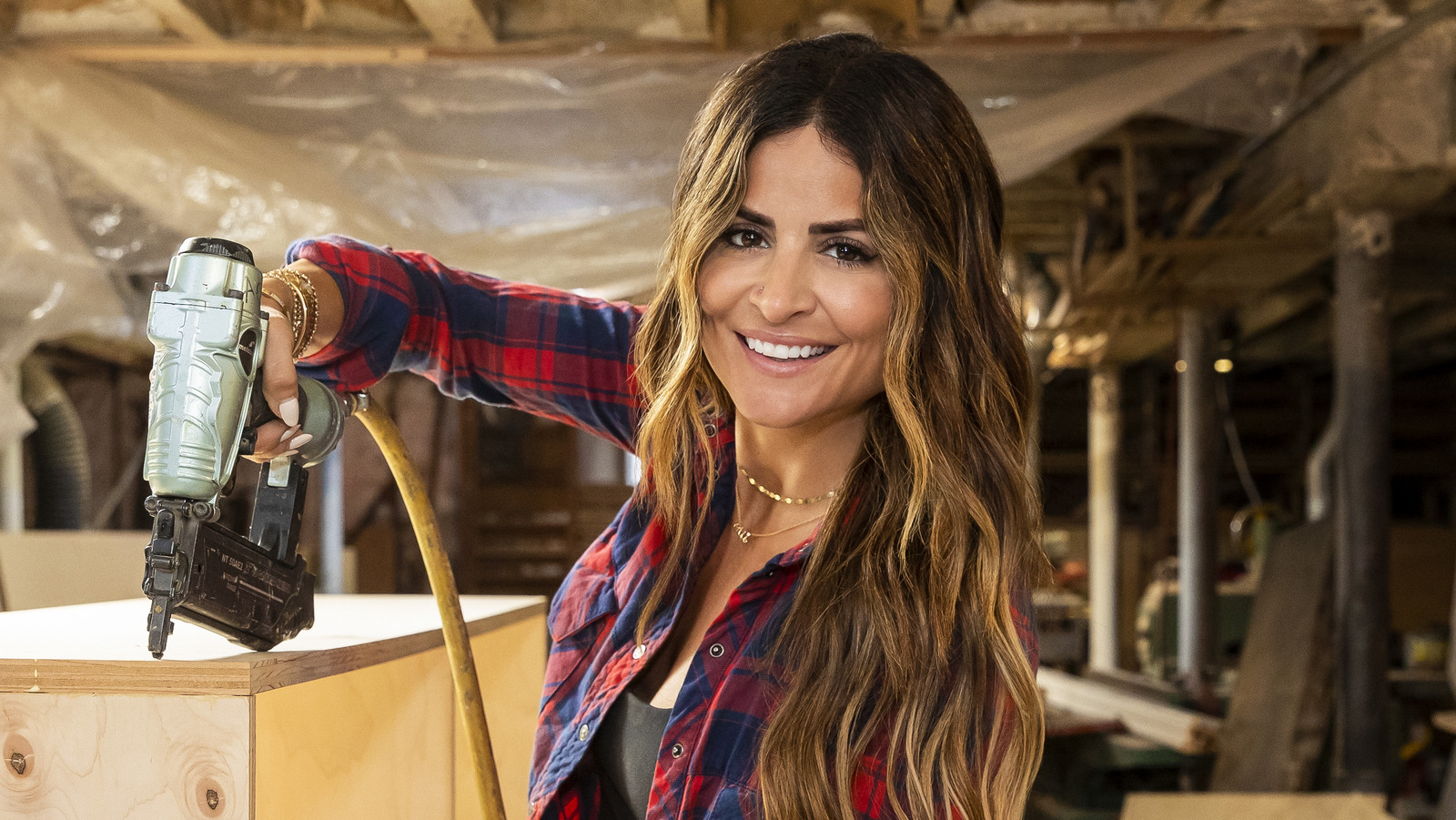
As of 2026, Alison Victoria remains one of the most resilient and influential figures in the home renovation television landscape. Through her flagship HGTV series, Windy City Rehab, she has transformed the high-stakes world of Chicago real estate into a narrative of design excellence, legal perseverance, and professional evolution, moving from a collaborative partnership to a solo powerhouse brand.
The Architectural Legacy of Alison Victoria in Chicago
Alison Victoria (born Alison Gramenos) has become synonymous with a specific brand of "modern vintage" luxury that has redefined North Side Chicago neighborhoods like Bucktown, Wicker Park, and Ukrainian Village. Her journey with Windy City Rehab began with a mission to preserve the historic integrity of Chicago’s aging housing stock while introducing high-end, contemporary amenities that appeal to the modern luxury buyer.
By 2026, her body of work encompasses dozens of completed full-gut renovations. Victoria’s approach is characterized by a refusal to "white-box" a property. Instead, she sources architectural salvage—antique doors from Europe, reclaimed mantels from Parisian flea markets, and vintage brass hardware—to ensure that each home feels curated rather than manufactured. This dedication to craftsmanship has often put her at odds with the typical "fix-and-flip" timeline, creating the central tension that has made the show a staple of HGTV programming for over seven years.
The Turning Point: Navigating Business and Legal Complexity
To understand the current state of Windy City Rehab in 2026, one must look back at the significant pivot that occurred during the show's second and third seasons. The series initially featured a partnership between Victoria and lead contractor Donovan Eckhardt. However, the professional relationship dissolved amidst a series of high-profile legal disputes, permit issues, and financial audits.
The Dissolution of the Partnership
The fallout between Victoria and Eckhardt was not merely a narrative arc for television; it involved real-world consequences including stop-work orders from the Chicago Department of Buildings and lawsuits regarding construction quality and financial management. Victoria eventually took full control of the business, a move that required her to undergo a grueling process of forensic accounting and personal financial risk.
By 2022 and 2023, the show transitioned into a "solo" format, focusing on Victoria’s efforts to clear her professional name and rebuild her brand. This era of the show was praised for its transparency regarding the "ugly side" of real estate development—the lawsuits, the insurance claims, and the crushing weight of carrying multi-million dollar high-interest loans.
Structural Changes in Project Management
Since taking the reins, Victoria has overhauled her operational model. In the 2026 landscape, her projects are noted for:
- Third-Party Auditing: Strict oversight of all construction draws and vendor payments to prevent the financial opacity of earlier years.
- Specialized Legal Counsel: A dedicated team to navigate Chicago’s notoriously complex zoning and landmark preservation laws.
- Diversified Contracting: Moving away from a single partner to a rotating roster of vetted, specialized tradespeople.
The "Alison Victoria Style": Design Elements and Technical Depth
Victoria’s influence extends beyond the screen and into the actual trends seen in luxury residential design. Her aesthetic, often referred to as "Dark Glamour" or "Modern Vintage," relies on several technical and material pillars that she has refined by 2026.
The Signature Kitchen
The kitchen is the centerpiece of any Windy City Rehab project. Victoria frequently employs:
- Custom Integrated Range Hoods: Often finished in plaster or oversized brass, these serve as the room's focal point.
- Inset Cabinetry: A more expensive and technically demanding style than overlay cabinetry, providing a seamless, furniture-like appearance.
- The "Victoria Blue" and Charcoal Palettes: A departure from the all-white kitchens of the 2010s, favoring deep, moody tones paired with heavy gold or unlacquered brass accents.
Material Selection and Sourcing
A hallmark of her 2024–2026 projects is the integration of "found" history. This involves the technical challenge of retrofitting 19th-century elements into modern framing. For example, installing a 200-pound antique French door requires specialized structural headers and custom-mortised hinges that standard modern contractors often struggle to execute correctly.
Windy City Rehab: Project Comparison and Evolution
The following table outlines the shift in project scope and business strategy from the early years of the show to its current 2026 status.
| Feature | Early Seasons (1-2) | Mature/Current Era (2024-2026) |
|---|---|---|
| Business Structure | Joint Venture (Victoria & Eckhardt) | Solo Ownership (Alison Victoria Interiors) |
| Primary Location | Specifically Chicago North Side | Chicago, Los Angeles, and Atlanta |
| Financing Model | Large-scale construction loans | Private equity and personal reinvestment |
| Design Focus | Luxury flipping for profit | Preservation-led boutique development |
| Permit Management | Outsourced to partners | Directly overseen by Victoria’s legal team |
| Average Project Value | $1.2M – $2.5M | $1.5M – $4.0M |
Expanding the Brand: Beyond the Chicago Borders
While the "Windy City" remains her home base, by 2026, Alison Victoria has successfully expanded her footprint. This expansion was necessary to de-risk her portfolio after the volatility of the Chicago market in the early 2020s.
Alison’s Dream Home and Spin-offs
The success of Windy City Rehab led to limited-series events, most notably Alison’s Dream Home, where she converted a massive Chicago warehouse into her personal residence and office. This project served as a technical showcase, utilizing industrial-grade HVAC, custom steel-frame windows, and an indoor-outdoor courtyard that pushed the boundaries of adaptive reuse in a residential context.
Mentorship and Competition
In the 2025–2026 HGTV cycle, Victoria has transitioned into a "Dean of Design" role, appearing as a judge and mentor on Battle on the Beach and Rock the Block. Her experience with litigation and project failure has made her a unique voice among HGTV hosts—one who emphasizes the "numbers" and "legalities" as much as the "paint colors."
The Financial Realities of High-End Renovation
One of the most frequent questions regarding Windy City Rehab is how the finances actually work. In 2026, the economics of a Victoria flip are tighter than ever due to high labor costs and interest rates.
- Acquisition Costs: In neighborhoods like Bucktown, even a "tear-down" or shell can cost $600,000 to $900,000.
- Renovation Budget: A "Victoria-style" renovation typically exceeds $300 per square foot. On a 4,000-square-foot home, this represents a $1.2 million investment in construction alone.
- Holding Costs: With high-end renovations taking 12–18 months, interest payments on construction loans can exceed $10,000 per month.
- Profit Margins: While the "on-screen" profit might look like $200,000, after Realtor commissions (5-6%), closing costs, and taxes, the net return is often significantly leaner, reflecting the high-risk nature of the Chicago luxury market.
Addressing Common Criticisms and Challenges
The journey has not been without significant pushback. Local Chicago residents have occasionally criticized the show for contributing to gentrification and for the noise and disruption caused by long-term construction projects.
Furthermore, Victoria has had to address "workmanship" complaints from buyers of her early homes. By 2026, she has largely mitigated these issues by partnering with premium architectural firms and implementing a more rigorous multi-stage inspection process that goes beyond city requirements. This "over-building" strategy is now a core part of her marketing, positioning her homes as "heirloom properties" rather than speculative flips.
Frequently Asked Questions
Is Donovan Eckhardt still involved in Windy City Rehab?
No, Donovan Eckhardt has not been part of the show or Alison Victoria's business since the middle of Season 2. Their partnership ended in 2020 following a series of financial disputes and permit suspensions. Victoria now operates as the sole lead of the series and her design firm.
Where is Alison Victoria’s shop/office located in Chicago?
While she has used several spaces throughout the show, her primary 2026 base of operations is the custom-renovated warehouse space featured in her Dream Home series. This location serves as both her design studio and her personal residence, located on the city's North Side.
How can a homeowner hire Alison Victoria for a renovation?
Alison Victoria primarily focuses on her own development projects for the show and high-level commercial consulting. However, her firm, Alison Victoria Interiors, does take on select private residential clients. In 2026, the entry point for these services typically involves a full-home renovation scope rather than single-room designs.
Are the houses on Windy City Rehab actually for sale?
Yes. Most homes featured on the show are speculative developments intended for the open market. You can often find these listings on major real estate portals like Zillow or Redfin under "Active" or "Recently Sold" in Chicago neighborhoods such as Bucktown or Logan Square.
Did Alison Victoria lose her contractor’s license?
There was a period in 2019 where the Chicago Department of Buildings suspended permit privileges for Victoria and her then-partner. However, Victoria has since cleared those hurdles. In 2026, she works with a licensed team of general contractors and maintains all necessary professional standings to operate in the City of Chicago.
The Path Forward: Alison Victoria in 2026 and Beyond
As Windy City Rehab continues its run, the focus has shifted from the "shock value" of the legal drama to a more mature exploration of architectural artistry and business resilience. Alison Victoria has successfully rebranded herself from a "renovator" to a "developer and designer," a distinction that carries more weight in the 2026 real estate market.
For viewers and aspiring renovators, the lesson of Windy City Rehab is one of persistence. Victoria’s ability to remain a central figure in the HGTV universe, despite the public nature of her business failures and legal battles, serves as a masterclass in crisis management and brand evolution. Her current projects continue to set the bar for Chicago luxury, ensuring that her impact on the city’s skyline—and the world of interior design—will remain for decades to come.
Practical Action: If you are looking to replicate the Windy City Rehab look on a budget, focus on "architectural anchors." Source one high-quality vintage piece (like an antique fireplace mantel) and build the room's modern elements around it. This creates the "Modern Vintage" contrast that defines Victoria's work without the multi-million dollar price tag.