Commercial aviation remains the safest mode of long-distance transportation globally. Statistically, the likelihood of being involved in a fatal aviation accident is approximately one in several million flights. This peerless safety record is the result of rigorous engineering redundancies, intensive pilot training, global regulatory oversight, and advanced air traffic management systems that prioritize risk mitigation above all else.
The Statistical Reality of Aviation Safety
To understand why airplanes are safe, one must first look at the overwhelming data provided by organizations such as the International Air Transport Association (IATA) and the International Civil Aviation Organization (ICAO). As of 2026, the trend of increasing safety continues a decades-long trajectory. While any incident in the sky garners significant media attention due to its rarity and scale, the day-to-day reality of flight is one of mundane, repetitive safety.
Comparing air travel to other forms of transport reveals a stark contrast. For every billion miles traveled, the fatality rate for automobiles is significantly higher than that of commercial aircraft. In fact, for most travelers, the most dangerous part of their journey is the drive to the airport. This is not a matter of luck but a result of a highly regulated industry where every "near-miss" or minor mechanical anomaly is recorded, analyzed, and used to prevent future occurrences.
The "Safety First" culture in aviation is unique because it is non-competitive. Airlines and manufacturers—even direct rivals like Boeing and Airbus—share safety data through global clearinghouses. When a vulnerability is identified in one type of aircraft or during a specific flight maneuver, the entire industry is alerted to implement corrective actions. This collective intelligence ensures that the global fleet is constantly evolving to be safer.
Redundancy: The Core of Aerospace Engineering
The primary reason an airplane does not simply "fall out of the sky" is the principle of redundancy. In modern aerospace engineering, every critical system—those necessary for the continued safe flight and landing of the aircraft—must have at least one backup, and often two or three.
Powerplant Redundancy
Most modern commercial airliners are "twin-jets," meaning they have two engines. However, these aircraft are designed and certified to fly for extended periods on a single engine. This is known as ETOPS (Extended-range Twin-engine Operational Performance Standards). Under these regulations, an aircraft must be able to fly to a suitable diversion airport even if one engine fails at the most distant point of its route. Modern jet engines are incredibly reliable; a pilot might go an entire 30-year career without ever experiencing a total engine failure outside of a flight simulator.
Flight Controls and Hydraulics
Airplanes use multiple independent hydraulic or electrical systems to move the flaps, slats, and rudders. If one system leaks or loses power, the others are isolated and can maintain full control of the aircraft. In newer "fly-by-wire" aircraft, such as the Airbus A350 or the Boeing 787, the traditional mechanical cables are replaced by electronic signals. These systems include multiple redundant computers that "vote" on the correct action. If one computer provides an erroneous reading, the others override it to maintain the intended flight path.
Electrical and Navigation Systems
From the cockpit displays to the communication radios, every electronic component has a backup. Aircraft carry multiple batteries and even a Ram Air Turbine (RAT)—a small wind turbine that can be deployed into the airstream to generate emergency power if all engines and the onboard generators were to fail. This ensures that the pilots always have the instruments and power necessary to navigate and land safely.
The Human Factor: Training and Professionalism
While technology provides the tools, the humans in the cockpit are the final layer of safety. The path to becoming a commercial airline pilot is one of the most grueling professional journeys in any industry. In the United States, the Federal Aviation Administration (FAA) requires a minimum of 1,500 flight hours for a pilot to sit in the seat of a commercial airliner, along with an Airline Transport Pilot (ATP) certificate.
Simulator Training
Pilots are not just trained for "normal" flights; they spend a significant portion of their training in Level D Full Flight Simulators. these multi-million dollar machines replicate the exact physics and cockpit environment of a specific aircraft. Every six to twelve months, pilots must undergo "recurrent training" where they are tested on their ability to handle extreme emergencies—engine fires, total hydraulic loss, severe windshear, and bird strikes. By the time a pilot faces a real-life anomaly, they have likely practiced the solution dozens of times in a controlled environment.
Crew Resource Management (CRM)
One of the most significant advancements in aviation safety over the last 40 years is Crew Resource Management (CRM). In the past, the captain’s word was absolute law, which sometimes led to errors if a junior co-pilot was too intimidated to point out a mistake. Today, pilots are trained in a collaborative environment where communication is standardized. Any crew member, regardless of rank, is encouraged to "challenge and verify" actions. This culture of mutual accountability significantly reduces the risk of human error.
Rigorous Maintenance and Inspection Cycles
An airplane is never "finished" being maintained. It exists in a constant cycle of inspection, repair, and part replacement. These maintenance schedules are strictly mandated by national aviation authorities and are based on both flight hours and "cycles" (one takeoff and landing).
Maintenance is generally categorized into "checks" that increase in depth and complexity:
| Check Type | Frequency | Duration | Scope of Work |
|---|---|---|---|
| Line Maintenance | Daily/Before Flight | 1–3 hours | Visual inspections, fluid levels, and tire pressure. |
| A-Check | Every 400–600 hours | Overnight | Detailed inspection of systems and lubrication of moving parts. |
| B-Check | Every 6–8 months | 1–3 days | More intensive testing of flight controls and landing gear. |
| C-Check | Every 20–24 months | 1–2 weeks | Extensive inspection of the airframe structure and deep system tests. |
| D-Check | Every 6–10 years | 1–2 months | The "Heavy Maintenance Visit." The plane is stripped to the metal, inspected for fatigue, and rebuilt. |
This tiered system ensures that components are replaced long before they are expected to fail. The Federal Aviation Administration (FAA) and other global regulators perform unannounced audits to ensure airlines are adhering to these strict protocols.
Technological Guardians in the Sky
Beyond the aircraft itself, a global network of technology works to keep every flight separated and safe.
- Air Traffic Control (ATC): Every commercial flight is monitored by radar and satellite-based systems. Controllers manage the spacing between aircraft, ensuring they maintain a "protective bubble" of horizontal and vertical distance.
- TCAS (Traffic Collision Avoidance System): If two aircraft ever get too close to one another, their onboard computers communicate directly. The TCAS system will provide coordinated instructions to the pilots—ordering one to climb and the other to descend—to resolve the conflict immediately, independent of ATC.
- GPWS (Ground Proximity Warning System): Modern aircraft are equipped with Terrain Awareness and Warning Systems (TAWS). Using GPS and a worldwide terrain database, the aircraft "looks ahead" and warns pilots with loud voice alerts if they are approaching the ground, a mountain, or an obstacle too quickly or at an unsafe configuration.
- Weather Radar: Pilots use high-definition Doppler radar to see storms and turbulence hundreds of miles ahead. This allows them to navigate around convective activity rather than through it, ensuring both safety and passenger comfort.
Addressing Common Fears: Turbulence and Lightning
Many passengers confuse discomfort with danger. Two common sources of anxiety are turbulence and lightning strikes, yet neither poses a significant threat to a modern aircraft.
Turbulence is caused by changes in airflow—much like a car hitting a pothole in the road. Aircraft are designed to withstand forces far in excess of the most severe turbulence ever recorded. The wings are flexible, acting like shock absorbers, and can bend significantly without breaking. The primary danger during turbulence is not to the airplane's structure but to passengers who are not wearing their seatbelts and may be tossed from their seats.
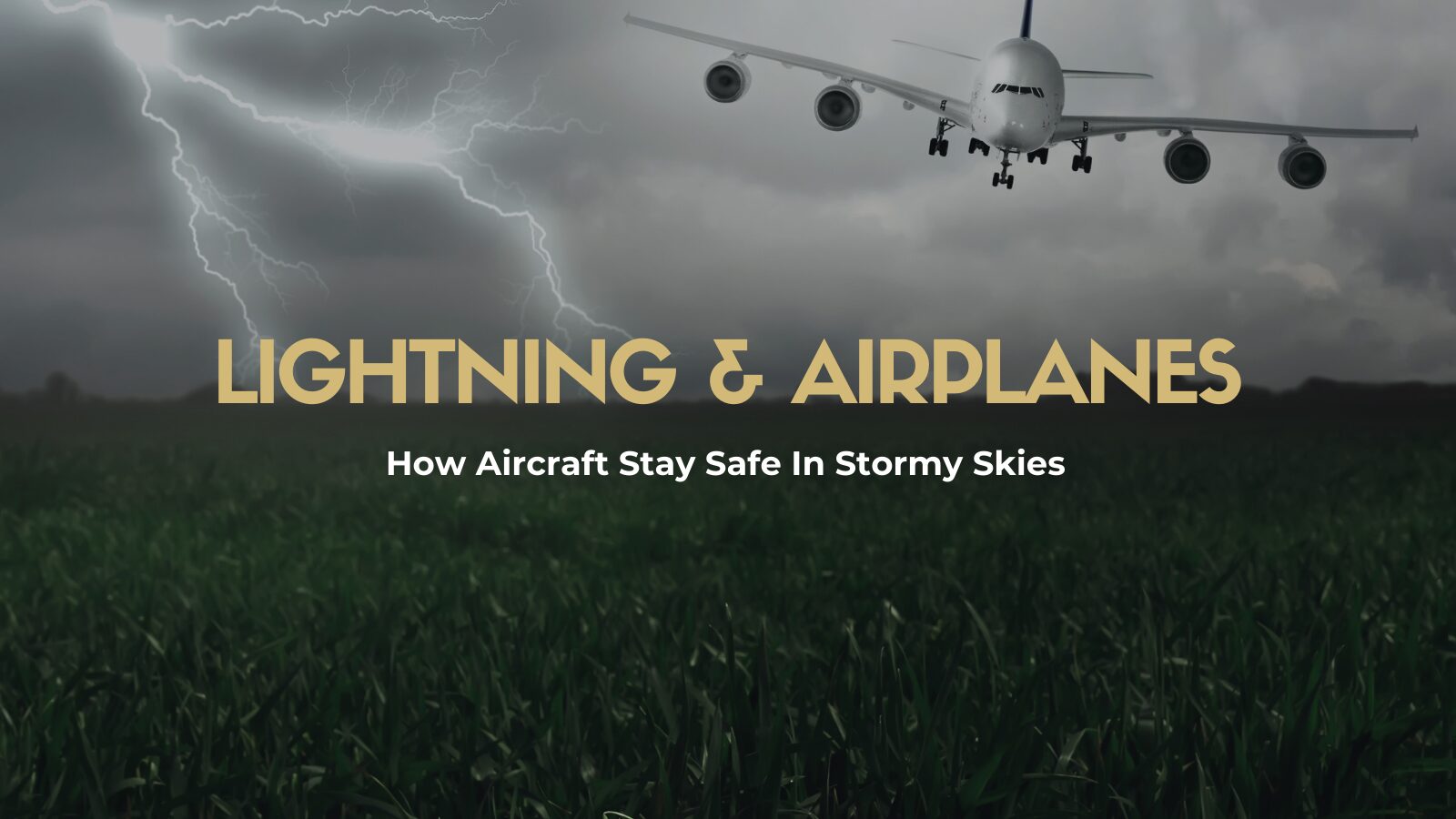
Lightning strikes occur more frequently than most passengers realize. However, airplanes act as "Faraday cages." The aluminum skin (or the conductive mesh embedded in composite fuselages) allows the electricity to flow around the outside of the aircraft and exit through the "static wicks" on the trailing edges of the wings. The sensitive electronics inside are shielded, and the fuel tanks are designed with fire-suppressant features to prevent any ignition from an electrical discharge.
The Role of Global Regulation and Investigation
Safety is also a byproduct of the legal and investigative framework surrounding the industry. When an accident or a "serious incident" occurs, independent bodies like the National Transportation Safety Board (NTSB) in the United States or the Air Accidents Investigation Branch (AAIB) in the UK conduct exhaustive investigations.
These agencies have no interest in assigning "blame" for the sake of litigation; their sole goal is to find the "probable cause" and issue safety recommendations. This forensic approach has led to massive safety leaps, such as the introduction of fire-resistant cabin materials, better floor-path lighting, and improved flight data recorders (black boxes).
Frequently Asked Questions
Can an airplane fly if one engine fails?
Yes. All modern commercial jetliners are designed to be able to climb, cruise, and land safely with one engine inoperative. Pilots practice single-engine landings frequently in simulators. Furthermore, even if both engines were to fail (an extremely rare occurrence usually involving fuel exhaustion or volcanic ash), an airplane does not drop; it becomes a glider. A typical airliner can glide for roughly 100 miles from a cruising altitude, providing ample time to reach an airport.
How do pilots handle severe weather?
Pilots use a combination of onboard weather radar, ground-based reports, and satellite updates to avoid severe weather. They are trained to fly through "moderate" rain and wind, but they will always deviate around thunderstorms (cells) which contain heavy turbulence and hail. If the weather at the destination is below safe minimums for visibility or wind, the aircraft will divert to a pre-planned alternate airport where conditions are better.
Is the air inside an airplane clean?
Yes. Modern aircraft use HEPA (High-Efficiency Particulate Air) filters, which are the same grade used in hospital operating rooms. These filters capture 99.9% of bacteria and viruses. The air in the cabin is completely refreshed every 2 to 3 minutes with a mix of filtered recirculated air and fresh air compressed from the engines (known as bleed air), which is heated to sterile temperatures during the compression process before being cooled for the cabin.
What happens if an airplane is struck by lightning?
In most cases, the passengers may hear a loud bang or see a flash, but the flight continues normally. The electrical charge travels along the exterior of the fuselage and exits through the tail or wingtips. Following a strike, the aircraft undergoes a specific "lightning strike inspection" by maintenance crews once it lands to check for any small entry or exit points that might need repair.
Does the age of an airplane affect its safety?
The age of an aircraft is less important than its maintenance history. A 25-year-old airplane that has been meticulously maintained and has undergone its heavy "D-Checks" is just as safe as a brand-new plane. Components are replaced based on wear and time, meaning an older plane likely has very few "original" parts left in its critical systems.
Summary and Next Steps
The safety of air travel is not a static achievement but a continuous process of improvement. In 2026, flying remains the most efficient and secure way to traverse the globe, backed by a sophisticated ecosystem of engineering, training, and regulation.
If you are a nervous flyer, the best course of action is to educate yourself on the "noises" and sensations of flight. Understanding that a sudden "thump" is merely the landing gear retracting, or that a change in engine pitch is a standard thrust reduction for noise abatement, can demystify the experience. For those with severe anxiety, many airlines offer "Fear of Flying" courses that include simulator visits and briefings from pilots to reinforce the reality that you are in a highly controlled, incredibly safe environment.