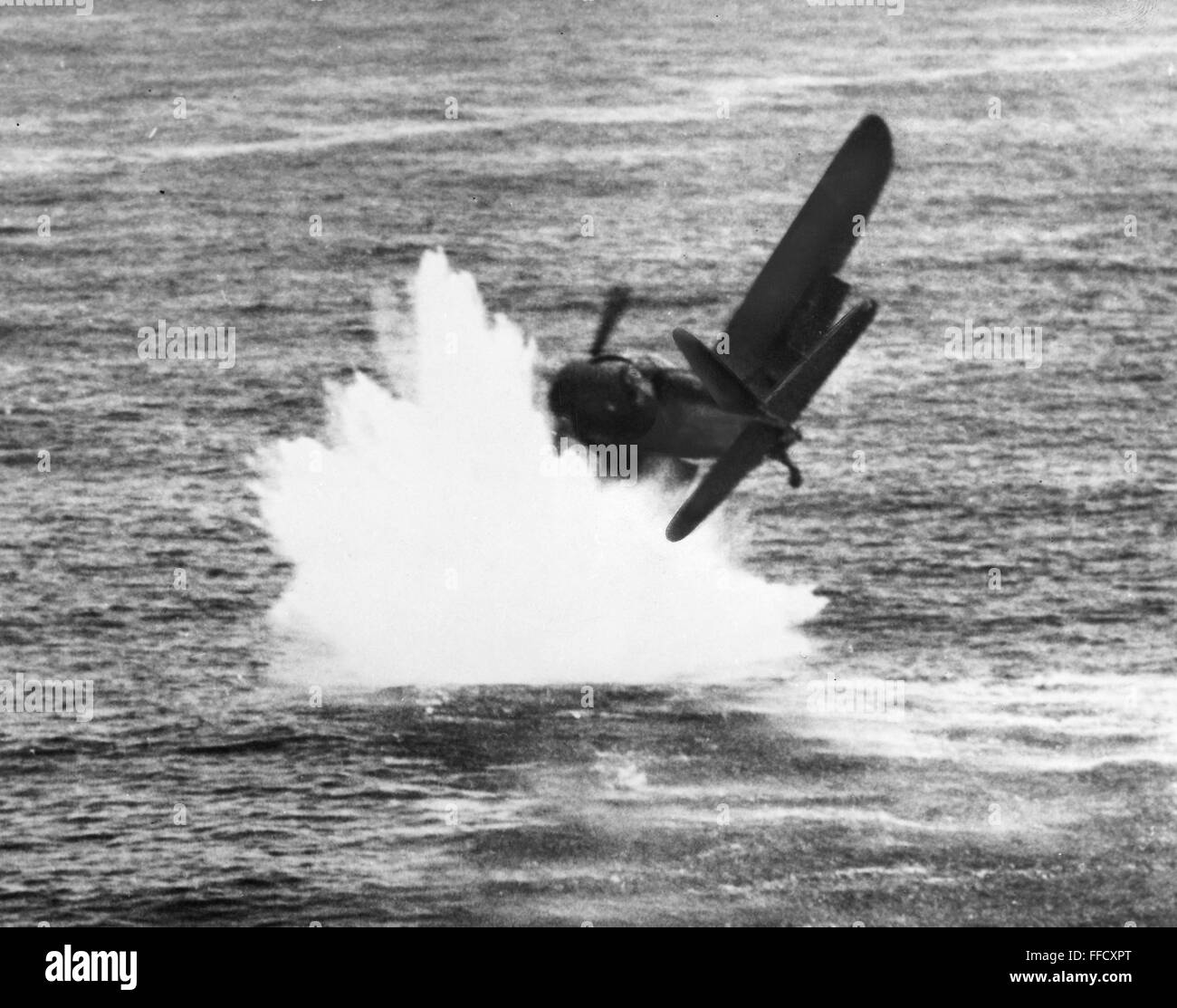
Aircraft carrier plane crashes are high-kinetic accidents occurring during the launch, recovery, or movement of aircraft on a carrier’s flight deck. These incidents result from mechanical failures, human error, or environmental factors. While modern technology has significantly reduced their frequency, the inherent physics of naval aviation maintains a slim margin for error.
The Physics of the "Controlled Crash"
To understand why aircraft carrier plane crashes occur, one must first understand that every successful landing on a carrier is essentially a "controlled crash." Unlike a land-based runway, which may be 10,000 feet long and stationary, a carrier flight deck is approximately 300 to 500 feet of usable recovery space that is constantly moving, pitching, and rolling in three dimensions.
When a naval aviator approaches the ship, they are aiming for one of several steel arresting wires. The goal is to transition from an approach speed of approximately 130 to 150 knots to a complete stop in less than two seconds and within about 300 feet. This process, known as a "trap," subjects the airframe and the pilot to immense longitudinal G-forces. If the tailhook fails to engage a wire, or if the aircraft strikes the rear of the ship, the result is a catastrophic mishap.
In the 2026 operational environment, while automation has improved, the fundamental requirement remains: the aircraft must maintain a precise glideslope and airspeed to survive the recovery phase. Any deviation can lead to a "ramp strike"—where the aircraft hits the stern of the ship—or a "bolter," where the aircraft misses the wires and must immediately accelerate to fly off the deck and try again.
Primary Causes of Carrier-Based Aviation Accidents
The environment of a flight deck is often described as "the most dangerous four acres in the world." Accidents are rarely the result of a single factor; they are typically the culmination of a "Swiss cheese" model of failure, where multiple small errors or mechanical issues align.
Mechanical Failures: Catapults and Arresting Gear
The machinery responsible for launching and stopping aircraft is subject to extreme stress. On older Nimitz-class carriers using steam catapults, a "cold catapult" shot occurs if the system fails to provide enough pressure to get the aircraft to flying speed. In such cases, the aircraft may settle into the sea immediately after leaving the deck.
Conversely, the arresting gear (the wires) can fail. If an arresting cable snaps under the tension of a landing aircraft, the plane may continue off the angled deck into the water, while the broken cable can whip across the flight deck, causing devastating injuries to personnel and damage to other aircraft.
Human Factors and Pilot Error
Despite rigorous training, human performance is a variable. Fatigue, "target fixation," and spatial disorientation are leading contributors to mishaps. During night operations or in heavy weather, pilots may lose their sense of the horizon, leading to "controlled flight into terrain" (or in this case, the sea or the deck).
The Landing Signal Officer (LSO) serves as a critical safety backup. Stationed at the rear of the ship, the LSO monitors every landing, providing radio corrections and controlling the "wave-off" lights. If a pilot fails to respond to an LSO’s command to "power" or "wave off," a crash is often the inevitable result.
Environmental Conditions and the Pitching Deck
The sea state is a primary driver of carrier crashes. In rough waters, the flight deck does not just move forward; it pitches up and down and rolls side-to-side. A pilot might be on a perfect glideslope, only for the deck to rise ten feet in the final seconds before touchdown. This can result in a "hard landing" that collapses the landing gear or a ramp strike that destroys the aircraft.
The Evolution of Safety: From Straight Decks to MAGIC CARPET
The history of naval aviation is written in the lessons learned from crashes. In the early days of carrier operations (pre-1950s), carriers had straight decks. If a pilot missed the arresting wires, they would crash into a "barricade" or, worse, into parked aircraft at the bow of the ship.
The Angled Flight Deck
The introduction of the angled flight deck in the 1950s was perhaps the single greatest advancement in carrier safety. By canting the landing area a few degrees away from the ship's centerline, the Navy allowed pilots who missed the wires to simply "bolt"—apply full power and fly off the deck to try again—without the risk of hitting parked aircraft.
Optical Landing Systems
Before digital displays, pilots relied on the Fresnel Lens Optical Landing System (FLOLS), commonly known as the "meatball." This system of lights allows a pilot to visualize their position relative to the ideal glideslope. If the amber light (the ball) is centered between a row of green lights, the pilot is on the correct path. As of 2026, enhanced digital overlays and "heads-up" displays (HUDs) have integrated this data, but the "meatball" remains a fundamental visual backup.
Precision Landing Mode (PLM)
Modern aircraft like the F/A-18E/F Super Hornet and the F-35C Lightning II utilize software known as Precision Landing Mode (PLM), formerly called "MAGIC CARPET." This technology automates much of the throttle and flap adjustments required during a landing approach. By reducing the pilot’s workload, PLM has drastically lowered the rate of "unstabilized" approaches, which were historically a leading cause of crashes.
Notable Historical Incidents and Lessons Learned
Examining past accidents provides insight into how the Navy improves its procedures. Each major crash has resulted in changes to the NATOPS (Naval Air Training and Operating Procedures Standardization) manuals.
The 1967 USS Forrestal Disaster
While not a landing crash in the traditional sense, the 1967 fire on the USS Forrestal began with a Zuni rocket misfiring on the flight deck. The resulting chain reaction of explosions and fires killed 134 sailors. This incident revolutionized damage control training and changed how ordnance is handled on the deck. It highlighted that a "crash" on a carrier is not just a threat to the pilot, but to the entire ship’s company.
The 1981 USS Nimitz Crash
In May 1981, an EA-6B Prowler crashed on the deck of the USS Nimitz, killing 14 people and destroying or damaging nearly 20 aircraft. The subsequent investigation found that several deck crew members had traces of illicit substances in their systems. This tragedy led to the implementation of the U.S. military’s "zero tolerance" drug policy and mandatory testing, which remains a cornerstone of military safety in 2026.
The 2022 F-35C South China Sea Incident
A recent example of the dangers of carrier operations occurred in 2022 when an F-35C struck the ramp of the USS Carl Vinson. The pilot ejected, but the aircraft slid across the deck and fell into the ocean. The investigation pointed to a "pilot error" involving the setting of approach power modes. This incident led to updated training for F-35C pilots regarding the transition between manual and automated flight modes during the "groove" (the final seconds of landing).
Comparing Types of Carrier Mishaps
Understanding the terminology used in naval aviation safety reports is essential for distinguishing between different types of incidents.
| Incident Type | Primary Cause | Typical Outcome |
|---|---|---|
| Ramp Strike | Low glideslope / Poor power management | High probability of airframe loss and deck fire. |
| Cold Cat | Catapult mechanical failure / Low steam | Aircraft enters water immediately after launch. |
| Cable Snap | Arresting gear fatigue / Improper maintenance | Aircraft may go overboard; severe danger to deck crew. |
| Bolter | High glideslope / Late touchdown | Safe fly-around; pilot attempts landing again. |
| Foul Deck Crash | Presence of debris or other aircraft | Collision on the flight deck; high risk of "chain reaction" damage. |
| Hard Landing | High sink rate / Excessive vertical velocity | Damage to landing gear or airframe; possible "blown" tires. |
The Human Cost and Technical Requirements
When a plane crashes on a carrier, the response is immediate and highly orchestrated. The "Air Boss" in the primary flight control tower coordinates the emergency response, which includes the flight deck fire party (the "Red Shirts") and the search and rescue (SAR) helicopter, which is always airborne during flight operations.
The technical requirements for a pilot to be "carrier qualified" are among the most stringent in the world. Pilots must complete dozens of "field carrier landing practice" (FLP) sessions on land—where a runway is painted to look like a carrier deck—before they are permitted to attempt a landing at sea. Even then, they are graded on every single landing. A series of poor grades can lead to a pilot being "de-qualified," a measure taken to prevent crashes before they happen.
Safety Protocols and Maintenance Standards
In 2026, the maintenance of arresting gear and catapults is tracked using sophisticated predictive analytics. By measuring the tension and heat generated by every "trap," the ship's computer systems can predict when a cable is nearing its fatigue limit.
Furthermore, Foreign Object Debris (FOD) walks are conducted multiple times a day. The entire flight deck crew lines up and walks from one end of the ship to the other, picking up every tiny piece of metal, plastic, or stone. Even a small bolt sucked into a jet engine can cause a catastrophic engine failure during the critical launch phase, leading to a crash.
Frequently Asked Questions
Why don't carrier planes just use parachutes to slow down?
While some land-based aircraft use drogue chutes, they are insufficient for the distances required on a carrier. A parachute requires time to deploy and inflate, whereas a carrier landing requires an almost instantaneous stop. Furthermore, if a pilot needs to "bolt" (fly away), a deployed parachute would make it impossible to regain the necessary airspeed, leading to a certain crash.
What happens to a pilot after a crash?
Following any mishap, a pilot is immediately grounded and must undergo a medical evaluation. A Safety Investigation Board (SIB) is convened to determine the cause. If the crash was due to mechanical failure, the pilot may return to flight status quickly. If it was due to "pilot error," the aviator must undergo significant remedial training and may face a "Field Naval Aviator Evaluation Board" (FNAEB) to determine if they are fit to continue flying.
Can a carrier survive a plane crashing into its bridge (Island)?
Modern carriers are designed with significant structural hardening. While a plane crashing into the "Island" (the command tower) would be devastating and likely kill personnel in primary flight control, it is unlikely to sink the ship. The USS Enterprise (CVN-65) and others have survived major flight deck explosions and fires because of the armored nature of the flight deck and compartmentalization below.
How do pilots land at night if they can't see the deck?
Night landings are considered the most difficult task in aviation. Pilots rely on the Instrument Carrier Landing System (ICLS) and the "meatball." In 2026, night vision goggles (NVGs) and synthetic vision systems allow pilots to see the ship more clearly, but they are still trained to "trust their instruments" above their own eyes to avoid spatial disorientation.
Future Outlook: Autonomous Recoveries
By 2026, the integration of Unmanned Aerial Systems (UAS), such as the MQ-25 Stingray, has forced further evolution in safety. These drones land autonomously using highly precise GPS and data-link systems. As this technology matures, it is expected that even manned aircraft will move toward "monitored autonomy," where the pilot oversees the computer’s landing. This shift aims to eliminate the "human factor" from the landing equation, theoretically reducing the crash rate to near zero, though mechanical risks will always persist.
If you are interested in the technical specifics of naval aviation safety, the primary next step is to review the NATOPS General Flight and Operating Instructions (OPNAVINST 3710.7), which outlines the rigorous standards required for all naval flight operations.