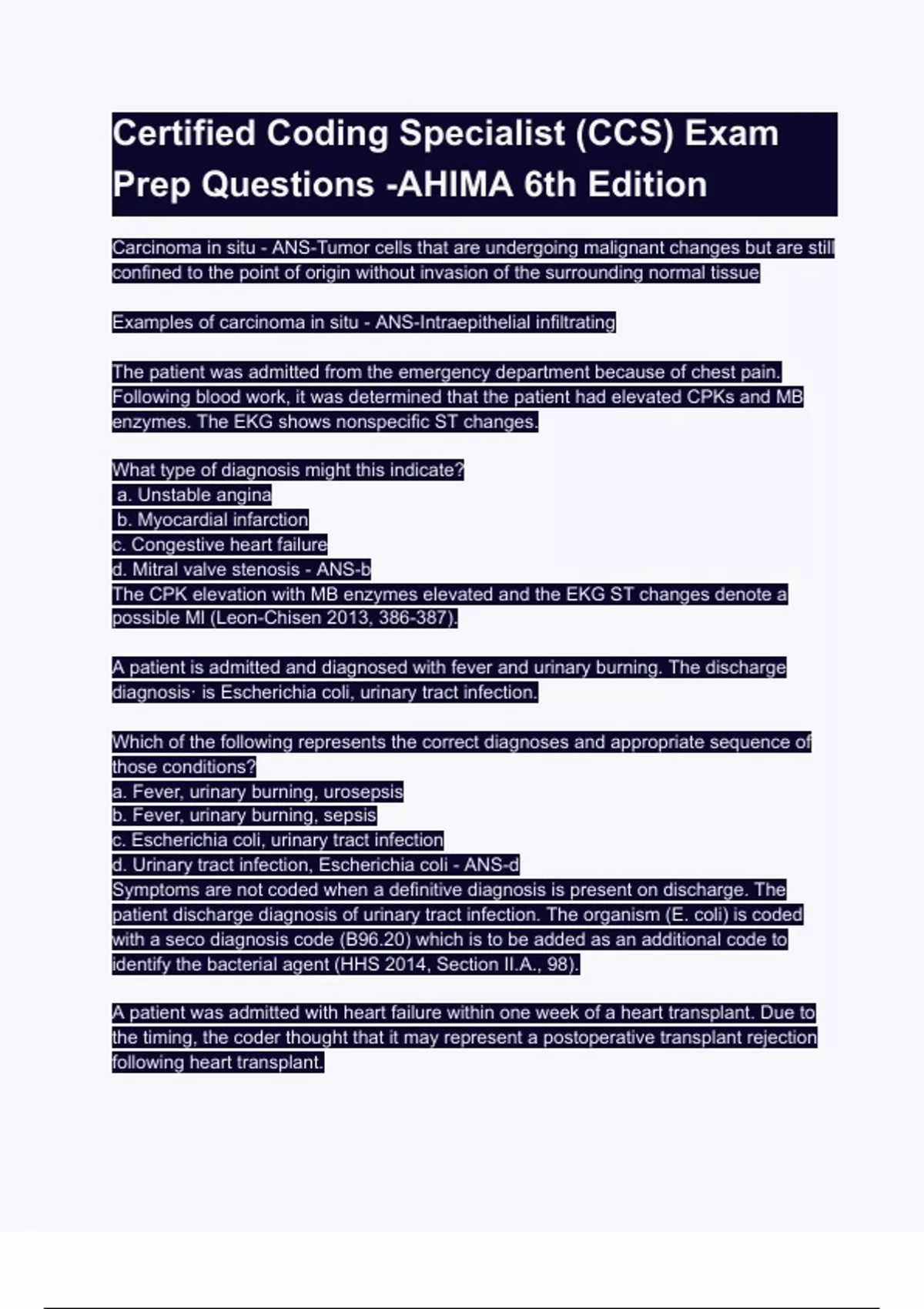
Choosing an AHIMA-approved coding program online is a critical step for individuals pursuing a professional career in medical coding and health information management. These programs are vetted by the American Health Information Management Association (AHIMA) to ensure they meet rigorous standards for curriculum content, instructional quality, and industry relevance, providing students with the essential knowledge required to sit for national certification exams like the Certified Coding Associate (CCA) or Certified Coding Specialist (CCS).
The landscape of medical coding education is vast, but not all programs carry the stamp of approval from the American Health Information Management Association (AHIMA). When you seek an AHIMA-approved coding program online, you are looking for an educational pathway that has been formally evaluated for its compliance with the association’s Professional Certificate Approval Program (PCAP) standards. These programs are specifically designed to prepare students for the complexities of modern healthcare data, including ICD-10-CM, CPT, and HCPCS coding systems. By selecting a program that has undergone this voluntary, rigorous peer-review process, you ensure that your investment in time and tuition aligns with the competencies expected by employers and credentialing bodies in 2026.
Understanding the AHIMA PCAP Designation
The Professional Certificate Approval Program (PCAP) is the mechanism AHIMA uses to evaluate coding programs. It is important to note that PCAP approval is distinct from institutional accreditation. While accreditation covers the entire college or university, PCAP approval focuses specifically on the medical coding certificate program.
Programs that achieve this designation have demonstrated that their curriculum covers the core domains of health information management, including medical terminology, pathophysiology, pharmacology, and reimbursement methodologies. When you enroll in an approved program, you are gaining access to a structured learning environment that meets specific instructional hour requirements and includes hands-on practice with coding software or realistic health record simulations.
For students, this approval acts as a quality assurance marker. It confirms that the program has met the necessary benchmarks to effectively prepare candidates for the workforce. In an industry where accuracy is paramount to financial integrity and patient safety, starting with a vetted education is a foundational professional choice.
Evaluating Online Delivery Models
In 2026, most AHIMA-approved coding programs are delivered through online or hybrid formats to accommodate working professionals. When reviewing these options, consider the difference between synchronous and asynchronous learning.
Synchronous programs require you to log in at specific times for live lectures. This format provides real-time interaction with instructors and peers, which can be beneficial for complex topics like diagnostic coding nuances. Conversely, asynchronous programs allow you to complete coursework on your own schedule, provided you meet specific weekly deadlines. This flexibility is often preferred by those managing full-time employment alongside their studies.
Beyond the schedule, evaluate the program's technical infrastructure. Quality online programs utilize a Learning Management System (LMS) that facilitates document submission, discussion forums, and direct communication with faculty. Additionally, check if the program provides access to electronic health record (EHR) software training. Practical experience with industry-standard software is often a requirement for entry-level roles and significantly enhances your resume.
Key Curriculum Components
An AHIMA-approved coding curriculum is not limited to just "coding." It is a multidisciplinary approach that ensures a coder understands the "why" behind the code. A high-quality program should provide a deep dive into the following areas:
- Medical Terminology and Anatomy: You must understand the human body and the language of medicine to accurately interpret physician documentation.
- Pathophysiology: Learning the progression of diseases is essential for assigning accurate diagnostic codes.
- Pharmacology: An understanding of common medications and their intended uses is vital for identifying relevant clinical conditions.
- Coding Conventions: Rigorous training in the official guidelines for ICD-10-CM (diagnoses), ICD-10-PCS (inpatient procedures), and CPT/HCPCS (outpatient and physician services).
- Reimbursement Methodologies: Understanding how codes translate into billing and revenue cycle management, including DRGs (Diagnosis-Related Groups) and APCs (Ambulatory Payment Classifications).
- Legal and Ethical Standards: Comprehensive training on HIPAA, data privacy, and the ethical responsibility of a health information professional.
Comparison of Educational Paths
Selecting the right program requires balancing your career goals with your current lifestyle and financial capacity. The following table illustrates the common differences between program types.
| Feature | Certificate Programs | Associate Degree Programs |
|---|---|---|
| Duration | 6 to 12 months | 18 to 24 months |
| Focus | Specific to coding/billing | Broad HIM and liberal arts |
| AHIMA Status | Often PCAP-approved | Usually CAHIIM-accredited |
| Primary Goal | Fast-track to entry-level jobs | Long-term career advancement |
| Cost | Generally lower | Generally higher |
Note: CAHIIM (Commission on Accreditation for Health Informatics and Information Management Education) is the body that accredits associate and bachelor degrees, whereas PCAP is the AHIMA-managed approval for certificate-level coding programs.
The Role of Practicum and Mentorship
Many reputable online programs include a virtual practicum or an externship component. This is perhaps the most valuable aspect of an AHIMA-approved program. While textbook learning provides the theory, coding requires the application of guidelines to actual (often messy or incomplete) medical documentation.
During a practicum, you may work through case studies that simulate real-world hospital or physician office environments. Some programs partner with healthcare facilities to offer supervised remote internships. If a program does not explicitly mention a practicum or extensive case study work, you should inquire how they ensure students gain practical, real-world experience before graduation. Mentorship from certified professionals—typically individuals who hold the CCS or RHIT (Registered Health Information Technician) credentials—can also provide invaluable insights into the daily challenges of the coding profession.
Financial and Career Planning
Investing in an AHIMA-approved program involves tuition, textbooks, and potentially professional membership fees. Before enrolling, conduct a thorough cost-benefit analysis.
- Direct Costs: Beyond tuition, verify the cost of required coding manuals (e.g., current year ICD-10-CM, CPT, and HCPCS books), which are updated annually.
- Certification Costs: The fee for the AHIMA certification exam is separate from your program tuition. Factor this into your total budget.
- Career Services: Determine if the institution offers career placement assistance, resume reviews, or connections to local health information management associations.
- Employer Sponsorship: Some healthcare employers offer tuition reimbursement for employees who choose to pursue an AHIMA-approved coding credential. Check with your current HR department if you are already in the healthcare field.
Common Pitfalls to Avoid
The most common mistake students make is failing to verify the current status of a program's approval. A school might advertise that they are "AHIMA-aligned" or that they use AHIMA curriculum materials, but this is not the same as being an official AHIMA-approved PCAP program. Always consult the official AHIMA directory to verify the program’s current approval status before providing any payment.
Another error is ignoring the regional demand for specific certifications. While the CCS is the gold standard for hospital coding, some employers may specifically request candidates with an RHIT or CCA credential. Research the job postings in your target market to ensure the program you choose aligns with the certifications local employers prioritize.
Troubleshooting Your Search
If you are having trouble finding an approved program that meets your needs, consider the following troubleshooting steps:
- Broaden the Scope: If you cannot find a school with a local physical presence, look for reputable state colleges that offer their health information programs entirely online. Many public universities offer regional tuition rates for online learners.
- Verify Institutional Accreditation: If a program is not PCAP-approved, ensure the school itself holds regional or national accreditation. While PCAP is preferred for coding, institutional accreditation is a minimum requirement for federal financial aid and degree recognition.
- Check for Updated Materials: Ensure the program uses 2026 coding manuals. Coding guidelines change every October (for ICD-10-CM) and January (for CPT), and learning from outdated materials will actively hinder your ability to pass a certification exam.
Frequently Asked Questions
Does AHIMA approval guarantee I will get a job? No, approval indicates that the curriculum meets professional standards, but it does not guarantee employment. Success in the job market depends on your performance in the program, your certification status, and your ability to demonstrate coding proficiency during interviews.
Can I use financial aid for these programs? In many cases, yes, particularly if the program is part of a credit-bearing certificate or degree offered by an accredited college. However, you must verify with the school's financial aid office whether their specific certificate program qualifies for federal aid.
What is the difference between coding and billing? Coding is the process of translating medical documentation into standardized numeric or alphanumeric codes. Billing is the process of using those codes to submit claims to insurance companies for payment. Many programs teach both, as they are closely linked in the revenue cycle.
How often do coding guidelines change? ICD-10-CM coding updates occur annually, effective October 1st. CPT updates are effective January 1st of each year. An AHIMA-approved program is expected to keep its curriculum current with these updates to ensure students are testing on the most recent information.
Do I need an associate degree to become a medical coder? It is not strictly required; you can often enter the field with a certificate. However, many hospitals and high-level health systems prefer candidates with an associate degree in Health Information Management (HIM) because it provides a more comprehensive understanding of the entire healthcare data lifecycle.
Next Steps for Prospective Students
Your path to becoming a professional medical coder should begin with a visit to the official AHIMA website. Use their searchable directory of approved programs to filter by state and delivery method. Once you have a list of candidates:
- Request a Syllabus: Ask for a detailed breakdown of the curriculum to ensure it includes the core competencies required for the exam.
- Verify Instructor Credentials: Look for instructors who hold AHIMA certifications such as the RHIA, RHIT, or CCS.
- Contact Admissions: Speak with an advisor to discuss your specific career goals and ask about their graduates' pass rates on national certification exams.
- Confirm 2026 Standards: Explicitly ask if the current instructional materials align with the latest 2026 coding guidelines.
By systematically vetting your options, you position yourself to enter the workforce with a high-quality, industry-recognized education that will serve as the foundation for a long and productive career in the rapidly evolving field of health information management.