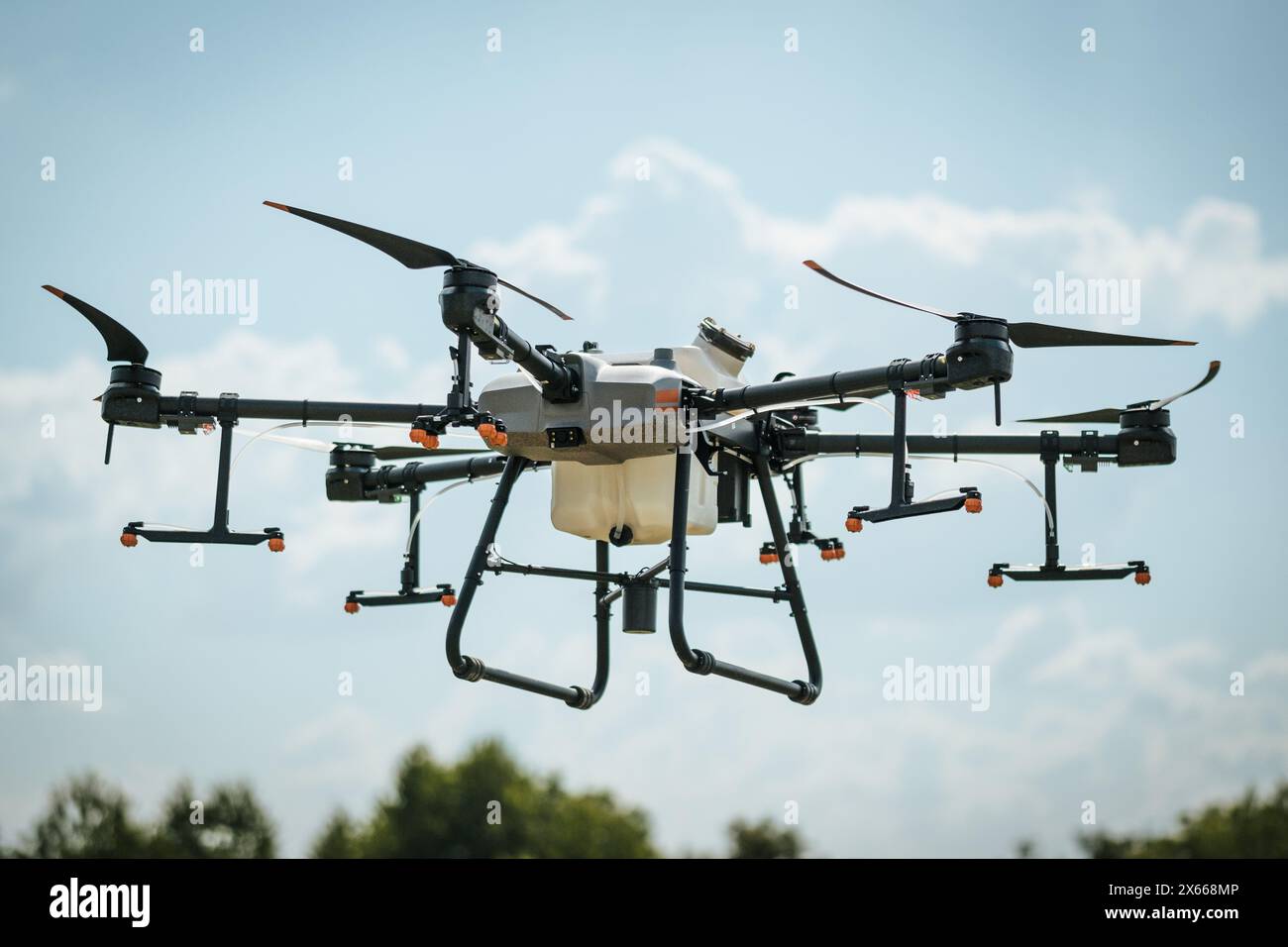
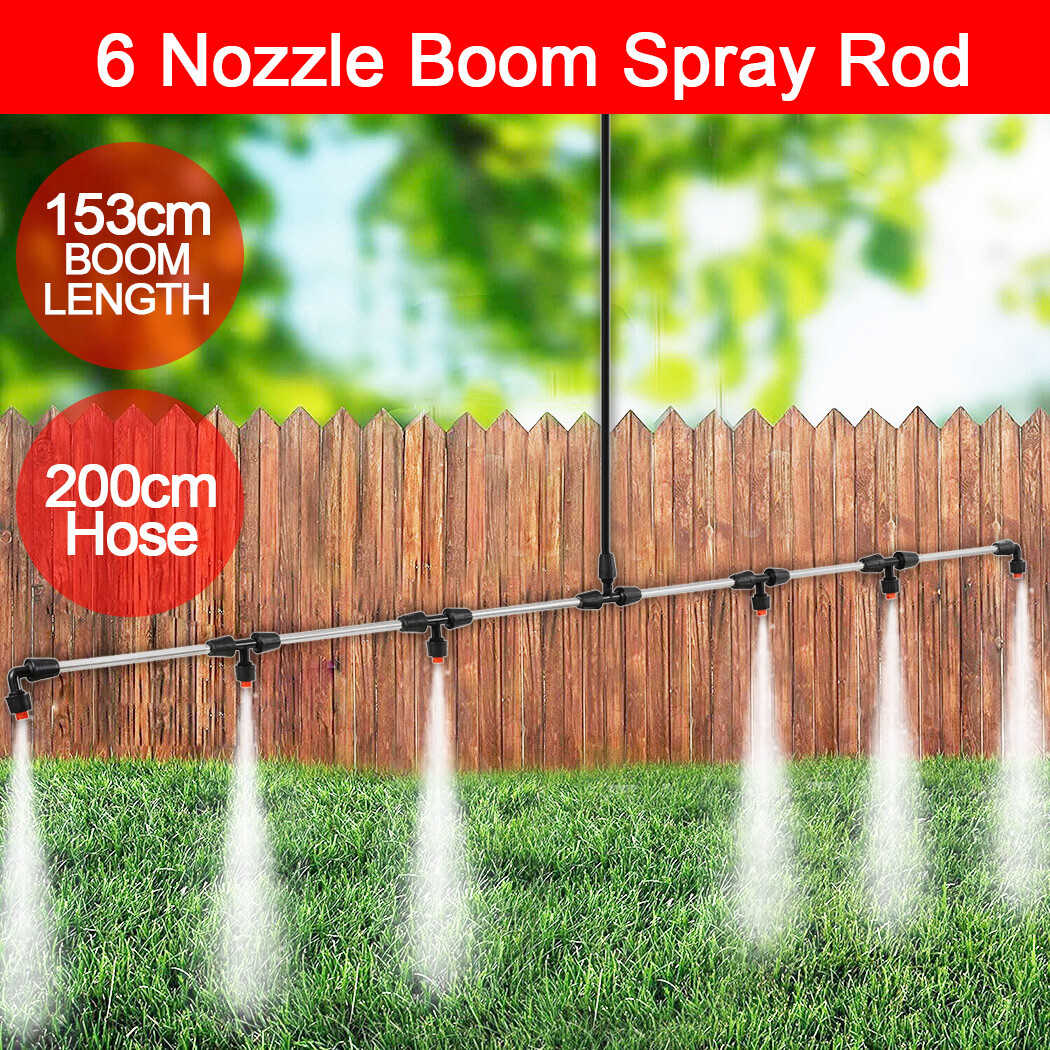
Selecting the right agricultural herbicide spray nozzle involves matching droplet size to the chemical's mode of action while mitigating environmental drift. Systemic herbicides generally require coarser droplets for safety, whereas contact herbicides demand finer droplets for maximum coverage. Proper nozzle selection ensures effective weed control, regulatory compliance, and optimized chemical application costs for the 2026 growing season.
The Critical Role of Nozzles in Modern Herbicide Application
In the context of modern precision agriculture, the spray nozzle is often the most undervalued component of the application system. However, it is the final point of control for the billions of dollars of chemistry applied to crops annually. The nozzle's primary function is threefold: metering the flow of liquid (Gallons Per Minute), atomizing the liquid into droplets, and dispersing those droplets in a specific pattern.
As we move through 2026, the industry faces increasing pressure from both regulatory bodies and environmental changes. The rise of herbicide-resistant weed species has necessitated the use of more complex tank mixes and higher-volume applications. Simultaneously, strict label requirements for products like Dicamba and 2,4-D formulations mandate specific nozzle architectures to prevent off-target movement. Understanding the mechanics of how a nozzle transforms pressurized liquid into a biological delivery system is essential for any professional applicator.
Understanding Nozzle Anatomy and Materials
The durability and performance of a nozzle are dictated by its design and the materials used in its construction. While a nozzle may appear to be a simple piece of molded plastic or machined metal, its internal geometry is engineered to handle high pressures and abrasive chemicals.
Material Selection and Longevity
The choice of material significantly impacts the "wear life" of the nozzle. As the orifice wears, the flow rate increases, and the spray pattern distorts, leading to over-application and uneven coverage.
- Polymer (POM/Polyacetal): Most common in modern broadacre spraying. It offers excellent chemical resistance and is cost-effective. However, it wears faster than harder materials when used with abrasive wettable powders.
- Stainless Steel: Provides high precision and better durability than polymer. It is often preferred for high-pressure applications where orifice integrity is paramount.
- Ceramic: The gold standard for longevity. Ceramic orifices are virtually immune to abrasion from suspended solids and can last up to 20 to 50 times longer than stainless steel. In 2026, many high-duty-cycle operators have transitioned entirely to ceramic for pre-emergent applications.
- Brass: Now largely considered obsolete in professional herbicide application due to rapid wear and susceptibility to corrosion from modern nitrogen-stabilized chemical loads.
Internal Geometry: Standard vs. Air Induction
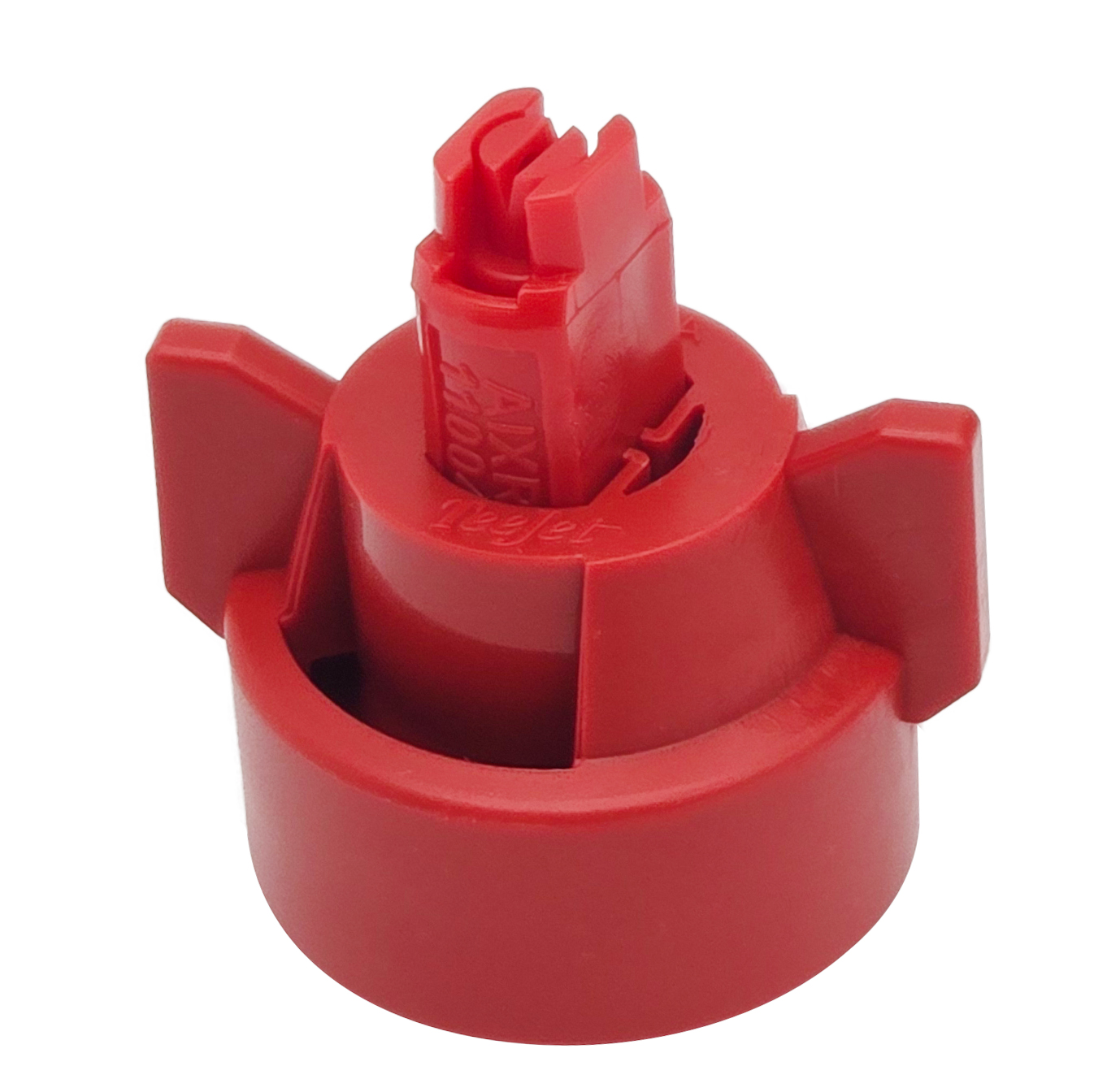
The most significant advancement in nozzle technology over the last two decades is the Venturi or Air Induction (AI) nozzle. Unlike standard nozzles that rely solely on liquid pressure for atomization, AI nozzles incorporate a small hole (aspirator) that draws air into the nozzle body. This air mixes with the liquid to create larger, air-filled droplets. These "bubbles" are heavy enough to resist wind drift but shatter upon impact with the leaf surface, providing coverage similar to a much finer droplet.
The ASABE S572.1 Droplet Size Classification
To standardize communication between chemical manufacturers, nozzle producers, and farmers, the American Society of Agricultural and Biological Engineers (ASABE) developed the S572.1 standard. This system categorizes nozzles based on the Volume Median Diameter (VMD) of the droplets they produce at specific pressures.
The classification is color-coded and ranges from:
- Extra Fine (XF - Purple): < 145 microns. Used for specialized fogging, rarely for herbicides.
- Very Fine (VF - Red): 145–235 microns. Maximum coverage, but extremely high drift risk.
- Fine (F - Orange): 236–325 microns. Ideal for contact herbicides and small weed targets.
- Medium (M - Yellow): 326–400 microns. The "utility" size for many systemic herbicides.
- Coarse (C - Blue): 401–500 microns. Standard for most systemic applications to minimize drift.
- Very Coarse (VC - Green): 501–650 microns. High drift reduction.
- Extremely Coarse (XC - Light Blue): 651–800 microns. Used for specific high-drift-risk labels.
- Ultra Coarse (UC - Black): > 800 microns. Maximum drift protection, used with specialized chemistries.
When reading an herbicide label in 2026, you will likely see a mandatory droplet size category. Failing to use a nozzle that produces the required category is not only an agronomic error but a violation of federal law.
Selecting Nozzles Based on Herbicide Mode of Action
The biological requirements of the herbicide dictate the necessary spray quality. We generally categorize herbicides into two groups: contact and systemic.
Contact Herbicides (e.g., Paraquat, Glufosinate)
Contact herbicides only kill the plant tissue they touch. Therefore, coverage is the most critical factor. These chemicals require a higher density of droplets per square inch. To achieve this without increasing carrier volume to impractical levels, applicators must use Fine to Medium droplets.
Because these droplets are smaller and prone to drift, applications must be made during ideal weather windows (wind speeds between 3 and 10 mph). In 2026, many operators utilize Twin Fan nozzles for contact herbicides. These nozzles split the flow into two fans—one angled forward and one backward—to coat both sides of the weed and penetrate dense crop canopies.
Systemic Herbicides (e.g., Glyphosate, Dicamba)
Systemic herbicides are absorbed by the plant and translocated to the growing points (meristems). Because the chemical moves within the plant, 100% surface coverage is less critical than it is for contact products. This allows the use of Coarse to Ultra Coarse droplets.
The primary goal with systemic herbicides, particularly with newer auxin-based formulations, is drift management. Using an air-induction nozzle like the TeeJet TTI or Lechler IDK ensures that the chemical stays on the target field. While the droplet count is lower, the biological efficacy remains high because the chemical is highly mobile once inside the weed.
Technical Comparison of Leading Nozzle Types
The following table compares the most common nozzle architectures used in 2026 herbicide applications.
| Nozzle Type | Design Principle | Primary Use Case | Droplet Category | Drift Risk |
|---|---|---|---|---|
| Standard Flat Fan | Simple elliptical orifice | Soil-applied pre-emergents | Fine to Medium | High |
| Air Induction (AI) | Venturi air-mix | Systemic post-emergence | Coarse to Very Coarse | Low |
| Twin Fan (AI) | Dual orifices with Venturi | Contact herbicides in canopy | Medium to Coarse | Low-Moderate |
| Even Spray | Uniform distribution across fan | Banding/Directional spraying | Variable | Moderate |
| Turbo TeeJet (TT) | Turbulence chamber | High-speed application | Coarse | Moderate |
| TTI (AI) | Ultra-low drift Venturi | Dicamba / 2,4-D labels | Ultra Coarse | Very Low |
Calibration and Pressure Management
A nozzle's performance is not static; it changes with pressure. In 2026, most modern sprayers use rate controllers that automatically adjust pressure as the sprayer speed changes to maintain a constant "Gallons Per Acre" (GPA). However, this creates a technical challenge: as speed increases, pressure increases, which causes droplet size to decrease.
The Pressure-Flow Relationship
The flow rate of a nozzle is proportional to the square root of the pressure. To double the flow rate (GPM), you must increase the pressure by four times. This exponential relationship means that small changes in speed can lead to massive swings in pressure, potentially pushing a nozzle out of its intended droplet size category.
Pulse Width Modulation (PWM) Systems
To solve the pressure-flow conflict, 2026 sprayer technology often utilizes PWM. Instead of changing pressure to vary flow, PWM systems use solenoid valves at each nozzle body to "pulse" the flow on and off many times per second (typically 10Hz to 30Hz). By changing the "duty cycle" (the percentage of time the nozzle is open), the system can change the application rate without changing the internal pressure or the droplet size. This allows for consistent drift control across a wide range of ground speeds.
Common Mistakes in Nozzle Selection and Maintenance
Even the most advanced nozzle will fail if improperly managed. Industry data from 2025 and 2026 suggest that "nozzle neglect" is a leading cause of herbicide failure and resistant-weed development.
- Mixing Nozzle Sizes on the Boom: All nozzles on a boom must be the same size and type. Mixing them leads to uneven application rates and varied droplet spectra, making it impossible to calibrate the machine correctly.
- Using High Pressure to Compensate for Small Nozzles: If an operator wants to increase their GPA, they should switch to a larger orifice size (e.g., from a 04 to an 06) rather than cranking the pressure to 90 PSI. High pressure creates "fines" (droplets under 150 microns) that are nearly impossible to control.
- Cleaning with Metal Objects: When a nozzle clogs, the temptation is to use a wire or a pocketknife. This will instantly ruin the precision-machined orifice. Applicators should use a soft-bristled brush or compressed air.
- Ignoring Wear Rates: A 10% increase in flow due to wear is the standard threshold for replacement. In 2026, digital flow-check tools make it easy to verify each nozzle's output in seconds.
Environmental Considerations and Drift Reduction
Drift is not just an environmental concern; it is a financial loss. Chemical that moves off-target is chemical that is not killing weeds in your field.
Temperature Inversions
Nozzle selection cannot overcome the physics of a temperature inversion. An inversion occurs when warm air traps a layer of cool air near the ground. Small droplets can remain suspended in this cool air for hours and move miles away with the slightest breeze. In 2026, most local regulations forbid the application of certain herbicides during recognized inversion events, regardless of the nozzle used.
Boom Height
The effect of a high-quality drift-reduction nozzle is negated if the boom is too high. The further a droplet has to travel to the target, the more time wind has to act upon it. Standard practice for 110-degree nozzles is a boom height of 20 inches above the canopy. Many sprayers now use ultrasonic sensors to maintain this height automatically.
Frequently Asked Questions
How do I know when my herbicide nozzles are worn out?
You should calibrate your sprayer at the start of every season and periodically throughout. The most accurate method is to catch the output of several nozzles for one minute at a set pressure and compare it to the manufacturer’s flow chart. If the output is 10% higher than the rated GPM of a new nozzle, the entire set should be replaced. Visible distortion in the spray pattern is also a sign of terminal wear.
Can I use the same nozzles for fungicides and herbicides?
Technically yes, but it is not recommended. Fungicides usually require "Fine" to "Medium" droplets for total coverage of the leaf and stem, especially in the lower canopy. Most modern herbicide applications, particularly for systemic products, utilize "Coarse" to "Very Coarse" droplets for drift management. Using a coarse herbicide nozzle for fungicides will likely result in poor disease control due to inadequate coverage.
What does the numbering on the nozzle mean (e.g., AIXR 11004)?
The numbers provide the technical specifications. The first digits (110) represent the spray angle in degrees. A wider angle allows the boom to be run lower to the ground. The last digits (04) represent the flow rate in Gallons Per Minute (GPM) at 40 PSI. In this case, 0.4 GPM. The letters (AIXR) refer to the nozzle series and manufacturer's trademark (in this case, an Air Induction eXtended Range nozzle).
Does water volume (GPA) affect nozzle choice?
Yes. If you are applying a high carrier volume, such as 20 Gallons Per Acre (GPA), you will need a larger orifice size to maintain reasonable ground speeds. Conversely, low-volume applications (5–10 GPA) require smaller orifices or slower speeds. The nozzle must be sized to provide your target GPA at a pressure that maintains the required droplet size category.
Why are ceramic nozzles so much more expensive?
Ceramic is significantly harder than polymer or stainless steel, making it much more difficult and expensive to manufacture. However, the cost is offset by the lifespan. For an operator spraying 10,000+ acres a year, ceramic nozzles often pay for themselves within two seasons by maintaining precise flow rates and reducing the frequency of recalibration and replacement.
Final Recommendation for the 2026 Season
For the 2026 growing season, the most versatile setup for a professional applicator is a dual-nozzle body system. Equip one position with an Air Induction Flat Fan (AIXR or equivalent) in a "Coarse" category for general systemic herbicide and pre-emergent work. Equip the second position with a Twin-Fan Air Induction nozzle for contact herbicides (like Glufosinate) and fungicide applications where canopy penetration is required.
Always consult the most recent chemical labels, as 2026 EPA guidelines have become increasingly specific regarding nozzle models for specific active ingredients. Regular maintenance and the use of digital calibration tools will ensure that your application remains effective, legal, and profitable.