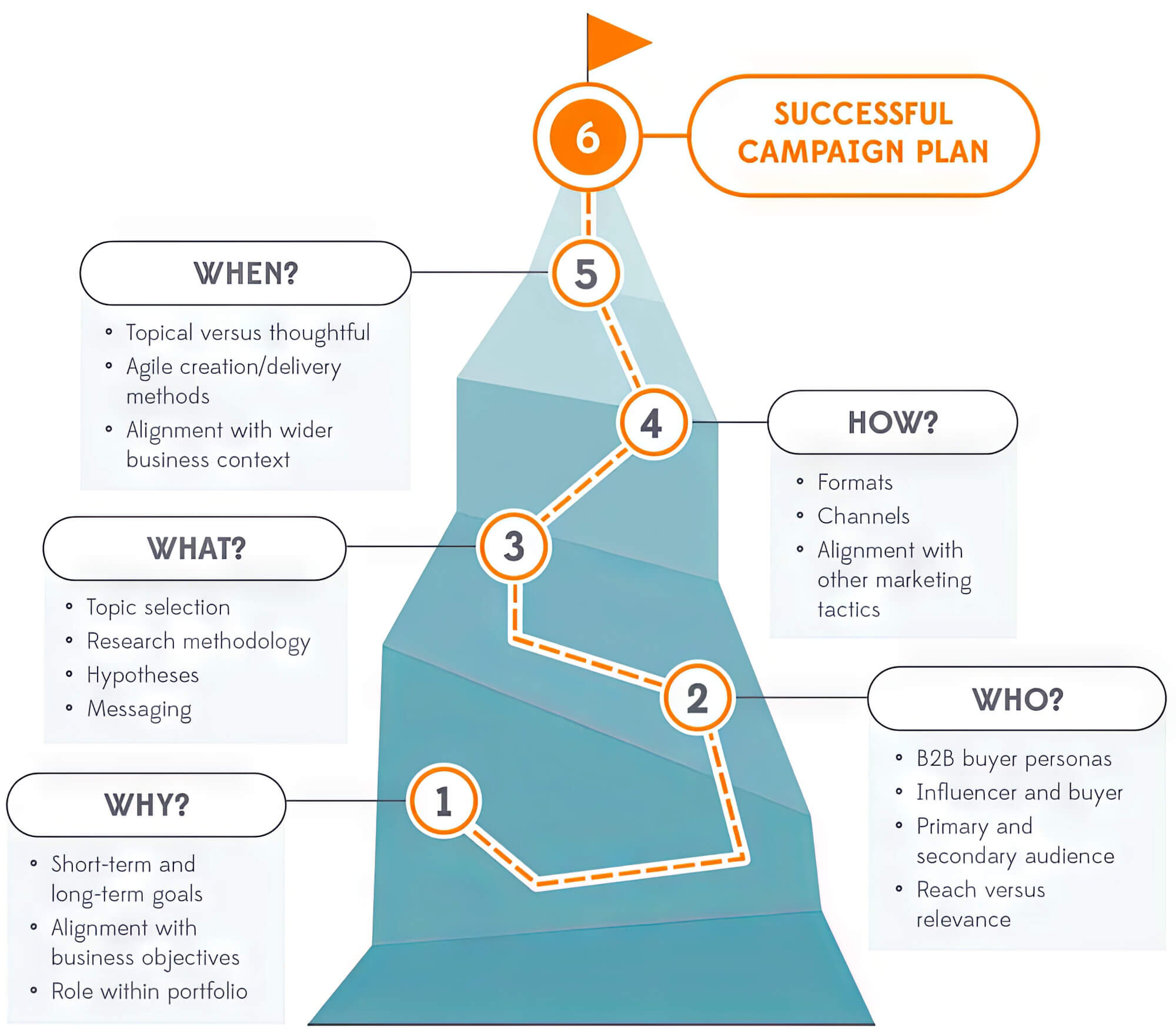
Ads campaign planning and execution is the structured process of defining marketing objectives, researching target audiences, selecting advertising networks, designing ad assets, building technical tracking, launching campaigns, and continuously optimizing performance. A successful campaign aligns commercial goals with audience search intent, robust data attribution, disciplined budget allocation, and iterative testing across paid channels.
Strategic Foundations: The Planning Phase
Before deploying budget into advertising platforms, digital marketers must establish clear objectives, define precise audience segments, and set financial boundaries. Skimping on the planning stage frequently results in misallocated spend, fragmented data, and poor return on ad spend (ROAS).
Setting SMART Objectives and Core KPIs
Every campaign begins with clear, quantifiable goals. A generic goal like "increasing sales" lacks the structure required to drive bidding strategies and creative direction. Marketers use the SMART framework—ensuring goals are Specific, Measurable, Achievable, Relevant, and Time-bound.
Objectives dictate the primary Key Performance Indicators (KPIs) monitored during execution:
- Awareness and Reach: Measured by Cost Per Thousand Impressions (CPM), video completion rates, and unique impression reach.
- Lead Generation: Measured by Cost Per Lead (CPL), conversion rate (CR), and Form Completion Rate.
- E-Commerce Direct Sales: Measured by Cost Per Acquisition (CPA), Customer Acquisition Cost (CAC), Return on Ad Spend (ROAS), and Average Order Value (AOV).
- Customer Lifetime Value (LTV) Alignment: Measuring the long-term gross margin generated from acquired users to determine acceptable CAC limits.
Target Audience Segmentation and Persona Mapping
Campaign targeting must extend beyond broad demographic parameters. Effective campaign planning requires synthesizing three distinct tiers of data:
- First-Party Data: Existing customer lists, email subscribers, site visitors, and mobile app users. Uploading customer match lists to platforms like Meta Ads and Google Ads creates high-intent seed audiences for retargeting and lookalike/similar modeling.
- Intent and Behavioral Data: Keywords, search queries, in-market categories, and past purchase actions. Google Search and Microsoft Advertising excel at capturing high-intent active searches, whereas platforms like LinkedIn Ads target professional roles, seniority levels, and company size.
- Psychographic and Interest Profiling: Lifestyle preferences, content consumption habits, and brand affinities. Platforms like Meta, TikTok, and Pinterest leverage complex algorithmic interest clusters to match ad creative with relevant user feeds.
Media Channel Selection Matrix
Choosing the right advertising platforms depends on where the target audience sits within the conversion funnel. Blending search, social, and display inventory creates full-funnel coverage:
- Google Search Ads: Captures explicit user intent at the bottom of the funnel (BoFu) when users actively search for specific solutions or product categories.
- Meta Ads (Facebook & Instagram): Highly effective across the middle (MoFu) and top of the funnel (ToFu), leveraging visual storytelling and algorithmic targeting to generate new demand.
- LinkedIn Ads: Ideal for Business-to-Business (B2B) marketing where precision targeting by job title, company size, industry, and decision-making authority outweighs higher CPM costs.
- YouTube and Programmatic Video: Builds broad brand recall and demonstrates complex visual product capabilities at scale.
Technical Infrastructure and Creative Readiness
Launching paid campaigns without reliable tracking and tailored landing pages leads to wasted budget and blind decision-making. The technical setup phase verifies that every impression, click, and conversion is measured accurately.
Conversion Tracking and Data Attribution Setup
Accurate reporting relies on tracking events at both the client side (browsers) and server side. Due to privacy frameworks, third-party cookie deprecation, and browser restrictions (such as Apple's App Tracking Transparency), relying solely on standard browser pixels leads to missing data.
To ensure data integrity, media buyers implement:
- Google Tag Manager (GTM): Centralizes the management of container tags, event triggers, and variables without altering site source code directly.
- Server-Side Tracking and Conversions APIs: Deploying Meta Conversions API (CAPI) and Google Ads Server-Side Tracking transmits events directly from the web server to the ad platform, mitigating browser blockages and ad-blocker data loss.
- Enhanced Conversions: Passing hashed first-party customer data (e.g., email address, phone number) back to ad platforms to match offline or cross-device conversions accurately.
- UTM Parameter Standardization: Establishing a strict taxonomy for standard URL parameters (
utm_source,utm_medium,utm_campaign,utm_content,utm_term) allows Google Analytics and backend CRMs (like Salesforce or HubSpot) to attribute revenue correctly.
Example UTM Naming Structure:
https://example.com/landing-page/?utm_source=google&utm_medium=cpc&utm_campaign=search_prospecting_us_2026&utm_content=text_ad_variant_a
Creative Development and Messaging Alignment
Ad creative acts as the primary lever for audience engagement and conversion efficiency. An effective ad creative framework produces multiple asset variations tailored to each platform's native formats:
- Direct-Response Copywriting: Focuses on clear value propositions, explicit pain points, social proof, and compelling Calls to Action (CTAs).
- Visual Asset Production: High-resolution vertical videos (9:16) for Reels/TikTok, square images (1:1) for social feeds, and landscape formats (16:9) for YouTube and display networks.
- Dynamic Creative Optimization (DCO): Uploading multiple headlines, images, descriptions, and primary text variations allows ad machine-learning models to assemble personalized combinations for individual users automatically.
Landing Page Optimization and Message Match
Sending paid traffic to an unoptimized homepage reduces conversion rates significantly. High-performing campaign execution requires dedicated landing pages designed specifically for the incoming traffic segment:
- Message Match: The headline and offer on the landing page must directly reflect the hook presented in the ad copy to maintain user expectation.
- Technical Performance: Mobile-optimized, fast-loading pages are critical; page load delays directly correlate with increased bounce rates and higher acquisition costs.
- Frictionless Conversion Paths: Clear, simple forms, prominent CTAs above the fold, and minimal navigational distraction help maximize the percentage of visitors completing the target conversion.
Campaign Architecture and Launch Execution
Once tracking is established and assets are finalized, media buyers move to building campaign structures inside advertising platform managers.
Structuring Campaign Accounts
A organized account architecture prevents budget dilution and enables granular control over bidding, targeting, and messaging.
- Account Level
- Campaign Level (Objective & Budget Allocation)
- Ad Set / Ad Group Level (Targeting, Placement, Bidding Strategy)
- Ad Level (Creative, Copy, Landing Page URL)
- Ad Set / Ad Group Level (Targeting, Placement, Bidding Strategy)
- Campaign Level (Objective & Budget Allocation)
Search Engine Advertising (e.g., Google Ads)
Modern Google Ads structures emphasize consolidation over old Single Keyword Ad Group (SKAG) models. Implementing Single Topic Ad Groups (STAGs) or consolidating around intent themes alongside Broad Match paired with Smart Bidding gives machine-learning algorithms sufficient conversion density to optimize efficiency.
Paid Social Advertising (e.g., Meta Ads)
Meta recommends simplified account structures. Consolidating targeting into broader ad sets avoids audience overlap and internal auction competition. Rather than creating dozens of hyper-niched ad sets, advertisers rely on dynamic creative options within consolidated ad sets, allowing algorithm-driven targeting based on ad creative signals.
Automated Bidding Strategies vs. Manual Control
Modern ad networks heavily leverage machine-learning bidding algorithms. Selecting the right bidding strategy depends on campaign maturity, budget size, and historical conversion volume:
- Manual CPC (Cost Per Click): Provides maximum control over individual keyword bids. Useful during early testing phases when conversion data is insufficient for machine learning.
- Maximize Conversions: Bids to capture the highest volume of conversions within the set daily budget, regardless of individual conversion costs.
- Target CPA (Cost Per Acquisition): Automatically sets bids to secure as many conversions as possible at or below the advertiser’s target cost per acquisition. Requires adequate historical conversion volume to operate effectively.
- Target ROAS (Return on Ad Spend): Bids based on revenue signals to achieve a specified return ratio on advertising spend. Highly recommended for e-commerce accounts with diverse catalog prices.
Ad Campaign Execution Framework Comparison
The table below highlights key operational differences across major digital advertising platforms during planning, launch, and optimization phases:
| Platform | Primary Intent Level | Ideal Funnel Stage | Core Bidding Strategies | Tracking Architecture Needs | Primary Creative Formats |
|---|---|---|---|---|---|
| Google Search | High Active Search Intent | Bottom of Funnel (BoFu) | Target CPA, Target ROAS, Maximize Conversions | Google Tag Manager, Enhanced Conversions | Responsive Search Ads (RSA), Text |
| Meta Ads (FB/IG) | Passive / Interest-Driven Intent | Full Funnel (ToFu / MoFu / BoFu) | Highest Volume, Cost Cap, Bid Cap | Meta Pixel, Conversions API (CAPI) | UGC Video, Carousels, Single Image, Reels |
| LinkedIn Ads | Professional / Career Intent | Middle to Bottom (B2B) | Maximum Delivery, Target Cost, Manual CPC | Insight Tag, Conversions API | Single Image, Lead Gen Forms, Thought Leader Ads |
| YouTube Ads | Visual Interest / Informational | Top to Middle Funnel | Target CPM, Target CPA, Maximize Conversions | GTM, Google Ads Tag, Server Tracking | In-Stream Skippable, Shorts, Bumper Ads |
| TikTok Ads | Entertainment / Discovery | Top to Middle Funnel | Cost Cap, Lowest Cost, Custom Bidding | TikTok Pixel, Events API | User-Generated Content (UGC), Vertical 9:16 |
In-Flight Optimization and Campaign Maintenance
Campaign execution does not end at launch. Systematic monitoring and structured optimizations prevent performance decay and identify growth opportunities.
Navigating the Learning Phase
When a new campaign or ad set launches, platform algorithms enter a "Learning Phase." During this initial period, performance can fluctuate as the system tests different placements, audiences, and times of day.
- Avoid Frequent Edits: Modifying bids, changing targets, or adding new ad creative during the learning window resets the platform's learning counter.
- Conversion Thresholds: Meta typically requires approximately 50 conversion events per ad set per week to exit the learning phase, while Google Ads recommends at least 30 conversions per month for automated bidding strategies to stabilize.
Structured Performance Diagnostic Process
When a campaign fails to meet target KPIs, media buyers execute a top-down diagnostic analysis to identify bottlenecks:
- Low Impressions / Low Delivery: Check bid constraints (is Target CPA set too aggressively low?), targeting size (is the audience too narrow?), budget restrictions, or account payment/policy holds.
- High Impressions, Low Click-Through Rate (CTR): Indicates creative fatigue or poor ad-to-audience alignment. Refresh ad visual assets, test bolder hooks, or refine audience targeting parameters.
- High CTR, Low Conversion Rate (CVR): Points to post-click disconnects. Check site loading speed, verify landing page messaging match, ensure tracking script functionality, or evaluate offer pricing friction.
- High CPA, Low ROAS: Indicates excessive bidding costs or low average order value. Adjust target bidding caps, optimize dynamic product sets, or focus spend on high-converting geographic locations and schedule windows.
Diagnostic Workflow:
- Low Impressions: Check Bids, Budget Caps, and Audience Size
- Low CTR: Refresh Creative Assets and Adjust Copy Hooks
- Low Conversion Rate: Improve Landing Page Speed, Message Match, & UX
- High CPA / Low ROAS: Lower Bid Targets, Exclude Poor Audiences, Boost High-Margin Products
Creative Testing and Scaling Frameworks
To scale campaign spend predictably without suffering efficiency drops, performance teams use a two-account or two-campaign workflow split between Testing and Scaling:
Creative Sandbox (Testing)
- Isolate new ad concepts, hooks, static designs, and video angles in a dedicated sandbox environment.
- Maintain equal conditions (such as standard dynamic creative setups or identical budgets) to ensure clear performance comparison.
- Identify winning creatives based on benchmark CTR, Hook Rate (3-second video views divided by impressions), and initial conversion cost.
Production / Scaling Campaign (Winning Assets)
- Graduate proven top-performing assets from the testing sandbox into main consolidated scaling campaigns.
- Vertical Scaling: Increase the daily budget of top-performing campaigns incrementally (e.g., 15–20% every 48 hours) to maintain platform stability without forcing the account back into extended learning phases.
- Horizontal Scaling: Expand total reach by duplicate testing into new lookalike segments, broader interest tiers, new geographic territories, or adjacent target keywords.
Common Pitfalls in Ad Campaign Management
Avoiding predictable strategic and operational mistakes saves budget and speeds up campaign maturity:
- Neglecting Exclusions: Failing to exclude recent buyers from prospecting campaigns leads to redundant ad spend and negative customer experiences.
- Over-segmentation: Splitting budgets across too many small campaigns or ad groups starves machine-learning algorithms of the conversion volume required for optimization.
- Ignoring Attribution Windows: Evaluating performance on mismatched attribution frameworks (e.g., comparing 1-day click to 7-day click and 1-day view) leads to inaccurate conclusions regarding channel profitability.
- Scaling Too Rapidly: Doubling or tripling daily budgets instantly destabilizes auction dynamics, increasing costs and eroding efficiency.
Frequently Asked Questions
What is the difference between campaign planning and campaign execution?
Campaign planning encompasses defining objectives, target audience research, budgeting, creative asset planning, and setting up tracking infrastructure. Campaign execution is the operational implementation phase, including constructing campaigns within ad platforms, managing auctions, conducting QA checks, monitoring in-flight data, and making iterative optimizations.
How much budget should be allocated to creative testing versus scaling?
A standard budget split allocates 70–80% of total media spend to scaling proven campaign structures and high-performing ad creative, while reserving 20–30% for continuous testing of new creative assets, audience variations, and landing page angles.
How long should I wait before making changes to a newly launched ad campaign?
Allow campaigns to run undisturbed for at least 3 to 7 days (or until the ad set accumulates enough conversion volume to exit the initial platform learning phase). Making adjustments within the first 48 hours disrupts platform optimization algorithms and generates unreliable performance data.
Why do my backend CRM sales numbers differ from ad manager conversion metrics?
Discrepancies occur due to differing attribution models, privacy-related browser blockages, cross-device usage, and default reporting windows (such as Meta's view-through attribution vs. Google Analytics' last-click model). Implementing server-side tracking (Conversions API) and UTM parameter structures helps minimize data gaps between ad platforms and CRMs.
Strategic Next Steps for Campaign Execution
- Audit Technical Tracking: Verify that server-side tracking, primary conversion events, and UTM parameter structures are sending clean data across Google Analytics and native platform ad managers.
- Define Objective and Target CPA/ROAS Thresholds: Establish baseline financial targets grounded in unit economics, margin considerations, and acceptable customer acquisition costs.
- Build Consolidate Campaign Architecture: Avoid audience overlap and structural fragmentation by organizing search accounts into intent-based STAGs and social accounts into consolidated, broad-targeting frameworks.
- Establish a Iterative Testing Cadence: Schedule regular creative production sprints to continuously feed fresh visual and copy assets into sandbox testing environments before scaling media spend.