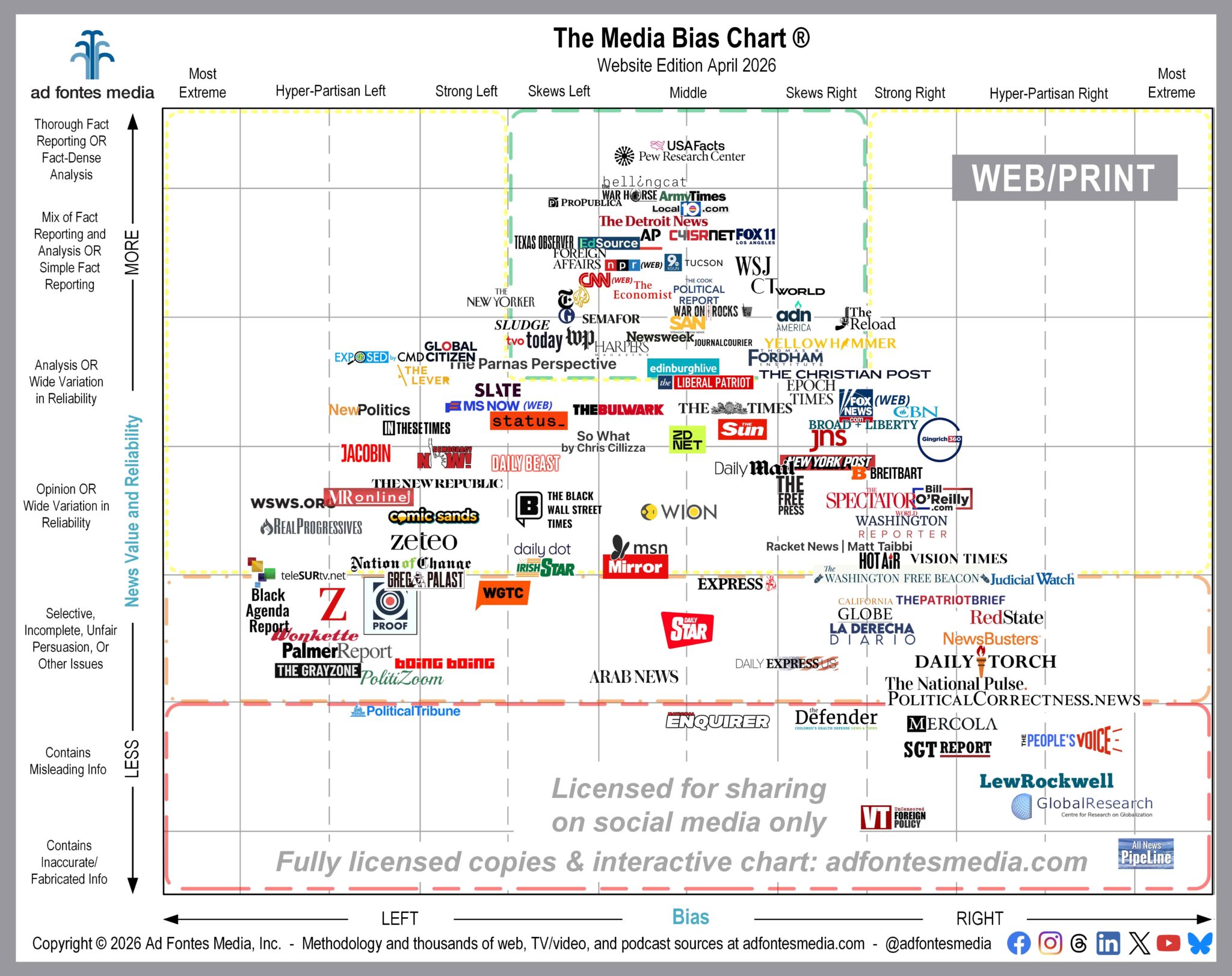
ABC News reliability scores and the ongoing debate surrounding its perceived media bias hinge on a complex mix of empirical rating methodologies, editorial standards, and shifting public perceptions. Independent media watchdog organizations evaluate the network through distinct lenses, often highlighting high factual reporting standards alongside sustained debates regarding framing, curation, and structural worldview leanings.
Evaluating the credibility of a major legacy broadcast network like ABC News requires examining how different media watchdogs operate, the distinctions between factual reporting and editorial commentary, and the broader ecosystem of media accountability. As audiences increasingly consume news through decentralized digital platforms, understanding the mechanisms behind reliability ratings helps media consumers navigate news literacy in an era of heightened political polarization.
Understanding Media Reliability and Bias Frameworks
Media reliability scores do not emerge from a single governing authority; instead, they are generated by a diverse ecosystem of independent media watchdogs, academic researchers, and journalism institutes. Each organization employs its own methodology to assess news outlets, typically scoring them on two primary axes: factual reporting and political bias.
Factual reporting measures how often an outlet publishes verifiable information, how quickly it issues corrections when errors occur, and whether it relies on credible, primary sources. Political bias, by contrast, evaluates whether the selection of stories, the framing of issues, or the choice of commentators consistently favors a particular ideological perspective—usually mapped along a left-to-right political spectrum.
Evaluating a major broadcast network like ABC News requires understanding that its output is not monolithic. A traditional evening news broadcast, an investigative documentary unit, a digital-first opinion column, and a morning talk show all operate under different structural constraints, even if they share an overarching corporate parent. Watchdog methodologies often attempt to capture this nuance, though aggregate scores necessarily smooth out individual editorial decisions.
Independent Media Watchdog Assessments of ABC News
Several prominent media evaluation organizations regularly publish assessments of ABC News. While these groups share a common goal of promoting media literacy, their specific scoring rubrics yield nuanced variations in how they categorize the network's reliability and bias.
AllSides Media Bias Ratings
AllSides, a media watchdog that utilizes blind bias surveys, editorial reviews, and independent research, typically rates ABC News (online news) as "Lean Left." This categorization indicates that while AllSides finds the network's reporting to be generally factual and reliable, its story selection and framing tend to subtly favor progressive perspectives or emphasize narratives more common on the political left. AllSides emphasizes that a "Lean Left" rating does not mean an outlet is untrustworthy or intentionally deceptive, but rather that its output exhibits a discernible ideological tilt when viewed in aggregate.
Media Bias/Fact Check (MBFC)
Media Bias/Fact Check frequently classifies ABC News as having a "Left-Center" bias based on story selection and editorial positions, while maintaining a "High" rating for factual reporting. MBFC’s evaluation notes that ABC News generally sources its reporting to reputable government agencies, scientific journals, and established news services, and that it has a strong record of correcting factual errors promptly. However, MBFC points out that opinion pieces, human-interest framing, and panel discussions on programs like This Week occasionally introduce left-leaning slants.
Ad Fontes Media (The Media Bias Chart)
Ad Fontes Media places ABC News relatively high on its interactive media bias chart, both in terms of reliability (vertical axis) and neutrality (horizontal axis). In their evaluations, ABC News typically lands in the upper-middle tiers for reliability, reflecting rigorous editorial oversight, professional journalistic standards, and institutional fact-checking processes. On the bias spectrum, Ad Fontes places the network slightly left of center, noting that while hard news reporting strives for objective balance, the network's broader editorial identity reflects mainstream corporate media norms that tend to align more comfortably with liberal social views.
| Evaluation Organization | Primary Focus of Methodology | Rated Factual Reliability | Assessed Bias Direction |
|---|---|---|---|
| AllSides | Blind bias surveys, editorial consensus, and independent research | High / Generally Reliable | Lean Left |
| Media Bias/Fact Check | Sourcing practices, correction history, and story curation | High | Left-Center |
| Ad Fontes Media | Complex content analysis, source evaluation, and expert scoring | High (Upper-Middle Tier) | Skews Slightly Left of Center |
The Core Arguments in the Ongoing Debate
The debate over ABC News reliability and bias is not confined to formal watchdogs; it is an active public discourse involving media critics, politicians, and the viewing public. These discussions generally center on three distinct areas: story selection, framing and language, and institutional accountability.
Story Selection and Omission
Critics from the political right frequently argue that media bias manifests less in outright fabrication and more in what stories are chosen for prominent coverage and which are minimized or ignored. In this view, a network may report facts accurately when covering a controversial topic, but the decision to dedicate significant airtime to certain policy debates while giving minimal attention to others creates a distorted picture of public priorities.
Conversely, defenders of the network argue that editorial judgment is an inherent necessity in journalism. With thousands of potential news items occurring daily, editors must make difficult choices based on perceived audience interest, national impact, and institutional resources. What critics call bias, defenders often describe as standard news judgment shaped by the professional consensus of professional journalists working within major metropolitan centers.
Language and Framing
Another focal point in the debate involves the specific vocabulary used by anchors, reporters, and guests. Critics often point to subtle linguistic choices—such as the adjectives used to describe legislation, social movements, or political figures—as evidence of an underlying ideological viewpoint. For instance, the choice of whether to label a policy initiative as "reform" versus "overhaul," or how an international conflict is contextualized, can subtly influence viewer perception without violating strict rules of factual accuracy.
Supporters counter that professional journalism schools and network style guides explicitly train reporters to use neutral terminology and attribute contentious claims to named sources. They argue that parsing individual words often ignores the broader context of a segment, where multiple viewpoints are frequently presented, especially on weekend public affairs programming.
Institutional Accountability and Corrections
A crucial component of media reliability is how an organization handles mistakes. ABC News, like other legacy broadcast networks, maintains formal standards and practices departments dedicated to verifying facts before broadcast and issuing corrections when errors occur. Critics acknowledge these mechanisms but sometimes question the prominence and speed of retractions, arguing that initial misleading reports reach a much larger audience than subsequent corrections.
On the other hand, media analysts note that major broadcast networks operate under intense public scrutiny. The transparency of the correction process—when compared to unregulated social media content or partisan digital blogs—remains a primary reason why independent watchdogs continue to assign high factual reliability scores to legacy news organizations.
Navigating News Consumption in a Polarized Media Ecosystem
For media consumers seeking balanced and reliable information, understanding the nuances of ABC News reliability scores and bias debates offers a practical roadmap for critical thinking. No single news outlet provides a completely neutral, exhaustive view of global events. Recognizing that professional reporting and editorial framing are distinct components of a broadcast helps viewers extract factual information while remaining aware of institutional perspectives.
Developing robust news literacy involves cross-referencing major reporting with alternative sources, paying attention to primary documentation cited in news segments, and distinguishing between hard investigative reporting and commentary or analysis. By engaging with news content through this analytical framework, audiences can better evaluate not just ABC News, but the entire contemporary media landscape.
Frequently Asked Questions
Is ABC News considered a reliable news source?
Yes, independent media watchdogs consistently rate ABC News as having high factual reliability. Organizations like Media Bias/Fact Check and Ad Fontes Media rank the network well for adhering to journalistic standards, relying on credible sources, and maintaining a formal correction process, even as they note a slight ideological lean in story curation.
What does "Lean Left" mean in the context of ABC News?
When a watchdog like AllSides rates ABC News as "Lean Left," it means the network's reporting is generally factual and trustworthy, but its choice of stories, framing, and editorial commentary tend to favor progressive perspectives or mainstream liberal viewpoints more often than conservative ones.
How do media watchdogs determine bias?
Media watchdogs use various methodologies, including blind surveys where readers evaluate articles without knowing the source, comprehensive content analysis of language and sourcing, and editorial reviews conducted by panels representing diverse political perspectives across the ideological spectrum.
Does ABC News issue corrections when it makes mistakes?
Yes, ABC News operates under established journalistic standards and practices that require the correction of factual errors. Like most major broadcast networks, it publishes corrections online and broadcasts retractions on-air when significant reporting errors are identified.
How can viewers minimize the impact of media bias in their news consumption?
Viewers can reduce the influence of bias by consuming news from multiple outlets representing different perspectives, checking primary source documents and scientific studies referenced in reports, and distinguishing between straight news reporting and opinion or commentary segments.
Conclusion and Next Action
Evaluating media reliability requires looking beyond partisan labels to examine sourcing, correction practices, and factual accuracy. To build a well-rounded media diet, readers should regularly cross-reference major legacy network reports with original source documents, independent investigative journalism, and diverse ideological perspectives to maintain a comprehensive understanding of current events.