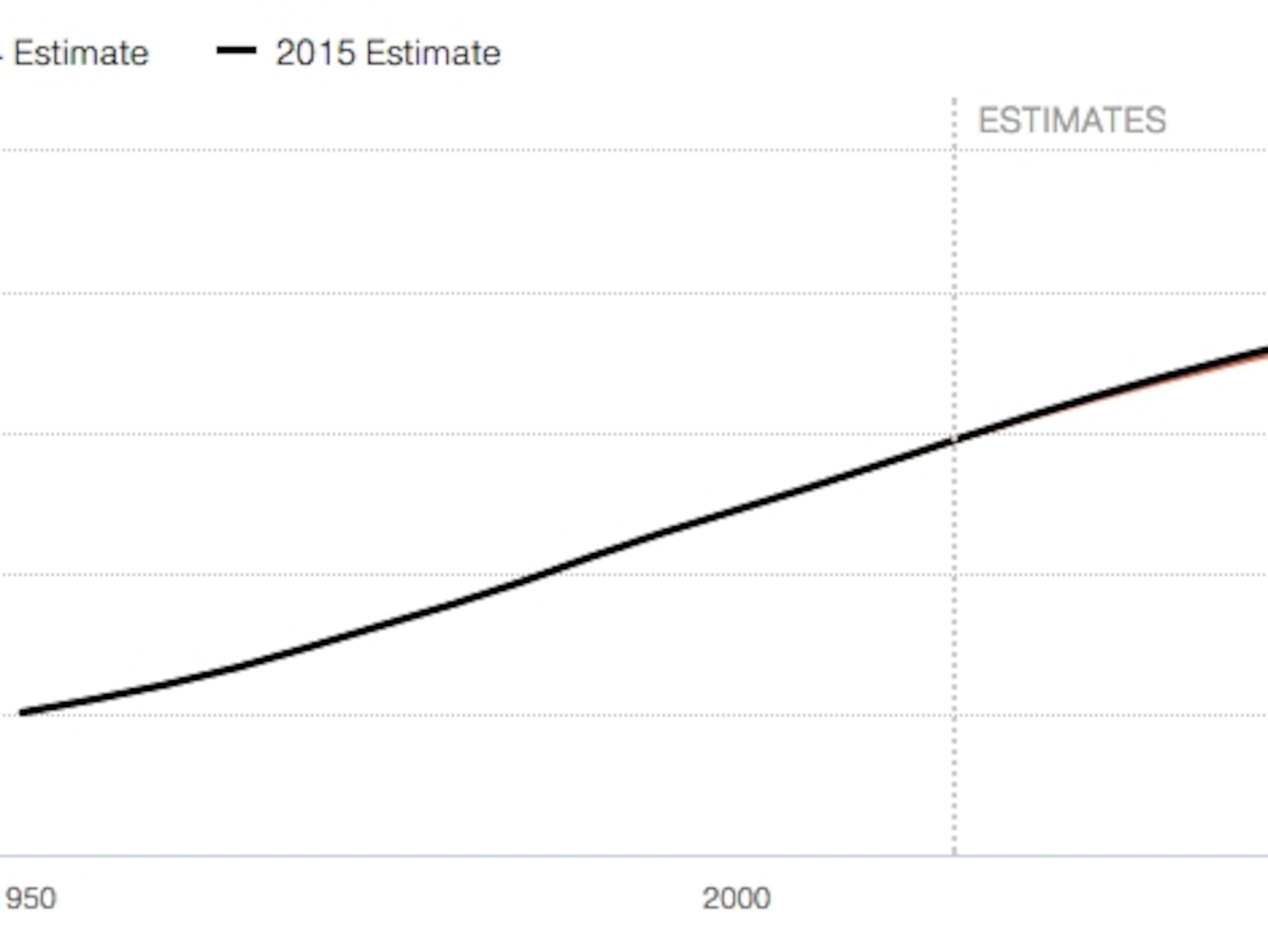
The projection of 9.8 billion people by the year 2050 represents a critical milestone in human demography, primarily driven by high fertility rates in developing nations and increasing global longevity. Established by the United Nations, this figure highlights the urgent need for sustainable infrastructure, food security, and resource management to support a planet nearing its carrying capacity.
The Origins of the 9.8 Billion Projection
The figure of 9.8 billion originates from the United Nations Department of Economic and Social Affairs (DESA) in its "World Population Prospects" reports. Specifically, the 2017 and 2019 revisions brought this number into the global spotlight as the most likely "medium-variant" scenario. As of 2026, we are currently observing these trends play out in real-time, with the global population having recently surpassed the 8 billion mark and continuing its steady climb.
Demographers arrive at the 9.8 billion estimate by analyzing three primary factors: fertility rates, mortality rates, and international migration. The UN uses a "probabilistic" approach, running thousands of simulations to determine the most probable outcome. The 9.8 billion figure assumes a "medium-variant" growth, which posits that while fertility will continue to decline globally, the sheer number of people currently in their reproductive years—a phenomenon known as demographic momentum—will ensure growth remains positive for several more decades.
It is important to distinguish this from the "high-variant" and "low-variant" projections. If fertility rates do not drop as quickly as anticipated in Sub-Saharan Africa and parts of South Asia, the 2050 population could exceed 10.5 billion. Conversely, a more rapid shift toward smaller family units globally could see the number dip closer to 9.2 billion. However, 9.8 billion remains the central benchmark for international policy planning.
Primary Drivers of Global Population Growth
To understand why the world is on track to add nearly 2 billion more people over the next 24 years, we must examine the specific mechanics of modern population change. This growth is not uniform; it is a concentrated expansion driven by two main engines.
High Fertility in Developing Regions
The most significant contributor to the 9.8 billion figure is the high Total Fertility Rate (TFR) in roughly 47 countries, most of which are classified by the UN as "Least Developed Countries." In these regions, the TFR often exceeds 4.0 or 5.0 children per woman, far above the "replacement level" of 2.1.
Cultural norms, limited access to reproductive healthcare, and the economic necessity of large families in agricultural societies contribute to these rates. Even as education levels rise and healthcare improves, the lag between these improvements and a shift in family size means that these populations will continue to double every few decades.
Increasing Life Expectancy and Healthcare
While more babies are being born in the Global South, people are also living longer in almost every corner of the world. Advances in medical technology, the eradication of several communicable diseases, and better sanitation have pushed global average life expectancy from 46 years in 1950 to over 73 years in the current era of 2026.
This "longevity revolution" means that even in countries where the birth rate has slowed significantly, the population does not shrink immediately because the existing generations are surviving well into their 80s and 90s. This creates a "top-heavy" demographic profile in developed nations while the Global South remains "bottom-heavy" with youth.
Regional Shifts: Where the Growth is Concentrated
The journey toward 9.8 billion is largely a story of two continents: Africa and Asia. Between now and 2050, more than half of the global population growth is expected to occur in Africa.
Sub-Saharan Africa's Demographic Boom
Sub-Saharan Africa is the only region in the world that will continue to see substantial growth through the end of the century. By 2050, it is estimated that one in every four people on Earth will be African. Countries like Nigeria, the Democratic Republic of the Congo, Ethiopia, and Tanzania are projected to be among the top contributors to this surge.
Nigeria, in particular, is on a trajectory to surpass the United States as the world’s third-most populous country shortly before 2050. This rapid growth presents a "demographic dividend" opportunity—a large working-age population that can drive economic growth—but only if the infrastructure exists to educate and employ them.
The Asian Transition: India vs. China
Asia remains the most populous region, but its growth patterns are shifting. India has already surpassed China as the world's most populous nation (a milestone confirmed early in the 2020s). While China’s population has begun a slow decline due to decades of low fertility and an aging workforce, India’s population continues to grow, albeit at a slower pace than in previous decades.
The United Nations Population Division provides detailed data sets showing that by 2050, the "center of gravity" of the world's population will have shifted definitively toward the Indian Ocean basin and the African continent.
Comparison of Population Projections (2026 vs. 2050)
The following table outlines the projected shifts in population by major geographic region based on current 2026 estimates and the target 2050 projection.
| Region | Estimated Population 2026 (Billions) | Projected Population 2050 (Billions) | Growth Percentage (Approx.) |
|---|---|---|---|
| Africa | 1.52 | 2.50 | 64% |
| Asia | 4.85 | 5.30 | 9% |
| Europe | 0.74 | 0.71 | -4% |
| Latin America & Caribbean | 0.68 | 0.76 | 12% |
| Northern America | 0.38 | 0.43 | 13% |
| Oceania | 0.045 | 0.055 | 22% |
| Global Total | ~8.22 | 9.80 | 19% |
Note: Figures are based on medium-variant projections and current 2026 demographic trends.
The Challenges of a 9.8 Billion Person Planet
Reaching a population of 9.8 billion is not merely a statistical milestone; it is a massive logistical and environmental challenge. The strain on the planet’s systems will be unprecedented.
Food Security and Sustainable Agriculture
To feed 9.8 billion people, global food production must increase by approximately 70%. This is complicated by the fact that the most fertile land is already in use, and climate change is making crop yields less predictable.
Solving this requires a move away from resource-intensive meat production toward plant-based diets and cellular agriculture. Furthermore, the Food and Agriculture Organization of the United Nations (FAO) emphasizes the need for "precision agriculture"—using AI and satellite data to optimize water and fertilizer use—to prevent total soil depletion.
Urbanization and Infrastructure Stress
By 2050, nearly 70% of the world’s population will live in cities. We are seeing the rise of "megacities"—urban areas with more than 10 million residents—particularly in Asia and Africa. Lagos, Kinshasa, and Delhi are expanding at rates that outpace their ability to provide basic services.
Without massive investment in mass transit, affordable housing, and waste management, these cities risk becoming hubs of extreme inequality and public health crises. The challenge for 2026 and beyond is to build "smart cities" that can absorb thousands of new residents every day without collapsing.
Resource Scarcity: Water and Energy
Water scarcity is perhaps the most immediate threat. According to the World Health Organization (WHO), billions of people already face seasonal water shortages. A population of 9.8 billion will require double the current freshwater supply for agriculture, industry, and domestic use.
Similarly, energy demand will skyrocket. The transition to renewable energy must happen at an accelerated pace to ensure that the 9.8 billion people of 2050 do not inherit a planet devastated by runaway carbon emissions.
The Economic Implications: Opportunities and Risks
The economic impact of reaching 9.8 billion is a double-edged sword. On one hand, a larger population means a larger global market and a larger pool of potential innovators. On the other hand, it places immense pressure on the global financial system to provide social safety nets.
The Demographic Dividend
Countries with young, growing populations (like many in Africa and South Asia) have the potential for a "demographic dividend." This occurs when the working-age population (15–64) is larger than the dependent population (children and the elderly). If these young people are educated and integrated into the global economy, they can drive unprecedented levels of GDP growth and innovation.
The Aging Crisis in the Global North
In contrast, Europe, Japan, and parts of North America are facing a "silver tsunami." By 2050, the number of people aged 65 or over is expected to double. This creates a shrinking tax base and a soaring demand for healthcare and pension funding. These regions may become increasingly dependent on migration from high-growth areas to maintain their economies, leading to significant geopolitical and social shifts.
Mitigation and Policy Responses
How the world handles the path to 9.8 billion depends on the policy decisions made today, in 2026. Two areas are of paramount importance.
Education and Women’s Empowerment
History shows that the most effective "contraceptive" is education. When women have access to secondary education and economic opportunities, they tend to choose smaller families and invest more in each child’s health and schooling. Policies that support gender equality are not just social imperatives; they are the most effective way to manage global population growth sustainably.
Technological Innovation
From desalination plants to lab-grown meat and carbon capture technology, the survival of 9.8 billion people depends on the "technological leapfrog." Developing nations need to skip the "coal and internal combustion" phase of development and move straight to green grids and electric transport. International cooperation and technology transfer from the Global North to the Global South will be the deciding factor in whether 2050 is a year of prosperity or a year of crisis.
Frequently Asked Questions
Will the population actually stop growing at 9.8 billion?
No, 9.8 billion is the estimate for the year 2050. Most demographic models, including those from the UN, suggest that the global population will continue to grow until it peaks at approximately 10.4 to 11 billion around the year 2100. However, the rate of growth is slowing significantly, and many countries are already seeing their populations decline.
Is "overpopulation" the right term for this growth?
Many demographers prefer the term "resource mismanagement" over "overpopulation." The planet technically has enough resources to support 9.8 billion people, but not at the current consumption levels of the wealthiest nations. The challenge is distributing resources equitably and reducing the per-capita environmental footprint.
Which countries will see the most growth between now and 2050?
The UN identifies nine countries that will account for more than half of the projected growth: India, Nigeria, Pakistan, the Democratic Republic of the Congo, Ethiopia, the United Republic of Tanzania, Indonesia, Egypt, and the United States (primarily due to migration).
How does climate change affect these projections?
Climate change acts as a "threat multiplier." While it doesn't directly change the number of people born, it affects where they can live. We are already seeing "climate refugees" moving from uninhabitable equatorial regions toward more temperate zones. This migration can lead to political instability and shifts in regional population densities that the 9.8 billion figure doesn't fully capture.
What is the "replacement level" fertility rate?
The replacement level is roughly 2.1 children per woman. This is the average number of children a woman needs to have to "replace" herself and her partner, accounting for some infant mortality. When a country's TFR falls below this number, its population will eventually begin to shrink unless bolstered by immigration.
Final Recommendation for Stakeholders
As we navigate the years leading up to 2050, the most critical action for governments and private organizations is to invest in human capital. For developing nations with high growth, this means prioritizing universal education and reproductive healthcare. For developed nations with aging populations, it means rethinking immigration policies and investing in automation to sustain productivity. Monitoring the World Bank Open Data and UN updates regularly is essential for any organization involved in long-term strategic planning, as these figures are the foundation of future global stability.