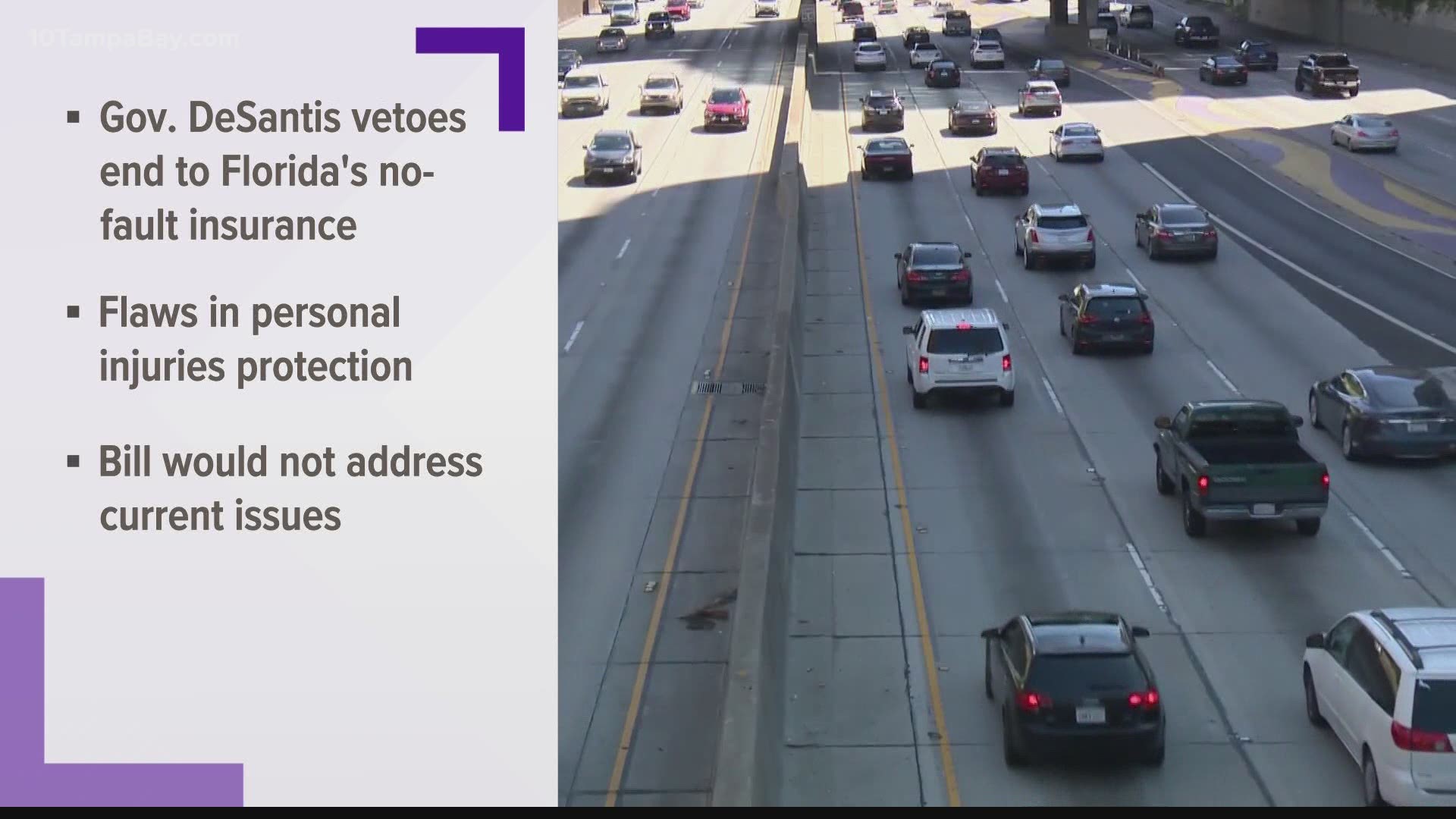
Florida no-fault auto insurance requires drivers to carry Personal Injury Protection (PIP) to cover their own medical expenses and lost wages up to $10,000 after an accident, regardless of who caused the collision. Understanding these statutory requirements helps motorists maintain compliance, secure proper medical care, and navigate the state's unique tort liability laws.
Operating a motor vehicle in the Sunshine State requires a firm grasp of how regional regulations dictate financial responsibility following a traffic collision. Unlike traditional fault-based states where the at-fault driver's insurance bears the primary financial burden, Florida operates under a unique system governed by the Florida Motor Vehicle No-Fault Law. This framework is designed to ensure prompt payment of medical benefits without requiring lengthy court battles to determine liability. However, navigating this system can be complex for both new residents and lifelong motorists. To help clarify the mechanics of this system, examining five critical aspects of Florida no-fault auto insurance provides a comprehensive foundation for compliance and financial protection.
1. Mandatory Personal Injury Protection (PIP) Coverage
At the core of Florida’s no-fault system is the mandatory requirement for Personal Injury Protection, commonly referred to as PIP. Under Florida Statutes § 627.736, every owner of a motor vehicle registered in the state must maintain a minimum of $10,000 in PIP coverage. This requirement extends to vehicles with four or more wheels, excluding taxis and certain limousines, provided the vehicle is operated within the state for more than 90 days during the preceding 365 days.
The primary function of PIP is to provide immediate, barrier-free financial relief for medical expenses and disability costs resulting from an auto accident. When a policyholder or an eligible family member is injured in a crash, their own insurance company pays out these benefits regardless of who caused the collision. This design bypasses the traditional, time-consuming process of establishing fault before medical care can be rendered.
To maintain compliance, drivers must purchase this coverage from an insurance carrier licensed to write motor vehicle insurance in Florida. Lapsing on this coverage can lead to severe administrative penalties, including the suspension of driving privileges and vehicle registration, as well as reinstatement fees.
What PIP Covers
PIP benefits are designed to absorb the immediate financial shock of an accident by covering a specific percentage of economic losses:
- Medical Expenses: Typically covers 80% of necessary and reasonable medical bills incurred for treatment related to the accident.
- Disability Benefits: Generally covers 60% of lost wages and loss of earning capacity if an injury prevents the insured from working.
- Replacement Services: Covers costs for household services—such as cleaning or childcare—that the injured party can no longer perform themselves.
- Death Benefits: Provides an additional $5,000 in death benefits per individual, separate from the medical and disability limits.
2. The 14-Day Rule and Initial Medical Treatment
Securing PIP benefits in Florida is contingent upon strict adherence to procedural timelines, most notably the "14-Day Rule." Under Florida law, an injured motorist must seek initial services and care from an authorized medical provider within 14 days of the motor vehicle accident to be eligible for PIP medical benefits. Failing to see a qualified professional within this two-week window can result in the complete denial of PIP medical coverage for that claim.
This rule places a heavy emphasis on prompt medical evaluation, even if injuries seem minor or latent at the scene of the crash. Adrenaline and shock often mask symptoms of whiplash, soft-tissue damage, or internal trauma, leading drivers to delay care. However, waiting until the 15th day or later to seek a diagnosis forfeits the statutory right to utilize the $10,000 PIP benefit for those injuries.
Qualified Medical Providers
Not all healthcare providers satisfy the criteria required to unlock the full scope of PIP benefits. To qualify under the initial services mandate, treatment must be rendered by specific licensed professionals:
- Medical doctors (MD)
- Osteopathic physicians (DO)
- Chiropractors (DC)
- Dentists (for dental injuries)
- Hospitals or licensed ambulatory surgical centers
- Emergency transport providers (such as emergency medical technicians or paramedics)
Emergency Medical Condition (EMC) Requirement
Even if a motorist meets the 14-day rule, accessing the full $10,000 limit depends on a subsequent clinical determination. If a qualified medical provider does not formally diagnose the insured with an Emergency Medical Condition (EMC), the PIP benefit is legally capped at $2,500. An EMC is defined as a medical condition manifesting itself by acute symptoms of sufficient severity—including severe pain—such that the absence of immediate medical attention would result in serious jeopardy to patient health, bodily function, or organ dysfunction. If an EMC is diagnosed, the full $10,000 limit becomes accessible for ongoing treatment.
3. Mandatory Property Damage Liability (PDL) Insurance
While Personal Injury Protection covers bodily injury and medical costs regardless of fault, Florida law also mandates a second core coverage: Property Damage Liability (PDL). Governed by Florida Statutes § 627.73725 and related statutes, drivers must carry a minimum of $10,000 in PDL insurance.
Unlike PIP, which pays for the insured's own injuries, PDL pays for damage that the insured driver causes to another person’s property. This typically includes other vehicles, but it also extends to public infrastructure, guardrails, mailboxes, and residential property damaged during a collision.
| Coverage Type | Minimum Required Limit |
|---|---|
| Personal Injury Protection (PIP) | $10,000 |
| Property Damage Liability (PDL) | $10,000 |
Relying solely on the state-mandated minimum of $10,000 for PDL presents a significant financial risk. Modern automobiles frequently exceed this value, and multi-vehicle pileups or accidents involving luxury cars or commercial property can quickly surpass $10,000 in damages. If repair costs exceed the policy limit, the at-fault driver remains personally liable for the remaining balance, exposing their personal assets to lawsuits and judgments.
4. The No-Fault Tort Threshold and Exceeding PIP Limits
A common misconception about Florida’s no-fault system is that drivers can never sue an at-fault motorist for damages. While PIP restricts lawsuits for minor injuries, Florida law preserves the right to pursue a traditional bodily injury liability claim—often called stepping outside the no-fault system—under specific statutory conditions.
To legally sue an at-fault driver for pain, suffering, mental anguish, and inconvenience, the injured party must cross the tort threshold established by Florida Statutes § 627.737. Minor or temporary injuries do not clear this hurdle; instead, the plaintiff must prove they suffered one of the following:
- Significant and permanent loss of an important bodily function.
- Permanent injury within a reasonable degree of medical probability, other than scarring or disfigurement.
- Significant and permanent scarring or disfigurement.
- Death.
When injuries exceed the $10,000 PIP limit and meet the tort threshold, the injured motorist can file a bodily injury claim or lawsuit against the negligent driver’s bodily injury liability insurance. It is worth noting that Florida does not legally mandate standard Bodily Injury Liability (BIL) coverage for private passenger vehicles, making it vital for motorists to purchase optional BIL coverage to protect themselves if they cause an accident injuring someone else.
5. Continuous Coverage Requirements and Penalties for Lapses
Maintaining active auto insurance in Florida is an ongoing legal obligation, not a one-time transaction. The Florida Department of Highway Safety and Motor Vehicles (FLHSMV) utilizes an electronic insurance verification system that matches vehicle registrations with active insurance policy data provided by carriers.
If an insurance policy is canceled, expires, or terminates without a seamless transition to a new policy, the insurance carrier electronically notifies the state. This triggers an immediate administrative review. A lapse in coverage—even for a single day—carries swift and severe penalties designed to keep uninsured motorists off the road.
Consequences of an Insurance Lapse
- Suspension of Driving Privilege: The state will suspend the registered owner's driver license for up to three years or until proof of current insurance is provided.
- Suspension of Vehicle Registration: The license plate and vehicle registration are suspended, preventing legal operation of the automobile.
- Reinstatement Fees: To clear a suspension, motorists must pay steep administrative fees that escalate with subsequent offenses:
- First offense: $150
- Second offense: $250
- Third or subsequent offense: $500
- SR-22 Requirement: Habitual offenders or drivers caught driving without insurance may be required to file an SR-22 form—a certificate of financial responsibility—which typically drives up future premium rates significantly.
Disclaimer: Insurance regulations, statutory limits, and legal interpretations can change. Motorists should consult directly with the Florida Department of Highway Safety and Motor Vehicles or a licensed insurance professional for guidance tailored to their specific circumstances.
Frequently Asked Questions
What happens if I am injured in a car accident in Florida and do not have PIP insurance?
Driving without mandatory PIP insurance violates Florida law and exposes you to severe personal financial liability. If you are injured while operating your uninsured vehicle, you lose access to the statutory $10,000 PIP medical benefit, meaning you must pay out of pocket for all medical care. Additionally, you face mandatory driver's license suspension, vehicle registration revocation, and reinstatement fees.
Does Florida PIP cover me if I am a passenger or a pedestrian?
Yes. Florida PIP is designed to follow the insured individual. If you own a registered vehicle and carry PIP, that policy typically covers you if you are injured as a pedestrian or while riding as a passenger in someone else's car. If you do not own a car and live with a relative who does, you may be covered under their household policy. If no household policy exists, you may seek coverage through the insurance policy of the vehicle involved in the crash.
Can I use health insurance instead of buying PIP auto insurance in Florida?
No. Purchasing a dedicated Florida auto insurance policy with PIP and PDL is a legal requirement for vehicle registration, regardless of whether you have private health insurance. While private health insurance or Medicare/Medicaid may help cover medical bills that exceed your PIP limits or fall outside the 80% reimbursement rate, health insurance cannot replace the mandatory PIP policy required by the state.
How does the 14-day rule affect chiropractic care after an accident?
The 14-day rule requires that you receive initial medical services from a qualified provider—which explicitly includes licensed chiropractors—within 14 days of the accident. If you see a chiropractor within this window, your visits can qualify for PIP coverage up to your policy limits. Waiting until day 15 or later to visit a chiropractor will result in the denial of PIP coverage for those treatments.
What is the difference between PIP and Bodily Injury Liability (BIL) in Florida?
Personal Injury Protection (PIP) is a no-fault coverage that pays your own medical bills and lost wages up to $10,000 after an accident, regardless of who caused it. Bodily Injury Liability (BIL), on the other hand, pays for injuries you cause to other people when you are at fault in an accident. Unlike PIP, standard BIL coverage is not strictly mandatory for all private passenger vehicles in Florida, though carrying it is strongly recommended to avoid personal lawsuits.
Next Steps for Florida Motorists
To ensure full compliance and adequate protection, review your current auto insurance declarations page today. Verify that your policy meets or exceeds the mandatory $10,000 PIP and $10,000 PDL thresholds, and consider adding optional Bodily Injury Liability and uninsured motorist coverages to safeguard your personal assets against unexpected liabilities on the road.