Integrating 3D avatar chat with edge computing reduces latency, offloads heavy rendering tasks from client devices, and processes real-time conversational AI locally or regionally to deliver responsive, immersive digital interactions.
Understanding the Convergence of 3D Avatars and Edge Computing
The convergence of interactive 3D avatars and edge computing represents a significant shift in how real-time digital communication and conversational agents are deployed. Traditional implementations of animated avatars—whether for customer service kiosks, virtual reality environments, or web-based applications—rely heavily on centralized cloud servers. In a cloud-centric architecture, video streams, audio feeds, and state synchronizations must travel from the client device to a remote datacenter, where heavy computation takes place, before traveling all the way back. This round-trip journey introduces noticeable latency, leading to sluggish animations, disjointed conversational flow, and bandwidth congestion.
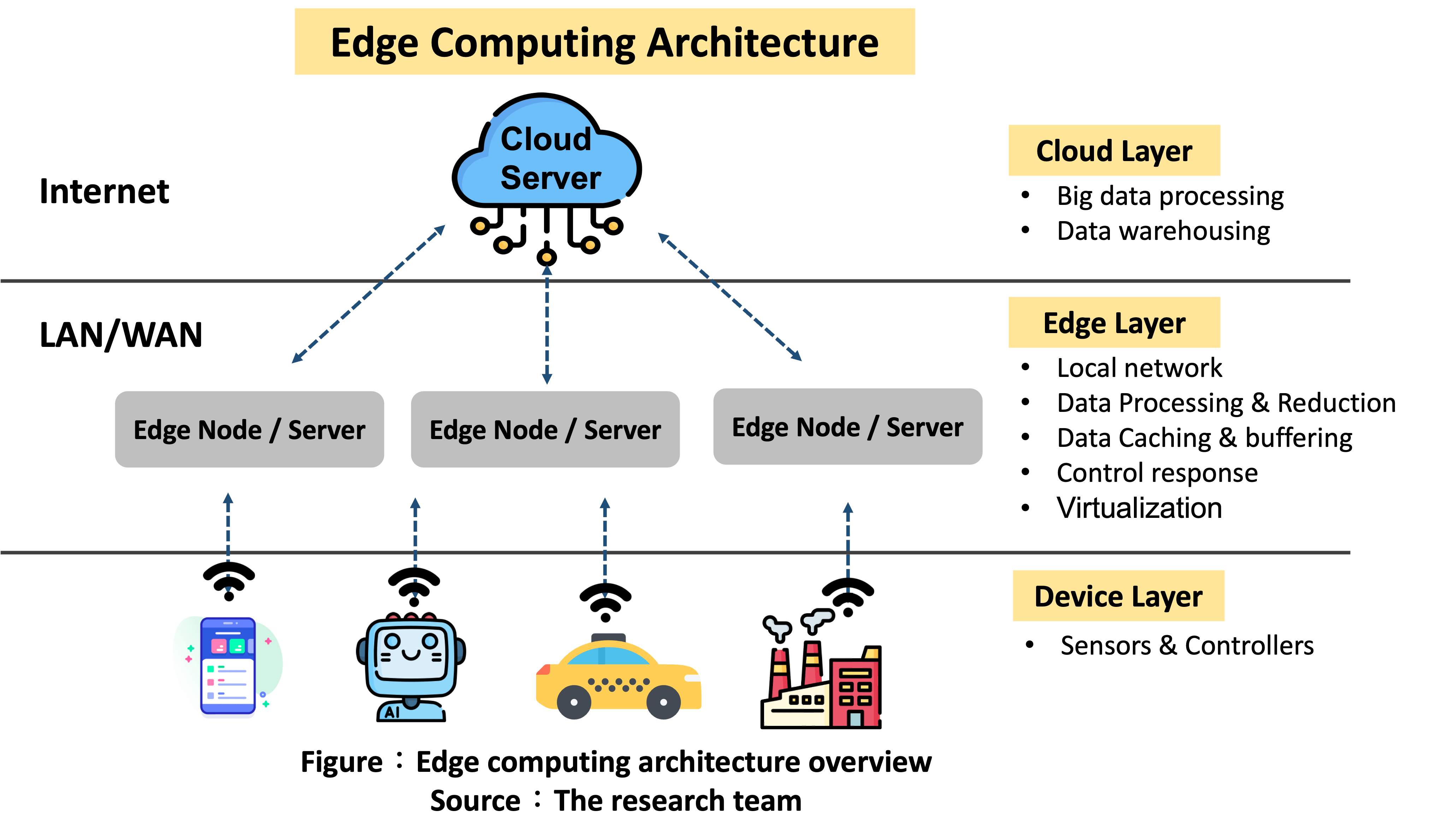
Edge computing alters this dynamic by pushing processing power, data storage, and rendering capabilities closer to the end-user. By decentralizing these workloads, network infrastructure can handle the massive throughput required for real-time 3D graphics and natural language processing (NLP) without overwhelming central servers. In an edge-optimized 3D avatar chat system, tasks are partitioned strategically. Lightweight client devices handle local user inputs and final display, regional edge nodes execute low-latency inference for conversational models and lightweight mesh updates, and distant cloud datacenters handle heavy periodic training and master asset storage.
The Problem of Latency in Conversational Interfaces
When humans interact with conversational agents, whether text-based or embodied in a 3D avatar, psychological tolerance for delay is remarkably low. Studies in human-computer interaction indicate that conversational latency exceeding 200 to 300 milliseconds breaks the illusion of natural, fluid dialogue. In a standard cloud-based 3D avatar application, network propagation delay alone can easily consume 100 milliseconds, leaving very little time for speech-to-text conversion, large language model (LLM) generation, text-to-speech (TTS) synthesis, facial blendshape calculation, and video encoding.
Edge computing directly addresses this bottleneck by positioning the computational nodes—such as multi-access edge computing (MEC) servers or local edge gateways—within single-digit millisecond distance from the user. By minimizing physical distance, network jitter and packet loss are drastically reduced. This stability ensures that the audio response matches the visual movement of the avatar's lips in real-time, preserving synchrony and maintaining user engagement.
Core Architectural Components of Edge-Based 3D Avatar Systems
Deploying a functional 3D avatar chat ecosystem at the edge requires a well-orchestrated pipeline of hardware, software protocols, and machine learning models. Each component must be carefully optimized to operate within the resource constraints of edge servers while maintaining high visual fidelity and conversational accuracy.
Client-Side Layer and Device Heterogeneity
The client device acts as the presentation and capture layer. Depending on the deployment scenario, the client might be a high-end desktop browser utilizing WebGL or WebGPU, a standalone virtual reality headset, a mobile smartphone app, or a smart kiosk with specialized touchscreen hardware.
- Input Capture: The client captures microphone audio and webcam input (if emotional or gesture tracking is required).
- Local Preprocessing: Noise suppression and basic voice activity detection (VAD) are often executed locally on the client to minimize upstream data transmission.
- Rendering and Presentation: Modern edge architectures often leverage progressive mesh streaming or client-side rendering where the base avatar model is cached locally, and only lightweight animation parameters (such as visemes and bone rotation matrices) are streamed from the edge node.
Edge Node Infrastructure and Processing Pipelines
The edge node is the workhorse of the architecture. Situated at the network edge—often co-located with 5G cellular base stations or enterprise local area networks—these nodes possess specialized hardware accelerators such as Graphics Processing Units (GPUs) or Tensor Processing Units (TPUs).
- Speech-to-Text (STT): Incoming audio streams are transcribed locally using optimized models like Whisper variants or lightweight streaming conformer networks.
- Conversational AI / LLM Inference: Quantized large language models or specialized dialog managers generate the textual response. Quantization (e.g., INT4 or INT8 formats) is essential here to fit models within the memory constraints of edge hardware while retaining semantic coherence.
- Text-to-Speech (TTS) and Viseme Generation: The text response is converted into synthetic audio while simultaneously generating time-stamped visemes (visual phoneme representations) that dictate how the avatar's mouth should move.
- Animation Mapping: Facial animation parameters and skeletal transformations are computed and packaged into compact data packets for transmission back to the client.
Data Flow and Protocol Optimization
Achieving real-time performance in 3D avatar chat over edge networks requires careful selection of communication protocols. Traditional HTTP-based request-response cycles introduce too much overhead for continuous interactive streams.
Protocol Comparison for Edge Streaming
| Protocol | Transport Layer | Latency Profile | Overhead | Best Use Case |
|---|---|---|---|---|
| WebRTC | UDP / ICE / STUN | Ultra-low (<50ms) | Low | Real-time audio, video, and data channel streaming between edge node and client. |
| gRPC / HTTP/2 | TCP / TLS | Low to Moderate | Moderate | High-performance Remote Procedure Calls for sending structured animation data and text. |
| WebSockets | TCP / TLS | Low | Low to Moderate | Persistent bidirectional communication for state synchronization and chat events. |
| MQTT | TCP | Low | Minimal | Lightweight IoT sensor integration and edge telemetry reporting. |
WebRTC has emerged as the dominant protocol for high-performance edge streaming because it operates over UDP and supports secure peer-to-peer or peer-to-server data channels. By bypassing TCP's strict retransmission delays, WebRTC ensures that even if an occasional frame of animation data is dropped, the stream does not stutter or pause, maintaining continuous motion.
Technical Implementation Challenges
While edge computing solves many latency issues, implementing a 3D avatar chat system introduces unique engineering hurdles that must be managed through specialized optimization strategies.
Resource Constraints at the Edge
Unlike hyperscale cloud datacenters with virtually limitless power and cooling, edge nodes are often resource-constrained in terms of CPU cores, GPU memory (VRAM), and thermal dissipation capacity. When multiple concurrent users connect to a single edge node to interact with complex 3D avatars, the node can quickly run out of VRAM due to concurrent LLM context windows and real-time rendering buffers.
To mitigate this, engineers employ several mitigation techniques:
- Model Pruning and Quantization: Reducing model parameter sizes to decrease memory footprints without significant accuracy loss.
- Dynamic Batching: Grouping incoming requests from multiple users into single inference batches to maximize GPU utilization.
- State Caching: Storing conversational history and user session states in fast edge memory caches (such as Redis instances deployed locally on the edge node).
Bandwidth Management and Variable Network Conditions
Edge computing is frequently deployed in mobile or wireless environments (such as 5G campus networks or urban IoT deployments) where network conditions fluctuate unpredictably. A sudden drop in available bandwidth can cause video degradation or audio desynchronization.
To combat this, adaptive bitrate (ABR) streaming algorithms are adapted for 3D avatar pipelines. If network throughput drops, the system can dynamically switch from streaming a full rendered video feed to streaming lightweight skeletal and blendshape parameters, allowing the client device to handle the rendering locally using its own GPU.
Security, Privacy, and Data Governance
Interactive 3D avatar chat applications often handle sensitive user data, including biometric inputs (facial scans, voice prints), personal conversational history, and enterprise proprietary information. Processing this data at the edge offers inherent privacy advantages over centralized cloud architectures, but it also introduces specific compliance requirements.
Edge Privacy Advantages
By keeping data processing localized to regional edge nodes or enterprise premises, organizations can significantly reduce the attack surface. Data does not need to traverse multiple public internet hops to reach a distant cloud datacenter, minimizing exposure to interception. Furthermore, sensitive voice and video streams can be processed in volatile memory and discarded immediately after inference, satisfying strict data minimization principles mandated by regulations such as the General Data Protection Regulation (GDPR) and the California Consumer Privacy Act (CCPA).
Security Best Practices
- End-to-End Encryption: All communication channels between the client and the edge node must be encrypted using Transport Layer Security (TLS) for control planes and Secure Real-time Transport Protocol (SRTP) for media planes.
- Secure Enclaves: Utilizing hardware-based trusted execution environments (TEEs) on edge servers to protect model weights and user session data from unauthorized access by host administrators.
- Identity and Access Management (IAM): Implementing token-based authentication (such as JSON Web Tokens) to ensure that only authorized clients can initiate avatar chat sessions with specific edge nodes.
Frequently Asked Questions
What is the primary benefit of using edge computing for 3D avatar chat?
The primary benefit is ultra-low latency. By processing natural language models, speech synthesis, and animation data on edge servers close to the user, round-trip travel time is minimized, ensuring that the avatar's speech, audio, and visual movements remain fluid and synchronized.
How do edge nodes handle resource contention when multiple users access avatars simultaneously?
Edge nodes manage resource contention using techniques such as model quantization to reduce memory footprints, dynamic batching to optimize GPU processing, and adaptive streaming protocols that shift rendering tasks to client devices when network or server loads peak.
Can 3D avatar chat run entirely offline on an edge device?
Yes, lightweight models can be deployed locally on powerful client edge devices (such as modern smartphones or XR headsets) for fully offline operation, though capabilities are typically limited compared to configurations backed by a networked edge server node.
What protocols are best suited for streaming avatar animations from the edge?
WebRTC is widely considered the best protocol for real-time edge streaming because it supports low-latency UDP transmission for audio, video, and custom data channels, avoiding the head-of-line blocking issues associated with standard TCP protocols.
How does edge computing protect user privacy in conversational applications?
Edge computing minimizes data exposure by processing sensitive voice, video, and text inputs locally or on regional servers rather than transmitting them to centralized cloud datacenters, allowing organizations to comply more easily with strict data governance laws.
Conclusion and Next Actions
Implementing 3D avatar chat in edge computing architectures requires a balanced approach to hardware provisioning, protocol selection, and machine learning model optimization. Engineering teams should begin by auditing their current latency bottlenecks across the speech, NLP, and rendering pipelines. Next, prototype a hybrid architecture using WebRTC for transport and quantized models on regional edge nodes to measure performance gains before scaling production deployments.