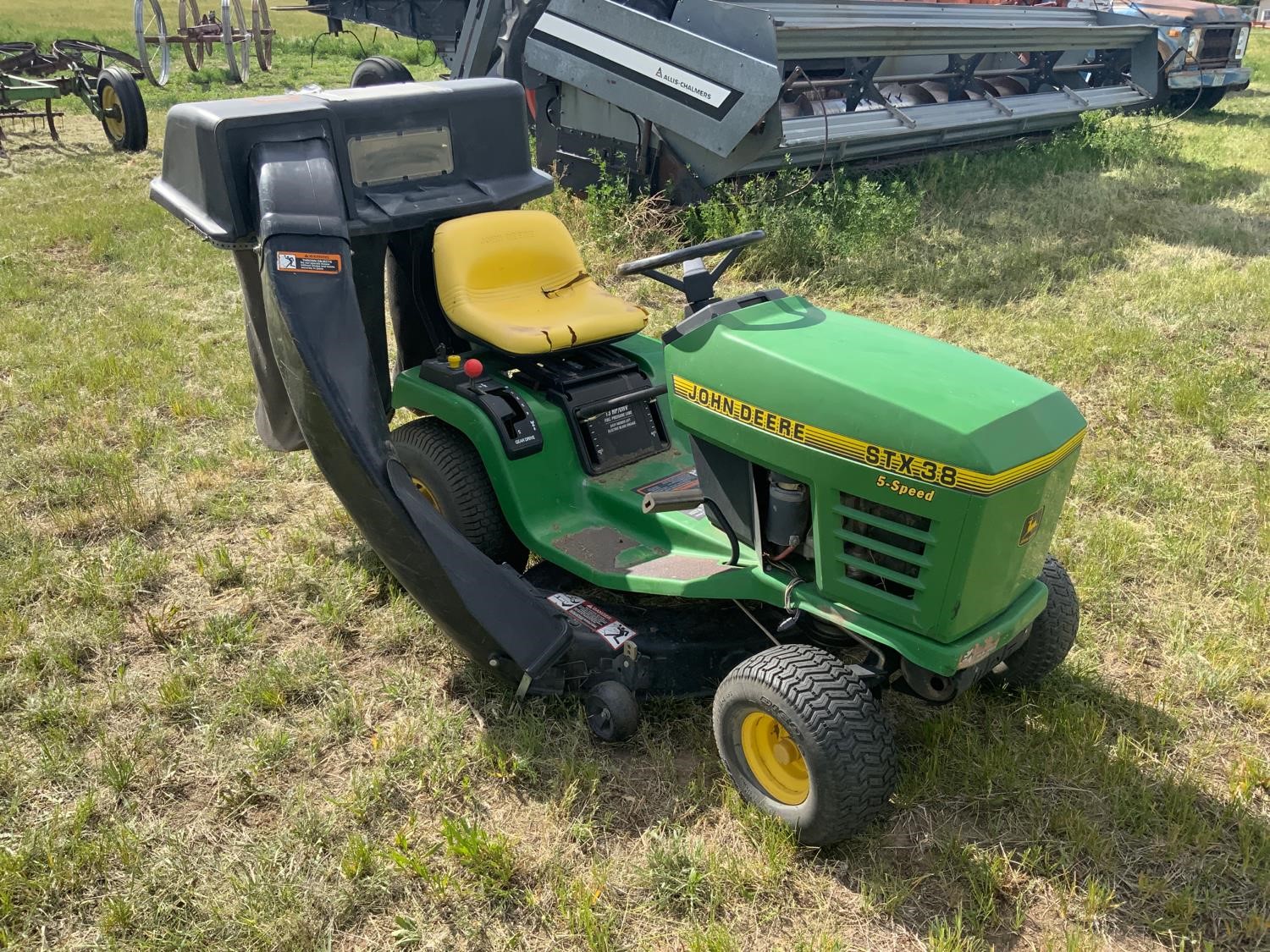
The John Deere STX38 remains a legendary piece of turf equipment, representing an era of robust small-horsepower riding lawn mowers built with heavy-gauge steel, simplistic mechanical designs, and repairable components that outlast modern consumer-grade alternatives.
When John Deere introduced the STX38 in the late 1980s, the landscape of residential lawn care was shifting. Homeowners with large properties required affordable, comfortable machines that bridged the gap between expensive commercial front-engine riders and traditional rear-engine riders. The STX38—standing for "S" (small/special), "T" (tractor), "X" (transaxle or automatic/gear variation), with a 38-inch deck—filled this market requirement with exceptional mechanical durability. Today, looking back at a multi-decade legacy spanning roughly four decades, this machine is celebrated not just as an old lawn tractor, but as a masterclass in accessible, end-user-serviceable engineering.
Understanding the STX38 Lineage and Market Position
The STX series was introduced by John Deere in the late 1980s (specifically beginning production around 1988) and continued through the late 1990s. Within this lineup, the STX38 established itself as the flagship model due to its versatility and balanced footprint. It was designed to compete directly with other entry-level residential lawn tractors of the era, offering a step up in build quality compared to department store brands while remaining far more affordable than commercial-grade ZTrak or 300/400 series machines.
What sets the legacy of the STX38 apart is its staying power. While thousands of contemporary mowers from competing brands have long since rusted into scrap yards, a remarkable number of STX38 units remain operational. This longevity stems from a design philosophy prioritizing mechanical simplicity over complex electronics, integrated circuit boards, or proprietary plastic body panels.
Engineering and Technical Specifications
The enduring reputation of the STX38 rests heavily on its powertrain options and robust chassis architecture. Over its production run, John Deere offered the STX38 with two distinct engine configurations, which buyers and restorers must understand when sourcing parts.
Engine Variants: Kohler vs. Briggs & Stratton
Early production models of the STX38 were powered by single-cylinder Kohler Magnum (KT17 or similar Magnum variants, though predominantly Kohler Command or Magnum 12.5 hp horizontal-shaft engines adapted for vertical output, or specific Kohler CV series engines depending on the exact year). Later production models transitioned to single-cylinder Briggs & Stratton engines (typically around 12.5 to 13 horsepower).
- Kohler-Powered Units: Generally praised by purists for their cast-iron cylinder liners, heavier flywheels, and industrial-grade durability. These engines often run smoother under heavy load and tolerate minor neglect well.
- Briggs & Stratton-Powered Units: Highly regarded for widespread parts availability, ease of carburetor rebuilding, and straightforward electrical systems.
Transmission Types: Gear-Drive vs. Automatic (Hydrostatic)
The STX38 was manufactured in two primary transmission configurations, denoted by subtle dashboard and shifter differences:
- Gear-Drive (5-Speed): Utilizes a peerless manual transaxle with a five-speed forward shift pattern and reverse. This variant is favored by users who value mechanical simplicity, zero fluid maintenance, and direct power transfer to the rear wheels.
- Hydrostatic (Automatic): Utilizes a foot-controlled hydrostatic transaxle (often Eaton-based). While requiring occasional fluid/filter checks and careful cooling management, it offers infinitely variable ground speed, making it vastly superior for intricate mowing around landscaping obstacles.
Deck and Cutting Performance
The defining feature of the STX38 is its 38-inch stamped-steel mower deck. Available in both yellow-painted commercial-style decks and later green variants, the deck uses a two-blade configuration. Unlike modern thin-gauge stamped decks that flex and warp upon striking hidden tree roots, the STX38 deck features thick steel construction that resists twisting. The deck height is adjustable via a fender-mounted lever, offering precise cutting heights from roughly 1.5 inches to 3.5 inches.
| Feature / Specification | Gear-Drive Model | Hydrostatic (Automatic) Model |
|---|---|---|
| Transmission | 5-Speed Manual Transaxle | Foot-Controlled Hydrostatic |
| Engine Options | Kohler or Briggs & Stratton (~12.5 hp) | Kohler or Briggs & Stratton (~12.5 hp) |
| Deck Size | 38-inch, 2-Blade Stamped Steel | 38-inch, 2-Blade Stamped Steel |
| Steering | Manual Sector-and-Pinion | Manual Sector-and-Pinion |
| Fuel Capacity | Approx. 1.5 US Gallons | Approx. 1.5 US Gallons |
| Primary Use Case | Open lawns, straightforward grading | Landscaped yards, frequent speed changes |
Practical Performance, Maintenance, and Common Weaknesses
Operating an STX38 today requires recognizing both its impressive strengths and its well-documented historical quirks. Because these machines are decades old, performance depends entirely on previous maintenance routines and current mechanical stewardship.
The Yellow Hood Dilemma: Material Degradation
One of the most famous characteristics of the STX series is its hood. Unlike the heavy sheet-metal hoods of older John Deere heritage tractors (like the 140 or 318 series), the STX38 utilizes an injection-molded plastic hood (Xenoy or similar thermoplastic composites). Over decades of exposure to ultraviolet (UV) sunlight, this plastic becomes brittle, prone to cracking near the hinge mounts, and susceptible to fading. Finding an STX38 with an intact, uncracked yellow hood is increasingly rare, making preserved hoods valuable collector items among restoration enthusiasts.
Electrical and Ignition Nuances
The STX38 electrical system is relatively simple, relying on a standard ignition switch, a seat safety switch, a blade engagement (PTO) switch, and a starter solenoid. However, decades of exposure to moisture can cause corrosion in the wiring harness connectors. Common troubleshooting steps for non-starting conditions typically involve inspecting the safety interlock switches under the seat and near the clutch/brake pedal, which frequently fail or become unseated over time.
Deck Belt Routing and Spindle Maintenance
The 38-inch deck relies on a specific belt routing configuration that drives both blades simultaneously off the electric or manual PTO clutch. A common mistake among new owners is installing an incorrect aftermarket belt length, which leads to premature belt slip, smoking, or throwing the belt during heavy grass cuts. Furthermore, the deck spindles feature grease zerks that require regular lubrication; neglecting this leads to bearing seizure and expensive spindle housing replacements.
Sourcing Parts and Restoring an STX38
One of the primary reasons the STX38 maintains its legacy value is the robust aftermarket and OEM support network. Because John Deere produced hundreds of thousands of small-frame tractors during this era, mechanical components remain widely available.
- OEM Parts: John Deere still stocks many common maintenance items, such as replacement deck belts, air filters, oil filters, and spark plugs, through authorized dealers and online parts portals.
- Aftermarket Support: Rebuilt carburetors, steering gear components, spindles, and tires are abundantly manufactured by third-party suppliers, keeping repair costs remarkably low.
- Used Salvage Market: For cosmetics, such as the aforementioned yellow hoods, side panels, and steering wheels, enthusiasts rely on specialized tractor salvage yards and online peer-to-peer marketplaces.
When restoring or maintaining an STX38, owners should prioritize changing the engine oil annually, cleaning the cooling fins around the cylinder head (especially on Kohler engines to prevent overheating), and regularly sharpening the twin cutting blades to ensure a clean, healthy lawn cut.
Comparative Analysis: STX38 vs. Modern Entry-Level Mowers
To understand why enthusiasts actively seek out a vintage STX38 rather than purchasing a brand-new box-store lawn tractor, a direct comparison of build philosophy is illuminating.
| Evaluation Metric | Vintage John Deere STX38 | Modern Big-Box Entry-Level Mower |
|---|---|---|
| Chassis & Frame | Heavy-gauge welded steel channel | Lightweight stamped and bolted sheet metal |
| Hood & Fenders | Thermoplastic hood / Steel fenders | Thin plastic hood and flimsy plastic fenders |
| Repairability | High; modular parts, accessible fasteners | Low; disposable assemblies, sealed transmissions |
| Lifespan Expectancy | 30+ years with proper maintenance | 8 to 12 years under standard residential use |
| Parts Availability | Excellent OEM and aftermarket support | Varies; proprietary parts often discontinued rapidly |
This comparison highlights why the STX38 is viewed as a sustainable, long-term investment in property maintenance. While a modern mower may feature digital hour meters or cup holders, it rarely matches the structural rigidity of the STX chassis.
Frequently Asked Questions
What year was the John Deere STX38 made?
The John Deere STX38 was manufactured between approximately 1988 and 1998. Exact production years for individual units can be verified by checking the serial number plate located typically beneath the seat pan or near the rear transaxle housing against official John Deere serial number lookup databases.
Is the STX38 transmission serviceable?
It depends on the model. The 5-speed gear-drive transaxle is a manual mechanical unit that uses grease or light gear oil and generally requires very little intervention aside from checking for axle seal leaks. The hydrostatic (automatic) transmission is technically sealed by the manufacturer for life, though many owners have successfully serviced and changed the fluid by removing the unit and flushing it to extend its operating life.
What size battery does an STX38 take?
The STX38 typically requires a standard U1-R lawn and garden tractor battery (12-volt with the positive terminal on the right side). It is essential to ensure the battery has sufficient cold-cranking amps (CCA), usually around 200 to 230 CCA, to reliably turn over the single-cylinder engine, especially in cooler weather.
Can the STX38 handle a snowblower attachment or front plow?
While some resourceful owners have fabricated custom front snow plow blades for the STX38, the machine was strictly engineered and marketed as a dedicated lawn-mowing tractor. It lacks the heavy-duty transaxle cooling, differential lock, and robust frame reinforcement found on larger garden tractors (such as the 300 or 400 series) required for heavy ground-engaging tasks like snow blowing or heavy tilling.
How do I prevent the plastic STX hood from cracking further?
To protect a fragile STX38 hood, avoid slamming it shut, check that the rubber hood stops are in place to cushion closure, and reinforce vulnerable stress points underneath with fiberglass resin or plastic welding kits. Applying a UV-blocking protectant can also slow down the thermal degradation of the thermoplastic material.
Final Recommendation and Action Plan
If you currently own a John Deere STX38, prioritize preventative maintenance: grease the deck spindles regularly, keep the engine cooling fins clear of grass debris, and source a replacement deck belt before your current one snaps mid-season. If you are looking to purchase a used STX38, inspect the frame for rust, test the transmission under load up a slight incline, check for excessive steering play, and examine the condition of the yellow hood. For property owners seeking a reliable, heavy-duty machine that is simple to wrench on and built to last another generation, a well-maintained STX38 remains an exceptional investment.