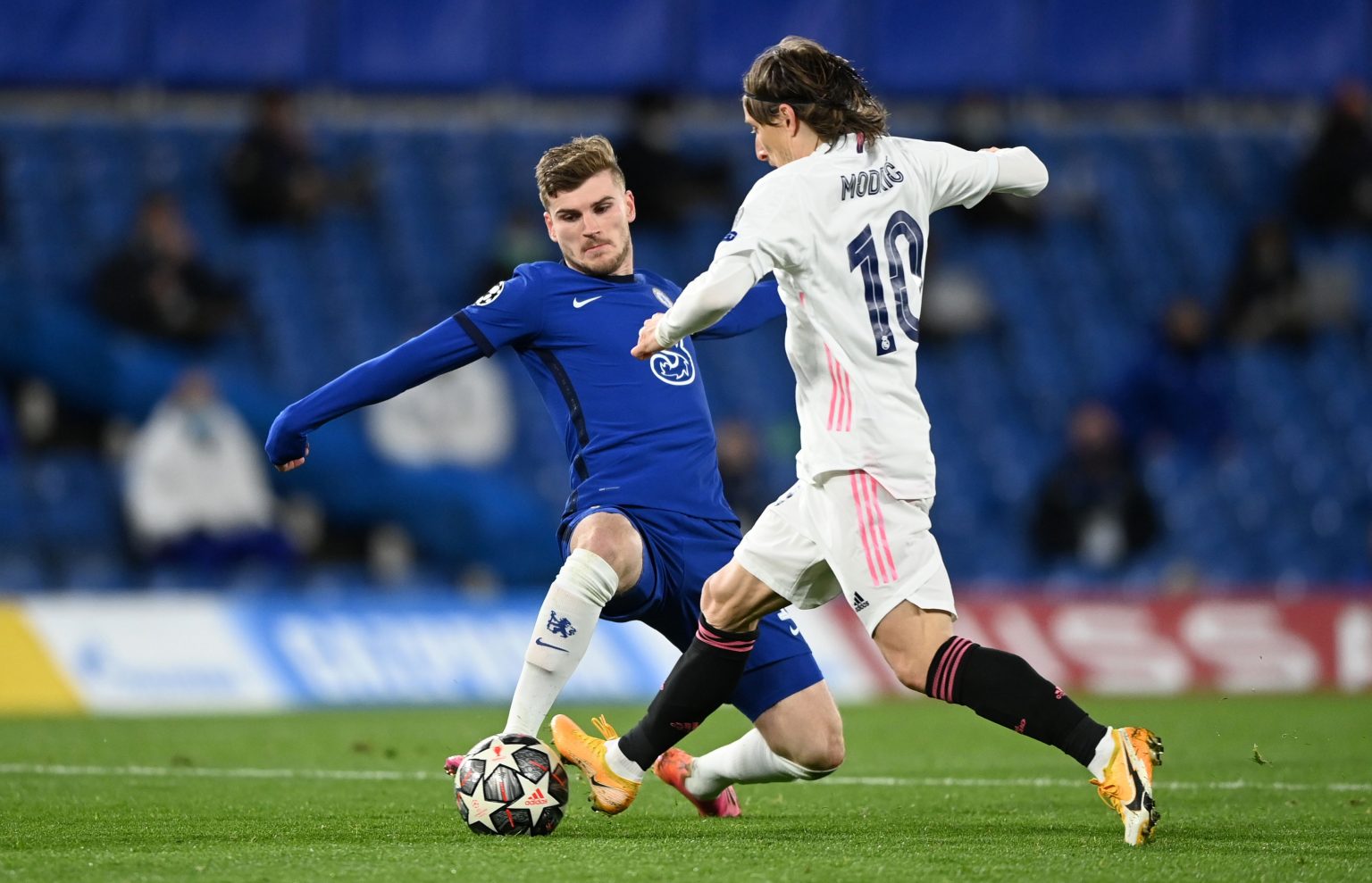
The 2021 UEFA Champions League semi-final between Real Madrid and Chelsea served as a defining collision of European football philosophies, resulting in a 3-1 aggregate victory for the London club. Over two legs, Chelsea’s disciplined defensive structure and high-intensity pressing under Thomas Tuchel effectively neutralized Real Madrid’s veteran midfield, propelling the Blues to their third-ever Champions League final appearance.
Context and Setting the Stage
In the spring of 2021, the UEFA Champions League was unfolding within the shadow of global pandemic restrictions, meaning matches were largely played behind closed doors. For Real Madrid, led by Zinedine Zidane, the campaign was characterized by a heavy reliance on the veteran core of Luka Modrić, Toni Kroos, and Casemiro. Their path to the semi-final had been marked by resilience, overcoming difficult group stages and knockout ties against Atalanta and Liverpool.
Chelsea, meanwhile, had undergone a mid-season transformation. Following the departure of Frank Lampard, German coach Thomas Tuchel took the reins in January 2021. Tuchel quickly implemented a sophisticated 3-4-2-1 formation that prioritized spatial control and defensive solidity. By the time they drew Real Madrid, Chelsea had conceded remarkably few goals under Tuchel’s stewardship, making them a formidable obstacle for the perennial European champions.
The First Leg: The Stalemate at the Alfredo Di Stéfano
The first leg, held on April 27, 2021, at the Alfredo Di Stéfano Stadium, set the tactical tone for the series. Chelsea dominated the opening phases, utilizing the pace of Timo Werner and Christian Pulišić to exploit gaps in the Madrid backline.
Pulišić opened the scoring in the 14th minute, showing exceptional composure to round Thibaut Courtois and slot the ball into the net after a precise assist from Antonio Rüdiger. Chelsea looked the more threatening side throughout the first half, frequently finding success in the pockets of space between Madrid’s midfield and defensive lines.
Real Madrid’s response came through the individual brilliance of Karim Benzema. In the 29th minute, after a series of headers from a set-piece, Benzema controlled the ball with his chest and unleashed a clinical volley to equalize. The remainder of the match saw a tactical stalemate; Madrid tightened their defensive structure, and Chelsea became more conservative, settling for a 1-1 draw that provided them with a crucial away goal advantage heading into the return leg.
The Second Leg: Tactical Mastery at Stamford Bridge
The second leg, played on May 5, 2021, at Stamford Bridge, is remembered as one of the most comprehensive performances of the Tuchel era. While Madrid welcomed back key figures like Eden Hazard and Sergio Ramos, the team looked physically exhausted and tactically disjointed compared to the clinical efficiency of the home side.
Chelsea’s approach was aggressive from the start. They disrupted Madrid’s ball circulation, forcing turnovers that allowed them to transition rapidly. Timo Werner scored the opening goal in the 28th minute, tapping in from close range after Kai Havertz’s initial chip hit the crossbar. While Madrid pressed for an equalizer, Chelsea’s back three—composed of Andreas Christensen, Thiago Silva, and Antonio Rüdiger—remained largely untroubled.
The final blow arrived in the 85th minute. Mason Mount, who had been instrumental in Chelsea’s press throughout the night, scored from a Christian Pulišić cross, sealing a 2-0 victory on the night and a 3-1 aggregate win. The result underscored the gap between Chelsea’s high-functioning collective unit and a Real Madrid side that struggled to cope with the intensity of their opponents.
Comparative Statistical Overview
The following table summarizes the key metrics across the two legs, illustrating the difference in control and threat levels between the two clubs.
| Metric | Real Madrid (Agg.) | Chelsea (Agg.) |
|---|---|---|
| Aggregate Goals | 1 | 3 |
| Average Possession | 54% | 46% |
| Shots on Target | 5 | 12 |
| Big Chances Created | 1 | 6 |
| Pass Completion | 87% | 83% |
| Tackles Won | 24 | 31 |
Key Tactical Factors
Chelsea’s Defensive Structure
Thomas Tuchel’s use of the 3-4-2-1 formation was pivotal. By employing three center-backs, Chelsea ensured they always had numerical parity against Karim Benzema while allowing their wing-backs, Ben Chilwell and César Azpilicueta, to track Madrid’s wide threats. This structure forced Madrid to play through the center, where N'Golo Kanté and Jorginho consistently stifled progress.
The Role of N'Golo Kanté
N'Golo Kanté was undoubtedly the standout performer of the tie. His ability to intercept passes, break up play, and initiate counter-attacks disrupted the rhythm of Toni Kroos and Luka Modrić. In both legs, Kanté covered immense ground, effectively turning the defensive transition into an offensive weapon for Chelsea.
Real Madrid’s Midfield Fatigue
For Real Madrid, the inability to control the tempo was their undoing. The iconic midfield trio, often relied upon to manage the pace of games, was unable to cope with the relentless pressing of Chelsea’s forwards and midfielders. Without the ball, Madrid looked exposed, and their defensive transitions were frequently exploited by Chelsea’s runners.
Legacy and Impact of the 2021 Semi-Final
The victory over Real Madrid was a watershed moment for Chelsea. It validated the mid-season tactical shift and served as the precursor to their ultimate triumph in the 2021 Champions League final against Manchester City. For Chelsea supporters, this victory was significant as it came against one of the most successful clubs in competition history, proving that the squad had the maturity to compete at the highest level.
For Real Madrid, the elimination necessitated a period of introspection and eventual renewal. It highlighted the need for more youthful energy in the squad to complement their veteran leaders. Within a few years, Madrid successfully integrated younger talents like Eduardo Camavinga and Aurélien Tchouaméni, shifting their tactical identity to handle the high-intensity pressing games that had previously caused them difficulties.
Frequently Asked Questions
Why was this tie considered a tactical masterclass for Thomas Tuchel?
It was viewed as such because Tuchel successfully adapted his side to neutralize Madrid's primary creative outlets. He exploited the space behind Madrid’s high line while ensuring his defensive block remained compact, leaving Madrid with very few clear-cut scoring opportunities over 180 minutes.
What was the importance of the away goal rule in this tie?
In 2021, the away goal rule was still in effect for UEFA competitions. The 1-1 draw in the first leg in Madrid meant that Chelsea held a slight advantage. When they scored the first goal at Stamford Bridge, it forced Madrid to score twice to progress, which fundamentally changed the risk-reward calculation for Zinedine Zidane’s team.
How did injuries affect Real Madrid's performance?
Real Madrid suffered from a lack of consistency due to recurring injuries throughout the season. Key players like Sergio Ramos were returning to fitness for the second leg and lacked the match sharpness required for such a high-intensity encounter. This lack of rhythm made it difficult for Madrid to sustain the level of performance needed to break down a well-drilled Chelsea defense.
Who was the man of the match across the two legs?
While many players performed well, N'Golo Kanté was widely recognized as the most influential player. He was named UEFA’s official Player of the Match in both the first and second legs, a testament to his dominance in the midfield battle and his impact on both ends of the pitch.
How did the 2021 result change the perception of Chelsea’s squad?
Before this tie, many analysts questioned whether Chelsea’s young squad had the experience to navigate the latter stages of the Champions League. Defeating a giant like Real Madrid silenced many of those critics and installed the team as a genuine contender, proving they had the tactical discipline to beat elite European opposition.
Next Steps for Tactical Study
For those interested in the evolution of football tactics, reviewing the 2021 semi-final offers a clear case study on the effectiveness of a three-back system against a traditional ball-dominant side. Aspiring coaches and analysts should focus on the "mid-block" positioning utilized by Chelsea, which allowed them to bait Madrid forward before executing rapid counter-attacks. Observing the specific movement of N'Golo Kanté during these transitions provides a masterclass in how a modern defensive midfielder can dictate the outcome of a continental tie.