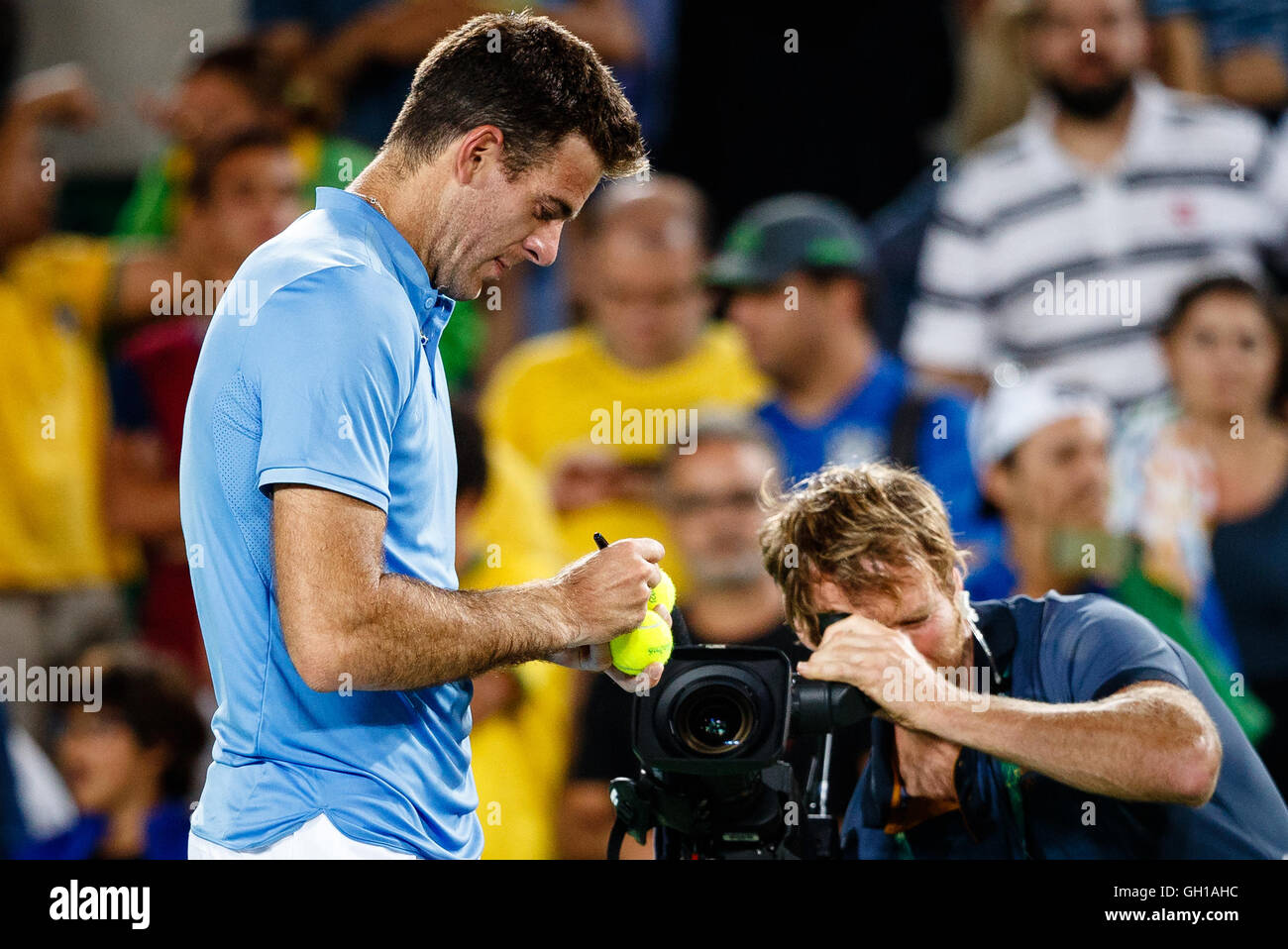
The 2016 Summer Olympics tennis tournament in Rio de Janeiro was defined by Andy Murray’s historic second consecutive singles gold medal and Monica Puig’s underdog victory, securing Puerto Rico’s first-ever Olympic gold. Other major highlights included Juan Martín del Potro’s emotional silver-medal run and Rafael Nadal’s successful return to the podium in the men's doubles.
Looking back from the vantage point of 2026, the Rio 2016 tennis event remains a cornerstone of Olympic history. It was a tournament that defied expectations, where established legends solidified their legacies and unheralded underdogs captured the world's imagination. Held at the Olympic Tennis Centre within the Barra Olympic Park, the event featured five medal disciplines: men's and women's singles, men's and women's doubles, and mixed doubles. The fast DecoTurf hard courts and the unique Brazilian atmosphere provided a backdrop for some of the most emotional matches in the sport's modern era.
The Men’s Singles: Murray’s Defense and Del Potro’s Resurrection
The men’s singles draw was perhaps most notable for the "resurrection" of Juan Martín del Potro. Entering the tournament using a protected ranking after years of grueling wrist surgeries, the Argentine giant was not expected to challenge the "Big Four." However, the first-round clash between Del Potro and the world number one, Novak Djokovic, became an instant classic.
The Fall of the World Number One
Novak Djokovic entered Rio 2016 seeking the only major title missing from his trophy cabinet: the Olympic Gold. However, Del Potro delivered a masterclass of power hitting, utilizing his devastating forehand to keep Djokovic on the defensive. The match, which ended 7–6(4), 7–6(2) in favor of Del Potro, left Djokovic in tears as he exited the court. This upset shifted the entire gravity of the tournament, opening the door for others while proving that Del Potro was back at the elite level.
Andy Murray’s Path to a Record-Breaking Gold
While Del Potro was the sentimental favorite, Andy Murray was the embodiment of clinical consistency. Having recently won his second Wimbledon title, Murray arrived in Rio with immense momentum. He navigated a tricky draw, including a difficult quarterfinal against Steve Johnson and a dominant semifinal against Kei Nishikori.
The final between Murray and Del Potro was a four-hour marathon of physical and mental endurance. Both players were visibly exhausted, yet the quality of play remained remarkably high. Murray eventually prevailed 7–5, 4–6, 6–2, 7–5. By doing so, he became the first tennis player in history—male or female—to win two Olympic singles gold medals in succession. This achievement remains a primary pillar of Murray's Hall of Fame career.
The Battle for Bronze
The bronze medal match featured Rafael Nadal and Kei Nishikori. Nadal, who had already played a grueling schedule across singles and doubles, fought back from a set and two breaks down to force a third set. Ultimately, Nishikori’s freshness and precision allowed him to claim the bronze with a 6–2, 6–7(1), 6–3 victory, earning Japan its first Olympic tennis medal in nearly a century.
The Women’s Singles: Monica Puig’s Historic "Pica Power"
If the men’s draw was about a legend defending his throne, the women’s singles draw was about a total disruption of the status quo. Monica Puig, ranked 34th in the world and unseeded, produced one of the most improbable runs in Olympic history.
Eliminating the Giants
Puig’s path to the gold was not a result of a lucky draw; she defeated three Grand Slam champions to reach the top of the podium. Her dominant 6–1, 6–1 victory over the reigning French Open champion Garbiñe Muguruza in the third round served as the first major warning to the field. Following that, she outlasted Petra Kvitova in a three-set semifinal that showcased her aggressive baseline game and mental fortitude.
The Final Against Angelique Kerber
The final pitted Puig against Angelique Kerber, the world number two who had already won the Australian Open earlier that year. The match was a clash of styles: Kerber’s elite counter-punching versus Puig’s relentless aggression. Puig took the first set 6–4, but Kerber responded to take the second. In the deciding set, Puig played with a level of "zone" tennis rarely seen, winning it 6–1.
The victory was monumental. It was the first gold medal ever won by an athlete representing Puerto Rico. The "Pica Power" movement—a play on Puig's nickname—became a symbol of national pride, and the image of Puig standing atop the podium as the Puerto Rican anthem played for the first time remains the most iconic highlight of the 2016 Games.
The Upset of Serena Williams
A major subplot of the women's event was the early exit of the defending champion, Serena Williams. Facing Elina Svitolina in the third round, Williams struggled with her serve and uncharacteristic unforced errors. Svitolina took advantage, winning in straight sets. This marked the first time in her Olympic career that Serena failed to win a medal in either singles or doubles, signaling a rare vulnerable moment for the then-dominant world number one.
Doubles Excellence: Nadal’s Emotional Gold and Swiss History
The doubles events in Rio were characterized by veteran expertise and the return of some of the sport's most decorated names to the Olympic stage.
Rafael Nadal and Marc López
Rafael Nadal’s participation in Rio was in doubt until the final weeks due to a wrist injury. Despite the physical limitations, he committed to a heavy schedule. Partnering with his close friend Marc López, Nadal showcased his legendary fighting spirit. In a tense men's doubles final, the Spanish duo defeated the Romanian pair of Florin Mergea and Horia Tecău 6–2, 3–6, 6–4. The image of Nadal and López collapsing to the court in joy highlighted the unique importance of the Olympics to professional tennis players, even those who have won everything else in the sport.
The Return of Martina Hingis
In the women's doubles, Martina Hingis returned to the Olympics for the first time since 1996. Partnering with Timea Bacsinszky, the Swiss pair reached the final. Although they were defeated by the Russian duo of Ekaterina Makarova and Elena Vesnina (6–4, 6–4), Hingis’ silver medal added a final chapter to her storied Olympic history. The Russians, Makarova and Vesnina, were a well-established pair on the WTA tour, and their gold medal was a testament to the value of specialized doubles chemistry in an Olympic format often dominated by singles stars.
Mixed Doubles: An All-American Final
The mixed doubles final was a unique affair, featuring two American teams. Bethanie Mattek-Sands and Jack Sock defeated Venus Williams and Rajeev Ram. While Mattek-Sands and Sock took the gold, the silver medal for Venus Williams was historic. It was her fifth Olympic medal, tying the all-time record for tennis medals held by Kathleen McKane Godfree.
Technical Conditions and Venue Analysis
The Rio 2016 tennis event was played at the Olympic Tennis Centre, a facility designed to host ten thousand spectators in its main stadium. Understanding the technical environment is crucial to analyzing the highlights and results of the tournament.
- Surface: The courts were surfaced with DecoTurf, a cushioned acrylic hard court surface similar to that used at the US Open. However, many players noted that the Rio courts played slightly slower and had a higher bounce than those in New York.
- Weather: The wind was a significant factor throughout the tournament. The open design of the outer courts meant that players had to contend with swirling gusts, which contributed to some of the high unforced error counts in matches like the Serena Williams vs. Svitolina upset.
- The Absence of Ranking Points: 2016 was a controversial year for Olympic tennis because the ATP and WTA did not award ranking points for the tournament. This differed from London 2012. Despite this, the player field remained incredibly strong, with almost all top-ten players (excluding those with health or Zika virus concerns) competing for the prestige of a medal.
2016 Summer Olympics Tennis Medal Table
The following table summarizes the podium finishers for all five events held in Rio de Janeiro.
| Event | Gold Medalist(s) | Silver Medalist(s) | Bronze Medalist(s) |
|---|---|---|---|
| Men's Singles | Andy Murray (GBR) | Juan Martín del Potro (ARG) | Kei Nishikori (JPN) |
| Women's Singles | Monica Puig (PUR) | Angelique Kerber (GER) | Petra Kvitová (CZE) |
| Men's Doubles | Marc López / Rafael Nadal (ESP) | Florin Mergea / Horia Tecău (ROU) | Steve Johnson / Jack Sock (USA) |
| Women's Doubles | E. Makarova / E. Vesnina (RUS) | T. Bacsinszky / Martina Hingis (SUI) | Lucie Šafářová / B. Strýcová (CZE) |
| Mixed Doubles | B. Mattek-Sands / Jack Sock (USA) | Venus Williams / Rajeev Ram (USA) | L. Hradecká / R. Štěpánek (CZE) |
Frequently Asked Questions
Why didn't Roger Federer play in the 2016 Olympics?
Roger Federer was forced to withdraw from the Rio 2016 Olympics due to a persistent knee injury. After undergoing surgery earlier in the year, he announced in July 2016 that he would miss the remainder of the season to focus on rehabilitation. This was a significant disappointment for fans, as Federer was seeking a singles gold medal to complete his "Career Golden Slam."
Did Novak Djokovic win a medal in Rio 2016?
No, Novak Djokovic did not win a medal in Rio. He was defeated in the first round of the singles draw by Juan Martín del Potro in two tiebreak sets. In doubles, partnering with Nenad Zimonjić, he reached the second round before losing to the Brazilian pair of Marcelo Melo and Bruno Soares.
What was the significance of Monica Puig’s gold medal?
Monica Puig’s gold medal was historic because it was the first Olympic gold medal ever won by an athlete representing Puerto Rico. Additionally, she was the first unseeded woman to win the Olympic singles gold since tennis returned to the Olympic program in 1988. Her victory remains one of the greatest underdog stories in the history of the sport.
How did Andy Murray win back-to-back gold medals?
Andy Murray’s success was built on his exceptional return of serve and defensive capabilities. After winning gold at London 2012 on grass, he adapted his game to the hard courts of Rio. His victory in the 2016 final was largely due to his physical conditioning, which allowed him to outlast Juan Martín del Potro in a match that lasted over four hours.
Who won the most tennis medals in Rio 2016?
The United States won the most medals in tennis at the 2016 Games, with a total of three (one gold, one silver, and one bronze). Jack Sock was the only player to win two medals in Rio, taking gold in mixed doubles and bronze in men’s doubles.
Was the Zika virus an issue for the players?
While several high-profile players (including Milos Raonic, Simona Halep, and Tomas Berdych) cited concerns regarding the Zika virus as a reason for their withdrawal, the tournament proceeded without any reported health incidents among the participating tennis athletes. The cooler winter temperatures in Rio during August helped mitigate the mosquito population.
Legacy and Long-term Impact
A decade later, in 2026, the 2016 Summer Olympics tennis highlights are viewed as a turning point for several careers. For Andy Murray, it was the peak of his "Big Four" status, cementing his place as a player who could dominate on the world's biggest stages. For Juan Martín del Potro, it was the ultimate proof of his resilience, proving he could still compete with the world's best despite his injuries.
Monica Puig’s victory continues to be celebrated as a masterclass in peak performance under pressure. While she struggled with injuries in the years following her gold medal, her 2016 performance remains a blueprint for how a lower-ranked player can utilize the unique format of the Olympics—where national pride often overrides individual rankings—to achieve greatness.
The Rio 2016 tournament also reinforced the Olympic Games' standing within the professional tennis calendar. Despite the lack of ranking points, the intensity of the matches and the emotional reactions of the winners (and losers) proved that for the modern player, an Olympic medal is often held in the same regard as a Grand Slam trophy.
Next Steps for Fans: For those looking to relive these moments, official archives on Olympics.com provide full-match replays and curated highlights of the 2016 finals. Additionally, the International Tennis Federation (ITF) maintains detailed statistical breakdowns of each match from the Rio tournament, which are invaluable for sports analysts and historians.