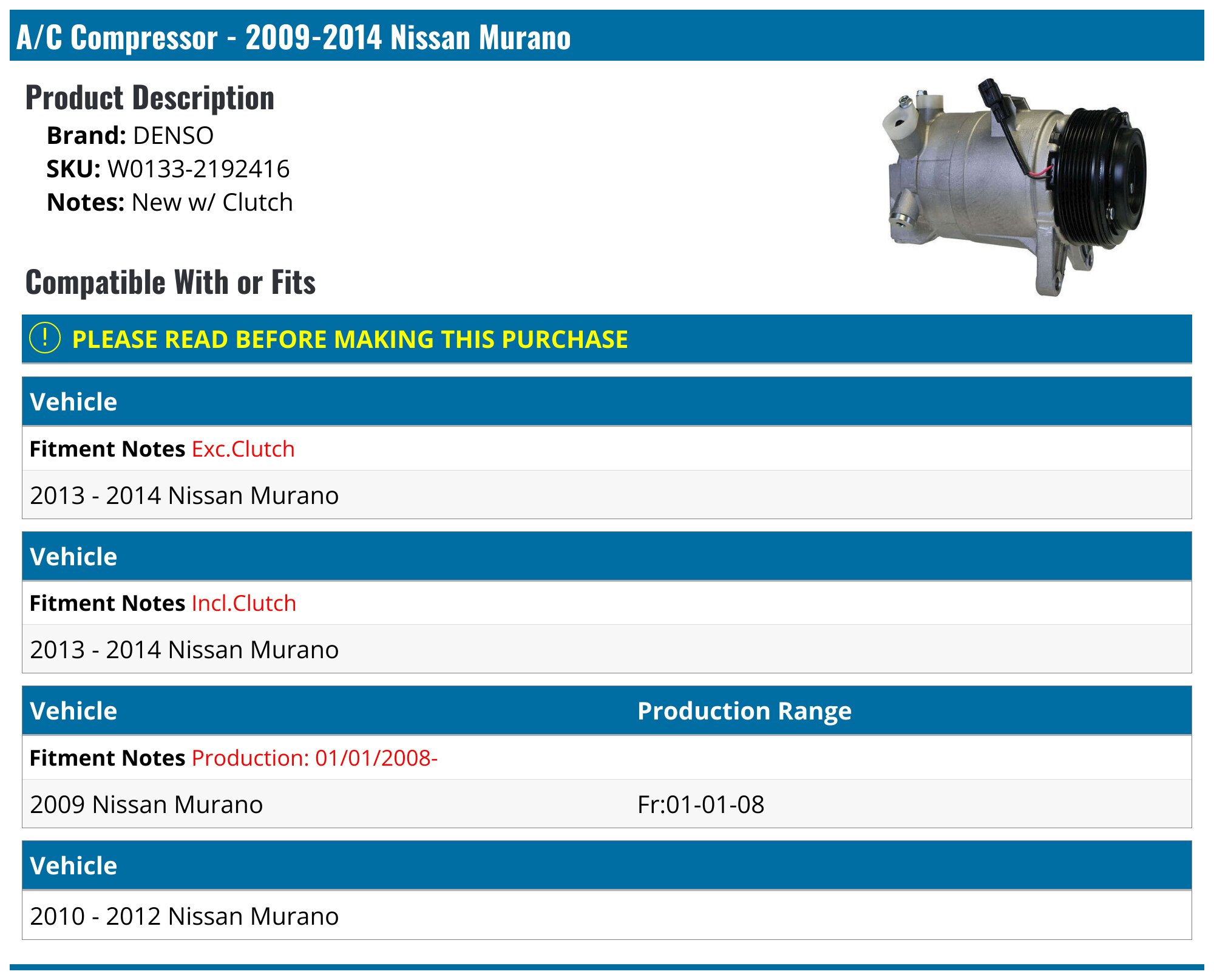
The 2009 Nissan Murano air conditioning compressor issue typically manifests as a failure to engage, loud metallic noises, or a complete loss of cold air due to internal mechanical wear or electrical control circuit failure. Resolving this problem requires diagnosing the compressor clutch, checking refrigerant pressures, and inspecting the climate control relay before replacing the entire component.
Understanding the Climate Control System in the 2009 Nissan Murano
The second-generation Nissan Murano (released for the 2009 model year) features an advanced automatic climate control system designed to regulate cabin temperature efficiently. At the heart of this system is a variable-displacement or fixed-displacement compressor driven by the serpentine belt. Unlike older vehicle architectures that simply cycle the compressor clutch on and off via a basic thermostat switch, the 2009 Murano relies heavily on the Engine Control Module (ECM) and the Auto Amplifier (the climate control computer) to modulate cooling based on cabin temperature sensors, ambient air sensors, and pressure transducers.
When the air conditioning system works as intended, pressing the "A/C" button sends a signal to the Auto Amplifier. This module checks system pressures through the refrigerant pressure sensor on the high-side liquid line. If pressures are within safe operating limits, the ECM commands the A/C relay to close, supplying 12-volt power to the electromagnetic compressor clutch. Once energized, the clutch engages the pulley to spin the compressor shaft, circulating R-134a refrigerant and PAG oil through the condenser, expansion valve, and evaporator core.
However, design wear, electrical degradation, and lack of maintenance can cause this intricate chain of events to break down. Understanding how these electronic and mechanical components interact is the first step toward accurately diagnosing why a 2009 Nissan Murano air conditioning system fails to blow cold air.
Common Symptoms of a Failing 2009 Nissan Murano AC Compressor
Recognizing the early warning signs of compressor distress can prevent catastrophic system failure, such as total seizure, which sends metallic debris throughout the entire air conditioning loop. Drivers experiencing climate control issues in a 2009 Murano typically notice one or more distinct symptoms.
1. Warm Air Blowing from Vents
The most immediate and obvious sign of a compressor failure is ambient or warm air blowing from the dashboard vents even when the climate control is set to its lowest temperature. While this can sometimes indicate a simple refrigerant leak, a failed compressor will fail to compress the gas, rendering the heat-exchange process in the condenser and evaporator useless.
2. Unusual Noises When A/C is Engaged
A failing internal bearing, worn swashplate, or damaged pistons inside the compressor will often produce a loud whining, grinding, or squealing noise whenever the A/C is switched on. If the noise disappears immediately when the A/C button is turned off, the issue is almost certainly localized to the compressor pulley bearing or internal mechanical assembly.
3. Non-Engaging Compressor Clutch
Popping the hood and observing the front plate of the A/C compressor while an assistant toggles the cabin A/C switch reveals whether the clutch is working. If the center hub of the pulley does not spin along with the outer belt pulley, the clutch is either not receiving electrical current, the magnetic coil is burned out, or the air gap between the clutch plate and pulley has widened beyond tolerance.
4. Frequent Blown Fuses or Tripped Relays
Electrical shorts within the electromagnetic clutch coil can draw excessive current, causing the dedicated A/C fuse to blow repeatedly or the IPDM (Intelligence Power Distribution Module) relay to fail. Ignoring this symptom and repeatedly replacing fuses without inspecting the compressor wiring can lead to harness damage.
Primary Root Causes and Diagnostic Procedures
Pinpointing the exact cause of a 2009 Nissan Murano AC compressor issue requires a methodical approach that rules out simple electrical faults before condemning expensive mechanical hardware.
- Start Diagnosis
- Check A/C Fuse & Relay (IPDM) -> Replace if faulty
- Inspect Refrigerant Pressure -> Recharge or locate leaks if low/high
- Test Clutch Power (12V) -> Fix wiring/coil if missing
- Mechanical Inspection -> Replace compressor if seized/noisy
Step 1: Inspecting Fuses and the IPDM E/R Relay
The Nissan Murano utilizes an Intelligent Power Distribution Module Engine Room (IPDM E/R) located near the battery. This module houses several integrated relays, including the A/C compressor relay. Because these integrated relays are soldered directly to the circuit board in some production runs or subject to heavy electrical loads, they can fail internally, cutting power to the compressor clutch. Mechanics should use a digital multimeter to verify that 12 volts are reaching the compressor electrical connector when the A/C is requested from the cabin.
Step 2: Evaluating Refrigerant Charge and Pressure Switches
A safety feature built into the 2009 Murano prevents the compressor from engaging if the refrigerant charge is too low or too high. Connecting a manifold gauge set to the low-side and high-side service ports allows technicians to read static and dynamic pressures.
- Zero or Very Low Pressure: Indicates a significant refrigerant leak (commonly at the condenser fins, high-pressure rubber hose crimps, or evaporator core). The low-pressure switch opens the circuit to protect the compressor from running dry.
- Normal Pressures but No Engagement: Points toward an electrical control fault, bad ground, or a failed compressor clutch coil.
Step 3: Checking the Air Gap and Clutch Coil Resistance
If power reaches the compressor plug but the clutch fails to pull in, measure the resistance of the electromagnetic coil using a multimeter set to ohms. A reading of infinity (open circuit) or zero (short circuit) confirms a burned-out coil. Additionally, a feeler gauge can measure the air gap between the front clutch plate and the pulley flange; excessive gap distance due to wear prevents proper magnetic engagement.
Comprehensive Component Comparison
When repairing a broken climate control system on a 2009 Nissan Murano, owners and technicians must choose between various repair scopes. Replacing only the broken component versus overhauling the entire system dictates long-term reliability.
| Repair Approach | Typical Parts Included | Pros | Cons |
|---|---|---|---|
| Clutch Assembly Replacement | Pulley, bearing, electromagnetic coil, front plate | Lower material cost; avoids opening refrigerant lines if done on-vehicle. | Does not address internal compressor wear; high labor overlap if the compressor fails later. |
| Complete Compressor Swap | New/Remanufactured compressor, PAG oil, O-rings | Fixes internal mechanical failures and seized components directly. | Requires complete refrigerant recovery, evacuation, and recharge. |
| Full System Overhaul | Compressor, condenser, expansion valve, accumulator/dryer, flush | Eliminates all metallic debris; prevents premature failure of the new compressor. | Highest total cost in parts and labor time. |
Step-by-Step Replacement Overview for the 2009 Murano Compressor
If diagnostics confirm that the compressor itself has suffered internal mechanical failure, replacement is mandatory. Because the 2009 Nissan Murano engine bay (utilizing the 3.5L VQ35DE V6 engine) is tightly packaged, following a structured workflow is essential.
1. Refrigerant Recovery
By federal law and environmental safety standards, a certified technician must use an R-134a recovery machine to safely evacuate all refrigerant from the vehicle's A/C system before disconnecting any lines. Never vent refrigerant into the atmosphere.
2. Accessing the Compressor
Raise the vehicle safely on a hydraulic lift and secure it with jack stands. Remove the front passenger-side wheel and the inner splash guards to gain clear access to the accessory drive belt and the lower-front-mounted A/C compressor. Remove the serpentine belt by releasing tension on the automatic belt tensioner with a breaker bar.
3. Disconnecting Electrical and Fluid Lines
Disconnect the electrical harness connector from the compressor clutch. Unbolt the high-side and low-side refrigerant manifold lines from the rear of the compressor. Immediately plug or cap these open lines to prevent ambient moisture and atmospheric contaminants from entering the desiccant and remaining system components.
4. Removing and Flushing
Unbolt the compressor mounting bolts from the engine block and carefully extract the unit through the wheel well opening. Before installing the new compressor, measure the amount of oil drained from the old unit, flush the metal lines if debris is present, and add the correct volume of fresh PAG 46 oil specified by Nissan service manuals into the new compressor.
5. Evacuation and Recharge
Reinstall the new compressor, torque all fasteners to factory specifications, replace all rubber O-rings with new ones coated in clean refrigerant oil, and reconnect the lines and electrical plug. Evacuate the system using a vacuum pump for a minimum of 30 to 45 minutes to boil off any trapped moisture, then recharge the system with the precise weight of R-134a refrigerant specified under the hood sticker (typically around 1.8 to 1.9 pounds).
Frequently Asked Questions
Can I drive my 2009 Nissan Murano with a seized A/C compressor?
Yes, but only if you bypass the compressor by installing a shorter serpentine belt designed for non-A/C models, or if the electric clutch remains completely disengaged and free-spinning. If the internal compressor bearings have seized entirely while the engine is running, the serpentine belt will drag across the locked pulley, causing rapid belt friction, smoking, and snapping, which can disable the alternator and power steering pump.
How much does it cost to replace the AC compressor on a 2009 Nissan Murano?
Total repair costs typically range from $650 to $1,200 depending on labor rates and whether parts are sourced aftermarket or Original Equipment Manufacturer (OEM). This total includes refrigerant recovery, labor time for the tight engine bay access, parts, oil replacement, and final system recharging.
Why do Nissan Murano compressors fail prematurely?
Common causes include low refrigerant levels which starve the compressor of circulating PAG oil, condenser blockages that spike high-side operating pressures, and natural electrical fatigue of the clutch coil windings over high mileage.
Is it necessary to replace the receiver drier when changing the compressor?
Yes. If the compressor has suffered catastrophic internal wear and shed metal shavings into the system, the receiver drier (integrated into the condenser on this generation) must be replaced. Retaining a contaminated drier will trap debris and immediately destroy the replacement compressor.
Practical Next Actions
If your 2009 Nissan Murano is showing signs of air conditioning failure, begin by checking the system fuses and verifying whether the compressor clutch receives 12 volts when the cabin control is activated. If electrical signals are normal but the unit fails to pump or emits grinding noises, schedule an appointment with a certified automotive air conditioning technician to safely recover the refrigerant and inspect the system for internal contamination before installing a replacement compressor.