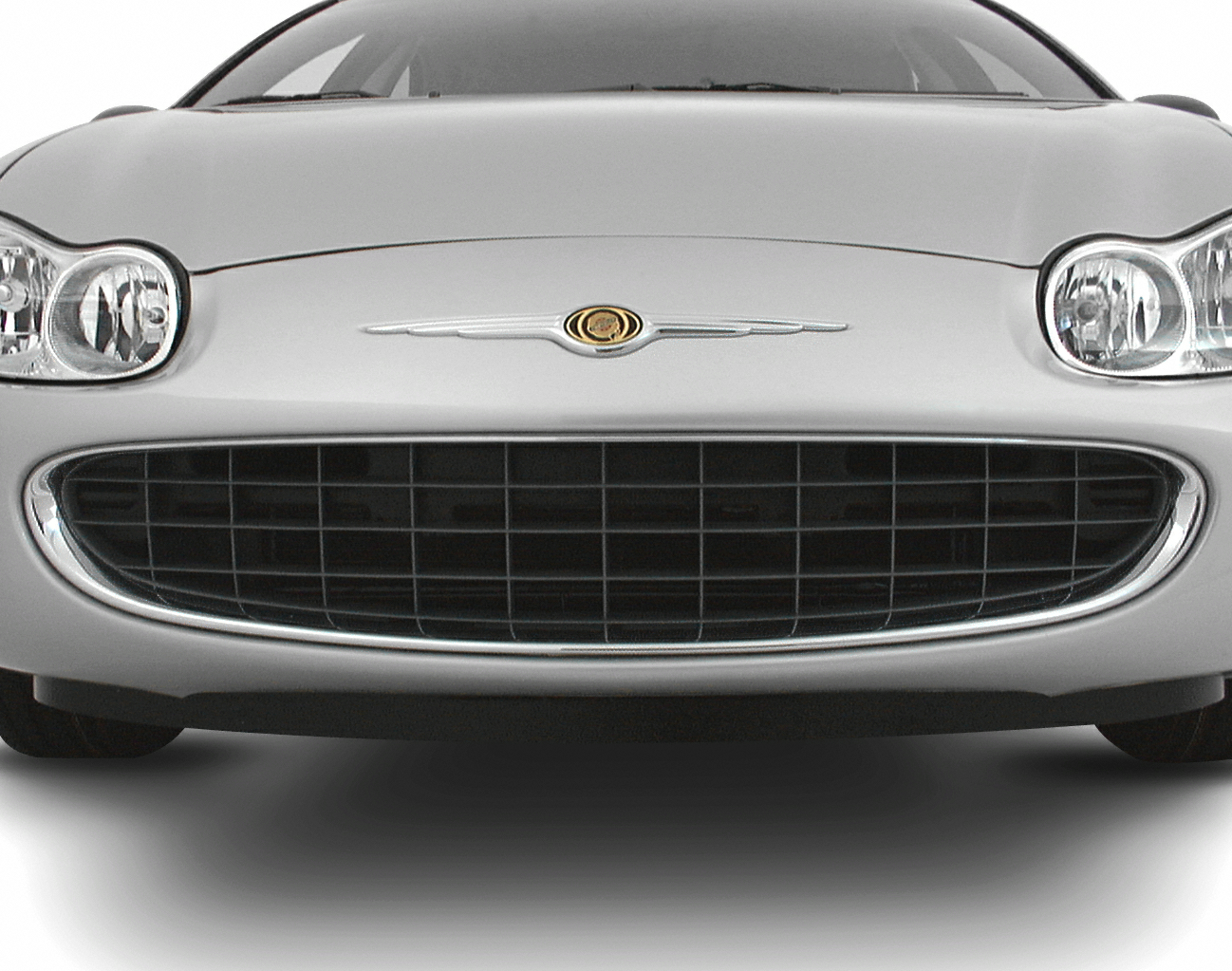
In 2000, the Chrysler lineup was characterized by the "cab-forward" design philosophy and the early integration period of the DaimlerChrysler merger. Key models included the performance-oriented 300M, the luxurious LHS, the sleek Concorde, the Sebring (in both coupe and convertible forms), and the premium Town & Country minivan. Today, these vehicles are regarded as accessible youngtimers valued for their spacious interiors and distinct late-90s styling.
The year 2000 represented a significant era for the Chrysler brand. It was a time when the company was attempting to balance its American heritage of bold, spacious design with the engineering rigors introduced by its new German partners at Daimler-Benz. The result was a fleet of vehicles that looked like nothing else on the road, featuring long wheelbases, short overhangs, and expansive glass areas. In 2026, these cars have transitioned from daily commuters to interesting historical artifacts of the "merger of equals" era.
The LH Platform: Chrysler’s Full-Size Sedans
The backbone of the 2000 Chrysler car lineup was the LH platform. This chassis supported the Concorde, the 300M, and the LHS. The "cab-forward" architecture pushed the wheels to the corners and moved the windshield forward, which significantly increased interior volume compared to traditional rear-wheel-drive competitors.
Chrysler 300M
The 300M was perhaps the most iconic sedan in the 2000 lineup. It was designed to be an "international" sports sedan, meaning its total length was kept under five meters to make it more palatable for European markets. Despite its shorter length compared to the Concorde, it offered a more aggressive stance and a performance-tuned suspension.
Under the hood, the 2000 300M featured a 3.5-liter SOHC V6 engine producing 253 horsepower and 255 lb-ft of torque. In 2026, this engine is still respected for its power output, though it requires strict adherence to timing belt replacement intervals. The 300M also featured "AutoStick," a semi-automatic transmission mode that allowed drivers to manually select gears, a novelty for American sedans at the time.
Chrysler Concorde
The Concorde served as the entry point into the full-size Chrysler sedan family. It shared the same basic architecture as the 300M but featured a longer, more aerodynamic body. For the 2000 model year, the Concorde was available in LX and LXi trims.
The LX trim typically housed the 2.7-liter DOHC V6, while the LXi offered the 3.2-liter V6. The Concorde focused heavily on ride comfort and highway cruising. Its cavernous trunk and rear legroom remain impressive even by 2026 standards, making it a favorite for those who prioritize passenger comfort over sporty handling.
Chrysler LHS
The LHS was the flagship of the sedan line. It used the same long-wheelbase version of the LH platform as the Concorde but added premium touches and a more conservative, "sophisticated" front-end treatment. The 2000 LHS was essentially a luxury-focused sibling to the 300M, sharing the 3.5-liter V6 but swapping the 300M's stiff suspension for a much softer, more traditional luxury car ride. Inside, the LHS featured premium leather, expanded woodgrain accents, and an upgraded Infinity sound system.
The Mid-Size and Specialty Models
While the LH cars dominated the full-size segment, Chrysler also addressed the mid-size and convertible markets with the Sebring and the Cirrus. These vehicles were part of the "Cloud Car" family, so named because their model names (Cirrus, Stratus, Breeze) referred to atmospheric formations.
Chrysler Sebring (Coupe vs. Convertible)
It is a common point of confusion for collectors in 2026 that the 2000 Chrysler Sebring Coupe and Convertible were actually built on different platforms.
- The Sebring Convertible (JX Platform): This was developed in-house by Chrysler and shared many components with the Cirrus sedan. It was one of the best-selling convertibles in America due to its genuine four-adult seating capacity.
- The Sebring Coupe (FJ Platform): This was a product of the Diamond-Star Motors (DSM) partnership with Mitsubishi. It was built in Normal, Illinois, and shared its mechanical DNA with the Mitsubishi Galant and Eclipse. It offered a tighter, more "import-like" driving experience compared to the Convertible.
Chrysler Cirrus
The 2000 Cirrus was the top-tier offering among the "Cloud Car" sedans. By this year, the lineup had been simplified, often featuring the 2.5-liter V6 engine as standard. The Cirrus was known for its excellent visibility and nimble handling, though it struggled to compete with the build quality of contemporary rivals like the Toyota Camry or Honda Accord.
The Evolution of the Minivan: Town & Country
In 2000, Chrysler remained the undisputed leader of the minivan segment. The Town & Country was the luxury pinnacle of the NS-platform minivans. While the Plymouth Voyager and Dodge Caravan handled the budget and mid-range duties, the Town & Country offered features like dual-zone climate control, leather-trimmed seating, and a power-sliding passenger-side door—a high-tech feature at the turn of the millennium.
The 2000 Town & Country was available with either a 3.3-liter or 3.8-liter V6 engine. The 3.8-liter engine was particularly favored for its torque, which helped the heavy van feel more responsive during highway merging. These engines used a traditional overhead valve (OHV) design, which proved to be remarkably durable compared to the more complex overhead cam engines found in the sedans.
Technical Specifications and Performance Data
The following table compares the primary specifications for the core 2000 Chrysler car models.
| Model | Engine Type | Horsepower | Torque (lb-ft) | Curb Weight (lbs) | Original MSRP (Est.) |
|---|---|---|---|---|---|
| 300M | 3.5L SOHC V6 | 253 | 255 | 3,581 | $29,500 |
| Concorde LXi | 3.2L SOHC V6 | 225 | 225 | 3,490 | $25,000 |
| LHS | 3.5L SOHC V6 | 253 | 255 | 3,588 | $30,000 |
| Sebring Conv. | 2.5L SOHC V6 | 168 | 170 | 3,340 | $25,500 |
| Cirrus LXi | 2.5L SOHC V6 | 168 | 170 | 3,150 | $20,500 |
| Town & Country | 3.8L OHV V6 | 180 | 240 | 4,100 | $34,000 |
Reliability and Common Maintenance Issues
Owning a 2000 Chrysler in 2026 requires an understanding of several known mechanical vulnerabilities. While these cars were innovative, they suffered from specific engineering choices that have become problematic over the decades.
The 2.7L V6 Oil Sludge Issue
The 2.7-liter V6 engine found in the entry-level Concorde and some Sebrings is notorious for "oil sludge." Due to a small oil capacity and a water pump driven by the timing chain (which could leak coolant into the oil), these engines often failed prematurely if maintenance wasn't perfect. In 2026, any surviving 2.7L engine should be treated with high-quality synthetic oil and frequent changes to prevent catastrophic failure.
Transmission "Limp Mode"
The 41TE and 42LE four-speed automatic transmissions used across the lineup were prone to electrical and sensor failures. When the Transmission Control Module (TCM) detected an issue, it would put the car into "Limp Mode," locking it into second gear to prevent damage. Frequently, this was caused by faulty input or output speed sensors rather than a mechanical failure of the gears themselves. Using the correct fluid—specifically ATF+4—is critical; using generic Dextron/Mercon fluid was a common cause of premature wear in these units.
Electrical and Interior Quality
As these vehicles age into their third decade, the interior plastics and electronics show their age. Common issues include:
- Body Control Module (BCM) Failures: This can lead to erratic behavior of lights, wipers, and door locks.
- Instrument Cluster Solder Joints: Cracked solder joints on the back of the gauge cluster can cause the needles to drop or the digital odometer to flicker.
- Headliner Sag: The adhesive used for the ceiling fabric often fails in humid climates.
Modern Value: The 2000 Chrysler in 2026
From the perspective of 2026, the 2000 Chrysler lineup represents an affordable entry point for youngtimer enthusiasts. The 300M is the most sought-after due to its design and performance, while the Town & Country is gaining a cult following among those who appreciate "retro-luxury" family travel.
Parts availability remains fair, primarily because Chrysler used many of these components across multiple brands (Dodge, Plymouth, and even some Mitsubishi models). However, specific trim pieces and dashboard components for the LHS or 300M are becoming harder to find in good condition, often requiring sourcing from specialized recyclers or enthusiast forums.
Maintenance and Preservation Tips
If you are considering purchasing or currently maintaining a 2000 Chrysler car, prioritize the following steps to ensure longevity:
- Timing Belt and Water Pump: For the 3.2L and 3.5L engines, the timing belt is a "must-do" every 100,000 miles or 7 years. Because these are interference engines, a belt snap will result in the valves hitting the pistons, effectively destroying the engine.
- Cooling System Health: The plastic coolant bleeder housings on the LH cars are known to crack. Replacing these with aftermarket aluminum versions is a common and highly recommended upgrade.
- Sensor Replacement: If the car experiences shifting issues, replace the input and output speed sensors with genuine Mopar parts before assuming the transmission is blown.
- Suspension Bushings: The heavy weight of these cars (especially the Town & Country and LHS) puts significant stress on control arm bushings and tie-rod ends. Replacing these with modern polyurethane or high-quality rubber components will drastically improve the steering feel.
Frequently Asked Questions
Is the 2000 Chrysler 300M considered a classic?
In 2026, the 300M is generally classified as a "youngtimer" or a modern classic. While it hasn't reached the stratospheric values of 1960s muscle cars, it is increasingly appreciated for its unique cab-forward styling and its role in revitalizing the Chrysler brand. Clean, low-mileage examples are beginning to see modest price appreciation.
What is the main difference between the 2000 LHS and the Concorde?
The LHS was essentially a premium, long-wheelbase version of the Concorde. While they share the same chassis architecture, the LHS came standard with the high-output 3.5L engine, a more upright and traditional front grille, and a much higher level of interior luxury. The Concorde was geared toward the mainstream full-size market, offering lower-displacement engine options and fewer standard features.
Can I use regular ATF in my 2000 Chrysler transmission?
No. You must use ATF+4 (or a certified equivalent). Using incorrect transmission fluid is the leading cause of "shudder" and premature failure in the 41TE and 42LE transmissions. Even in 2026, this remains the most important maintenance rule for owners of these vehicles.
How do I check for oil sludge in a 2.7L V6?
Before purchasing a 2000 Chrysler with the 2.7L engine, remove the oil filler cap and inspect the underside of the cap and the visible valve train components for a thick, black, tar-like substance. If the engine has "milkshake" textured oil, it likely has a leaking internal water pump. It is always advisable to have a mechanic perform a compression test and a borescope inspection.
Which 2000 Chrysler model is the most reliable?
The 2000 Town & Country with the 3.8-liter V6 is generally considered the most mechanically robust. The 3.8L engine is a simpler design than the overhead-cam V6s in the sedans and lacks the sludge issues of the 2.7L. However, the transmission in the minivans works harder due to the vehicle's weight, so cooling and fluid maintenance are paramount.
Practical Recommendation
For those looking to own a piece of early 2000s automotive history, the Chrysler 300M or the LHS with the 3.5L V6 remains the best balance of style and reliability. Avoid the 2.7L engine unless you have documented proof of meticulous maintenance. If you prioritize utility, search for a Town & Country Limited; its combination of 3.8L power and high-end interior features offers a level of comfort that holds up surprisingly well even against modern crossovers. Always perform a pre-purchase inspection focusing on the cooling system and transmission health to avoid the most common pitfalls of this era.