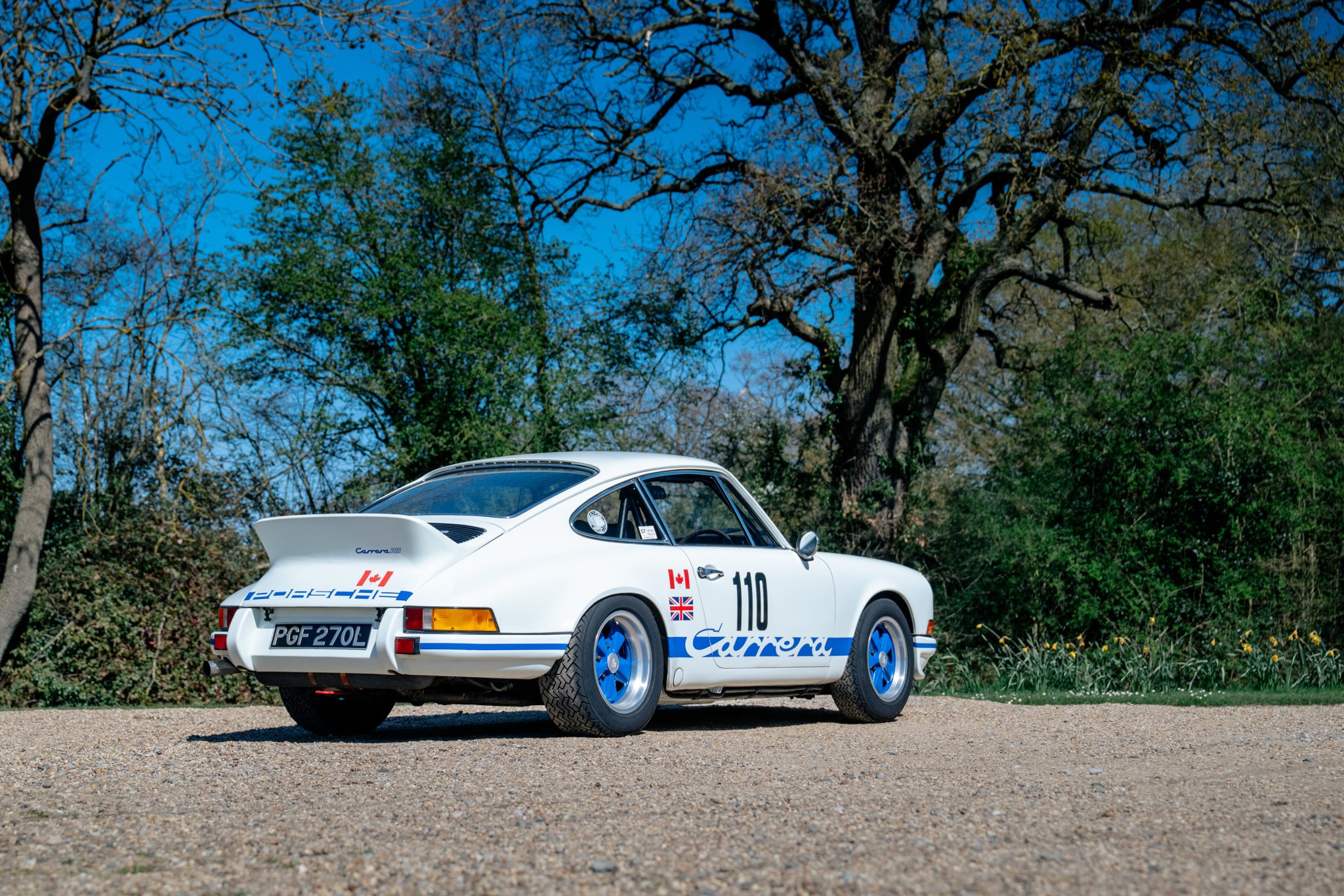
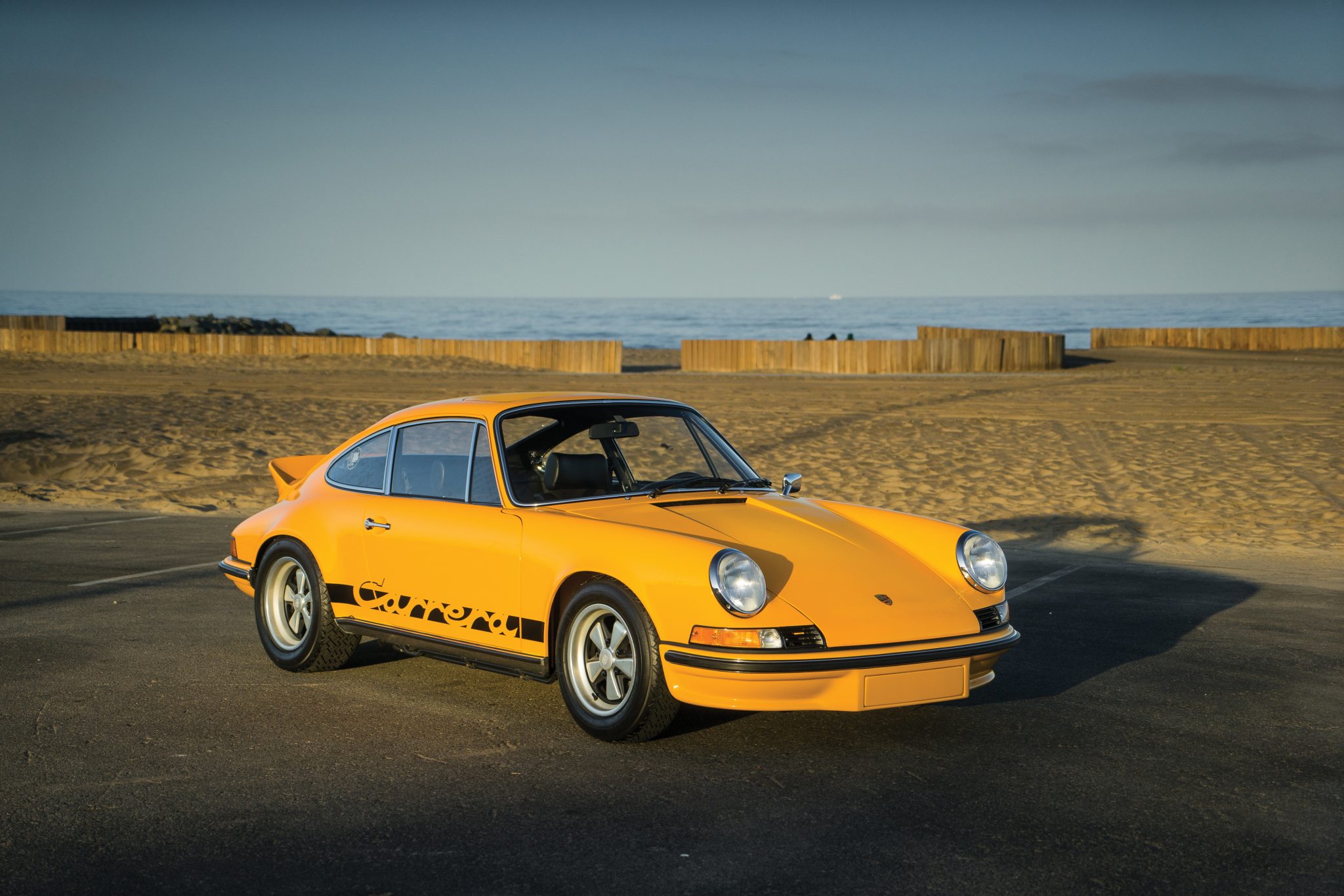
The 1973 Porsche Carrera RS 2.7 stands as the defining homologation special in automotive history. Developed to qualify the 911 for Group 4 Special GT racing, this lightweight powerhouse transitioned from a limited production run of 500 units to a total of 1,580 vehicles. This timeline traces its development from initial engineering concepts in 1972 through its final production in July 1973.
Genesis and Development: Late 1971 to Mid-1972
The motivation behind the Carrera RS 2.7 was clear: Porsche required a competitive platform for the 911 to dominate circuit racing and rallying. By 1971, the standard 911 2.4-liter engine had reached a plateau in terms of reliable power output. Porsche’s engineers, led by Norbert Singer and Hans Mezger, looked toward increasing displacement to gain torque and horsepower while maintaining the reliability required for endurance racing.
Development began under the internal project code 911.660. The engineering goal was to balance aggressive performance with weight reduction. Engineers experimented with thinner steel gauges for the body shell, simplified interior trim, and the removal of soundproofing materials. This pursuit of the "Sport" specification was not merely a marketing choice; it was a structural necessity to reach the weight requirements dictated by the FIA (Fédération Internationale de l’Automobile) for Group 4 competition.
Technical Specifications and Engine Evolution
The heart of the 1973 Carrera RS 2.7 is the M911/83 engine. While the standard 911 2.4S produced 190 horsepower, the RS engine was bored out to 90mm, resulting in a displacement of 2,687cc. This change was facilitated by the use of Nikasil-coated cylinders, a technological breakthrough that allowed for greater heat dissipation and lower friction compared to previous iron-lined cylinders.
Key Performance Metrics
- Engine: Flat-six, air-cooled, 2,687cc
- Induction: Bosch mechanical fuel injection (MFI)
- Output: 210 horsepower at 6,300 rpm
- Torque: 188 lb-ft at 5,100 rpm
- Weight (Lightweight): Approximately 960 kg (2,116 lbs)
- Top Speed: Approximately 245 km/h (152 mph)
The MFI system was critical. By utilizing the Bosch pump, engineers were able to achieve precise fuel metering at high rpms, which was essential for the engine’s endurance capabilities. This setup became the benchmark for Porsche's air-cooled engines for the remainder of the decade.
The Production Timeline: September 1972 – July 1973
The timeline of the RS 2.7 is defined by its rapid expansion. Originally, Porsche intended to build only 500 cars to meet the minimum threshold for Group 4 homologation. However, market demand significantly outstripped expectations.
- September 1972: The Porsche Carrera RS 2.7 is officially unveiled to the public at the Paris Motor Show. The reception is immediate, with orders flooding in well beyond the initial 500-unit projection.
- October 1972: Series production begins at the Zuffenhausen factory. The initial batch comprises the "Sport" (M471) trim, featuring thin-gauge glass, minimal trim, and bucket seats.
- November – December 1972: Due to demand, Porsche introduces the "Touring" (M472) version. This model retains the classic interior comforts of the standard 911 while maintaining the performance mechanicals of the RS.
- January 1973: The 500th unit is completed. FIA inspectors verify the vehicle fleet, and the Carrera RS 2.7 is officially homologated for international competition.
- February – June 1973: Production rates accelerate. Porsche continues to manufacture the car in various phases (first, second, and third series) to accommodate slight manufacturing variations and component availability.
- July 1973: The final production run concludes. By the end of this month, exactly 1,580 units have been produced across all variants.
Aerodynamics: The "Ducktail" Innovation
One of the most defining moments in the 1973 Carrera RS 2.7 timeline was the introduction of the Entenbürzel—the iconic "ducktail" rear spoiler. This was not an aesthetic choice but a direct result of wind tunnel testing at the Weissach research center.
The standard 911 body shape was prone to aerodynamic lift at high speeds, compromising handling stability. By adding the ducktail, Porsche engineers managed to reduce rear lift by approximately 75% and drag by 4.5%. This improvement allowed the car to achieve higher top speeds while maintaining grip through fast corners, providing a significant competitive advantage in endurance racing.
Comparative Overview: RS 2.7 Variants
The Carrera RS 2.7 was available in several configurations, often categorized by their "M" codes (Equipment Packages). Understanding these is essential for collectors and historians in 2026.
| Trim Level | Internal Code | Target Audience | Notable Features |
|---|---|---|---|
| Sport | M471 | Racing Enthusiasts | Thin glass, no rear seats, lightweight carpet |
| Touring | M472 | Street Drivers | 911S interior, soundproofing, back seats |
| Homologation | M491 | Competition Teams | Stripped chassis, roll cage, racing suspension |
The Sport trim remains the most sought-after by enthusiasts due to its raw, uncompromised nature, while the Touring package accounts for the majority of the total production run, offering a more usable experience for public road usage.
Frequently Asked Questions
1. How can you verify an authentic 1973 Porsche Carrera RS 2.7?
Verification is performed through a matching-numbers check of the engine (Type 911/83) and the chassis serial number. Official Porsche production records, often verified by a Certificate of Authenticity or the Porsche archive department, are the only definitive sources. Many "RS lookalikes" exist; therefore, a thorough physical inspection of the chassis reinforcement points is required.
2. What is the difference between the three production "series" of the RS 2.7?
The differences primarily concern the gauge of the sheet metal used in the body and small interior details. The first series used the thinnest steel, making them the lightest. Subsequent series had slightly thicker panels to improve structural rigidity and reduce production complexity, though the differences in weight are marginal for the average driver.
3. Was the 1973 Carrera RS 2.7 legal for road use?
Yes, despite being built for racing homologation, both the Sport and Touring versions were fully street-legal. The Sport version was often marketed as being "barely" street-legal due to the lack of insulation and lightweight construction, but it complied with all German StVZO requirements at the time of manufacture.
4. What is the significance of the "Carrera" name in this context?
Porsche revived the "Carrera" name—meaning "race" in Spanish—to pay homage to the brand’s victories in the Carrera Panamericana road race. The 1973 RS 2.7 was the first production 911 to bear the Carrera badge, cementing its status as the most performance-oriented model in the lineup.
5. Why is the MFI (Mechanical Fuel Injection) system considered difficult to maintain?
The Bosch MFI pump is a high-precision mechanical device that relies on specific calibration linked to the engine's throttle position and speed. It does not use modern electronic sensors. In 2026, specialized shops are required to rebuild or calibrate these pumps. If the system is neglected, it can lead to erratic idling and poor fuel mixture, necessitating professional expert intervention.
Maintenance and Ownership in 2026
For those managing or seeking to acquire an RS 2.7 today, the primary challenges involve sourcing original, period-correct components. Because the car was built as a lightweight racing machine, the metal and plastic parts are susceptible to fatigue.
Engine longevity depends heavily on consistent valve adjustments and the use of modern synthetic oils compatible with older air-cooled seals. The MFI system, as noted, requires a specialist who understands the mechanical nuances of 1970s fuel delivery. Always document all maintenance in a logbook; for a car of this historical significance, provenance is as important as technical condition.
Next Steps for Enthusiasts
If you are considering the acquisition or long-term preservation of a 1973 Carrera RS 2.7, your first step should be to consult the official Porsche archive for the chassis’s original factory specifications. Engage with a reputable appraiser specializing in air-cooled Porsches to ensure the vehicle’s components match its historical build record. Maintaining this vehicle is a commitment to preserving one of the most vital chapters in sports car history.