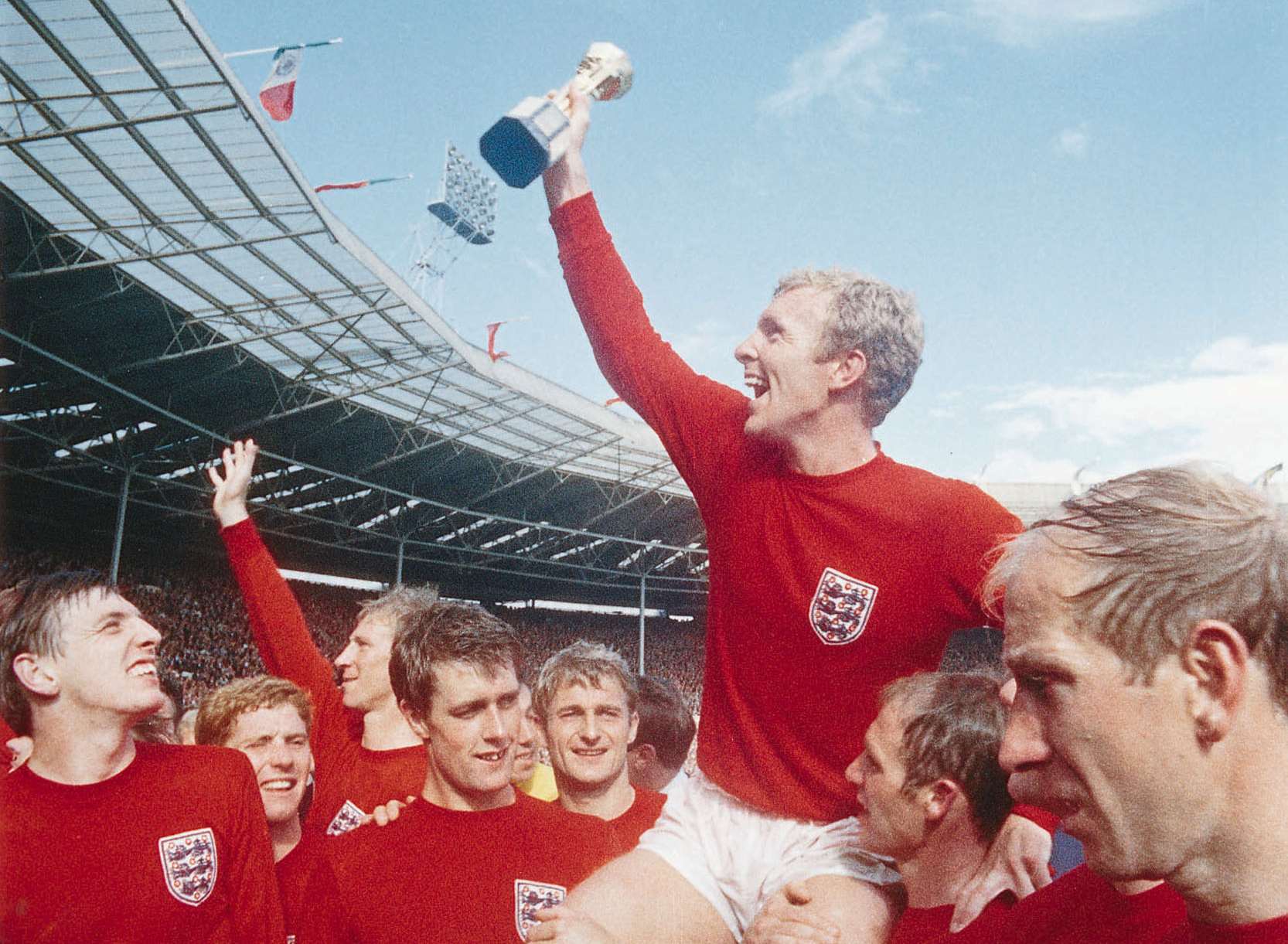
The 1966 FIFA World Cup Final remains the defining moment in English football history, culminating in a 4-2 extra-time victory over West Germany at Wembley Stadium. Managed by Alf Ramsey, England’s starting eleven and tactical configuration broke conventional molds by discarding traditional wingers in favor of a fluid, industrious midfield and a robust defensive structure that secured the nation's only senior men's World Cup title.
The Strategic Blueprint: Alf Ramsey’s "Wingless Wonders"
When Sir Alf Ramsey took charge of the England national team in 1963, he boldly declared that England would win the 1966 World Cup. To achieve this, Ramsey engineered a tactical revolution that discarded the conventional 4-2-4 formation popular in Europe and South America during the era. Instead, he pioneered a 4-3-3 variant that relied on narrow, hard-working midfielders rather than traditional, chalk-holding wingers. This system became universally known as the "Wingless Wonders."
The tactical genius of Ramsey’s setup lay in numerical superiority in the central areas of the pitch. By pulling the wide midfielders—principally John Connelly, Terry Paine, and later Alan Ball—into central channels, England could stifle opposition playmakers while releasing full-backs George Cohen and Ray Wilson to provide width in the attacking third. This required phenomenal physical stamina, tactical discipline, and versatility from every player on the pitch. The system was defensively impregnable, conceding only three goals throughout the entire tournament prior to the final, and it maximized the exceptional talents of captain Bobby Charlton and hat-trick hero Geoff Hurst.
The Starting Lineup: Player Profiles and Roles
Every member of the 1966 World Cup Final starting eleven played a distinct, highly specialized role in Ramsey’s tactical scheme. Understanding their individual contributions illuminates how England maintained control over a technically gifted West German side.
Goalkeeper and Defense
- Gordon Banks (Goalkeeper): Widely regarded as one of the greatest goalkeepers in football history, Banks provided an aura of absolute calm behind a resolute backline. His handling, positional awareness, and agility were vital, particularly in dealing with West Germany's dangerous aerial threats and long-range shooting from figures like Wolfgang Overath.
- George Cohen (Right-Back): Cohen was the epitome of the modern, overlapping full-back long before the term became ubiquitous. His defensive solidity against dangerous German wingers, combined with his relentless stamina to drive forward down the right flank, created essential passing lanes.
- Jack Charlton (Central Defender): The towering older brother of Bobby Charlton, Jack brought uncompromising physical presence, aerial dominance, and fierce competitiveness to the heart of the defense. Paired with Bobby Moore, he swept up loose balls and neutralized opposing central forwards.
- Bobby Moore (Central Defender and Captain): The captain and intellectual heartbeat of the team. Moore did not need to rely on desperate tackles because his anticipation, reading of the game, and immaculate distribution allowed him to intercept attacks effortlessly. His vision also initiated many of England's transitional counter-attacks.
- Ray Wilson (Left-Back): Everton's dependable left-back possessed exceptional pace and defensive instincts. Wilson dealt expertly with the tricky Reinhard Libuda, while also offering calculated support down the left flank to ease pressure on the midfield.
Midfield
- Nobby Stiles (Defensive Midfielder): Instantly recognizable by his missing teeth, combative tackles, and celebratory dances, Stiles was the ultimate midfield destroyer. Tasked with man-marking the brilliant West German playmaker Wolfgang Overath, Stiles successfully neutralized his influence while breaking up play with relentless energy.
- Bobby Charlton (Attacking Midfielder): Operating as the creative engine, Bobby Charlton was the team's driving force. Blessed with searing pace, two-footed shooting ability, and immense stamina, he transitioned defense into attack instantly. Although tightly marked by Franz Beckenbauer in the final, Charlton’s box-to-box movement stretched the German defense.
- Alan Ball (Midfielder): At just 21 years old, Ball was the youngest player in the England starting lineup. He covered an astonishing amount of ground during the 120 minutes of the final, running himself to exhaustion. His tireless work rate, neat passing, and crucial extra-time assist for Hurst's second goal epitomized England's physical superiority.
Forwards
- Martin Peters (Midfielder/Winger): Playing on the left side of the attacking trio, Peters was a pioneer of the "arrive late in the box" midfield style. His tactical intelligence allowed him to drift into space unnoticed by defenders, a trait that yielded England's second goal during regular time.
- Geoff Hurst (Striker): Initially a backup to Jimmy Greaves, Hurst seized his opportunity when Greaves suffered an injury earlier in the tournament. In the final, Hurst delivered the most iconic performance in World Cup history, scoring a historic hat-trick—the first and still only one ever recorded in a men's World Cup final.
- Roger Hunt (Striker): Liverpool’s prolific forward was a tireless worker who stretched opposing center-backs with his direct running. Hunt scored four goals during the tournament and unselfishly created space for Hurst, constantly pressing West German defenders to force mistakes.
Comparison of Squad Structures: England vs. West Germany (1966 Final)
The tactical clash in the final pitted England's rigid, industrious 4-3-3 against West Germany’s technically sound, disciplined WM-derived structure featuring a young Franz Beckenbauer.
| Tactical Element | England (Alf Ramsey) | West Germany (Helmut Schön) |
|---|---|---|
| Formation | 4-3-3 ("Wingless Wonders") | 4-2-4 / Modified WM |
| Key Playmaker | Bobby Charlton | Wolfgang Overath / Franz Beckenbauer |
| Defensive Approach | High-pressing, zonal coverage with a sweeper-style center-back (Moore) | Man-marking system (Beckenbauer tracking Bobby Charlton) |
| Attacking Width Provided By | Overlapping full-backs (Cohen & Wilson) | Traditional wingers (Held & Emmerich) |
| Physical Profile | Exceptionally high stamina, direct running, aerial strength | Technical proficiency, tactical discipline, resilience |
The Match Dynamics: How the Team Performed Under Pressure
The final at Wembley began with a shock when Helmut Haller capitalized on a defensive mix-up to put West Germany ahead in the 12th minute. However, England’s mental resilience, a hallmark instilled by Alf Ramsey, showed immediately. Geoff Hurst equalized within six minutes by heading home a free-kick delivered by captain Bobby Moore.
As the match progressed into the second half, England's physical conditioning proved decisive. Martin Peters poked home a rebound in the 78th minute to give England a 2-1 lead, seemingly securing the trophy. Yet, dramatic tension peaked in the final seconds of normal time when a controversial late free-kick led to Wolfgang Weber scrambling home an equalizer for West Germany, forcing the match into extra time.
In the extra thirty minutes, the supreme fitness of the England team became the defining factor. Exhausted German legs struggled to match the tireless surges of Alan Ball and Bobby Charlton. In the 101st minute, Ball crossed for Hurst, whose thunderous shot hit the underside of the crossbar, bounced down, and was controversially ruled to have crossed the line by referee Gottfried Dienst and linesman Tofik Bahramov—creating one of the most debated moments in football history. In the dying seconds of extra time, with German players committed forward in desperate search of an equalizer, Bobby Moore launched a long ball upfield. Geoff Hurst raced clear and smashed an emphatic shot into the roof of the net, sealing a 4-2 victory and prompting commentator Kenneth Wolstenholme's immortal television words: "They think it's all over... it is now!"
Legacy and Impact on English Football
The 1966 World Cup-winning team holds a mythical status in British sporting culture. They remain the only group of English men's players to lift the Jules Rimet trophy, setting an enduring benchmark against which every subsequent generation is measured.
Beyond the trophy itself, Ramsey’s pragmatic tactical flexibility permanently shifted how English football perceived team shape. While English domestic football traditionally prized the flamboyant 4-4-2 or traditional wing play, the 1966 triumph demonstrated the value of tactical discipline, fitness, and positional interchange. The team proved that collective work ethic and tactical innovation could overcome individual flair on the world's biggest stage.
Frequently Asked Questions
Who managed the England team in the 1966 World Cup Final?
Sir Alf Ramsey managed the England team. He took charge in 1963 and systematically rebuilt the national squad, implementing his revolutionary "Wingless Wonders" tactical system that brought England their historic World Cup victory.
Why was the 1966 England team called the "Wingless Wonders"?
The team earned this moniker because Alf Ramsey deliberately discarded traditional wingers who hugged the touchline. Instead, he deployed narrow midfielders who worked centrally, relying on overlapping full-backs to provide width and maintaining a compact, defensively sound structure.
Who scored the goals for England in the 1966 World Cup Final?
Geoff Hurst scored a famous hat-trick (goals in the 18th, 101st, and 120th minutes), and Martin Peters scored England's other goal in the 78th minute during the 4-2 extra-time win over West Germany.
Did Jimmy Greaves play in the 1966 World Cup Final?
No. Jimmy Greaves was England’s premier starting striker entering the tournament but suffered a severe shin injury during the group stage match against France. Geoff Hurst replaced him in the lineup, performed brilliantly, and retained his starting spot for the final.
How many players started for England in the 1966 final?
Eleven players started the match: Gordon Banks, George Cohen, Jack Charlton, Bobby Moore, Ray Wilson, Nobby Stiles, Bobby Charlton, Alan Ball, Martin Peters, Geoff Hurst, and Roger Hunt. Substitutions were not permitted in World Cup matches during this era.
Next Actions and Further Exploration
To deepen your understanding of this historic era, examine official match footage from the BBC or FIFA archives to observe the tactical fluidity of the full-backs. Reviewing Alf Ramsey's tactical writings or reading biographical accounts of captain Bobby Moore provides valuable context regarding the leadership and psychology that underpinned England's 1966 campaign.