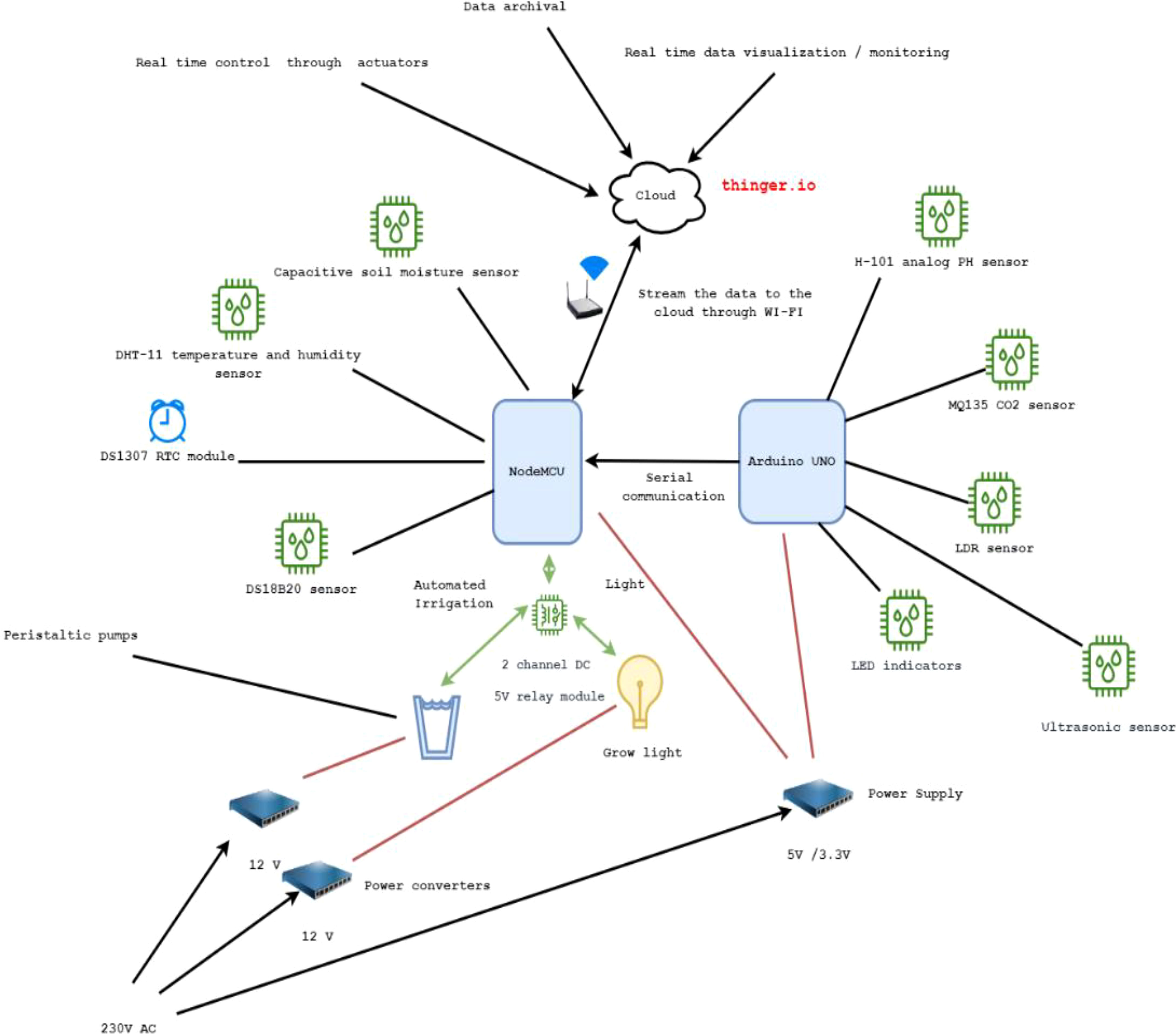
Designing and implementing a real-time cloud architecture requires a systematic approach to hardware selection, low-latency networking, distributed consensus, and event-driven data streaming to ensure deterministic performance under unpredictable workloads.
The evolution of modern digital infrastructure has shifted from static, batch-oriented data processing to hyper-responsive ecosystems where microseconds matter. Whether powering algorithmic financial trading platforms, live telecommunications routing, autonomous vehicle telemetry ingestion, or real-time IoT device fleet management, traditional cloud computing models often introduce unacceptable latency. Standard cloud frameworks optimize for throughput and massive parallel storage at the expense of predictable, bounded response times. Designing a real-time cloud bridges this gap by marrying scalable cloud elasticity with the stringent determinism of edge and real-time operating systems.
Achieving a true real-time cloud environment is not merely a matter of spinning up faster virtual machines; it requires a complete rethinking of the architectural stack. Every layer—from bare-metal hypervisors and software-defined networking to message brokers, stream processing engines, and persistent data layers—must be engineered for low jitter and minimal overhead. This comprehensive guide outlines the ten essential steps required to successfully design, build, and deploy a production-grade real-time cloud environment.
1. Defining Strict Latency and Determinism Objectives
Before procuring hardware or configuring network topologies, engineering teams must establish precise Service Level Objectives (SLOs) and Service Level Agreements (SLAs). Real-time computing is broadly classified into two categories: soft real-time, where occasional deadline misses degrade user experience but cause no catastrophic failure, and hard real-time, where missing a deadline by even a millisecond can result in system failure or severe safety hazards.
To design an effective real-time cloud, you must document the exact deterministic bounds required for end-to-end processing. This involves breaking down the latency budget across four primary phases:
- Ingestion Latency: The time required for a client payload to hit the cloud edge network boundary.
- Transport Latency: The propagation and routing delay across the internal cloud backplane.
- Computation Latency: The processing time consumed by stream engines, microservices, or containerized workers.
- Persistence or Delivery Latency: The time required to write state to storage or push a response back to an external actuator.
Establishing these metrics dictates every subsequent architectural decision, ensuring that the chosen hardware, protocols, and software frameworks can collectively honor the established latency budget under peak loads.
2. Selecting Specialized Bare-Metal and Virtualization Infrastructure
Traditional multi-tenant cloud environments suffer from noisy neighbor effects, CPU steal, and unpredictable hypervisor scheduling jitter, all of which are fatal to real-time workloads. The foundation of a real-time cloud must rest on specialized bare-metal instances or ultra-low-latency hypervisor configurations.
When evaluating infrastructure providers or building private cloud hardware, architects must prioritize specific hardware characteristics:
- CPU Architecture: Utilize high-frequency, multi-core processors with consistent clock speeds (avoiding aggressive, unpredictable thermal throttling or dynamic frequency scaling like Intel SpeedStep or AMD Cool'n'Quiet when maximum determinism is required).
- Kernel Configuration: Implement Real-Time Linux kernels patched with the
PREEMPT_RTpatchset, which converts standard Linux into a hard real-time operating system by forcing most kernel code to be preemptible. - Virtualization Isolation: If virtualization is mandatory, deploy type-1 hypervisors with core pinning, non-uniform memory access (NUMA) node awareness, and dedicated PCI pass-through for network interface cards (SR-IOV) to bypass hypervisor networking stacks.
| Infrastructure Layer | Standard Cloud Approach | Real-Time Cloud Approach |
|---|---|---|
| Compute Scheduling | Oversubscribed vCPUs, variable time slices | Pinning dedicated physical cores to specific threads |
| Memory Management | Transparent Huge Pages, dynamic paging | Locked memory (mlockall), disabled swapping, NUMA optimization |
| Hypervisor Stack | Software-switched virtual bridges | SR-IOV, Kernel-bypass networking (DPDK) |
| Storage Subsystem | Network-attached virtual disks with burst limits | Direct-attached NVMe arrays with raw I/O access |
3. Architecting Low-Latency Software-Defined Networking (SDN)
Network congestion and packet serialization delays are primary bottlenecks in distributed cloud architectures. Standard TCP/IP stacks introduce significant overhead through kernel interrupts, context switches, and complex buffer management.
To achieve sub-millisecond network transit within a real-time cloud, architects must adopt advanced networking paradigms:
- Kernel-Bypass Technologies: Implement frameworks like the Data Plane Development Kit (DPDK) or OpenOnload. These tools poll network interface cards directly from user space, bypassing the operating system kernel networking stack entirely and eliminating costly context switches.
- Transport Protocols: Move away from standard TCP where appropriate for internal telemetry. Utilize User Datagram Protocol (UDP) combined with application-level reliability framing, or adopt modern transport protocols like QUIC and RDMA over Converged Ethernet (RoCE) for zero-copy memory transfers between cluster nodes.
- Network Topology: Design flat, non-blocking leaf-spine network architectures to ensure that any server can communicate with any other server across a predictable, minimal number of hops.
4. Deploying Distributed Event Streaming Backbones
At the heart of any real-time cloud lies the event streaming backbone. This layer acts as the nervous system, ingesting, buffering, and distributing continuous streams of data from edge sensors, user interfaces, and external APIs to downstream processing engines.
The selection of the message broker or event streaming platform must align with the durability and latency requirements defined in Step 1:
- High-Throughput Log-Based Brokers: Platforms like Apache Kafka provide massive horizontal scalability and durable storage, making them ideal for systems that require event replay capabilities, though tuning is required to minimize tail latencies.
- Low-Latency Message-Oriented Brokers: Technologies such as Apache Pulsar, NATS, or Eclipse Mosquitto (for MQTT workloads) offer lightweight pub/sub models with exceptional sub-millisecond delivery guarantees for distributed microservices.
- Partitioning and Sharding: Design topic partitions carefully to ensure even load distribution across broker nodes, preventing hot spots that can introduce queueing delays and latency spikes.
5. Implementing Stream Processing and Stateful Computation Engines
Ingesting data rapidly is only half the battle; the real-time cloud must also process, filter, aggregate, and enrich data on the fly. Batch processing frameworks like Hadoop are entirely unsuitable here. Instead, architects must deploy distributed stream processing engines.
Key considerations for real-time computational layers include:
- Framework Selection: Utilize frameworks like Apache Flink or Apache Spark Structured Streaming, which process events as unbounded data streams with native support for event-time processing and watermarking to handle late-arriving data gracefully.
- State Management: Real-time stream processing often requires maintaining state across sliding or tumbling time windows (e.g., calculating moving averages or detecting fraud patterns over a 5-minute window). Configure high-performance distributed state backends, such as RocksDB integrated with distributed object stores, to ensure fast checkpointing without blocking execution threads.
- Fault Tolerance: Balance processing speed with exactly-once semantic guarantees. While transactional consistency adds overhead, careful tuning of checkpoint intervals ensures that recovery from node failures happens within acceptable RTO (Recovery Time Objective) windows.
6. Designing Resilient and Distributed Storage Layers
Persisting data in a real-time cloud presents a fundamental engineering paradox: disk input/output operations are inherently slower than memory operations, yet real-time systems often require durable logs and fast analytical lookups.
To resolve this, architects employ a tiered storage strategy:
- In-Memory Data Grids (IMDGs): Utilize distributed caching and in-memory key-value stores like Redis Enterprise or Apache Ignite for hot data paths, session states, and rapid reference lookups requiring sub-millisecond response times.
- Append-Only Log Storage: For persistent event logs, implement distributed file systems or object stores optimized for sequential write performance.
- Distributed Consensus and Metadata: Coordinate cluster state using robust consensus protocols like Raft or Paxos (via tools like etcd or Apache ZooKeeper). Ensure that metadata operations do not block the primary data ingestion pipeline.
7. Establishing Comprehensive Observability, Telemetry, and Tracing
A real-time cloud is a highly dynamic, distributed system where failure modes are often complex and transient. Traditional monitoring tools that poll metrics every 60 seconds are inadequate for diagnosing microsecond-level latency spikes or transient packet drops.
Building an effective observability pipeline involves three core pillars:
- High-Resolution Metrics: Collect system, network, and application metrics at sub-second intervals using push-based telemetry collectors to capture fleeting resource contention spikes.
- Distributed Tracing: Implement end-to-end request tracing (using OpenTelemetry standards) across all microservices and streaming pipelines. This allows engineers to visualize the exact path and latency contribution of every service hop for a given transaction.
- Automated Anomaly Detection: Deploy machine learning models trained on baseline performance data to automatically flag abnormal jitter, queue depth expansions, or garbage collection pauses before they breach SLA thresholds.
8. Automating Orchestration and Infrastructure as Code (IaC)
Managing a complex, low-latency cloud environment manually introduces human error and configuration drift. Infrastructure automation ensures that production environments can be spun up, scaled, and repaired with absolute consistency.
Best practices for real-time cloud automation include:
- Immutable Infrastructure: Treat servers and container images as disposable. Whenever a configuration change is required, replace the instance rather than modifying it in place.
- Declarative Orchestration: Utilize container orchestration platforms configured with custom resource schedulers that respect core pinning, CPU isolation, and strict node affinity rules.
- CI/CD Pipeline Validation: Integrate automated latency benchmarking and chaos engineering tests (such as intentionally introducing network jitter or node failures) directly into the deployment pipeline to catch performance regressions before production releases.
9. Enforcing Zero-Trust Security and Regulatory Compliance
Speed and real-time responsiveness must never come at the expense of security and data privacy. Real-time clouds often process sensitive financial transactions, healthcare telemetry, or personally identifiable information (PII) at massive scale, making them prime targets for malicious actors.
Securing the real-time cloud requires a multi-layered security posture:
- Encryption in Transit and at Rest: Utilize hardware-accelerated cryptographic modules (such as AES-NI instructions or dedicated crypto-coprocessors) to encrypt data streams without incurring measurable latency penalties.
- Zero-Trust Microsegmentation: Implement strict network policies and mutual TLS (mTLS) authentication between all internal services, ensuring that even if an outer perimeter is breached, lateral movement is constrained.
- Compliance Guardrails: Ensure that real-time log ingestion and stream processing comply with regulatory frameworks such as GDPR, HIPAA, or PCI-DSS, particularly regarding data residency, masking, and automated retention/purge cycles.
10. Continuous Performance Tuning and Chaos Engineering
The final step in implementing a real-time cloud is recognizing that the architecture is never truly "finished." Production workloads evolve, hardware degrades, and software dependencies update, all of which can subtly erode system determinism over time.
To maintain optimal performance, organizations must institutionalize ongoing validation practices:
- Continuous Profiling: Run low-overhead profilers in production to identify CPU hot spots, memory allocation bottlenecks, and lock contention within application code.
- Chaos Engineering Experiments: Proactively inject faults—such as sudden network partitions, artificial latency injection, disk filling, or sudden traffic surges—to verify that the real-time cloud degrades gracefully and self-heals according to design expectations.
- Capacity Planning Feedback Loops: Use telemetry data to continuously recalibrate scaling thresholds, partition counts, and hardware provisioning models to stay ahead of organic business growth.
Frequently Asked Questions
What is the primary difference between standard cloud computing and a real-time cloud?
Standard cloud computing prioritizes high throughput, horizontal scalability, and cost efficiency, often accepting variable latency and occasional resource contention. A real-time cloud prioritizes determinism, bounded response times, and predictable execution windows, utilizing specialized hardware, kernel-bypass networking, and dedicated resource allocation to eliminate latency jitter.
How does the Linux PREEMPT_RT patch help in a real-time cloud?
The PREEMPT_RT patch transforms the standard Linux kernel into a real-time operating system by making most kernel subsystems—including interrupt handlers and spinlocks—fully preemptible. This ensures that high-priority real-time tasks can immediately interrupt lower-priority background processes, drastically reducing scheduling latency and system jitter.
Can Kubernetes be used for real-time cloud architectures?
Yes, but it requires deep configuration. Default Kubernetes setups are not real-time friendly. To use Kubernetes effectively in a real-time cloud, administrators must implement custom kubelet configurations, CPU manager policies (such as static policy for core pinning), memory manager policies, and integrate container network interfaces (CNIs) that support kernel-bypass technologies like DPDK.
What is kernel-bypass networking, and why is it important?
Kernel-bypass networking allows applications to read and write data directly to and from network interface cards, bypassing the operating system kernel networking stack. This eliminates expensive context switches, CPU interrupts, and memory copying overhead, shaving crucial microseconds off network transit times.
How do you handle state management in a real-time stream processing cloud?
State management in real-time streams is handled by distributed state backends (such as RocksDB integrated with frameworks like Apache Flink) that maintain local state alongside stream workers while periodically asynchronously checkpointing state to durable distributed object storage for fault tolerance.
Conclusion and Next Actions
Designing and implementing a real-time cloud is a multidisciplinary engineering challenge that demands careful coordination across hardware selection, kernel tuning, networking, and software architecture. By methodically moving through these ten steps—from establishing precise latency SLOs to implementing continuous chaos engineering—organizations can build resilient, ultra-responsive infrastructures capable of meeting the rigorous demands of modern real-time applications. To begin your implementation journey, audit your current application latency bottlenecks, establish your deterministic requirements, and conduct a proof-of-concept utilizing bare-metal nodes configured with kernel-bypass networking.