IPv6 and IPsec are fully compatible by design, with IPsec serving as a mandatory core protocol for IPv6 compliance in its original specifications and remaining natively integrated to secure network-layer communications. Unlike IPv4—where IPsec was bolted on later as an architectural afterthought via separate add-on packages—IPv6 builds IPsec support directly into its foundational framework, ensuring that modern internet protocol architectures can utilize cryptographic authentication and encryption seamlessly across any network medium.
Architectural Evolution: Why IPv6 and IPsec Were Built Together
To understand the modern relationship between Internet Protocol version 6 (IPv6) and Internet Protocol Security (IPsec), one must examine the historical constraints of IPv4. When IPv4 was conceptualized and deployed, internet security relied primarily on perimeter defenses, trusted local area networks, and application-layer protections. Packet-level encryption was rare and computationally expensive. As the global internet expanded and threat vectors diversified, engineers realized that securing communications required a transport-independent, network-layer security mechanism.
IPsec was subsequently developed as an extension to IPv4. However, because it was retrofitted onto an existing protocol, it faced severe implementation challenges. Network Address Translation (NAT) devices frequently broke IPsec state tables, firewall traversal required complex configuration workarounds, and header overhead compounded legacy fragmentation issues.
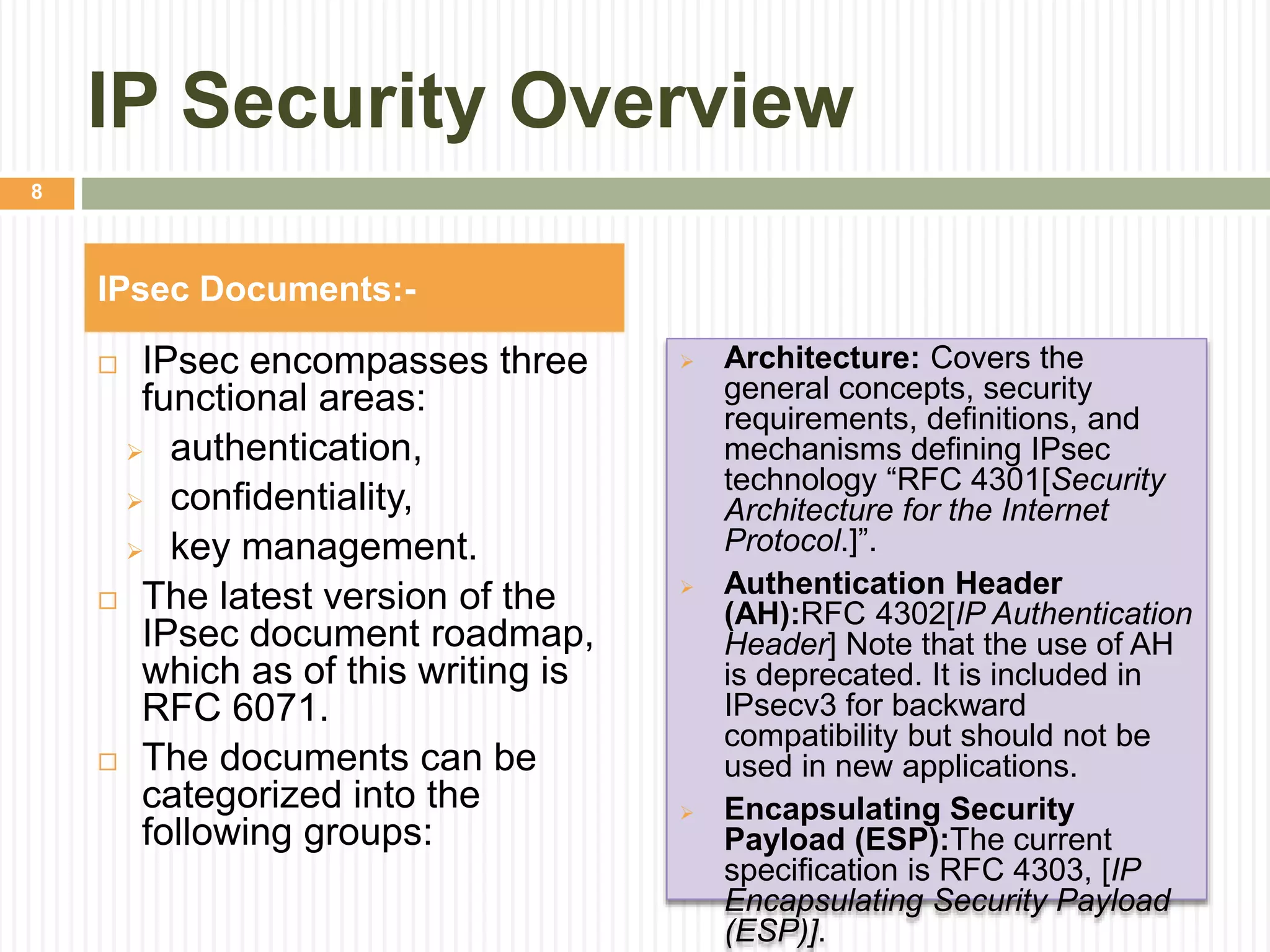
When the Internet Engineering Task Force (IETF) designed IPv6, they resolved these systemic flaws by mandating that IPsec be integrated into the protocol suite from its inception. Although subsequent standards updates (such as RFC 4301) relaxed the absolute requirement for mandatory end-to-end IPsec implementation in every single IPv6 node, the architectural hooks, header definitions, and extension headers were explicitly built to support IPsec natively. This means that IPv6 routers and hosts do not require proprietary translation tricks or unstable wrapper protocols to establish secure tunnels; the framework expects and accommodates cryptographic extensions natively.
Core Components of IPsec Within the IPv6 Architecture
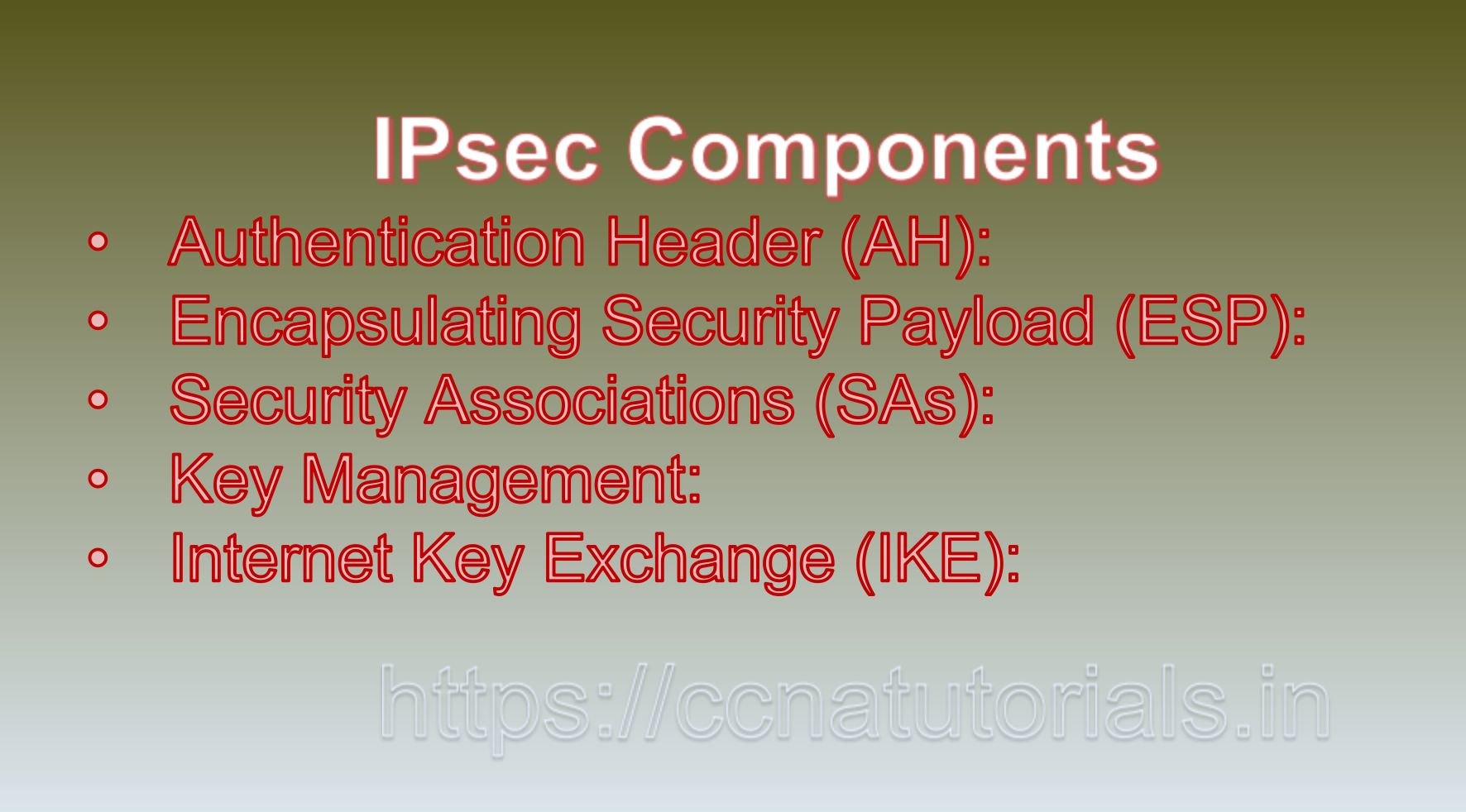
IPsec operates at the network layer (Layer 3 of the OSI model), making it transparent to transport and application protocols like TCP, UDP, and HTTP. When paired with IPv6, IPsec utilizes two primary security protocols and a dynamic key management framework.
Authentication Header (AH)
The Authentication Header provides connectionless integrity, data origin authentication, and optional anti-replay protection for IPv6 packets. AH protects the entire IPv6 packet—including the static header fields (except for fields that change dynamically in transit, such as Hop Limit)—by calculating a cryptographic checksum over the data.
In IPv6 environments, AH handles extension headers differently than IPv4. Because IPv6 utilizes a dynamic chain of extension headers rather than a monolithic header structure, AH algorithms must account for hop-by-hop options versus end-to-end options. AH ensures that a packet has not been altered in transit and verifies the identity of the sender, though it does not provide confidentiality (encryption).
Encapsulating Security Payload (ESP)
The Encapsulating Security Payload provides comprehensive protection by offering confidentiality (encryption), data origin authentication, connectionless integrity, and anti-replay service. In an IPv6 network, ESP encrypts the inner payload and, depending on the operational mode, wraps it securely.
ESP is the most widely deployed component of IPsec because privacy and confidentiality are typically primary security objectives. When integrated with IPv6, ESP relies on the predictable structure of IPv6 base headers while cleanly encapsulating extension headers that need to remain hidden from intermediate nodes.
Security Associations (SA) and Internet Key Exchange (IKEv2)
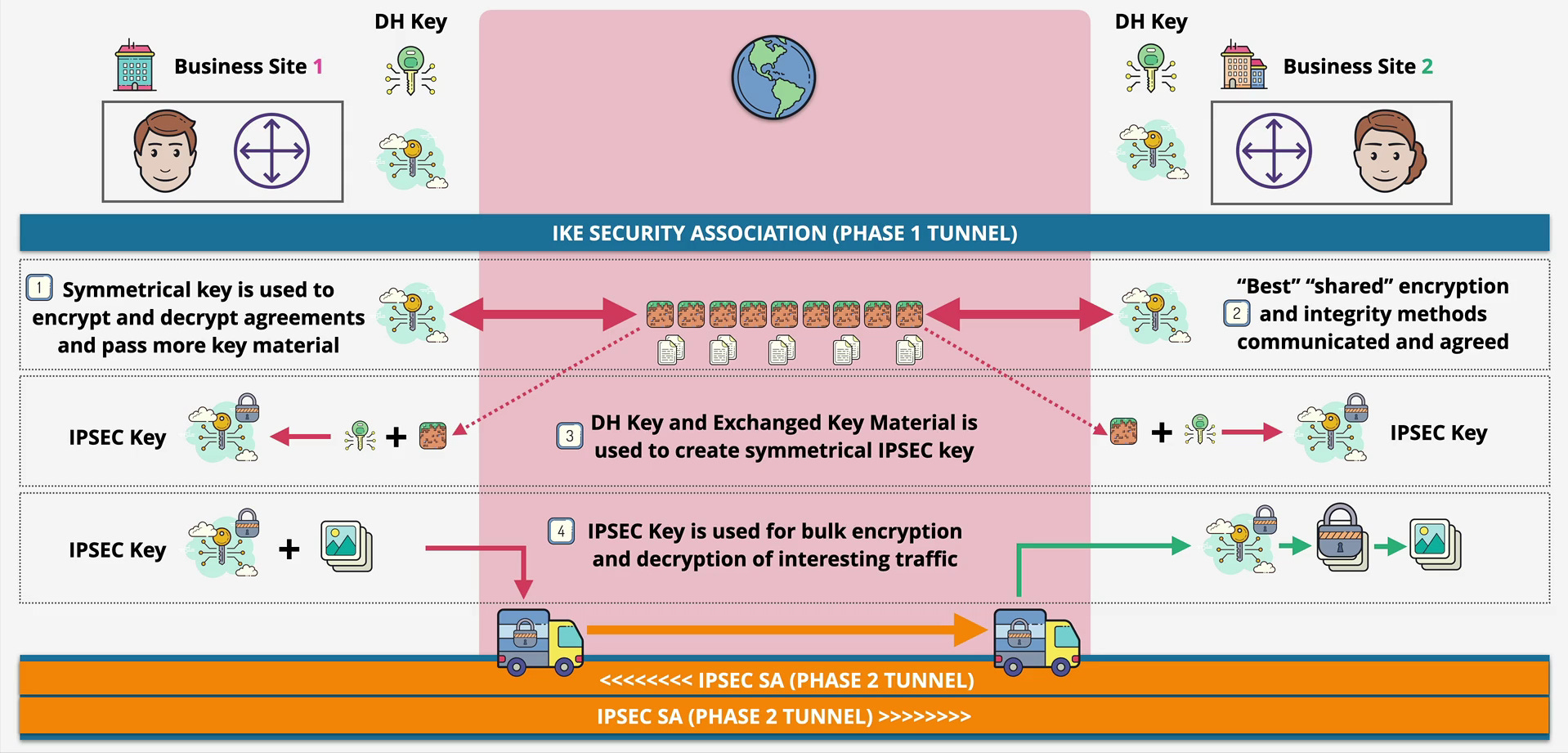
Before any data can flow securely via AH or ESP, communicating nodes must establish a Security Association (SA). The SA defines the cryptographic algorithms, keys, and operational parameters used for the session. In modern IPv6 and IPsec deployments, the Internet Key Exchange version 2 (IKEv2) protocol manages these associations.
IKEv2 benefits significantly from IPv6 features such as stateless address autoconfiguration and simplified header processing. Because IPv6 eliminates the broadcast storms of older networks and supports larger packet sizes natively without mandatory fragmentation, IKEv2 handshakes complete with fewer path Maximum Transmission Unit (MTU) black-hole issues.
IPv6 Extension Headers and IPsec Interaction
A defining characteristic of IPv6 is its use of extension headers inserted between the base IPv6 header and the upper-layer payload. These headers handle optional network-layer information, such as routing, fragmentation, and security. IPsec leverages these exact extension mechanisms via the Hop-by-Hop Options, Routing Header, and specifically Encapsulating Security Payload (ESP) and Authentication Header (AH) structures.
| IPv6 / IPsec Feature | IPv4 Implementation | IPv6 Native Implementation |
|---|---|---|
| IPsec Integration | Optional, retrofitted via RFC extensions | Built into architecture; standard extension headers |
| NAT Interaction | Severely impaired; requires NAT-Traversal (NAT-T) | Simplified by massive address space reducing raw NAT dependency |
| Header Overhead | High; requires additional encapsulation layers | Streamlined; fixed 40-byte base header with flexible extension chains |
| Address Autoconfiguration | Dependent on DHCP or manual static entry | Stateless Address Autoconfiguration (SLAAC) working alongside IKEv2 |
This clean separation allows intermediate routers to process basic routing instructions efficiently without inspecting encrypted payloads, while destination nodes parse the security extension headers in a standardized sequence.
Operational Modes: Transport vs. Tunnel in IPv6
IPsec operates in two distinct modes, both of which are fully supported and optimized within IPv6 networks:
Transport Mode
In transport mode, IPsec protects the payload of the IPv6 packet, leaving the base IPv6 header intact. This mode is typically used for host-to-host communications (e.g., a developer connecting securely to an IPv6-enabled database server). Because IPv6 addresses are globally unique and routable by design, transport mode allows end-to-end security associations without needing intermediary gateway devices, bypassing the complex NAT mappings that frequently plague IPv4 transport-mode deployments.
Tunnel Mode
In tunnel mode, the entire original IPv6 packet—including its base header and payload—is encapsulated inside a new, outer IPv6 packet with a fresh header. This mode is standard for site-to-site VPNs, connecting remote branch offices or cloud environments over the public internet. IPv6 tunnel mode is exceptionally robust because the larger minimum MTU of IPv6 (1280 bytes) reduces the risk of packet fragmentation failures during encapsulation.
Security Benefits of Combining IPv6 and IPsec
Deploying IPsec over an IPv6 infrastructure yields several structural security advantages over legacy IPv4 setups:
- Elimination of Broadcast Vulnerabilities: IPv6 replaces broadcast traffic with multicast and anycast, reducing the attack surface for local-segment sniffing and spoofing attacks that IPsec must mitigate.
- Mandatory Cryptographic Readiness: Because software stacks supporting IPv6 are engineered to parse IPsec extension headers natively, deploying zero-trust network architectures or encrypted overlays requires less custom middleware.
- True End-to-End Encryption: With billions of unique IP addresses available, Network Address Translation becomes unnecessary for standard connectivity. This allows IPsec transport mode to function as originally intended: direct, authenticated, and encrypted communication between two distinct hosts across the globe.
Common Compatibility Challenges and Misconceptions
Despite native compatibility, network engineers frequently encounter specific operational hurdles when deploying IPsec in IPv6 environments:
- Firewall and ACL Misconfigurations: Many legacy enterprise firewalls treat IPv6 extension headers as anomalies. If a security appliance drops packets containing unrecognized extension header chains, IPsec traffic will fail silently. Administrators must explicitly configure stateful inspection engines to permit AH and ESP traffic streams.
- MTU and Fragmentation Issues: Although IPv6 enforces a strict minimum MTU of 1280 bytes, encapsulation via IPsec tunnel mode adds significant header overhead. If the path MTU discovery (PMTUD) process is blocked by ICMPv6 filtering, packets exceeding the true link limit will be dropped, causing connection stalls.
- Dual-Stack Complexity: During the prolonged transition period where networks run both IPv4 and IPv6 simultaneously, administrators must maintain dual security policies. An IPsec policy defined for an IPv4 tunnel will not automatically protect the parallel IPv6 path, requiring explicit security associations for both protocol versions.
Verification and Troubleshooting Guidelines
Verifying that IPsec is successfully securing an IPv6 stream requires a methodical approach combining packet capture tools and system diagnostics.
- Check Security Associations: Use operating system command-line utilities (such as
setkeyon BSD/macOS orip xfrmon Linux) to verify that active SAs exist for your IPv6 endpoints. Ensure that inbound and outbound policies match expected encryption algorithms (e.g., AES-GCM). - Inspect Extension Headers via Wireshark: When capturing traffic on an IPv6 interface, filter for Next Header values corresponding to ESP (50) or AH (51). Verify that the decryption keys are loaded into your analysis tool if you need to inspect inner payloads.
- Validate ICMPv6 Rules: Ensure that your firewalls do not block ICMPv6 Type 2 packets (Packet Too Big). Allowing ICMPv6 messaging is critical for Path MTU Discovery to function correctly across IPsec tunnels.
Frequently Asked Questions
Are IPv6 and IPsec the same thing?
No. IPv6 is a network-layer protocol that defines how packets are structured, addressed, and routed across the internet. IPsec is a suite of cryptographic protocols designed to secure internet protocol communications by authenticating and encrypting each packet. While separate, they are designed to work together seamlessly.
Do I need to configure IPsec on every IPv6 network?
No. IPsec is not mandatory for basic IPv6 connectivity, but it is fully supported. Standard web browsing over IPv6 does not require IPsec unless specific security policies, VPNs, or zero-trust mandates require end-to-end encryption at the network layer.
How does IPv6 solve the NAT traversal problems that affected IPv4 IPsec?
IPv4 IPsec struggled with Network Address Translation because NAT alters IP addresses and ports embedded inside the packet headers, breaking cryptographic checksums. IPv6 provides a vastly larger address space that eliminates the necessity of NAT for standard host connectivity, allowing IPsec transport mode to operate directly without complex translation hacks.
Can IPsec protect upper-layer protocols like TCP and UDP in IPv6?
Yes. Because IPsec operates at Layer 3 (the network layer), it transparently secures any upper-layer protocol running inside the IP packet, including TCP, UDP, ICMPv6, and application-specific protocols, without requiring application modifications.
What is the performance impact of running IPsec over IPv6?
The performance impact depends primarily on the chosen cryptographic algorithms and hardware acceleration availability. Modern processors feature dedicated cryptographic instruction sets (such as AES-NI) that minimize CPU overhead, making the performance penalty of encryption negligible in high-speed enterprise environments.