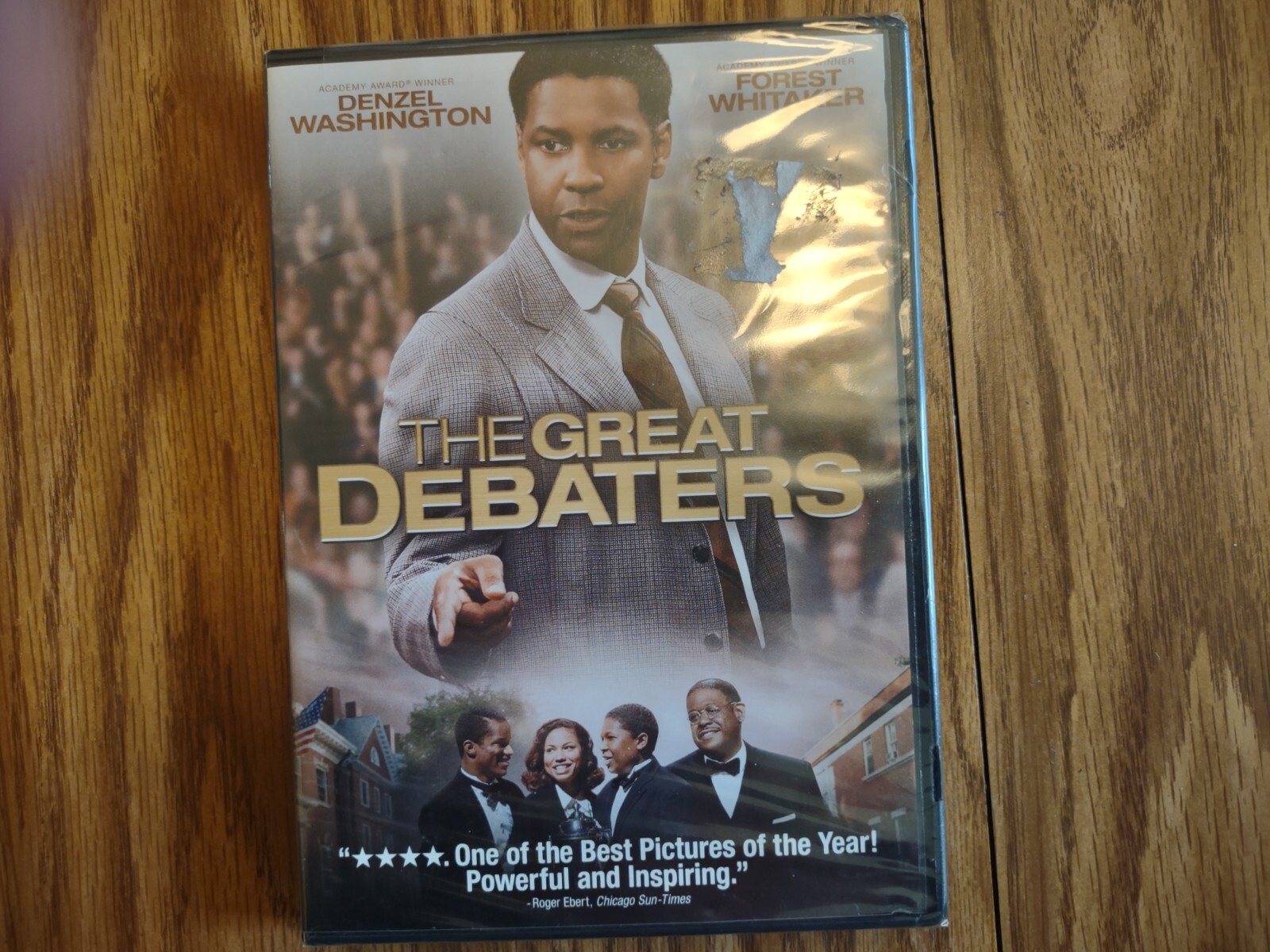
The Great Debaters (2007) is a biographical drama film directed by and starring Denzel Washington, chronicling the inspiring true story of Melvin B. Tolson, a professor at Wiley College in Texas who formed the school’s first debate team and led them to challenge powerhouse institutions in the era of Jim Crow segregation.
Introduction and Subject Identity
The Great Debaters, released in December 2007 by The Weinstein Company, brings a remarkable piece of American educational and civil rights history to the cinematic screen. Set in the 1930s deep South, the film focuses primarily on Melvin B. Tolson, a brilliant professor, poet, and radical organizer who coached a debate team composed of marginalized African American students at Wiley College, a historically black college (HBCU) in Marshall, Texas.
The narrative centers on the formation, trials, and triumphs of this debate squad, culminating in a historic debate against the reigning national champions, Harvard University. While cinematic adaptations inherently dramatize certain timelines and compress real-world events for dramatic effect, the film remains deeply anchored in the actual achievements of Tolson and his debaters, notably including a young James Farmer Jr. The movie explores themes of systemic racism, intellectual empowerment, eloquent rhetoric, and the unyielding dignity of individuals fighting for equality long before the mainstream Civil Rights Movement formally erupted.
Historical Background of Wiley College and Melvin B. Tolson
Understanding the factual foundation of The Great Debaters requires examining the actual history of Wiley College during the Jim Crow era. Founded in 1873 by the Freedman's Aid Society of the Methodist Episcopal Church, Wiley College was dedicated to the education of African Americans in the post-Reconstruction South. In this highly oppressive environment, academic institutions served as vital sanctuaries for intellectual development and resistance.
Melvin Beaunorus Tolson arrived at Wiley College as a professor of English and speech in the late 1920s. Tolson was not only an educator but also a celebrated Harlem Renaissance poet and a labor organizer who believed deeply in the power of words as a tool for social justice. Under his rigorous tutelage, the Wiley debate team operated under a unique philosophy. Tolson trained his students to master parliamentary procedure, engage in exhaustive research, and deliver arguments with emotional resonance and logical precision.
The debate team's success was unprecedented for an HBCU during an era when organized intercollegiate competition was heavily segregated. Wiley debated and defeated numerous regional and national opponents, establishing a formidable reputation that eventually caught the attention of white academic institutions.
| Historical Element | Factual Context in the 1930s |
|---|---|
| Institution | Wiley College (Marshall, Texas), established in 1873. |
| Coach | Melvin B. Tolson, professor, poet, and labor activist. |
| Key Student Debater | James Farmer Jr., who later co-founded CORE (Congress of Racial Equality). |
| Milestone Achievement | Undefeated streak leading to legendary competitions against major universities. |
Cast, Characters, and Cinematic Portrayals
Denzel Washington took on the dual role of director and lead actor, portraying Melvin B. Tolson with a blend of fierce intellect, demanding pedagogical discipline, and quiet vulnerability. Washington's direction emphasizes the rhythm of language, showcasing debate not merely as an academic exercise, but as a verbal weapon against prejudice and subjugation.
The student debaters are portrayed by a talented ensemble cast representing fictionalized composites or adaptations of real historical figures:
- James Farmer Jr. (played by Jurnee Smollett): Depicted as a prodigious 14-year-old intellectual who navigates the immense pressures of academic excellence while grappling with the terrifying realities of southern racial violence. In reality, James Farmer Jr. went on to become one of the towering figures of the Civil Rights Movement, co-founding the Congress of Racial Equality (CORE) in 1942.
- Samantha Booke (played by Jurnee Smollett): A fictionalized composite character representing the pioneering female debaters who broke gender and racial barriers within the forensic circuit.
- Henry Lowe (played by Nate Parker): A brilliant, rebellious, and fiercely independent student struggling with personal demons and the heavy psychological toll of Jim Crow segregation, whose oratorical brilliance anchors the team.
- Hamilton Burgess (played by Denzel Whitaker): A dedicated and disciplined team member who provides steady support and analytical depth to the squad.
Forest Whitaker also stars as James Farmer Sr., a theologian, pastor, and the first African American to earn a Ph.D. from Boston University. The complex relationship between James Farmer Sr. and his son provides emotional weight to the film, exploring the generational tensions between accommodationist survival strategies and active resistance.
Production and Creative Liberties
Developing The Great Debaters was a long-term passion project for producer Oprah Winfrey and her Harpo Films banner, alongside co-producers Todd Black, Dave Rubin, and Oprah Winfrey. The screenplay was written by Robert Eisele, drawing inspiration from a 1997 Esquire magazine article by Tony Scherman detailing the true history of Tolson's debate team.
Cinematically, the production team went to great lengths to recreate the texture of 1935 Texas, utilizing authentic locations, period-accurate costuming, and evocative cinematography by Philippe Rousselot. The musical score, composed by James Newton Howard and Peter Golub, blends traditional gospel, blues, and orchestral arrangements to underscore the historical gravity of the narrative.
From a historical standpoint, the film takes notable dramatic liberties for narrative cohesion. Most famously, the climactic debate depicted in the film is against Harvard University. In historical reality, the Wiley debate team actually competed against and defeated the reigning national debate champions—who, in 1935, were the University of Southern California (USC), not Harvard. Changing the opponent to Harvard was a deliberate screenwriting choice designed to maximize the symbolic weight of an underdog southern Black college taking on the ultimate bastion of American academic prestige. Additionally, historical timelines involving individual student members were compressed to fit a streamlined feature-length arc.
Thematic Depth: Rhetoric, Education, and Resistance
The Great Debaters operates on multiple thematic levels, examining how language and education function as instruments of liberation.
The Power of Words and Logic
Tolson's coaching methodology treats rhetoric not as empty speechifying, but as an exercise in rigorous logic, evidence evaluation, and persuasive structure. In the film, debate is presented as a discipline that requires students to understand both sides of an argument, fostering intellectual agility. This emphasis on critical thinking equips the Wiley debaters to dismantle racist assumptions not through physical retaliation, but through undeniable intellectual superiority.
The Psychological Toll of Jim Crow
The film does not shy away from the brutal realities of the 1930s South. Scenes depicting racial terror—such as witnessing a lynch mob—provide stark context for the intellectual endeavors of the characters. Education is framed not merely as a path to personal career success, but as a collective act of defiance. When Tolson and his students travel across the segregated South, every encounter with Jim Crow laws highlights the precariousness of their existence and the radical nature of their achievements.
Generational Shifts in Resistance
The ideological friction between James Farmer Sr. and his son, as well as between Tolson and conservative academic administrators who fear his radical labor organizing, illustrates the complex strategic debates within Black communities regarding how to combat white supremacy. While the elder Farmer preaches caution and dignity within established bounds, Tolson and the younger generation push for aggressive, unapologetic confrontation in the public square and the courtroom of ideas.
Reception, Critical Analysis, and Cultural Impact
Upon its release in December 2007, The Great Debaters received generally favorable reviews from critics and audiences alike. It was praised for its powerful performances, uplifting message, and historical illumination of a largely forgotten chapter of American history. The film was recognized by the American Film Institute (AFI) as one of the top ten movies of 2007 and received a Golden Globe nomination for Best Motion Picture – Drama.
Academic and cultural commentators have debated the film's historical adjustments. While purists note the substitution of Harvard for USC, cultural historians generally credit the film with bringing national attention to the legacy of HBCUs and the overlooked contributions of educators like Melvin B. Tolson. The film has become a staple in educational settings, frequently used in high school and university classrooms to teach units on rhetoric, African American history, and the Civil Rights Movement.
Frequently Asked Questions
Is The Great Debaters based on a true story?
Yes, the film is based on the true story of Melvin B. Tolson and the Wiley College debate team in 1935. However, the filmmakers altered certain historical details for dramatic effect, most notably changing the team's final historic opponent from the University of Southern California to Harvard University.
Did Wiley College actually debate Harvard in 1935?
No. Historically, Wiley College debated and defeated the University of Southern California (USC), which held the national championship at the time. The cinematic climax featuring Harvard was a dramatic adaptation to heighten the narrative impact for viewers.
Who was Melvin B. Tolson in real life?
Melvin B. Tolson was a multi-talented educator, acclaimed Harlem Renaissance poet, and labor organizer. He taught at Wiley College from 1924 to 1947, where he achieved legendary status as a debate coach before later teaching at Langston University and serving as the poet laureate of Liberia.
What happened to James Farmer Jr. after the events of the film?
James Farmer Jr. went on to have a profound impact on American history. He earned a degree from Wiley College, attended Howard University Divinity School, and in 1942 co-founded the Congress of Racial Equality (CORE). He was one of the principal leaders of the Civil Rights Movement, organizing the 1961 Freedom Rides that challenged segregated interstate bus travel.
Where can I watch The Great Debaters (2007)?
The film is widely available for streaming, digital rental, and physical purchase on DVD and Blu-ray through major digital distribution platforms and home entertainment retailers.
Conclusion and Next Actions
The Great Debaters (2007) endures as a compelling cinematic exploration of intellectual excellence, courage, and resilience under oppression. Viewers interested in deepening their understanding of this era should explore historical texts on the Harlem Renaissance, biographies of Melvin B. Tolson, and memoirs by civil rights leaders such as James Farmer Jr. To further appreciate the subject, consider reviewing historical archives related to Wiley College's forensic legacy or examining foundational works on the history of African American higher education during the Jim Crow era.