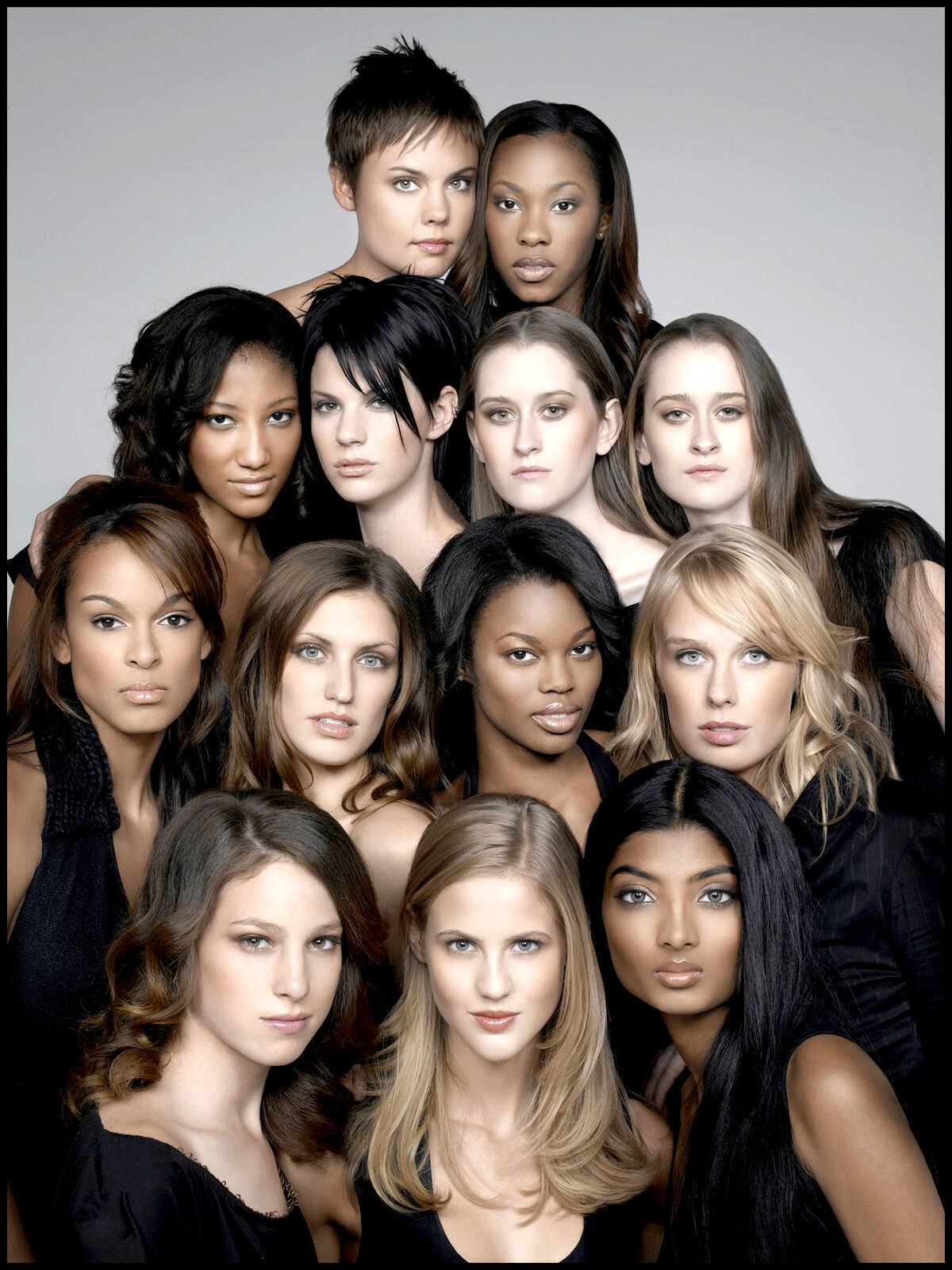
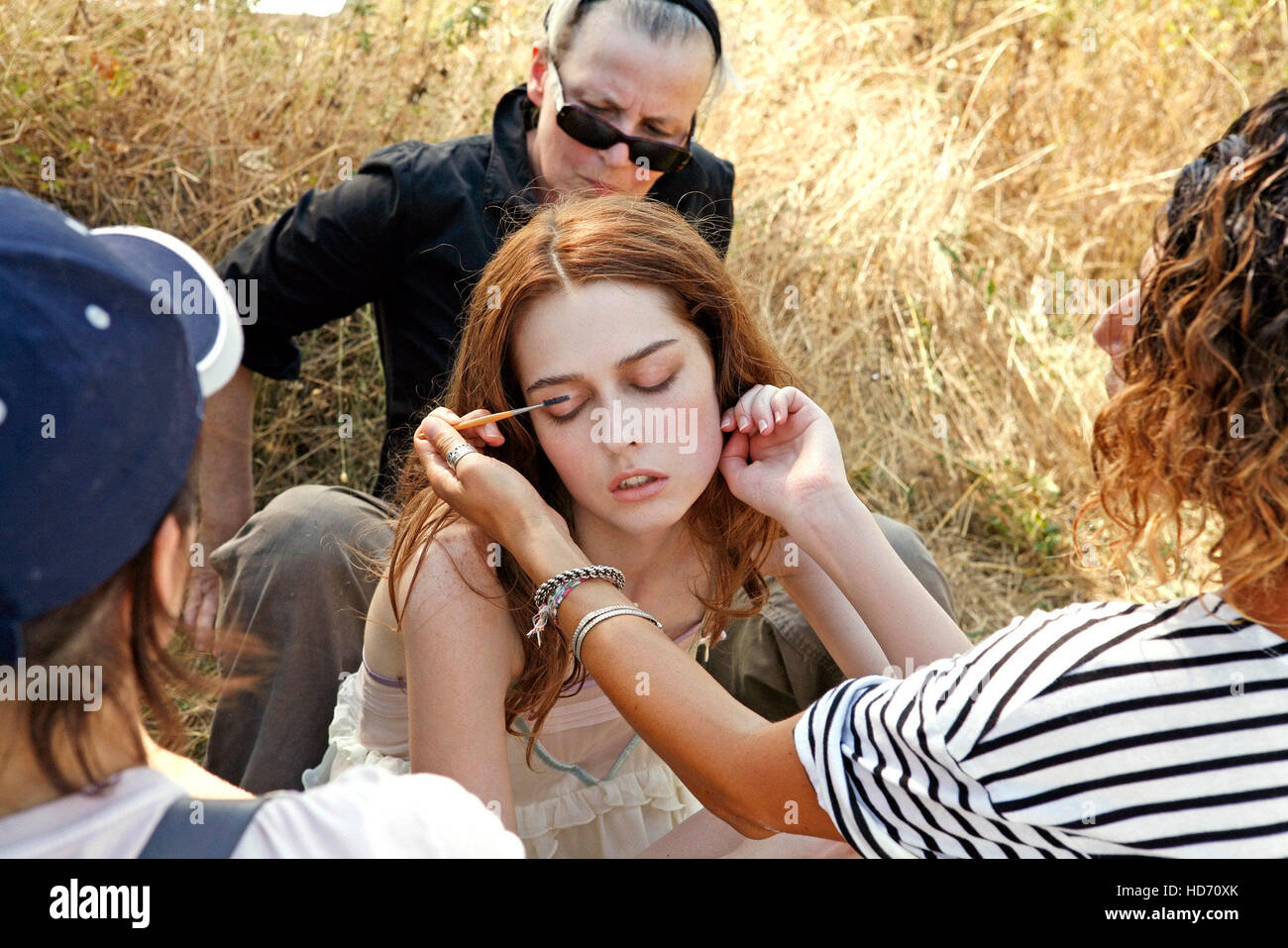
Ann Ward won America’s Next Top Model (ANTM) Cycle 15, which aired in late 2010. As the winner of the show’s first dedicated "high-fashion" cycle, she earned a contract with IMG Models, a cover and spread in Vogue Italia, and a $100,000 CoverGirl contract, cementing her place as the show’s most editorially successful contestant.
The Paradigm Shift: Why Cycle 15 Mattered
For years, America's Next Top Model struggled with a paradox: it was a massive television success but often failed to produce models who could break into the upper echelons of the actual fashion industry. The winners frequently leaned toward "commercial" appeal—suitable for catalogs and mid-range beauty brands—but were often ignored by high-fashion houses in Milan, Paris, and London.
Cycle 15, which premiered in September 2010, was Tyra Banks' explicit attempt to bridge this gap. By partnering with Franca Sozzani, the late editor-in-chief of Vogue Italia, and moving the winner’s spread from Seventeen magazine to the most prestigious fashion publication in the world, the stakes were fundamentally altered. This shift necessitated a different kind of winner: someone who possessed the unconventional beauty, extreme height, and skeletal-chic proportions required for the runway and high-end editorials. Ann Ward, a 6’2” native of Dallas, Texas, became the ultimate personification of this new direction.
The Emergence of Ann Ward: From Outcast to Frontrunner
Ann Ward entered the competition as a shy, soft-spoken girl who had spent much of her life feeling out of place due to her extreme height and slender frame. In her initial audition, she famously mentioned that she had been bullied for being "the tall girl" and struggled with her self-image.
From a technical modeling perspective, Ann possessed the "editorial" look that photographers and designers crave. Her facial structure—prominent cheekbones, a strong jawline, and large, expressive eyes—allowed her to transform in front of the lens. However, her journey began with a controversy that preceded the season's premiere. A promotional clip showed judge Miss J. Alexander placing his hands around Ann’s waist, showing that they could nearly meet. This sparked a national conversation about body image and the fashion industry’s standards. Tyra Banks later addressed this, emphasizing that the show celebrated different types of beauty, though the focus on Ann's thinness remained a point of debate throughout the season.
The Record-Breaking Run: Five Consecutive First Call-Outs
The most objective proof of Ann Ward's dominance in Cycle 15 was her unprecedented performance during the weekly eliminations. In the world of ANTM, the "First Call-Out" (FCO) is given to the model who produced the best photo of the week. Ann Ward achieved five consecutive FCOs at the start of the competition, a record that remains unsurpassed in the show’s history as of 2026.
Breaking Down the Key Photoshoots
To understand why Ann was so successful, one must analyze the specific photoshoots that defined her run:
- The Bullying Shoot (Week 1): Contestants were painted with words reflecting the insults they had faced. Ann’s word was "Giant." She utilized her long limbs to create a high-fashion shape that felt both vulnerable and powerful. The judges were instantly captivated by her ability to tell a story through her silhouette.
- The Fallen Angel (Week 2): Shooting in a desolate landscape, Ann delivered a haunting image that looked like it belonged in a luxury fragrance campaign. Her control over her facial expressions began to show a level of sophistication rarely seen in early-season contestants.
- The Mermaid Shoot (Week 3): Modeling jewelry while being splashed with water, Ann proved she could handle difficult physical conditions while maintaining an "expensive" look.
- The Luchador Shoot (Week 4): This shoot required high energy and interaction with male models in a wrestling ring. Despite her natural shyness, Ann managed to create a dynamic, fashion-forward image that didn't look like a costume.
- The Rodeo Drive Walking Shoot (Week 5): While her actual runway walk was often criticized as her weakest point, she excelled in "walking" for the camera. This fifth consecutive win solidified her as the girl to beat.
Technical Analysis: The High-Fashion Aesthetic
In professional modeling, there is a distinct difference between "commercial" and "editorial" looks. Commercial models sell products to the masses; they are often conventionally beautiful and approachable. Editorial models sell a "vibe" or a concept; they are often "striking" rather than "pretty."
Ann Ward was the quintessential editorial model. Her height (6’2”) is at the upper limit for female runway models, making her a "clothes hanger" in the industry sense—someone on whom high-fashion garments hang perfectly. Her face was capable of "ugly-pretty" modeling, a term used in the industry to describe beauty that is unconventional or jarring but incredibly photogenic.
During Cycle 15, the judging panel—which included high-fashion heavyweights like André Leon Talley and Nigel Barker—consistently praised Ann for her "stillness." Unlike other contestants who over-posed, Ann understood that sometimes the most powerful editorial image comes from a subtle shift in the eyes or a slight tilt of the head.
The Finale: Ann Ward vs. Chelsey Hersley
The finale of Cycle 15 presented a classic ANTM dichotomy. On one side was Chelsey Hersley, a 22-year-old from Idaho who was a "student of fashion." Chelsey was a technically proficient model who understood lighting, garment movement, and industry history. On the other side was Ann Ward, the raw, intuitive talent who struggled with social anxiety and a clunky runway walk but produced undeniably superior photographs.
The final challenge involved a CoverGirl commercial and photo shoot, followed by a high-fashion runway show for Roberto Cavalli. Chelsey excelled in the commercial, appearing relatable and professional. Ann struggled with the lines, her shyness once again becoming a hurdle. However, when it came to the high-fashion runway, Ann’s height and striking look made her a natural fit for Cavalli’s designs, even if her gait wasn't as polished as Chelsey’s.
Ultimately, the judges had to decide what the "high fashion" cycle was meant to produce. André Leon Talley was a vocal supporter of Ann, arguing that her look was "Vogue-ready" in a way that Chelsey’s was not. Tyra Banks agreed, and on the season finale, Ann Ward was crowned the winner of Cycle 15.
Comparative Analysis: Ann Ward vs. Chelsey Hersley
| Feature | Ann Ward (Winner) | Chelsey Hersley (Runner-up) |
|---|---|---|
| Height | 6'2" | 5'11" |
| Primary Strength | Editorial Photography | Commercial & Technical Knowledge |
| Weakness | Runway Walk & Social Confidence | Lacked "Unconventional" Look |
| Record | 5 Consecutive Best Photos | Consistent High Performance |
| Industry Appeal | High Fashion / Runway / Couture | Catalog / Beauty / Commercial |
| Key Judge Support | André Leon Talley | Nigel Barker |
The Post-Show Reality: Life After ANTM
Winning America's Next Top Model provides a platform, but the transition into the real fashion world is notoriously difficult. For Ann Ward, the immediate prizes were massive. Her Vogue Italia spread was shot by legendary photographer Ellen von Unwerth, and she appeared on the cover of Beauty in Vogue.
Following her win, Ann moved to New York and began working with IMG Models. However, the reality of the industry in the early 2010s was that ANTM winners carried a "reality TV stigma." High-fashion designers often avoided models associated with the show to maintain an air of exclusivity.
Despite this, Ann Ward achieved several notable milestones:
- Runway: She walked for designers like Alex London and appeared in several high-profile shows during international fashion weeks.
- Editorial: Aside from her Vogue Italia spread, she appeared in publications like Velvet Magazine and Marie Claire.
- Artistic Transition: Over time, Ann transitioned away from full-time modeling to pursue her passion for art and illustration. By 2026, she is widely recognized as a talented concept artist and illustrator, often blending her fashion background with her artistic creations.
The Legacy of Cycle 15
Ann Ward’s win remains a polarizing but significant moment in the history of ANTM. For fans, she represented the underdog who overcame insecurities to reach the top. For the industry, she was proof that the show could identify someone with genuine high-fashion potential.
Cycle 15 changed the trajectory of the series. After Ann’s victory, the show continued to experiment with themed cycles (such as the "British Invasion" and "College Edition"), but it never quite recaptured the specific "high-fashion" prestige of the Ann Ward era. Her victory underscored the show’s peak influence on the fashion world before it shifted toward a more social-media-driven format in later seasons.
Frequently Asked Questions
Did Ann Ward really have the smallest waist in ANTM history?
While her waist was famously small (approximately 18–20 inches at the time), the show emphasized it through camera angles and editing to highlight the "high fashion" aesthetic. While striking, many high-fashion models possess similar proportions, though Ann’s height made the contrast more noticeable.
How did the 5 consecutive "Best Photos" impact the competition?
It created a "frontrunner effect" that intimidated other contestants. Chelsey Hersley and other models often expressed frustration that Ann’s photos were praised even when her personality or runway skills were lacking. However, the judges maintained that in a high-fashion cycle, the "final product" (the photo) was the most important metric.
What happened to Ann Ward's modeling career?
She worked professionally for several years under IMG Models, appearing in various international editorials. However, the fashion industry's fast-paced nature and the stigma of reality television led her to eventually focus on her career as an artist. She remains one of the most fondly remembered winners due to her unique look.
Why was Cycle 15 called the "High Fashion" cycle?
It was the first season where the prizes were specifically tailored to the elite fashion world. Instead of Seventeen magazine, the winner received a spread in Vogue Italia, which is considered the "fashion bible." The guest judges also included industry icons like Zac Posen, Diane von Furstenberg, and Roberto Cavalli.
Is Ann Ward still modeling in 2026?
As of 2026, Ann Ward is primarily focused on her career as a digital illustrator and artist. While she occasionally participates in fashion-related projects or "throwback" features, she has largely stepped away from the traditional runway and editorial circuit to pursue her creative interests.
Final Recommendation for Fans and Aspiring Models
For those studying the history of America's Next Top Model, Cycle 15 is essential viewing. It serves as a masterclass in editorial photography and showcases how a specific "look" can dominate a competition. If you are an aspiring model, Ann Ward’s journey teaches the importance of leaning into your unique features—even those that once made you feel insecure. While the fashion industry has evolved since 2010 to be more inclusive of different body types, the core lesson from Ann Ward’s win remains: high-fashion modeling is about transformation and the ability to create art through your presence.